 Add to Chrome
 Add to Firefox
 Add to Edge
Managing Task Execution for Unknown Workloads in Batteryless IoT: A Hardware-Agnostic Evaluation
Jun 23, 2026
In recent years, the Internet of Things (IoT) paradigm has been shifting toward batteryless, energy-harvesting architectures. Sustaining reliable operation in these systems requires intelligent management of highly volatile stored energy. As edge applications grow in complexity, traditional energy-aware schedulers struggle with unpredictable workloads due to their reliance on static execution thresholds or pre-measured, hardware-specific task profiles. To overcome this, we propose two novel, hardware-agnostic dynamic scheduling strategies treating applications as a "black box," requiring no prior energy information: a model-free Reinforcement Learning (RL) agent and an on-the-fly Approximated Prediction (AP) method. We evaluate these methods against an adaptive task rate approach (AsTAR) and optimized static thresholds using a custom-built, physically accurate simulation framework driven by real-world solar data and dynamic LoRa transmission profiles. Rather than claiming universal superiority, our analysis exposes the distinct operational trade-offs of each method: the AP approach delivers lightweight, near-oracle task throughput; the RL agent provides tunable survival-execution balancing; and AsTAR excels at execution pacing across long energy gaps. Finally, we demonstrate that while these advanced strategies provide critical resilience for severely constrained systems with small capacitors, devices with larger energy buffers can efficiently rely on simpler, less computationally expensive static policies.

Zero-energy Devices for 6G: Technical Enablers at a Glance
Feb 14, 2024Low-cost, resource-constrained, maintenance-free, and energy-harvesting (EH) Internet of Things (IoT) devices, referred to as zero-energy devices (ZEDs), are rapidly attracting attention from industry and academia due to their myriad of applications. To date, such devices remain primarily unsupported by modern IoT connectivity solutions due to their intrinsic fabrication, hardware, deployment, and operation limitations, while lacking clarity on their key technical enablers and prospects. Herein, we address this by discussing the main characteristics and enabling technologies of ZEDs within the next generation of mobile networks, specifically focusing on unconventional EH sources, multi-source EH, power management, energy storage solutions, manufacturing material and practices, backscattering, and low-complexity receivers. Moreover, we highlight the need for lightweight and energy-aware computing, communication, and scheduling protocols, while discussing potential approaches related to TinyML, duty cycling, and infrastructure enablers like radio frequency wireless power transfer and wake-up protocols. Challenging aspects and open research directions are identified and discussed in all the cases. Finally, we showcase an experimental ZED proof-of-concept related to ambient cellular backscattering.
A simulation study to distinguish prompt photon from $π^0$ and beam halo in a granular calorimeter using deep networks
Oct 30, 2018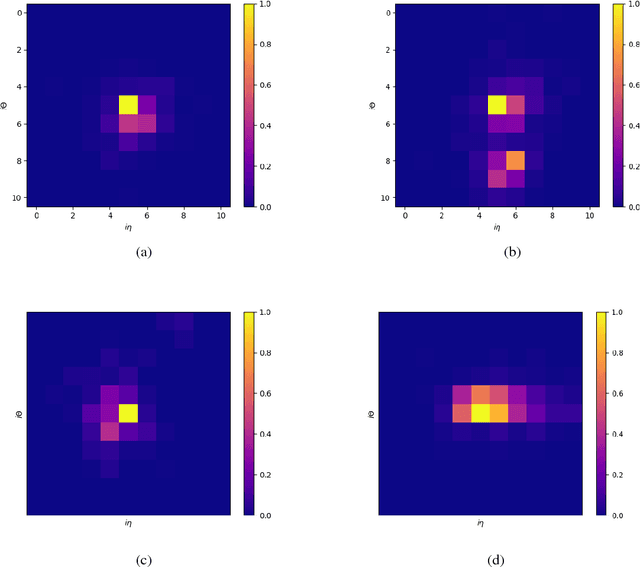
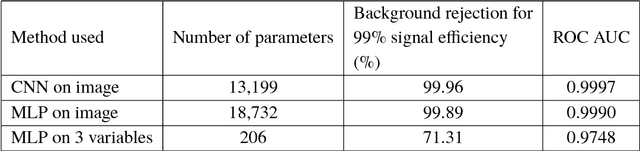
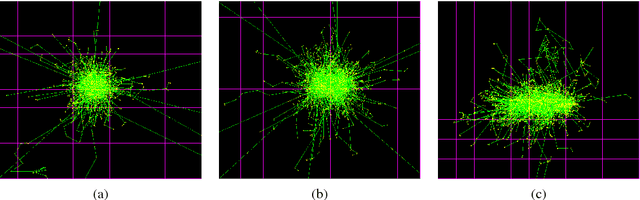
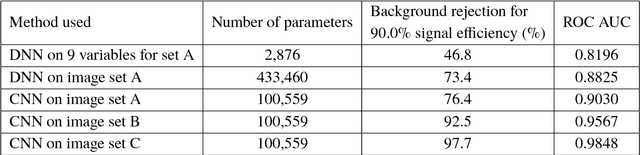
In a hadron collider environment identification of prompt photons originating in a hard partonic scattering process and rejection of non-prompt photons coming from hadronic jets or from beam related sources, is the first step for study of processes with photons in final state. Photons coming from decay of $\pi_0$'s produced inside a hadronic jet and photons produced in catastrophic bremsstrahlung by beam halo muons are two major sources of non-prompt photons. In this paper the potential of deep learning methods for separating the prompt photons from beam halo and $\pi^0$'s in the electromagnetic calorimeter of a collider detector is investigated, using an approximate description of the CMS detector. It is shown that, using only calorimetric information as images with a Convolutional Neural Network, beam halo (and $\pi^{0}$) can be separated from photon with 99.96\% (97.7\%) background rejection for 99.00\% (90.0\%) signal efficiency which is much better than traditionally employed variables.