 Add to Chrome
 Add to Firefox
 Add to Edge
Diagnosing Fine-Grained Inconsistency Classification in Financial Disclosure Text
Jul 29, 2026
Financial disclosures contain numerical claims, temporal statements, entity references, policy commitments, and risk descriptions that may conflict in qualitatively different ways. Detecting a conflict is only the first step: review workflows may also need to determine its type, since numerical, temporal, referential, factual, and normative inconsistencies require different evidence and downstream checks. We study this problem as fine-grained inconsistency classification. Using a fixed 5,940-instance snapshot of SBID-FD, a synthetic financial-disclosure benchmark with 11 inconsistency labels and paired reference evidence spans, we compare frozen embedding classifiers, fine-tuned encoders, evidence-augmented classifiers, prompted large language models, and LoRA-adapted generative models under a shared evaluation protocol. A fine-tuned 300M encoder reaches 61.9% accuracy, compared with 61.5% for a LoRA-adapted Qwen3.5-9B model and 61.3% for GPT-5.4. Because these systems differ in architecture, supervision, training objective, and input format, we interpret this as a practical efficiency result for compact supervised encoders rather than a controlled conclusion about model scale. Supplying gold evidence spans improves the fine-tuned encoder to 65.3%, whereas automatically predicted spans recover a meaningful but incomplete share of that gain, indicating that localization quality remains a bottleneck. Class-level analyses show that Referential inconsistencies are especially sensitive to localization quality, while Factual and Logical inconsistencies remain difficult even when the relevant evidence is provided. Together, the oracle, distractor, and per-class analyses separate localization errors from residual type-discrimination errors, indicating that progress requires both stronger evidence extraction and better reasoning over closely related inconsistency categories.

Ranking Companion: A Visual Analytics Approach to Item-Based Ranking with Hybrid Item Selection
Jun 22, 2026Personalizing item ranking creation is a challenging task, especially when users lack knowledge of data attributes or the ability to express and formalize their attribute preferences. Item-based ranking creation is an approach allowing users to directly externalize preferences through known-item judgments rather than attribute-based scoring. However, a core challenge of item-based ranking is identifying and selecting representative candidate items for externalizing preferences. Existing approaches rely on singular item-selection methods, limiting flexibility and user control. To address this challenge, we present Ranking Companion, a visual analytics approach for item-based ranking that combines model-driven active learning with human-driven item-selection methods. By drawing from six complementary item-selection methods, users can externalize listwise preferences based on selected candidate items, while an iterative machine learning process with a ranking model calculates ranking results, presented to users alongside explanations for interpretation. We evaluated Ranking Companion in a formative user study with 10 participants, in which participants used each item-selection method across three iterations, revealing tradeoffs in perceived ranking quality across accuracy, diversity, novelty, transparency, control, and satisfaction. Ranking Companion contributes a unified interactive item selection space and provides preliminary empirical guidance toward the hybrid use of multiple complementary item-selection methods in personalized item-based ranking creation.
Knowledge Graphs, the Missing Link in Agentic AI-based Formal Verification
May 07, 2026Recent advances in Large Language Models (LLMs) have enabled workflows that generate SystemVerilog Assertions (SVAs) from natural-language specifications, with the potential to accelerate Formal Verification (FV). However, high-quality assertion synthesis remains challenging because specifications are often ambiguous or incomplete and critical micro-architectural details reside in the Register Transfer Level (RTL). Many existing approaches treat the specification and RTL as loosely structured text, which weakens specification-to-RTL grounding and leads to semantic mismatches and frequent syntax failures during formal parsing and elaboration. This work addresses these limitations with a verification-centric Knowledge Graph (KG) constructed from structured Intermediate Representations (IRs) extracted from the specification, RTL, and formal-tool feedback, including syntax diagnostics, Counterexamples (CEXs), and coverage reports. The KG links requirements, design hierarchy, signals, assumptions, and properties to provide traceable, design-grounded context for generation. A multi-agent workflow queries and updates this KG to generate SVAs and to drive three refinement loops: syntax repair guided by tool diagnostics, CEX-guided correction using trace links, and coverage-directed property augmentation. Evaluation across seven benchmark designs indicates that KG-based context retrieval improves specification-to-RTL grounding and consistently produces compilable SVAs with low syntax-repair overhead. The approach achieves formal coverage ranging from 78.5% to 99.4%, though convergence exhibits design dependence with complex temporal and arithmetic reasoning remaining challenging for current LLM capabilities.
Saarthi for AGI: Towards Domain-Specific General Intelligence for Formal Verification
Mar 03, 2026Saarthi is an agentic AI framework that uses multi-agent collaboration to perform end-to-end formal verification. Even though the framework provides a complete flow from specification to coverage closure, with around 40% efficacy, there are several challenges that need to be addressed to make it more robust and reliable. Artificial General Intelligence (AGI) is still a distant goal, and current Large Language Model (LLM)-based agents are prone to hallucinations and making mistakes, especially when dealing with complex tasks such as formal verification. However, with the right enhancements and improvements, we believe that Saarthi can be a significant step towards achieving domain-specific general intelligence for formal verification. Especially for problems that require Short Term, Short Context (STSC) capabilities, such as formal verification, Saarthi can be a powerful tool to assist verification engineers in their work. In this paper, we present two key enhancements to the Saarthi framework: (1) a structured rulebook and specification grammar to improve the accuracy and controllability of SystemVerilog Assertion (SVA) generation, and (2) integration of advanced Retrieval Augmented Generation (RAG) techniques, such as GraphRAG, to provide agents with access to technical knowledge and best practices for iterative refinement and improvement of outputs. We also benchmark these enhancements for the overall Saarthi framework using challenging test cases from NVIDIA's CVDP benchmark targeting formal verification. Our benchmark results stand out with a 70% improvement in the accuracy of generated assertions, and a 50% reduction in the number of iterations required to achieve coverage closure.
Agentic AI-based Coverage Closure for Formal Verification
Mar 03, 2026Coverage closure is a critical requirement in Integrated Chip (IC) development process and key metric for verification sign-off. However, traditional exhaustive approaches often fail to achieve full coverage within project timelines. This study presents an agentic AI-driven workflow that utilizes Large Language Model (LLM)-enabled Generative AI (GenAI) to automate coverage analysis for formal verification, identify coverage gaps, and generate the required formal properties. The framework accelerates verification efficiency by systematically addressing coverage holes. Benchmarking open-source and internal designs reveals a measurable increase in coverage metrics, with improvements correlated to the complexity of the design. Comparative analysis validates the effectiveness of this approach. These results highlight the potential of agentic AI-based techniques to improve formal verification productivity and support comprehensive coverage closure.
FiMI: A Domain-Specific Language Model for Indian Finance Ecosystem
Feb 05, 2026We present FiMI (Finance Model for India), a domain-specialized financial language model developed for Indian digital payment systems. We develop two model variants: FiMI Base and FiMI Instruct. FiMI adapts the Mistral Small 24B architecture through a multi-stage training pipeline, beginning with continuous pre-training on 68 Billion tokens of curated financial, multilingual (English, Hindi, Hinglish), and synthetic data. This is followed by instruction fine-tuning and domain-specific supervised fine-tuning focused on multi-turn, tool-driven conversations that model real-world workflows, such as transaction disputes and mandate lifecycle management. Evaluations reveal that FiMI Base achieves a 20% improvement over the Mistral Small 24B Base model on finance reasoning benchmark, while FiMI Instruct outperforms the Mistral Small 24B Instruct model by 87% on domain-specific tool-calling. Moreover, FiMI achieves these significant domain gains while maintaining comparable performance to models of similar size on general benchmarks.
Hey AI, Generate Me a Hardware Code! Agentic AI-based Hardware Design & Verification
Jul 03, 2025Modern Integrated Circuits (ICs) are becoming increasingly complex, and so is their development process. Hardware design verification entails a methodical and disciplined approach to the planning, development, execution, and sign-off of functionally correct hardware designs. This tedious process requires significant effort and time to ensure a bug-free tape-out. The field of Natural Language Processing has undergone a significant transformation with the advent of Large Language Models (LLMs). These powerful models, often referred to as Generative AI (GenAI), have revolutionized how machines understand and generate human language, enabling unprecedented advancements in a wide array of applications, including hardware design verification. This paper presents an agentic AI-based approach to hardware design verification, which empowers AI agents, in collaboration with Humain-in-the-Loop (HITL) intervention, to engage in a more dynamic, iterative, and self-reflective process, ultimately performing end-to-end hardware design and verification. This methodology is evaluated on five open-source designs, achieving over 95% coverage with reduced verification time while demonstrating superior performance, adaptability, and configurability.
NTIRE 2025 Challenge on Day and Night Raindrop Removal for Dual-Focused Images: Methods and Results
Apr 19, 2025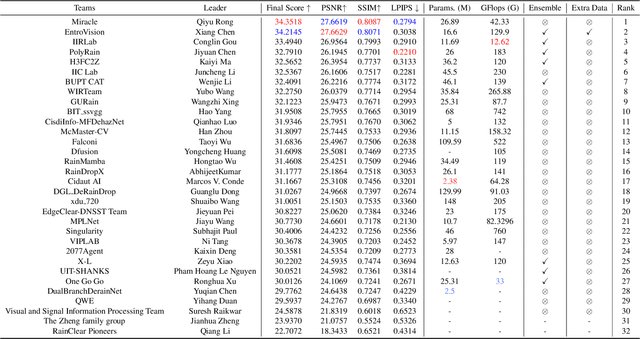
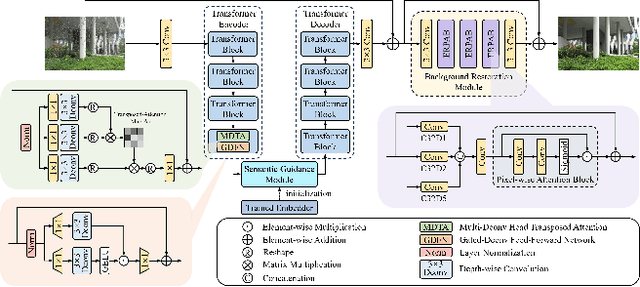
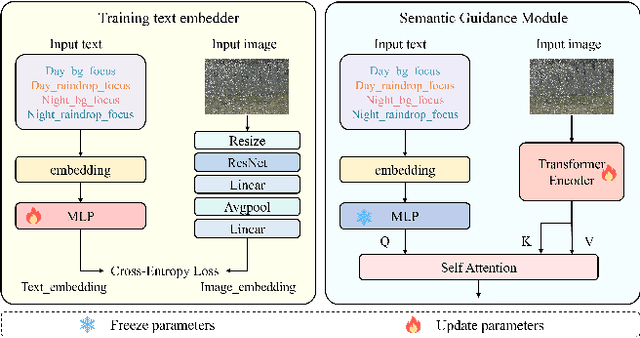
This paper reviews the NTIRE 2025 Challenge on Day and Night Raindrop Removal for Dual-Focused Images. This challenge received a wide range of impressive solutions, which are developed and evaluated using our collected real-world Raindrop Clarity dataset. Unlike existing deraining datasets, our Raindrop Clarity dataset is more diverse and challenging in degradation types and contents, which includes day raindrop-focused, day background-focused, night raindrop-focused, and night background-focused degradations. This dataset is divided into three subsets for competition: 14,139 images for training, 240 images for validation, and 731 images for testing. The primary objective of this challenge is to establish a new and powerful benchmark for the task of removing raindrops under varying lighting and focus conditions. There are a total of 361 participants in the competition, and 32 teams submitting valid solutions and fact sheets for the final testing phase. These submissions achieved state-of-the-art (SOTA) performance on the Raindrop Clarity dataset. The project can be found at https://lixinustc.github.io/CVPR-NTIRE2025-RainDrop-Competition.github.io/.
Saarthi: The First AI Formal Verification Engineer
Feb 23, 2025
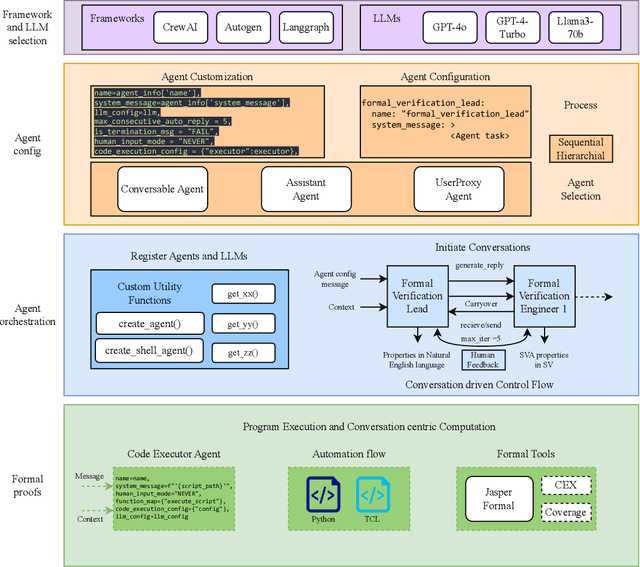
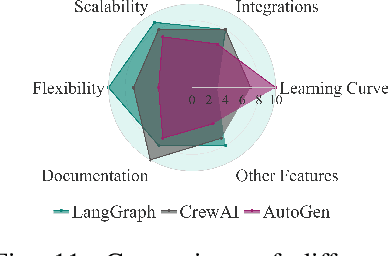
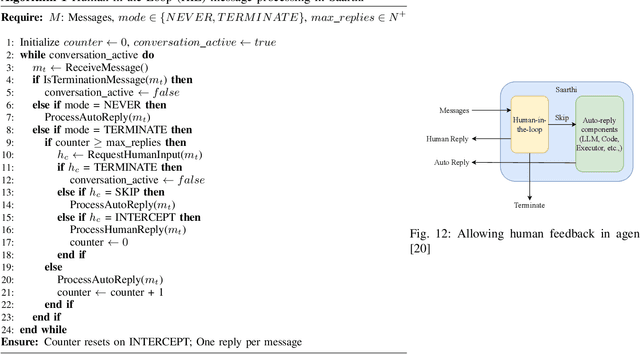
Recently, Devin has made a significant buzz in the Artificial Intelligence (AI) community as the world's first fully autonomous AI software engineer, capable of independently developing software code. Devin uses the concept of agentic workflow in Generative AI (GenAI), which empowers AI agents to engage in a more dynamic, iterative, and self-reflective process. In this paper, we present a similar fully autonomous AI formal verification engineer, Saarthi, capable of verifying a given RTL design end-to-end using an agentic workflow. With Saarthi, verification engineers can focus on more complex problems, and verification teams can strive for more ambitious goals. The domain-agnostic implementation of Saarthi makes it scalable for use across various domains such as RTL design, UVM-based verification, and others.
Hard Math -- Easy UVM: Pragmatic solutions for verifying hardware algorithms using UVM
Dec 06, 2024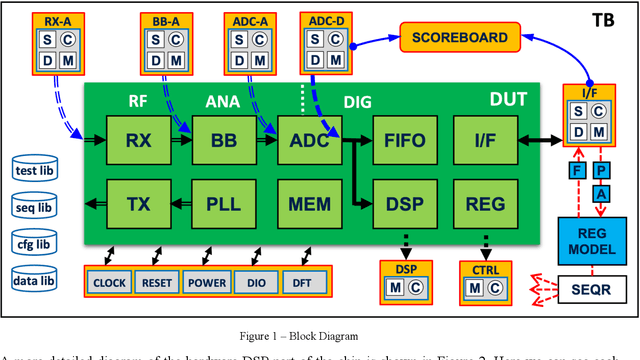
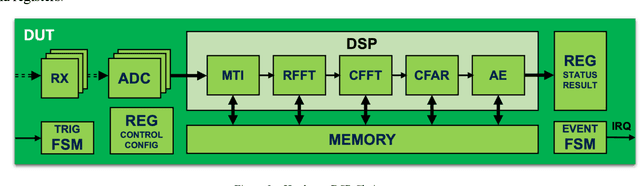
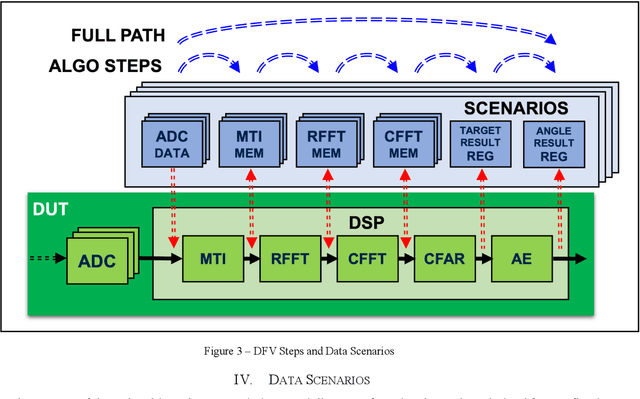
This paper presents pragmatic solutions for verifying complex mathematical algorithms implemented in hardware in an efficient and effective manner. Maximizing leverage of a known-answer-test strategy, based on predefined data scenarios combined with design-for-verification modes, we demonstrate how to find and isolate concept and design bugs early in the flow. The solutions presented are based on real project experience with single chip radar sensors for a variety of applications. The verification environments supporting the presented strategies are based on SystemVerilog and the Universal Verification Methodology.