 Add to Chrome
 Add to Firefox
 Add to Edge
CII: Novel CSI-RS Metric for Joint Precoder and RIS Reporting in Multi-User NextG Networks
Aug 11, 2026
While reconfigurable intelligent surfaces (RISs) are among the key enablers for next-generation (NextG) wireless networks, efficient feedback reporting for joint base station (BS) precoding and passive RIS configuration remains a major challenge due to the associated signaling overhead. By extending the standard-compliant channel state information reference signal framework, this paper introduces a novel channel information indicator (CII) that jointly represents the active BS precoding matrix and passive RIS configuration within a single feedback metric for multi-user multiple-input single-output systems. Simulation results demonstrate that the proposed unified feedback framework significantly reduces uplink signaling overhead compared with conventional disjoint reporting schemes. Furthermore, despite only a modest increase in the feedback payload, the proposed CII-based scheme outperforms conventional precoding matrix indicator approaches in terms of system performance, offering a practical and standards-compatible solution for RIS integration in NextG wireless networks.

A Novel Stripe-based RIS Optimization for UAV Communications and Sensing in Low-Altitude Wireless Networks
Jun 05, 2026Low-altitude wireless networks (LAWN) envision a reconfigurable 3D network capable of supporting mission-critical aerial operations. This paper presents a reconfigurable intelligent surface (RIS)-assisted LAWN to establish a reliable communication with an unmanned aerial vehicle (UAV) across varying wireless channel conditions and signal blockages. A low complexity stripe-based RIS phase shift optimization framework is proposed to simultaneously enhance communication reliability and provide passive sensing capability for UAV tracking under 3D mobility. Unlike high-complexity optimization approaches, the proposed method leverages the inherent structural phase-gradient of the RIS adjacent elements to significantly reduce the search space for calculating and updating the RIS configuration as the UAV moves. The analysis and simulation results demonstrate that the proposed framework outperforms conventional benchmarks in convergence speed and computational efficiency, while maintaining robust, high signal-to-noise-ratio (SNR) connectivity even in the presence of phase estimation errors and low SNR regimes. In addition, the measurement experiments using a real RIS prototype in an outdoor campus environment are performed to demonstrate the practical viability of the proposed approach.
Radar-Assisted Beam Management Framework for mmWave NTNs: Overhead Reduction and Physical Layer Security Application
May 29, 2026Fast and low-overhead beam management is a critical requirement for the practical deployment of non-terrestrial networks (NTNs) operating at millimeter-wave and higher frequencies. In this paper, we propose a radar-assisted beam selection framework for NTNs that limits the set of candidate beams by utilizing spatial sensing information such as the angle-of-departure (AoD) and distance estimations. To provide theoretical insight into the expected worst-case overhead, we conduct a probabilistic analysis under idealized conditions, where an approximation of the worst-case beam selection overhead is proposed and its statistics are derived under Gaussian error. Additionally, the proposed framework is applied to a physical-layer security (PLS) scenario by leveraging the radar's capability to detect passive targets that represent unintended users. The simulation results show that the unintended user's power is suppressed below -135 dBm, while an additional beamforming gain of roughly 2 dB is attained for the legitimate users.
LO-Free Receiver: Next-Gen Low-Power Joint Communication and Sensing
May 11, 2026This paper introduces and analyzes Spatial Phase Manifold Communications (SPMC), a paradigm that facilitates joint communication and sensing (JCAS) over Local Oscillator (LO) free receiver. Information is embedded in, and recovered from, the relative spatial phase between antennas. In contrast to conventional coherent receivers that rely on LOs and on channel estimation/equalization, SPMC exploits antenna-domain correlation to form a baseband observable that is a function of inter-antenna phase differences. Since these phase differences are fundamentally tied to Direction-of-Arrival (DoA) and vice-versa, the formulation recasts communication and sensing as inference over the unit-circle manifold and thus naturally supports JCAS decomposition, i.e., data and spatial sensing are encoded and recovered through DoA signatures. We develop a comprehensive framework comprising: (i) a manifold-domain signal model and corresponding phase-alphabet design; (ii) an LO-free quadrature spatial-correlator receiver architecture that resolves the phase-sign ambiguity without requiring an LO; and (iii) an analysis of error probability and sensing precision, including robustness to phase noise. The proposed paradigm is particularly suited to massive Internet-of-Things (IoT) deployments, for which hardware simplicity, LO distribution cost, power consumption, and seamless sensing integration are critical, especially at millimeter-wave and higher carrier frequencies.
Performance Analysis of HAPS-RIS-Assisted MIMO Systems Under Phase-Dependent Amplitude Response Using Saddle Point Approximation
Apr 28, 2026This letter proposes a novel mathematical framework for the statistical characterization of reconfigurable intelligent surface (RIS)-mounted high-altitude platform station (HAPS)-assisted MIMO systems over cascaded Rician fading channels. Due to the inherent coupling introduced by the RIS, the resulting cascaded channel does not satisfy the independence assumptions required for conventional Wishart-based modeling, which motivates a tractable alternative approach. By adopting a line-of-sight (LoS)-aligned precoding strategy, the received signal-to-noise ratio (SNR) is represented as a non-central quadratic form with a structured covariance matrix. Exploiting this structure, a saddle point approximation (SPA)-based framework is developed to characterize the SNR distribution. Closed-form expressions for the probability density function (PDF), cumulative distribution function (CDF), and outage probability are derived. The proposed framework further incorporates practical RIS hardware impairments, including discrete phase shifts and phase-dependent amplitude responses. The accuracy of the proposed analysis is validated through Monte Carlo simulations.
A Novel CSI-RS Reporting Scheme for RIS Optimization in O-RAN-based NextG Networks
Apr 20, 2026Reconfigurable intelligent surface (RIS) technology is a promising enabler for next-generation (NextG) wireless systems, capable of dynamically shaping the propagation environment. Integrating RIS within the open radio access network (O-RAN) architecture enables flexible and intelligent control of wireless links. However, practical RIS-assisted operation requires efficient acquisition and reporting of channel state information (CSI) to support real-time control from the base station side. This paper proposes a CSI reference signal (CSI-RS)-based reporting scheme for downlink complex channel information (CCI) to facilitate RIS optimization in an O-RAN-compliant environment. The proposed framework establishing CCI extraction and CSI-RS reporting procedures is experimentally validated on a real-world testbed integrating an open-source O-RAN system with an RIS prototype operating in the n78 frequency band. Existing channel estimation-based RIS optimization algorithms, including Hadamard and orthogonal matching pursuit (OMP), are tailored for integration into the O-RAN architecture. Experimental results demonstrate notable improvements in received signal power for both near and far users, highlighting the effectiveness and practical viability of the proposed scheme.
Propagation and Rate-Aware Cell Switching Optimization in HAPS-Assisted Wireless Networks
Mar 11, 2026Cell switching is a promising approach for improving energy efficiency in wireless networks; however, existing studies largely rely on simplified models and energy-centric formulations that overlook key performance-limiting factors. This paper revisits the cell switching concept by redefining its modeling assumptions and mathematical formulation, explicitly incorporating realistic propagation effects such as building entry loss (BEL) and atmospheric losses relevant to non-terrestrial networks (NTN), particularly high-altitude platform station (HAPS). Beyond proposing a new cell switching strategy, the conventional energy-focused problem is reformulated as a multi-objective optimization framework that jointly minimizes power consumption, unconnected users, and data rate degradation. Through this reformulation, the proposed methods ensure that energy-efficient operation is achieved without compromising user connectivity and data rate performance, thereby inherently supporting sustainability objectives for sixth-generation (6G) networks. To solve this reformulated problem, two complementary approaches are employed: the weighted sum method (WSM), which enables flexible and adaptive weighting mechanism, and the {ε-constraint-inspired method (εCM), which converts connectivity and rate-related objectives into constraints within the conventional energy-focused problem. Moreover, unlike prior work relying only on simulations, this study combines system-level simulations with Sionna-OpenAirInterface (OAI) based emulation on a smaller network to validate the proposed cell switching concept under realistic conditions. The results show that, compared to the conventional approach, WSM reduces rate degradation for up to 70% for high-loss indoor users and eliminates the 44% drop for low-loss indoor users.
ISAC-over-NTN: HAPS-UAV Framework for Post-Disaster Responsive 6G Networks
Jan 21, 2026In disaster scenarios, ensuring both reliable communication and situational awareness becomes a critical challenge due to the partial or complete collapse of terrestrial networks. This paper proposes an integrated sensing and communication (ISAC) over non-terrestrial networks (NTN) architecture referred to as ISAC-over-NTN that integrates multiple uncrewed aerial vehicles (UAVs) and a high-altitude platform station (HAPS) to maintain resilient and reliable network operations in post-disaster conditions. We aim to achieve two main objectives: i) provide a reliable communication infrastructure, thereby ensuring the continuity of search-and-rescue activities and connecting people to their loved ones, and ii) detect users, such as those trapped under rubble or those who are mobile, using a Doppler-based mobility detection model. We employ an innovative beamforming method that simultaneously transmits data and detects Doppler-based mobility by integrating multi-user multiple-input multiple-output (MU-MIMO) communication and monostatic sensing within the same transmission chain. The results show that the proposed framework maintains reliable connectivity and achieves high detection accuracy of users in critical locations, reaching 90% motion detection sensitivity and 88% detection accuracy.
Joint Phase Shift Optimization and Precoder Selection for RIS-Assisted 5G NR MIMO Systems
May 29, 2025By intelligently reconfiguring wireless propagation environment, reconfigurable intelligent surfaces (RISs) can enhance signal quality, suppress interference, and improve channel conditions, thereby serving as a powerful complement to multiple-input multiple-output (MIMO) architectures. However, jointly optimizing the RIS phase shifts and the MIMO transmit precoder in 5G and beyond networks remains largely unexplored. This paper addresses this gap by proposing a singular value ($\lambda$)-based RIS optimization strategy, where the phase shifts are configured to maximize the dominant singular values of the cascaded channel matrix, and the corresponding singular vectors are utilized for MIMO transmit precoding. The proposed precoder selection does not require mutual information computation across subbands, thereby reducing time complexity. To solve the $\lambda$-based optimization problem, maximum cross-swapping algorithm (MCA) is applied while an effective rank-based method is utilized for benchmarking purposes. The simulation results show that the proposed precoder selection method consistently outperforms the conventional approach under $\lambda$-based RIS optimization.
Interference Modulation: A Novel Technique for Low-Rate and Power Efficient Multiple Access
May 23, 2025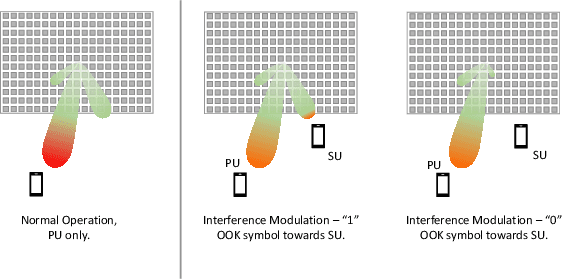
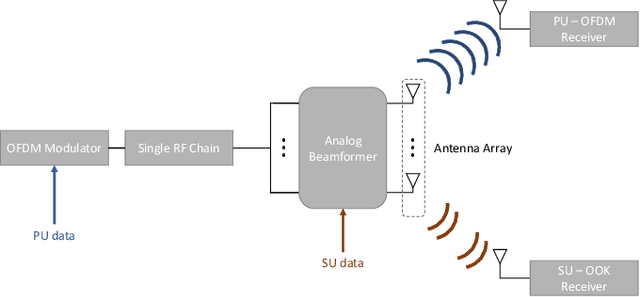
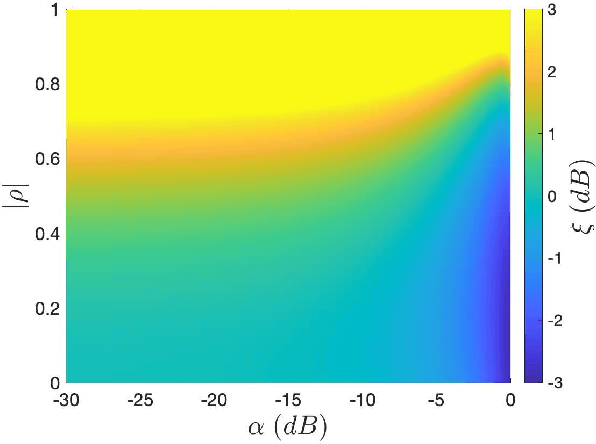
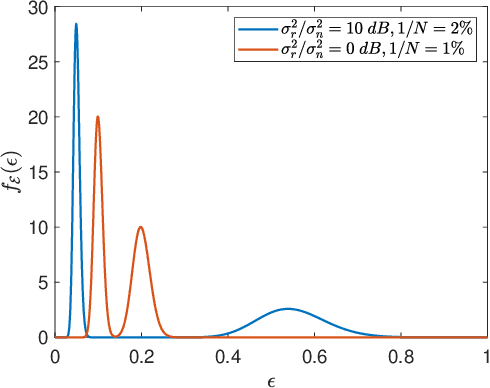
The majority of spatial signal processing techniques focus on increasing the total system capacity and providing high data rates for intended user(s). Unlike the existing studies, this paper introduces a novel interference modulation method that exploits the correlation between wireless channels to enable low-data-rate transmission towards additional users with a minimal power allocation. The proposed method changes the interference power at specific channels to modulate a low-rate on-off keying signal. This is achieved by appropriately setting the radiation pattern of front-end components of a transmitter, i.e., analog beamforming weights or metasurface configuration. The paper investigates theoretical performance limits and analyzes the efficiency in terms of sum rate. Bit error rate simulation results are closely matched with theoretical findings. The initial findings indicate that the proposed technique can be instrumental in providing reduced capability communication using minimal power consumption in 6G networks.