 Add to Chrome
 Add to Firefox
 Add to Edge
Voice Conversion
Voice conversion is the process of converting the voice of one speaker into the voice of another speaker.
Papers and Code
Advancing NAM-to-Speech Conversion with Novel Methods and the MultiNAM Dataset
Dec 25, 2024
Current Non-Audible Murmur (NAM)-to-speech techniques rely on voice cloning to simulate ground-truth speech from paired whispers. However, the simulated speech often lacks intelligibility and fails to generalize well across different speakers. To address this issue, we focus on learning phoneme-level alignments from paired whispers and text and employ a Text-to-Speech (TTS) system to simulate the ground-truth. To reduce dependence on whispers, we learn phoneme alignments directly from NAMs, though the quality is constrained by the available training data. To further mitigate reliance on NAM/whisper data for ground-truth simulation, we propose incorporating the lip modality to infer speech and introduce a novel diffusion-based method that leverages recent advancements in lip-to-speech technology. Additionally, we release the MultiNAM dataset with over $7.96$ hours of paired NAM, whisper, video, and text data from two speakers and benchmark all methods on this dataset. Speech samples and the dataset are available at \url{https://diff-nam.github.io/DiffNAM/}

FlexDuo: A Pluggable System for Enabling Full-Duplex Capabilities in Speech Dialogue Systems
Feb 19, 2025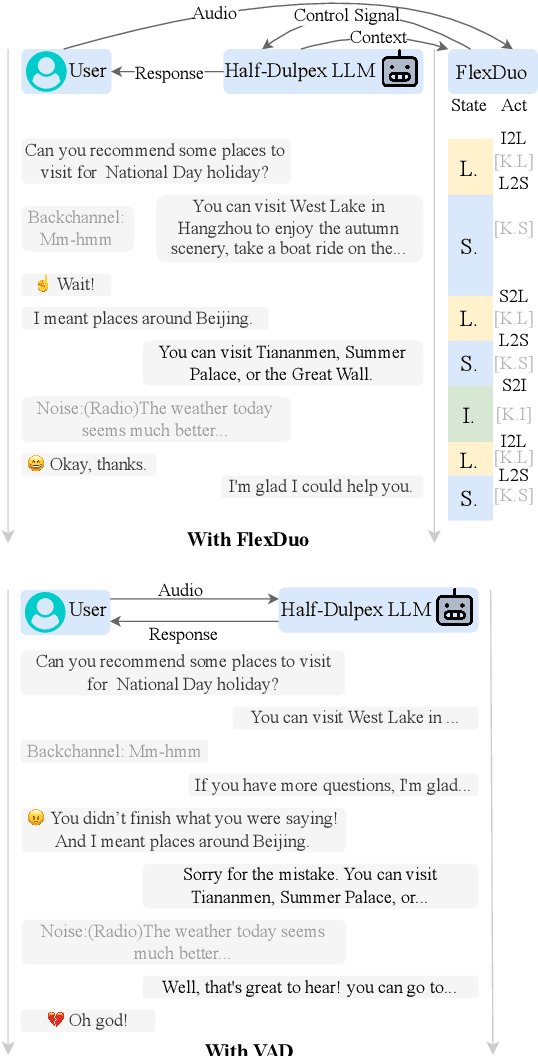
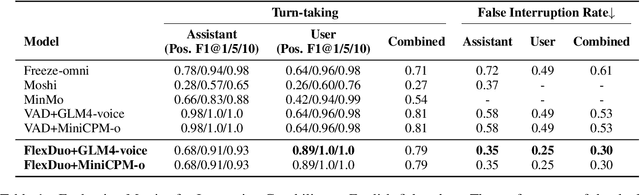
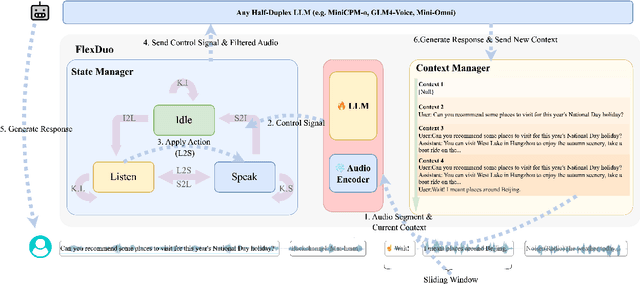

Full-Duplex Speech Dialogue Systems (Full-Duplex SDS) have significantly enhanced the naturalness of human-machine interaction by enabling real-time bidirectional communication. However, existing approaches face challenges such as difficulties in independent module optimization and contextual noise interference due to highly coupled architectural designs and oversimplified binary state modeling. This paper proposes FlexDuo, a flexible full-duplex control module that decouples duplex control from spoken dialogue systems through a plug-and-play architectural design. Furthermore, inspired by human information-filtering mechanisms in conversations, we introduce an explicit Idle state. On one hand, the Idle state filters redundant noise and irrelevant audio to enhance dialogue quality. On the other hand, it establishes a semantic integrity-based buffering mechanism, reducing the risk of mutual interruptions while ensuring accurate response transitions. Experimental results on the Fisher corpus demonstrate that FlexDuo reduces the false interruption rate by 24.9% and improves response accuracy by 7.6% compared to integrated full-duplex dialogue system baselines. It also outperforms voice activity detection (VAD) controlled baseline systems in both Chinese and English dialogue quality. The proposed modular architecture and state-based dialogue model provide a novel technical pathway for building flexible and efficient duplex dialogue systems.
A Review of Challenges in Speech-based Conversational AI for Elderly Care
Dec 10, 2024Artificially intelligent systems optimized for speech conversation are appearing at a fast pace. Such models are interesting from a healthcare perspective, as these voice-controlled assistants may support the elderly and enable remote health monitoring. The bottleneck for efficacy, however, is how well these devices work in practice and how the elderly experience them, but research on this topic is scant. We review elderly use of voice-controlled AI and highlight various user- and technology-centered issues, that need to be considered before effective speech-controlled AI for elderly care can be realized.
Building low-resource African language corpora: A case study of Kidawida, Kalenjin and Dholuo
Jan 19, 2025Natural Language Processing is a crucial frontier in artificial intelligence, with broad applications in many areas, including public health, agriculture, education, and commerce. However, due to the lack of substantial linguistic resources, many African languages remain underrepresented in this digital transformation. This paper presents a case study on the development of linguistic corpora for three under-resourced Kenyan languages, Kidaw'ida, Kalenjin, and Dholuo, with the aim of advancing natural language processing and linguistic research in African communities. Our project, which lasted one year, employed a selective crowd-sourcing methodology to collect text and speech data from native speakers of these languages. Data collection involved (1) recording conversations and translation of the resulting text into Kiswahili, thereby creating parallel corpora, and (2) reading and recording written texts to generate speech corpora. We made these resources freely accessible via open-research platforms, namely Zenodo for the parallel text corpora and Mozilla Common Voice for the speech datasets, thus facilitating ongoing contributions and access for developers to train models and develop Natural Language Processing applications. The project demonstrates how grassroots efforts in corpus building can support the inclusion of African languages in artificial intelligence innovations. In addition to filling resource gaps, these corpora are vital in promoting linguistic diversity and empowering local communities by enabling Natural Language Processing applications tailored to their needs. As African countries like Kenya increasingly embrace digital transformation, developing indigenous language resources becomes essential for inclusive growth. We encourage continued collaboration from native speakers and developers to expand and utilize these corpora.
Non-invasive electromyographic speech neuroprosthesis: a geometric perspective
Feb 09, 2025In this article, we present a high-bandwidth egocentric neuromuscular speech interface for translating silently voiced speech articulations into textand audio. Specifically, we collect electromyogram (EMG) signals from multiple articulatorysites on the face and neck as individuals articulate speech in an alaryngeal manner to perform EMG-to-text or EMG-to-audio translation. Such an interface is useful for restoring audible speech in individuals who have lost the ability to speak intelligibly due to laryngectomy, neuromuscular disease, stroke, or trauma-induced damage (e.g., radiotherapy toxicity) to speech articulators. Previous works have focused on training text or speech synthesis models using EMG collected during audible speech articulations or by transferring audio targets from EMG collected during audible articulation to EMG collected during silent articulation. However, such paradigms are not suited for individuals who have already lost the ability to audibly articulate speech. We are the first to present an alignment-free EMG-to-text and EMG-to-audio conversion using only EMG collected during silently articulated speech in an open-sourced manner. On a limited vocabulary corpora, our approach achieves almost 2.4x improvement in word error rate with a model that is 25x smaller by leveraging the inherent geometry of EMG.
Empathetic Conversational Agents: Utilizing Neural and Physiological Signals for Enhanced Empathetic Interactions
Jan 14, 2025Conversational agents (CAs) are revolutionizing human-computer interaction by evolving from text-based chatbots to empathetic digital humans (DHs) capable of rich emotional expressions. This paper explores the integration of neural and physiological signals into the perception module of CAs to enhance empathetic interactions. By leveraging these cues, the study aims to detect emotions in real-time and generate empathetic responses and expressions. We conducted a user study where participants engaged in conversations with a DH about emotional topics. The DH responded and displayed expressions by mirroring detected emotions in real-time using neural and physiological cues. The results indicate that participants experienced stronger emotions and greater engagement during interactions with the Empathetic DH, demonstrating the effectiveness of incorporating neural and physiological signals for real-time emotion recognition. However, several challenges were identified, including recognition accuracy, emotional transition speeds, individual personality effects, and limitations in voice tone modulation. Addressing these challenges is crucial for further refining Empathetic DHs and fostering meaningful connections between humans and artificial entities. Overall, this research advances human-agent interaction and highlights the potential of real-time neural and physiological emotion recognition in creating empathetic DHs.
Modular Conversational Agents for Surveys and Interviews
Dec 22, 2024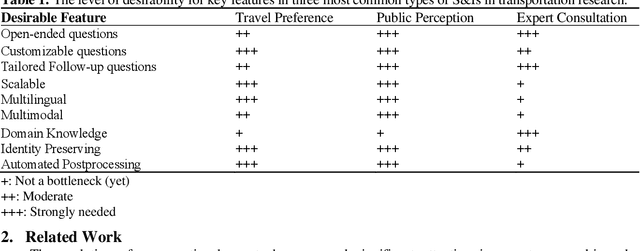
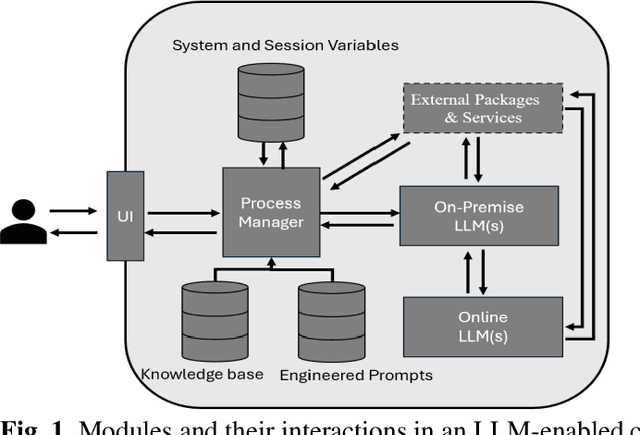
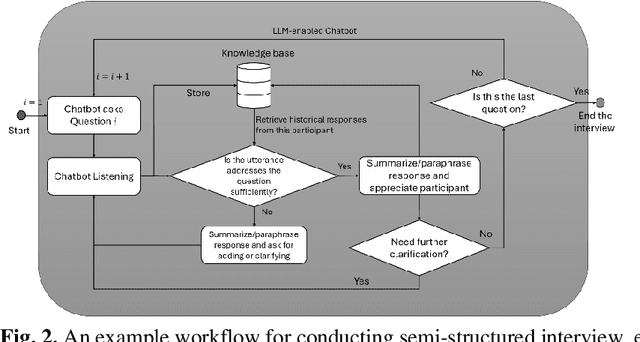
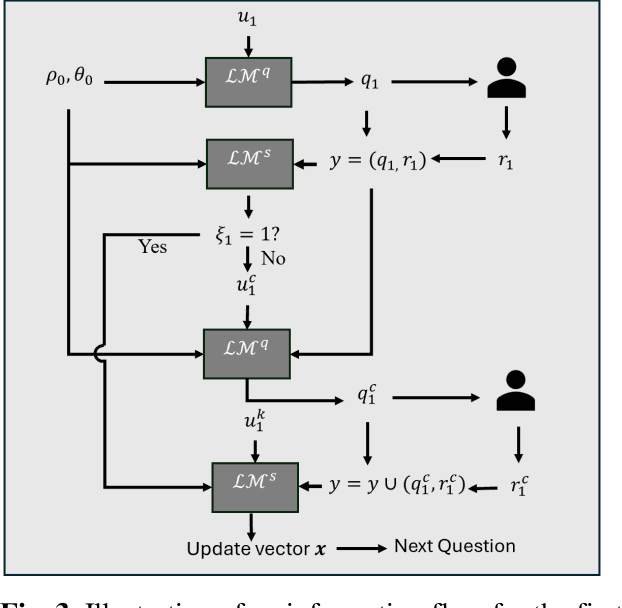
Surveys and interviews (structured, semi-structured, or unstructured) are widely used for collecting insights on emerging or hypothetical scenarios. Traditional human-led methods often face challenges related to cost, scalability, and consistency. Recently, various domains have begun to explore the use of conversational agents (chatbots) powered by large language models (LLMs). However, as public investments and policies on infrastructure and services often involve substantial public stakes and environmental risks, there is a need for a rigorous, transparent, privacy-preserving, and cost-efficient development framework tailored for such major decision-making processes. This paper addresses this gap by introducing a modular approach and its resultant parameterized process for designing conversational agents. We detail the system architecture, integrating engineered prompts, specialized knowledge bases, and customizable, goal-oriented conversational logic in the proposed approach. We demonstrate the adaptability, generalizability, and efficacy of our modular approach through three empirical studies: (1) travel preference surveys, highlighting multimodal (voice, text, and image generation) capabilities; (2) public opinion elicitation on a newly constructed, novel infrastructure project, showcasing question customization and multilingual (English and French) capabilities; and (3) transportation expert consultation about future transportation systems, highlighting real-time, clarification request capabilities for open-ended questions, resilience in handling erratic inputs, and efficient transcript post-processing. The results show the effectiveness of this modular approach and how it addresses key ethical, privacy, security, and token consumption concerns, setting the stage for the next-generation surveys and interviews.
Who Can Withstand Chat-Audio Attacks? An Evaluation Benchmark for Large Language Models
Nov 22, 2024Adversarial audio attacks pose a significant threat to the growing use of large language models (LLMs) in voice-based human-machine interactions. While existing research has primarily focused on model-specific adversarial methods, real-world applications demand a more generalizable and universal approach to audio adversarial attacks. In this paper, we introduce the Chat-Audio Attacks (CAA) benchmark including four distinct types of audio attacks, which aims to explore the the vulnerabilities of LLMs to these audio attacks in conversational scenarios. To evaluate the robustness of LLMs, we propose three evaluation strategies: Standard Evaluation, utilizing traditional metrics to quantify model performance under attacks; GPT-4o-Based Evaluation, which simulates real-world conversational complexities; and Human Evaluation, offering insights into user perception and trust. We evaluate six state-of-the-art LLMs with voice interaction capabilities, including Gemini-1.5-Pro, GPT-4o, and others, using three distinct evaluation methods on the CAA benchmark. Our comprehensive analysis reveals the impact of four types of audio attacks on the performance of these models, demonstrating that GPT-4o exhibits the highest level of resilience.
Evaluating Spoken Language as a Biomarker for Automated Screening of Cognitive Impairment
Jan 30, 2025Timely and accurate assessment of cognitive impairment is a major unmet need in populations at risk. Alterations in speech and language can be early predictors of Alzheimer's disease and related dementias (ADRD) before clinical signs of neurodegeneration. Voice biomarkers offer a scalable and non-invasive solution for automated screening. However, the clinical applicability of machine learning (ML) remains limited by challenges in generalisability, interpretability, and access to patient data to train clinically applicable predictive models. Using DementiaBank recordings (N=291, 64% female), we evaluated ML techniques for ADRD screening and severity prediction from spoken language. We validated model generalisability with pilot data collected in-residence from older adults (N=22, 59% female). Risk stratification and linguistic feature importance analysis enhanced the interpretability and clinical utility of predictions. For ADRD classification, a Random Forest applied to lexical features achieved a mean sensitivity of 69.4% (95% confidence interval (CI) = 66.4-72.5) and specificity of 83.3% (78.0-88.7). On real-world pilot data, this model achieved a mean sensitivity of 70.0% (58.0-82.0) and specificity of 52.5% (39.3-65.7). For severity prediction using Mini-Mental State Examination (MMSE) scores, a Random Forest Regressor achieved a mean absolute MMSE error of 3.7 (3.7-3.8), with comparable performance of 3.3 (3.1-3.5) on pilot data. Linguistic features associated with higher ADRD risk included increased use of pronouns and adverbs, greater disfluency, reduced analytical thinking, lower lexical diversity and fewer words reflecting a psychological state of completion. Our interpretable predictive modelling offers a novel approach for in-home integration with conversational AI to monitor cognitive health and triage higher-risk individuals, enabling earlier detection and intervention.
Speaker Emotion Recognition: Leveraging Self-Supervised Models for Feature Extraction Using Wav2Vec2 and HuBERT
Nov 05, 2024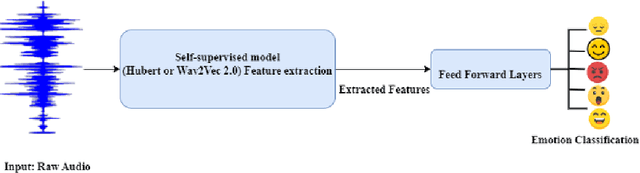

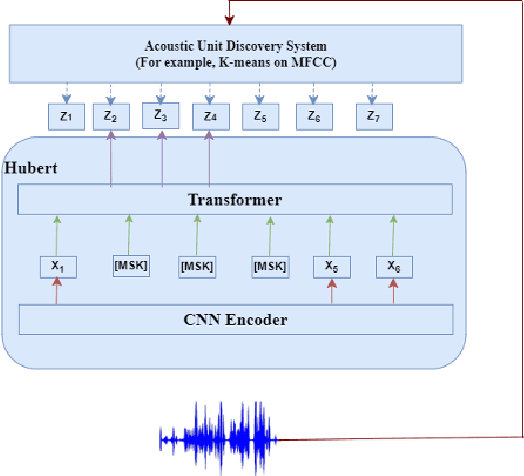

Speech is the most natural way of expressing ourselves as humans. Identifying emotion from speech is a nontrivial task due to the ambiguous definition of emotion itself. Speaker Emotion Recognition (SER) is essential for understanding human emotional behavior. The SER task is challenging due to the variety of speakers, background noise, complexity of emotions, and speaking styles. It has many applications in education, healthcare, customer service, and Human-Computer Interaction (HCI). Previously, conventional machine learning methods such as SVM, HMM, and KNN have been used for the SER task. In recent years, deep learning methods have become popular, with convolutional neural networks and recurrent neural networks being used for SER tasks. The input of these methods is mostly spectrograms and hand-crafted features. In this work, we study the use of self-supervised transformer-based models, Wav2Vec2 and HuBERT, to determine the emotion of speakers from their voice. The models automatically extract features from raw audio signals, which are then used for the classification task. The proposed solution is evaluated on reputable datasets, including RAVDESS, SHEMO, SAVEE, AESDD, and Emo-DB. The results show the effectiveness of the proposed method on different datasets. Moreover, the model has been used for real-world applications like call center conversations, and the results demonstrate that the model accurately predicts emotions.