 Add to Chrome
 Add to Firefox
 Add to Edge
Software Defect Prediction
Papers and Code
A Defect is Being Born: How Close Are We? A Time Sensitive Forecasting Approach
Jan 05, 2026
Background. Defect prediction has been a highly active topic among researchers in the Empirical Software Engineering field. Previous literature has successfully achieved the most accurate prediction of an incoming fault and identified the features and anomalies that precede it through just-in-time prediction. As software systems evolve continuously, there is a growing need for time-sensitive methods capable of forecasting defects before they manifest. Aim. Our study seeks to explore the effectiveness of time-sensitive techniques for defect forecasting. Moreover, we aim to investigate the early indicators that precede the occurrence of a defect. Method. We will train multiple time-sensitive forecasting techniques to forecast the future bug density of a software project, as well as identify the early symptoms preceding the occurrence of a defect. Expected results. Our expected results are translated into empirical evidence on the effectiveness of our approach for early estimation of bug proneness.

When Data Quality Issues Collide: A Large-Scale Empirical Study of Co-Occurring Data Quality Issues in Software Defect Prediction
Dec 19, 2025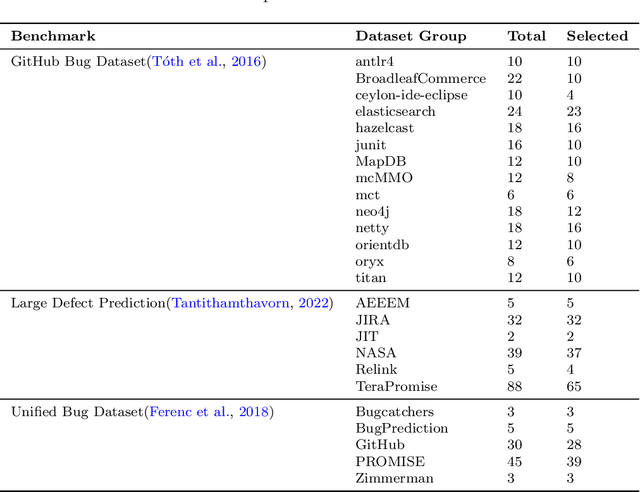
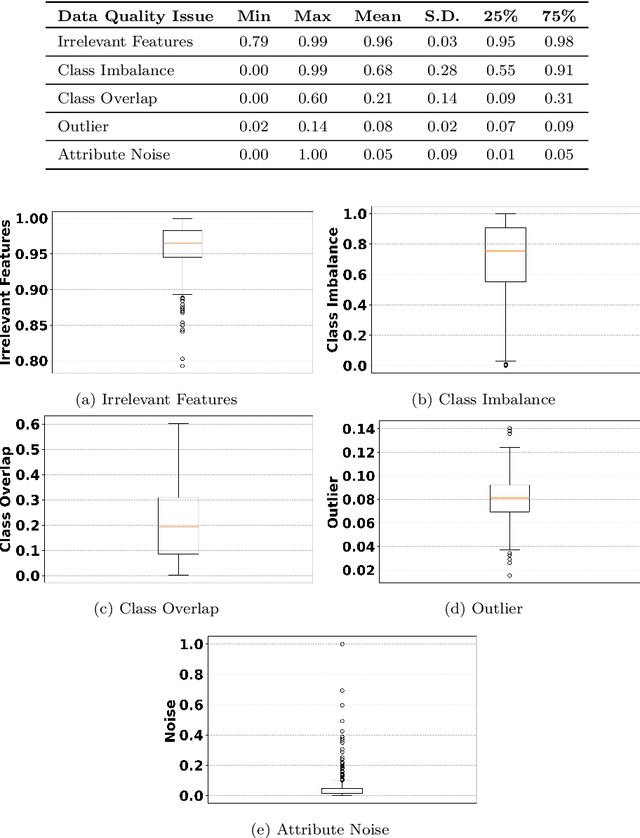
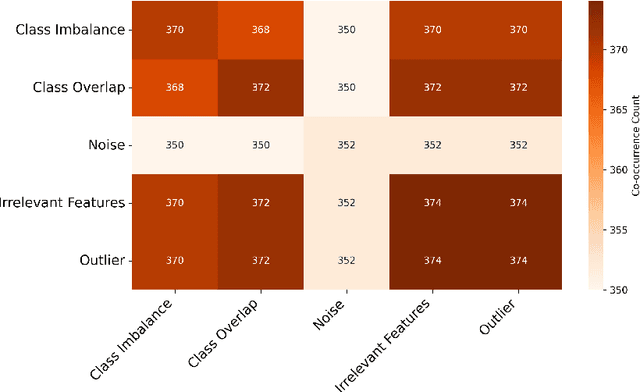
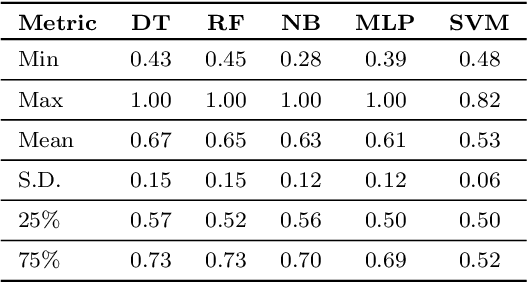
Software Defect Prediction (SDP) models are central to proactive software quality assurance, yet their effectiveness is often constrained by the quality of available datasets. Prior research has typically examined single issues such as class imbalance or feature irrelevance in isolation, overlooking that real-world data problems frequently co-occur and interact. This study presents, to our knowledge, the first large-scale empirical analysis in SDP that simultaneously examines five co-occurring data quality issues (class imbalance, class overlap, irrelevant features, attribute noise, and outliers) across 374 datasets and five classifiers. We employ Explainable Boosting Machines together with stratified interaction analysis to quantify both direct and conditional effects under default hyperparameter settings, reflecting practical baseline usage. Our results show that co-occurrence is nearly universal: even the least frequent issue (attribute noise) appears alongside others in more than 93% of datasets. Irrelevant features and imbalance are nearly ubiquitous, while class overlap is the most consistently harmful issue. We identify stable tipping points around 0.20 for class overlap, 0.65-0.70 for imbalance, and 0.94 for irrelevance, beyond which most models begin to degrade. We also uncover counterintuitive patterns, such as outliers improving performance when irrelevant features are low, underscoring the importance of context-aware evaluation. Finally, we expose a performance-robustness trade-off: no single learner dominates under all conditions. By jointly analyzing prevalence, co-occurrence, thresholds, and conditional effects, our study directly addresses a persistent gap in SDP research. Hence, moving beyond isolated analyses to provide a holistic, data-aware understanding of how quality issues shape model performance in real-world settings.
SQuaD: The Software Quality Dataset
Nov 14, 2025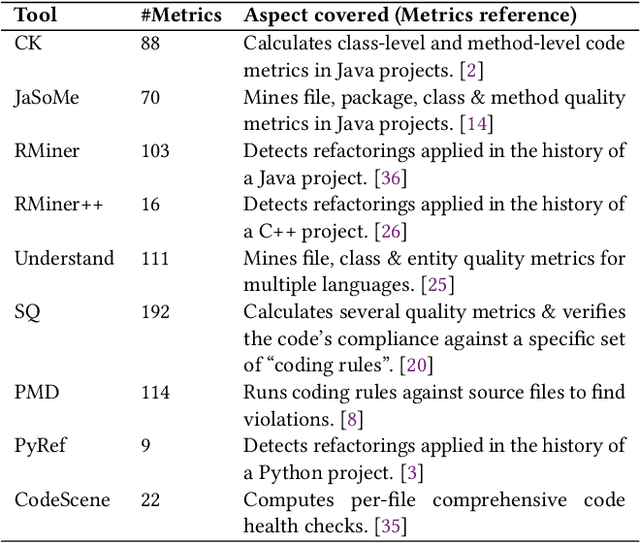
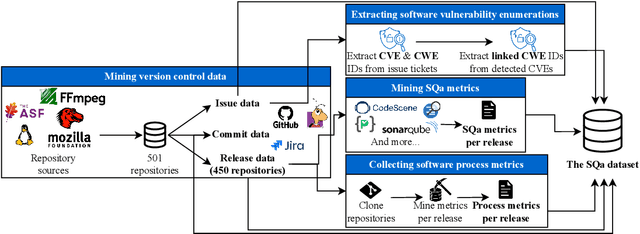
Software quality research increasingly relies on large-scale datasets that measure both the product and process aspects of software systems. However, existing resources often focus on limited dimensions, such as code smells, technical debt, or refactoring activity, thereby restricting comprehensive analyses across time and quality dimensions. To address this gap, we present the Software Quality Dataset (SQuaD), a multi-dimensional, time-aware collection of software quality metrics extracted from 450 mature open-source projects across diverse ecosystems, including Apache, Mozilla, FFmpeg, and the Linux kernel. By integrating nine state-of-the-art static analysis tools, i.e., SonarQube, CodeScene, PMD, Understand, CK, JaSoMe, RefactoringMiner, RefactoringMiner++, and PyRef, our dataset unifies over 700 unique metrics at method, class, file, and project levels. Covering a total of 63,586 analyzed project releases, SQuaD also provides version control and issue-tracking histories, software vulnerability data (CVE/CWE), and process metrics proven to enhance Just-In-Time (JIT) defect prediction. The SQuaD enables empirical research on maintainability, technical debt, software evolution, and quality assessment at unprecedented scale. We also outline emerging research directions, including automated dataset updates and cross-project quality modeling to support the continuous evolution of software analytics. The dataset is publicly available on ZENODO (DOI: 10.5281/zenodo.17566690).
Probing Pre-trained Language Models on Code Changes: Insights from ReDef, a High-Confidence Just-in-Time Defect Prediction Dataset
Sep 11, 2025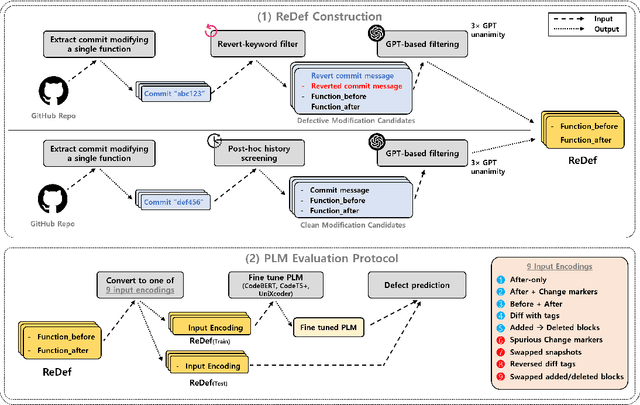
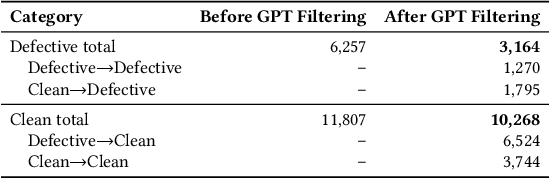
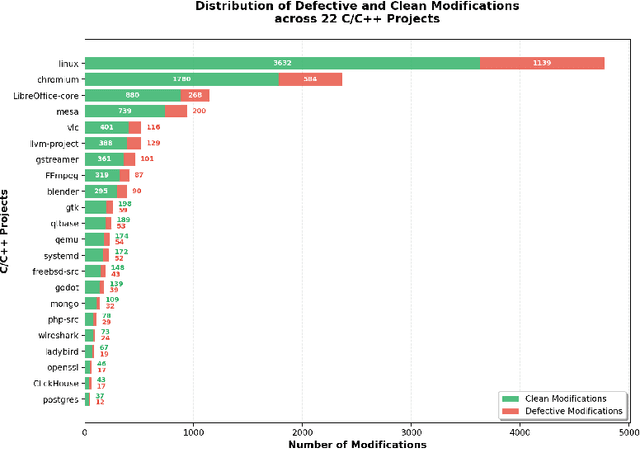
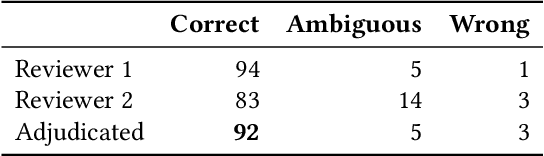
Just-in-Time software defect prediction (JIT-SDP) plays a critical role in prioritizing risky code changes during code review and continuous integration. However, existing datasets often suffer from noisy labels and low precision in identifying bug-inducing commits. To address this, we present ReDef (Revert-based Defect dataset), a high-confidence benchmark of function-level modifications curated from 22 large-scale C/C++ projects. Defective cases are anchored by revert commits, while clean cases are validated through post-hoc history checks. Ambiguous instances are conservatively filtered out via a GPT-assisted triage process involving multiple votes and audits. This pipeline yields 3,164 defective and 10,268 clean modifications, offering substantially more reliable labels than prior existing resources. Beyond dataset construction, we provide the first systematic evaluation of how pre-trained language models (PLMs) reason about code modifications -- specifically, which input encodings most effectively expose change information, and whether models genuinely capture edit semantics. We fine-tune CodeBERT, CodeT5+, and UniXcoder under five encoding strategies, and further probe their sensitivity through counterfactual perturbations that swap added/deleted blocks, invert diff polarity, or inject spurious markers. Our results show that compact diff-style encodings consistently outperform whole-function formats across all PLMs, with statistical tests confirming large, model-independent effects. However, under counterfactual tests, performance degrades little or not at all -- revealing that what appears to be robustness in fact reflects reliance on superficial cues rather than true semantic understanding. These findings indicate that, unlike in snapshot-based tasks, current PLMs remain limited in their ability to genuinely comprehend code modifications.
Multimodal Learning for Just-In-Time Software Defect Prediction in Autonomous Driving Systems
Feb 28, 2025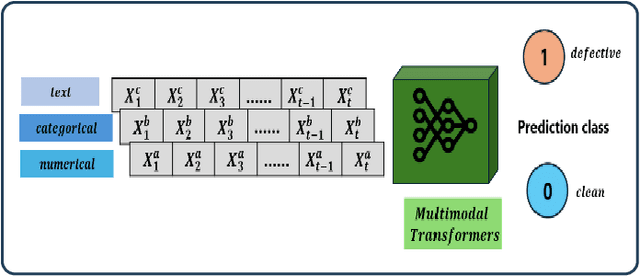
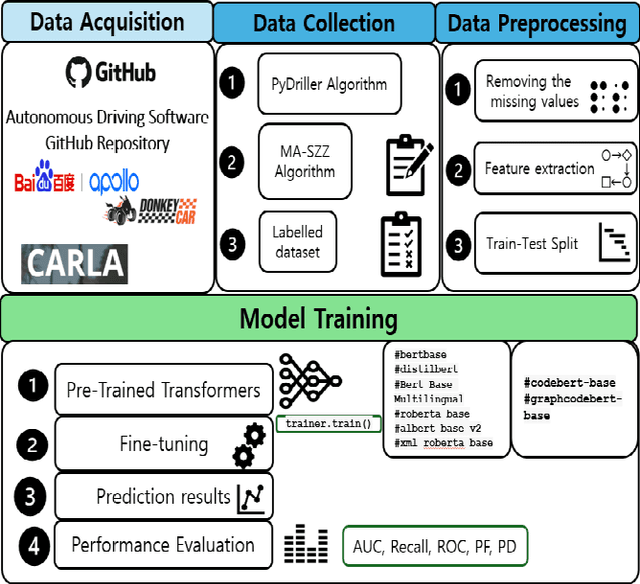
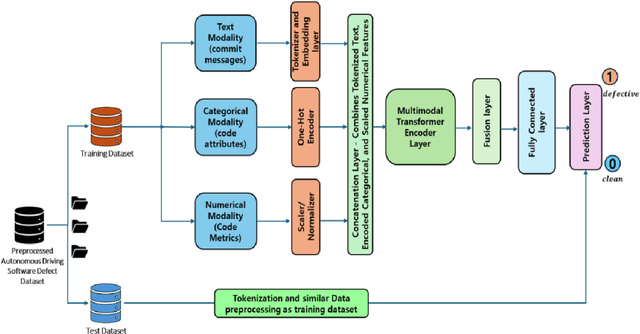
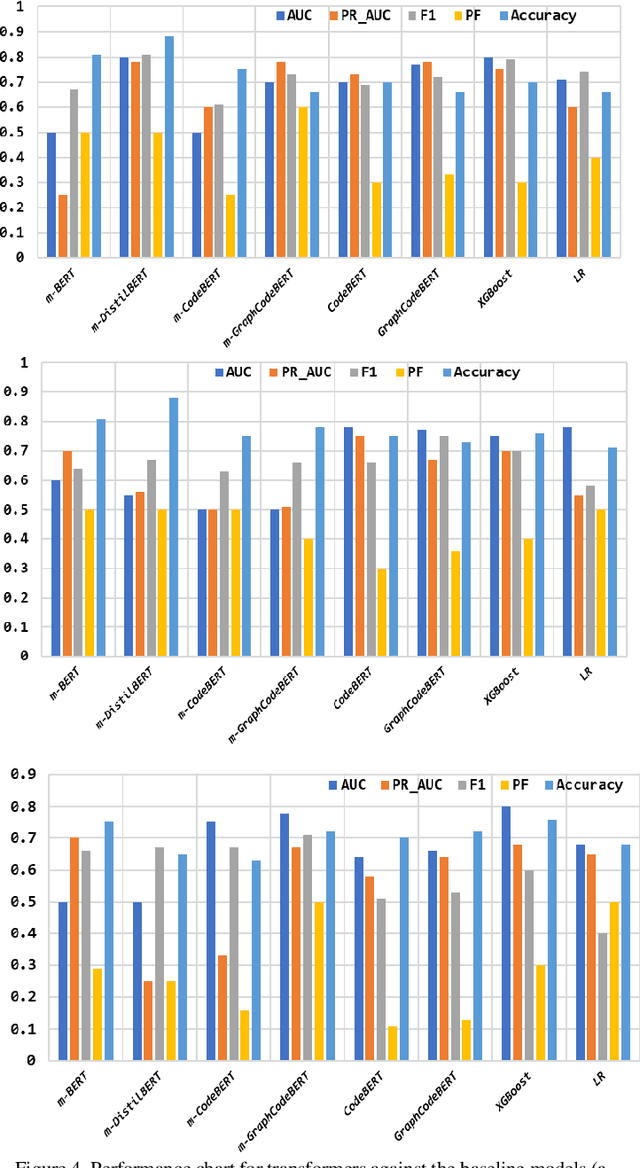
In recent years, the rise of autonomous driving technologies has highlighted the critical importance of reliable software for ensuring safety and performance. This paper proposes a novel approach for just-in-time software defect prediction (JIT-SDP) in autonomous driving software systems using multimodal learning. The proposed model leverages the multimodal transformers in which the pre-trained transformers and a combining module deal with the multiple data modalities of the software system datasets such as code features, change metrics, and contextual information. The key point for adapting multimodal learning is to utilize the attention mechanism between the different data modalities such as text, numerical, and categorical. In the combining module, the output of a transformer model on text data and tabular features containing categorical and numerical data are combined to produce the predictions using the fully connected layers. Experiments conducted on three open-source autonomous driving system software projects collected from the GitHub repository (Apollo, Carla, and Donkeycar) demonstrate that the proposed approach significantly outperforms state-of-the-art deep learning and machine learning models regarding evaluation metrics. Our findings highlight the potential of multimodal learning to enhance the reliability and safety of autonomous driving software through improved defect prediction.
Enhancing Software Quality Assurance with an Adaptive Differential Evolution based Quantum Variational Autoencoder-Transformer Model
Mar 20, 2025An AI-powered quality engineering platform uses artificial intelligence to boost software quality assessments through automated defect prediction and optimized performance alongside improved feature extraction. Existing models result in difficulties addressing noisy data types together with imbalances, pattern recognition complexities, ineffective feature extraction, and generalization weaknesses. To overcome those existing challenges in this research, we develop a new model Adaptive Differential Evolution based Quantum Variational Autoencoder-Transformer Model (ADE-QVAET), that combines a Quantum Variational Autoencoder-Transformer (QVAET) to obtain high-dimensional latent features and maintain sequential dependencies together with contextual relationships, resulting in superior defect prediction accuracy. Adaptive Differential Evolution (ADE) Optimization utilizes an adaptive parameter tuning method that enhances model convergence and predictive performance. ADE-QVAET integrates advanced AI techniques to create a robust solution for scalable and accurate software defect prediction that represents a top-level AI-driven technology for quality engineering applications. The proposed ADE-QVAET model attains high accuracy, precision, recall, and f1-score during the training percentage (TP) 90 of 98.08%, 92.45%, 94.67%, and 98.12%.
Quantum vs. Classical Machine Learning Algorithms for Software Defect Prediction: Challenges and Opportunities
Dec 10, 2024Software defect prediction is a critical aspect of software quality assurance, as it enables early identification and mitigation of defects, thereby reducing the cost and impact of software failures. Over the past few years, quantum computing has risen as an exciting technology capable of transforming multiple domains; Quantum Machine Learning (QML) is one of them. QML algorithms harness the power of quantum computing to solve complex problems with better efficiency and effectiveness than their classical counterparts. However, research into its application in software engineering to predict software defects still needs to be explored. In this study, we worked to fill the research gap by comparing the performance of three QML and five classical machine learning (CML) algorithms on the 20 software defect datasets. Our investigation reports the comparative scenarios of QML vs. CML algorithms and identifies the better-performing and consistent algorithms to predict software defects. We also highlight the challenges and future directions of employing QML algorithms in real software defect datasets based on the experience we faced while performing this investigation. The findings of this study can help practitioners and researchers further progress in this research domain by making software systems reliable and bug-free.
Automated Bug Report Prioritization in Large Open-Source Projects
Apr 22, 2025
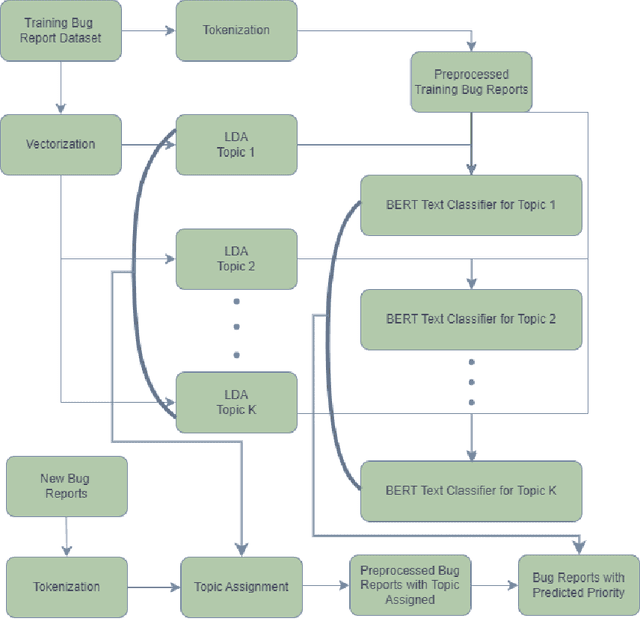
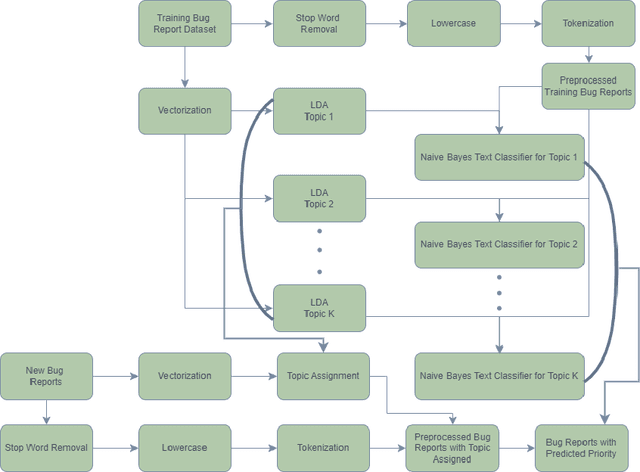
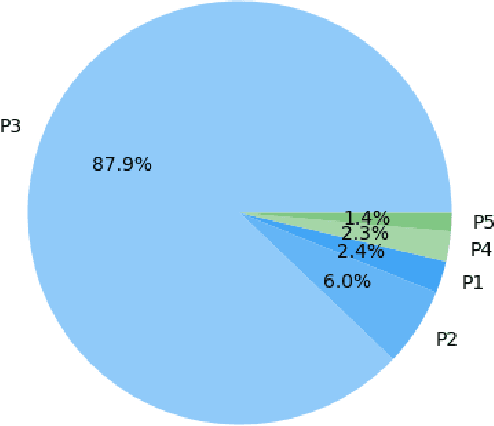
Large open-source projects receive a large number of issues (known as bugs), including software defect (i.e., bug) reports and new feature requests from their user and developer communities at a fast rate. The often limited project resources do not allow them to deal with all issues. Instead, they have to prioritize them according to the project's priorities and the issues' severities. In this paper, we propose a novel approach to automated bug prioritization based on the natural language text of the bug reports that are stored in the open bug repositories of the issue-tracking systems. We conduct topic modeling using a variant of LDA called TopicMiner-MTM and text classification with the BERT large language model to achieve a higher performance level compared to the state-of-the-art. Experimental results using an existing reference dataset containing 85,156 bug reports of the Eclipse Platform project indicate that we outperform existing approaches in terms of Accuracy, Precision, Recall, and F1-measure of the bug report priority prediction.
Evaluating the Performance of a D-Wave Quantum Annealing System for Feature Subset Selection in Software Defect Prediction
Oct 21, 2024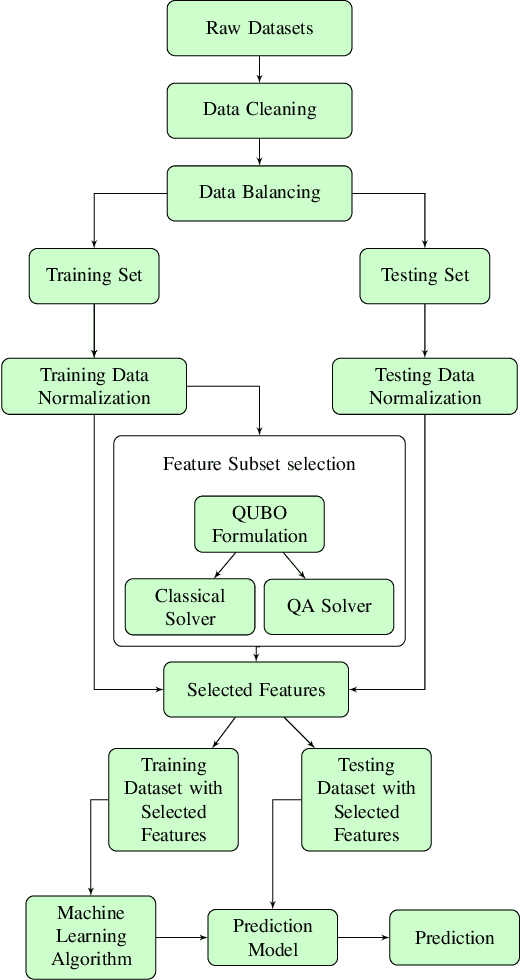
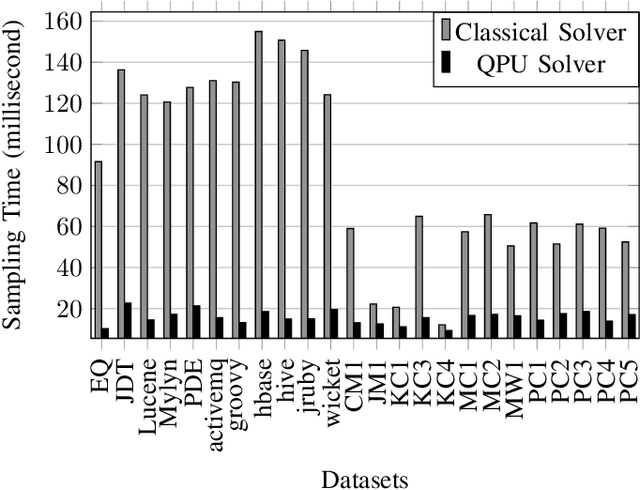

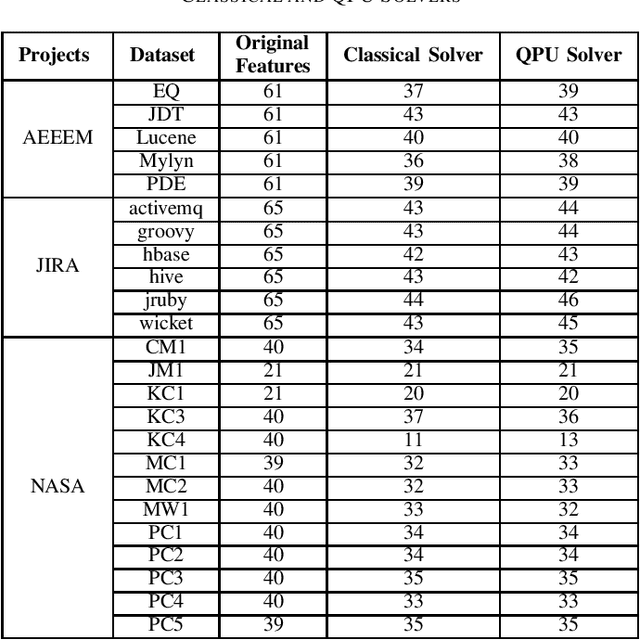
Predicting software defects early in the development process not only enhances the quality and reliability of the software but also decreases the cost of development. A wide range of machine learning techniques can be employed to create software defect prediction models, but the effectiveness and accuracy of these models are often influenced by the choice of appropriate feature subset. Since finding the optimal feature subset is computationally intensive, heuristic and metaheuristic approaches are commonly employed to identify near-optimal solutions within a reasonable time frame. Recently, the quantum computing paradigm quantum annealing (QA) has been deployed to find solutions to complex optimization problems. This opens up the possibility of addressing the feature subset selection problem with a QA machine. Although several strategies have been proposed for feature subset selection using a QA machine, little exploration has been done regarding the viability of a QA machine for feature subset selection in software defect prediction. This study investigates the potential of D-Wave QA system for this task, where we formulate a mutual information (MI)-based filter approach as an optimization problem and utilize a D-Wave Quantum Processing Unit (QPU) solver as a QA solver for feature subset selection. We evaluate the performance of this approach using multiple software defect datasets from the AEEM, JIRA, and NASA projects. We also utilize a D-Wave classical solver for comparative analysis. Our experimental results demonstrate that QA-based feature subset selection can enhance software defect prediction. Although the D-Wave QPU solver exhibits competitive prediction performance with the classical solver in software defect prediction, it significantly reduces the time required to identify the best feature subset compared to its classical counterpart.
DeMuVGN: Effective Software Defect Prediction Model by Learning Multi-view Software Dependency via Graph Neural Networks
Oct 25, 2024Software defect prediction (SDP) aims to identify high-risk defect modules in software development, optimizing resource allocation. While previous studies show that dependency network metrics improve defect prediction, most methods focus on code-based dependency graphs, overlooking developer factors. Current metrics, based on handcrafted features like ego and global network metrics, fail to fully capture defect-related information. To address this, we propose DeMuVGN, a defect prediction model that learns multi-view software dependency via graph neural networks. We introduce a Multi-view Software Dependency Graph (MSDG) that integrates data, call, and developer dependencies. DeMuVGN also leverages the Synthetic Minority Oversampling Technique (SMOTE) to address class imbalance and enhance defect module identification. In a case study of eight open-source projects across 20 versions, DeMuVGN demonstrates significant improvements: i) models based on multi-view graphs improve F1 scores by 11.1% to 12.1% over single-view models; ii) DeMuVGN improves F1 scores by 17.4% to 45.8% in within-project contexts and by 17.9% to 41.0% in cross-project contexts. Additionally, DeMuVGN excels in software evolution, showing more improvement in later-stage software versions. Its strong performance across different projects highlights its generalizability. We recommend future research focus on multi-view dependency graphs for defect prediction in both mature and newly developed projects.