 Add to Chrome
 Add to Firefox
 Add to Edge
Randaugment
Papers and Code
Sample-aware RandAugment: Search-free Automatic Data Augmentation for Effective Image Recognition
Aug 11, 2025
Automatic data augmentation (AutoDA) plays an important role in enhancing the generalization of neural networks. However, mainstream AutoDA methods often encounter two challenges: either the search process is excessively time-consuming, hindering practical application, or the performance is suboptimal due to insufficient policy adaptation during training. To address these issues, we propose Sample-aware RandAugment (SRA), an asymmetric, search-free AutoDA method that dynamically adjusts augmentation policies while maintaining straightforward implementation. SRA incorporates a heuristic scoring module that evaluates the complexity of the original training data, enabling the application of tailored augmentations for each sample. Additionally, an asymmetric augmentation strategy is employed to maximize the potential of this scoring module. In multiple experimental settings, SRA narrows the performance gap between search-based and search-free AutoDA methods, achieving a state-of-the-art Top-1 accuracy of 78.31\% on ImageNet with ResNet-50. Notably, SRA demonstrates good compatibility with existing augmentation pipelines and solid generalization across new tasks, without requiring hyperparameter tuning. The pretrained models leveraging SRA also enhance recognition in downstream object detection tasks. SRA represents a promising step towards simpler, more effective, and practical AutoDA designs applicable to a variety of future tasks. Our code is available at \href{https://github.com/ainieli/Sample-awareRandAugment}{https://github.com/ainieli/Sample-awareRandAugment

SAFLEX: Self-Adaptive Augmentation via Feature Label Extrapolation
Oct 03, 2024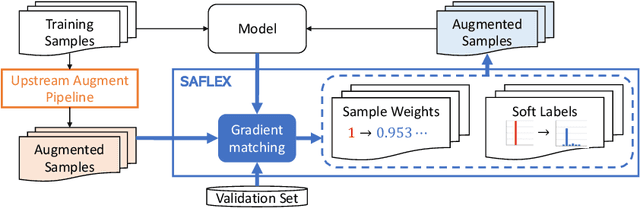
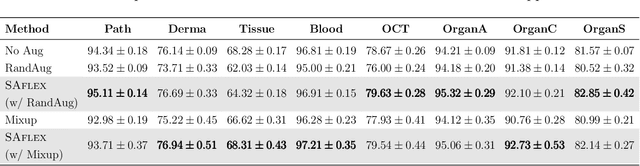
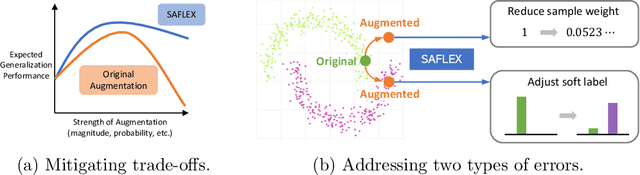
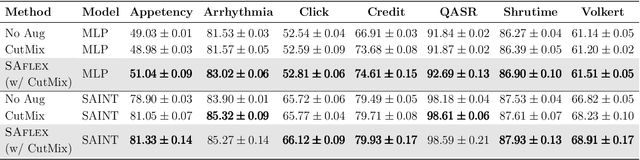
Data augmentation, a cornerstone technique in deep learning, is crucial in enhancing model performance, especially with scarce labeled data. While traditional techniques are effective, their reliance on hand-crafted methods limits their applicability across diverse data types and tasks. Although modern learnable augmentation methods offer increased adaptability, they are computationally expensive and challenging to incorporate within prevalent augmentation workflows. In this work, we present a novel, efficient method for data augmentation, effectively bridging the gap between existing augmentation strategies and emerging datasets and learning tasks. We introduce SAFLEX (Self-Adaptive Augmentation via Feature Label EXtrapolation), which learns the sample weights and soft labels of augmented samples provided by any given upstream augmentation pipeline, using a specifically designed efficient bilevel optimization algorithm. Remarkably, SAFLEX effectively reduces the noise and label errors of the upstream augmentation pipeline with a marginal computational cost. As a versatile module, SAFLEX excels across diverse datasets, including natural and medical images and tabular data, showcasing its prowess in few-shot learning and out-of-distribution generalization. SAFLEX seamlessly integrates with common augmentation strategies like RandAug, CutMix, and those from large pre-trained generative models like stable diffusion and is also compatible with frameworks such as CLIP's fine-tuning. Our findings highlight the potential to adapt existing augmentation pipelines for new data types and tasks, signaling a move towards more adaptable and resilient training frameworks.
Learning Tree-Structured Composition of Data Augmentation
Aug 26, 2024Data augmentation is widely used for training a neural network given little labeled data. A common practice of augmentation training is applying a composition of multiple transformations sequentially to the data. Existing augmentation methods such as RandAugment randomly sample from a list of pre-selected transformations, while methods such as AutoAugment apply advanced search to optimize over an augmentation set of size $k^d$, which is the number of transformation sequences of length $d$, given a list of $k$ transformations. In this paper, we design efficient algorithms whose running time complexity is much faster than the worst-case complexity of $O(k^d)$, provably. We propose a new algorithm to search for a binary tree-structured composition of $k$ transformations, where each tree node corresponds to one transformation. The binary tree generalizes sequential augmentations, such as the SimCLR augmentation scheme for contrastive learning. Using a top-down, recursive search procedure, our algorithm achieves a runtime complexity of $O(2^d k)$, which is much faster than $O(k^d)$ as $k$ increases above $2$. We apply our algorithm to tackle data distributions with heterogeneous subpopulations by searching for one tree in each subpopulation and then learning a weighted combination, resulting in a forest of trees. We validate our proposed algorithms on numerous graph and image datasets, including a multi-label graph classification dataset we collected. The dataset exhibits significant variations in the sizes of graphs and their average degrees, making it ideal for studying data augmentation. We show that our approach can reduce the computation cost by 43% over existing search methods while improving performance by 4.3%. The tree structures can be used to interpret the relative importance of each transformation, such as identifying the important transformations on small vs. large graphs.
Free Performance Gain from Mixing Multiple Partially Labeled Samples in Multi-label Image Classification
May 24, 2024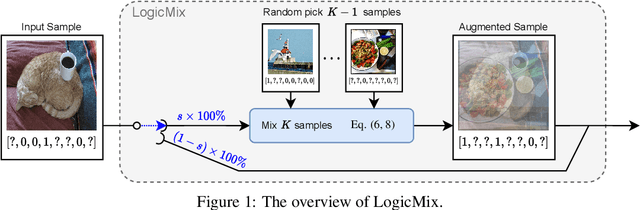
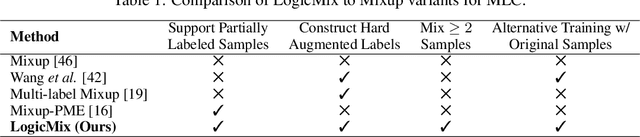

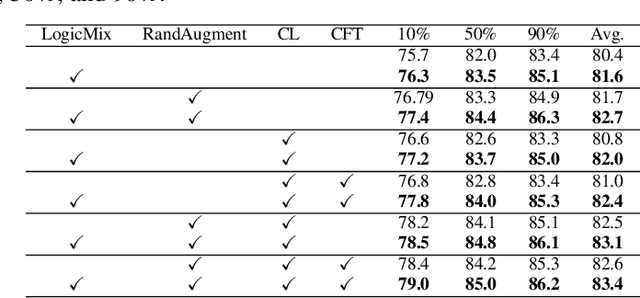
Multi-label image classification datasets are often partially labeled where many labels are missing, posing a significant challenge to training accurate deep classifiers. However, the powerful Mixup sample-mixing data augmentation cannot be well utilized to address this challenge, as it cannot perform linear interpolation on the unknown labels to construct augmented samples. In this paper, we propose LogicMix, a Mixup variant designed for such partially labeled datasets. LogicMix mixes the sample labels by logical OR so that the unknown labels can be correctly mixed by utilizing OR's logical equivalences, including the domination and identity laws. Unlike Mixup, which mixes exactly two samples, LogicMix can mix multiple ($\geq2$) partially labeled samples, constructing visually more confused augmented samples to regularize training. LogicMix is more general and effective than other compared Mixup variants in the experiments on various partially labeled dataset scenarios. Moreover, it is plug-and-play and only requires minimal computation, hence it can be easily inserted into existing frameworks to collaborate with other methods to improve model performance with a negligible impact on training time, as demonstrated through extensive experiments. In particular, through the collaboration of LogicMix, RandAugment, Curriculum Labeling, and Category-wise Fine-Tuning, we attain state-of-the-art performance on MS-COCO, VG-200, and Pascal VOC 2007 benchmarking datasets. The remarkable generality, effectiveness, collaboration, and simplicity suggest that LogicMix promises to be a popular and vital data augmentation method.
RandMSAugment: A Mixed-Sample Augmentation for Limited-Data Scenarios
Nov 25, 2023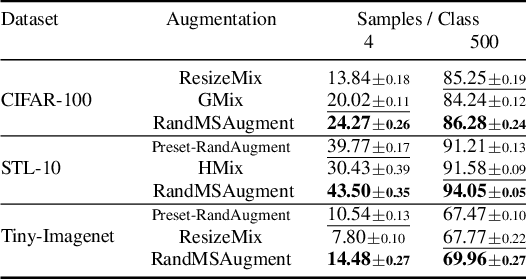
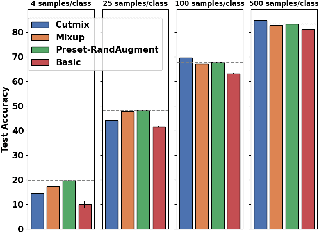
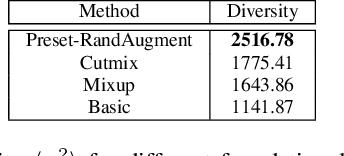
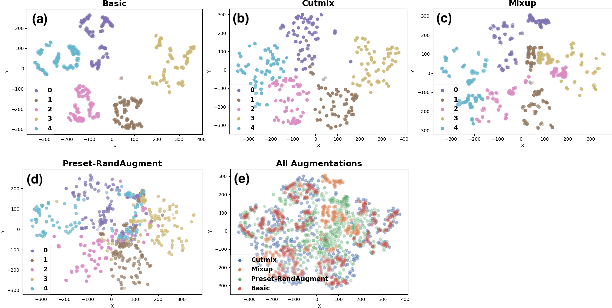
The high costs of annotating large datasets suggests a need for effectively training CNNs with limited data, and data augmentation is a promising direction. We study foundational augmentation techniques, including Mixed Sample Data Augmentations (MSDAs) and a no-parameter variant of RandAugment termed Preset-RandAugment, in the fully supervised scenario. We observe that Preset-RandAugment excels in limited-data contexts while MSDAs are moderately effective. We show that low-level feature transforms play a pivotal role in this performance difference, postulate a new property of augmentations related to their data efficiency, and propose new ways to measure the diversity and realism of augmentations. Building on these insights, we introduce a novel augmentation technique called RandMSAugment that integrates complementary strengths of existing methods. RandMSAugment significantly outperforms the competition on CIFAR-100, STL-10, and Tiny-Imagenet. With very small training sets (4, 25, 100 samples/class), RandMSAugment achieves compelling performance gains between 4.1% and 6.75%. Even with more training data (500 samples/class) we improve performance by 1.03% to 2.47%. RandMSAugment does not require hyperparameter tuning, extra validation data, or cumbersome optimizations.
Enhancing Transformer-Based Segmentation for Breast Cancer Diagnosis using Auto-Augmentation and Search Optimisation Techniques
Nov 18, 2023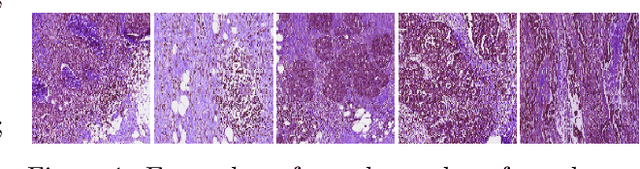
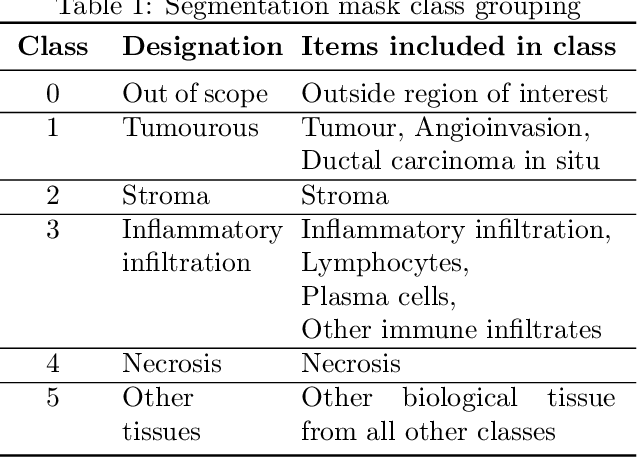
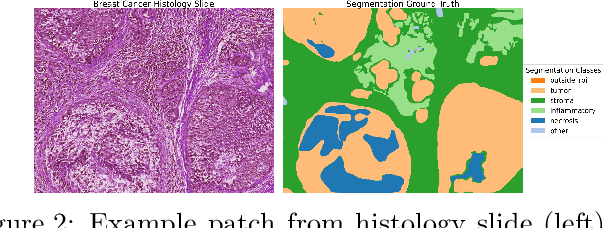
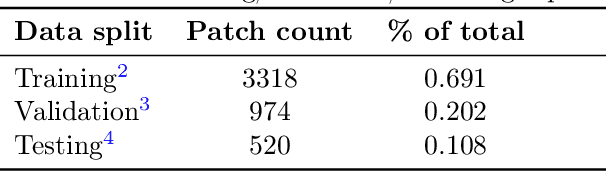
Breast cancer remains a critical global health challenge, necessitating early and accurate detection for effective treatment. This paper introduces a methodology that combines automated image augmentation selection (RandAugment) with search optimisation strategies (Tree-based Parzen Estimator) to identify optimal values for the number of image augmentations and the magnitude of their associated augmentation parameters, leading to enhanced segmentation performance. We empirically validate our approach on breast cancer histology slides, focusing on the segmentation of cancer cells. A comparative analysis of state-of-the-art transformer-based segmentation models is conducted, including SegFormer, PoolFormer, and MaskFormer models, to establish a comprehensive baseline, before applying the augmentation methodology. Our results show that the proposed methodology leads to segmentation models that are more resilient to variations in histology slides whilst maintaining high levels of segmentation performance, and show improved segmentation of the tumour class when compared to previous research. Our best result after applying the augmentations is a Dice Score of 84.08 and an IoU score of 72.54 when segmenting the tumour class. The primary contribution of this paper is the development of a methodology that enhances segmentation performance while ensuring model robustness to data variances. This has significant implications for medical practitioners, enabling the development of more effective machine learning models for clinical applications to identify breast cancer cells from histology slides. Furthermore, the codebase accompanying this research will be released upon publication. This will facilitate further research and application development based on our methodology, thereby amplifying its impact.
Selective Volume Mixup for Video Action Recognition
Sep 18, 2023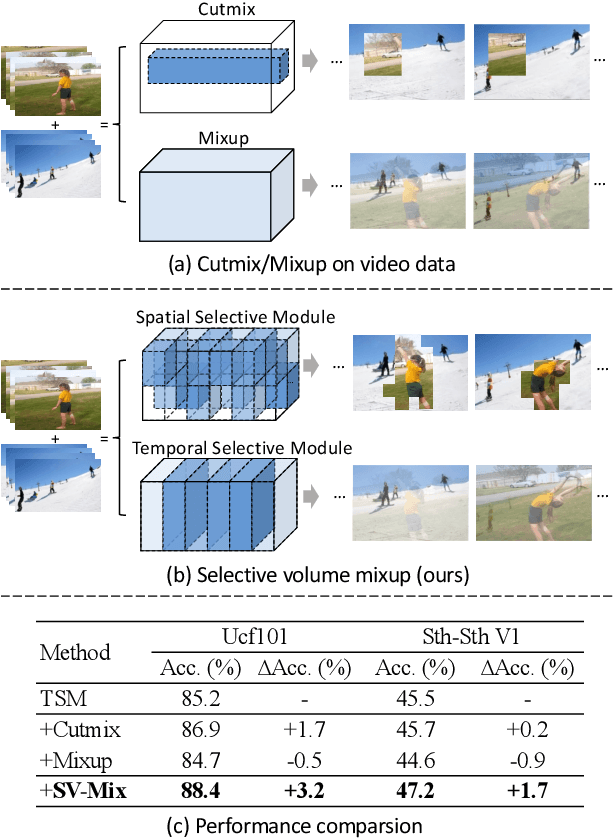

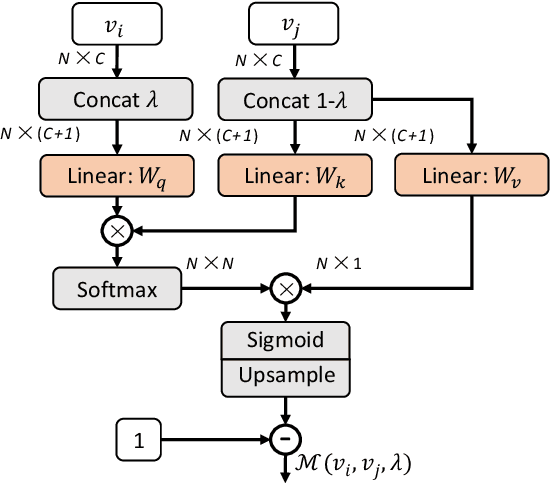
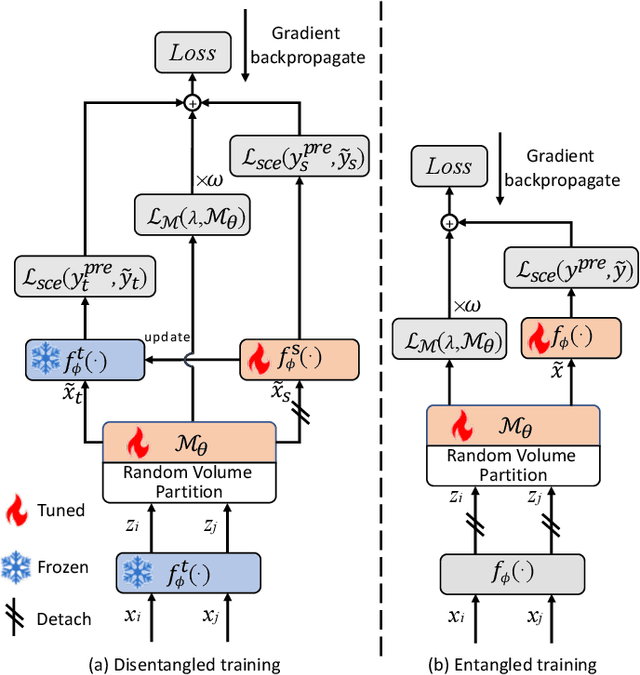
The recent advances in Convolutional Neural Networks (CNNs) and Vision Transformers have convincingly demonstrated high learning capability for video action recognition on large datasets. Nevertheless, deep models often suffer from the overfitting effect on small-scale datasets with a limited number of training videos. A common solution is to exploit the existing image augmentation strategies for each frame individually including Mixup, Cutmix, and RandAugment, which are not particularly optimized for video data. In this paper, we propose a novel video augmentation strategy named Selective Volume Mixup (SV-Mix) to improve the generalization ability of deep models with limited training videos. SV-Mix devises a learnable selective module to choose the most informative volumes from two videos and mixes the volumes up to achieve a new training video. Technically, we propose two new modules, i.e., a spatial selective module to select the local patches for each spatial position, and a temporal selective module to mix the entire frames for each timestamp and maintain the spatial pattern. At each time, we randomly choose one of the two modules to expand the diversity of training samples. The selective modules are jointly optimized with the video action recognition framework to find the optimal augmentation strategy. We empirically demonstrate the merits of the SV-Mix augmentation on a wide range of video action recognition benchmarks and consistently boot the performances of both CNN-based and transformer-based models.
AudRandAug: Random Image Augmentations for Audio Classification
Sep 09, 2023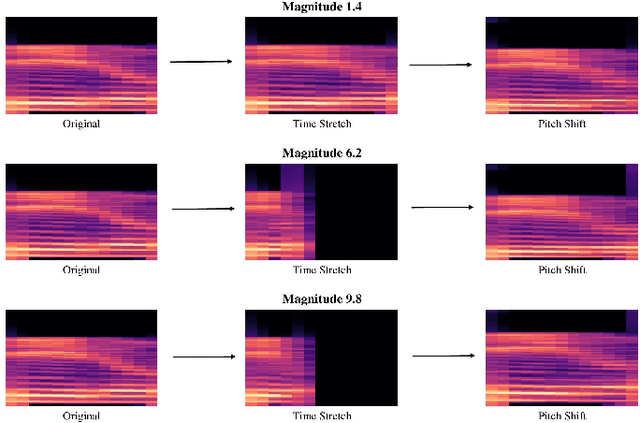
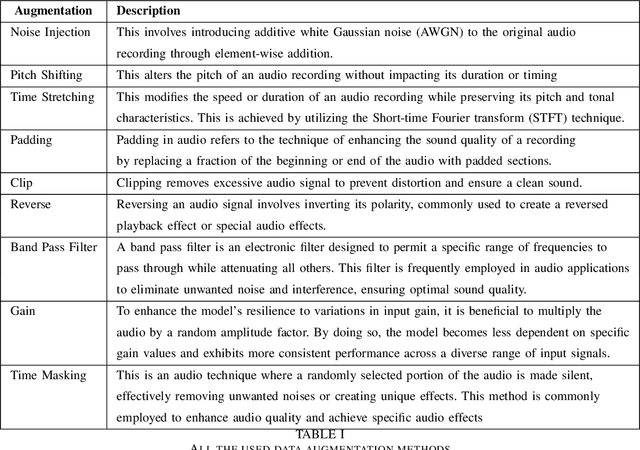
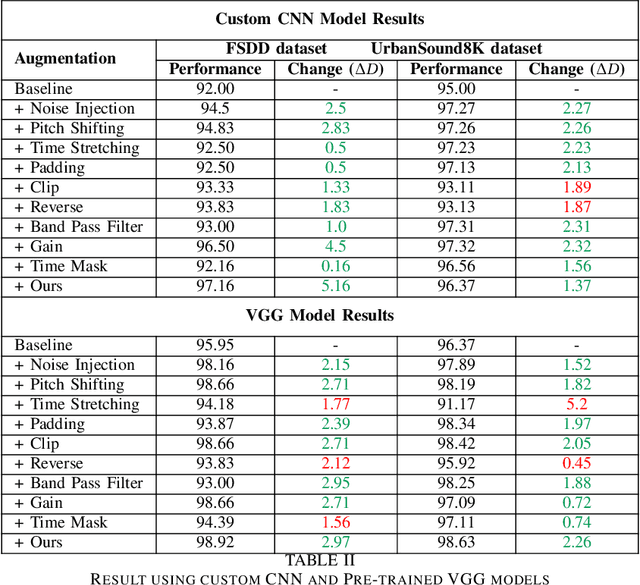
Data augmentation has proven to be effective in training neural networks. Recently, a method called RandAug was proposed, randomly selecting data augmentation techniques from a predefined search space. RandAug has demonstrated significant performance improvements for image-related tasks while imposing minimal computational overhead. However, no prior research has explored the application of RandAug specifically for audio data augmentation, which converts audio into an image-like pattern. To address this gap, we introduce AudRandAug, an adaptation of RandAug for audio data. AudRandAug selects data augmentation policies from a dedicated audio search space. To evaluate the effectiveness of AudRandAug, we conducted experiments using various models and datasets. Our findings indicate that AudRandAug outperforms other existing data augmentation methods regarding accuracy performance.
Automatic Data Augmentation Learning using Bilevel Optimization for Histopathological Images
Jul 21, 2023Training a deep learning model to classify histopathological images is challenging, because of the color and shape variability of the cells and tissues, and the reduced amount of available data, which does not allow proper learning of those variations. Variations can come from the image acquisition process, for example, due to different cell staining protocols or tissue deformation. To tackle this challenge, Data Augmentation (DA) can be used during training to generate additional samples by applying transformations to existing ones, to help the model become invariant to those color and shape transformations. The problem with DA is that it is not only dataset-specific but it also requires domain knowledge, which is not always available. Without this knowledge, selecting the right transformations can only be done using heuristics or through a computationally demanding search. To address this, we propose an automatic DA learning method. In this method, the DA parameters, i.e. the transformation parameters needed to improve the model training, are considered learnable and are learned automatically using a bilevel optimization approach in a quick and efficient way using truncated backpropagation. We validated the method on six different datasets. Experimental results show that our model can learn color and affine transformations that are more helpful to train an image classifier than predefined DA transformations, which are also more expensive as they need to be selected before the training by grid search on a validation set. We also show that similarly to a model trained with RandAugment, our model has also only a few method-specific hyperparameters to tune but is performing better. This makes our model a good solution for learning the best DA parameters, especially in the context of histopathological images, where defining potentially useful transformation heuristically is not trivial.
Tied-Augment: Controlling Representation Similarity Improves Data Augmentation
May 22, 2023Data augmentation methods have played an important role in the recent advance of deep learning models, and have become an indispensable component of state-of-the-art models in semi-supervised, self-supervised, and supervised training for vision. Despite incurring no additional latency at test time, data augmentation often requires more epochs of training to be effective. For example, even the simple flips-and-crops augmentation requires training for more than 5 epochs to improve performance, whereas RandAugment requires more than 90 epochs. We propose a general framework called Tied-Augment, which improves the efficacy of data augmentation in a wide range of applications by adding a simple term to the loss that can control the similarity of representations under distortions. Tied-Augment can improve state-of-the-art methods from data augmentation (e.g. RandAugment, mixup), optimization (e.g. SAM), and semi-supervised learning (e.g. FixMatch). For example, Tied-RandAugment can outperform RandAugment by 2.0% on ImageNet. Notably, using Tied-Augment, data augmentation can be made to improve generalization even when training for a few epochs and when fine-tuning. We open source our code at https://github.com/ekurtulus/tied-augment/tree/main.