 Add to Chrome
 Add to Firefox
 Add to Edge
Product Question Answering
Papers and Code
Is Micro Domain-Adaptive Pre-Training Effective for Real-World Operations? Multi-Step Evaluation Reveals Potential and Bottlenecks
Feb 04, 2026
When applying LLMs to real-world enterprise operations, LLMs need to handle proprietary knowledge in small domains of specific operations ($\textbf{micro domains}$). A previous study shows micro domain-adaptive pre-training ($\textbf{mDAPT}$) with fewer documents is effective, similarly to DAPT in larger domains. However, it evaluates mDAPT only on multiple-choice questions; thus, its effectiveness for generative tasks in real-world operations remains unknown. We aim to reveal the potential and bottlenecks of mDAPT for generative tasks. To this end, we disentangle the answering process into three subtasks and evaluate the performance of each subtask: (1) $\textbf{eliciting}$ facts relevant to questions from an LLM's own knowledge, (2) $\textbf{reasoning}$ over the facts to obtain conclusions, and (3) $\textbf{composing}$ long-form answers based on the conclusions. We verified mDAPT on proprietary IT product knowledge for real-world questions in IT technical support operations. As a result, mDAPT resolved the elicitation task that the base model struggled with but did not resolve other subtasks. This clarifies mDAPT's effectiveness in the knowledge aspect and its bottlenecks in other aspects. Further analysis empirically shows that resolving the elicitation and reasoning tasks ensures sufficient performance (over 90%), emphasizing the need to enhance reasoning capability.

Business Logic-Driven Text-to-SQL Data Synthesis for Business Intelligence
Jan 20, 2026Evaluating Text-to-SQL agents in private business intelligence (BI) settings is challenging due to the scarcity of realistic, domain-specific data. While synthetic evaluation data offers a scalable solution, existing generation methods fail to capture business realism--whether questions reflect realistic business logic and workflows. We propose a Business Logic-Driven Data Synthesis framework that generates data grounded in business personas, work scenarios, and workflows. In addition, we improve the data quality by imposing a business reasoning complexity control strategy that diversifies the analytical reasoning steps required to answer the questions. Experiments on a production-scale Salesforce database show that our synthesized data achieves high business realism (98.44%), substantially outperforming OmniSQL (+19.5%) and SQL-Factory (+54.7%), while maintaining strong question-SQL alignment (98.59%). Our synthetic data also reveals that state-of-the-art Text-to-SQL models still have significant performance gaps, achieving only 42.86% execution accuracy on the most complex business queries.
Sola-Visibility-ISPM: Benchmarking Agentic AI for Identity Security Posture Management Visibility
Jan 11, 2026Identity Security Posture Management (ISPM) is a core challenge for modern enterprises operating across cloud and SaaS environments. Answering basic ISPM visibility questions, such as understanding identity inventory and configuration hygiene, requires interpreting complex identity data, motivating growing interest in agentic AI systems. Despite this interest, there is currently no standardized way to evaluate how well such systems perform ISPM visibility tasks on real enterprise data. We introduce the Sola Visibility ISPM Benchmark, the first benchmark designed to evaluate agentic AI systems on foundational ISPM visibility tasks using a live, production-grade identity environment spanning AWS, Okta, and Google Workspace. The benchmark focuses on identity inventory and hygiene questions and is accompanied by the Sola AI Agent, a tool-using agent that translates natural-language queries into executable data exploration steps and produces verifiable, evidence-backed answers. Across 77 benchmark questions, the agent achieves strong overall performance, with an expert accuracy of 0.84 and a strict success rate of 0.77. Performance is highest on AWS hygiene tasks, where expert accuracy reaches 0.94, while results on Google Workspace and Okta hygiene tasks are more moderate, yet competitive. Overall, this work provides a practical and reproducible benchmark for evaluating agentic AI systems in identity security and establishes a foundation for future ISPM benchmarks covering more advanced identity analysis and governance tasks.
The Discovery Gap: How Product Hunt Startups Vanish in LLM Organic Discovery Queries
Jan 01, 2026When someone asks ChatGPT to recommend a project management tool, which products show up in the response? And more importantly for startup founders: will their newly launched product ever appear? This research set out to answer these questions. I randomly selected 112 startups from the top 500 products featured on the 2025 Product Hunt leaderboard and tested each one across 2,240 queries to two different large language models: ChatGPT (gpt-4o-mini) and Perplexity (sonar with web search). The results were striking. When users asked about products by name, both LLMs recognized them almost perfectly: 99.4% for ChatGPT and 94.3% for Perplexity. But when users asked discovery-style questions like "What are the best AI tools launched this year?" the success rates collapsed to 3.32% and 8.29% respectively. That's a gap of 30-to-1 for ChatGPT. Perhaps the most surprising finding was that Generative Engine Optimization (GEO), the practice of optimizing website content for AI visibility, showed no correlation with actual discovery rates. Products with high GEO scores were no more likely to appear in organic queries than products with low scores. What did matter? For Perplexity, traditional SEO signals like referring domains (r = +0.319, p < 0.001) and Product Hunt ranking (r = -0.286, p = 0.002) predicted visibility. After cleaning the Reddit data for false positives, community presence also emerged as significant (r = +0.395, p = 0.002). The practical takeaway is counterintuitive: don't optimize for AI discovery directly. Instead, build the SEO foundation first and LLM visibility will follow.
Don't Break the Cache: An Evaluation of Prompt Caching for Long-Horizon Agentic Tasks
Jan 09, 2026Recent advancements in Large Language Model (LLM) agents have enabled complex multi-turn agentic tasks requiring extensive tool calling, where conversations can span dozens of API calls with increasingly large context windows. However, although major LLM providers offer prompt caching to reduce cost and latency, its benefits for agentic workloads remain underexplored in the research literature. To our knowledge, no prior work quantifies these cost savings or compares caching strategies for multi-turn agentic tasks. We present a comprehensive evaluation of prompt caching across three major LLM providers (OpenAI, Anthropic, and Google) and compare three caching strategies, including full context caching, system prompt only caching, and caching that excludes dynamic tool results. We evaluate on DeepResearchBench, a multi-turn agentic benchmark where agents autonomously execute real-world web search tool calls to answer complex research questions, measuring both API cost and time to first token (TTFT) across over 500 agent sessions with 10,000-token system prompts. Our results demonstrate that prompt caching reduces API costs by 45-80% and improves time to first token by 13-31% across providers. We find that strategic prompt cache block control, such as placing dynamic content at the end of the system prompt, avoiding dynamic traditional function calling, and excluding dynamic tool results, provides more consistent benefits than naive full-context caching, which can paradoxically increase latency. Our analysis reveals nuanced variations in caching behavior across providers, and we provide practical guidance for implementing prompt caching in production agentic systems.
Authors Should Label Their Own Documents
Dec 27, 2025Third-party annotation is the status quo for labeling text, but egocentric information such as sentiment and belief can at best only be approximated by a third-person proxy. We introduce author labeling, an annotation technique where the writer of the document itself annotates the data at the moment of creation. We collaborate with a commercial chatbot with over 20,000 users to deploy an author labeling annotation system. This system identifies task-relevant queries, generates on-the-fly labeling questions, and records authors' answers in real time. We train and deploy an online-learning model architecture for product recommendation with author-labeled data to improve performance. We train our model to minimize the prediction error on questions generated for a set of predetermined subjective beliefs using author-labeled responses. Our model achieves a 537% improvement in click-through rate compared to an industry advertising baseline running concurrently. We then compare the quality and practicality of author labeling to three traditional annotation approaches for sentiment analysis and find author labeling to be higher quality, faster to acquire, and cheaper. These findings reinforce existing literature that annotations, especially for egocentric and subjective beliefs, are significantly higher quality when labeled by the author rather than a third party. To facilitate broader scientific adoption, we release an author labeling service for the research community at https://academic.echollm.io.
Authors Should Annotate
Dec 15, 2025The status quo for labeling text is third-party annotation, but there are many cases where information directly from the document's source would be preferable over a third-person proxy, especially for egocentric features like sentiment and belief. We introduce author labeling, an annotation technique where the writer of the document itself annotates the data at the moment of creation. We collaborate with a commercial chatbot with over 10,000 users to deploy an author labeling annotation system for subjective features related to product recommendation. This system identifies task-relevant queries, generates on-the-fly labeling questions, and records authors' answers in real time. We train and deploy an online-learning model architecture for product recommendation that continuously improves from author labeling and find it achieved a 534% increase in click-through rate compared to an industry advertising baseline running concurrently. We then compare the quality and practicality of author labeling to three traditional annotation approaches for sentiment analysis and find author labeling to be higher quality, faster to acquire, and cheaper. These findings reinforce existing literature that annotations, especially for egocentric and subjective beliefs, are significantly higher quality when labeled by the author rather than a third party. To facilitate broader scientific adoption, we release an author labeling service for the research community at academic.echollm.io.
Yantra AI -- An intelligence platform which interacts with manufacturing operations
Dec 12, 2025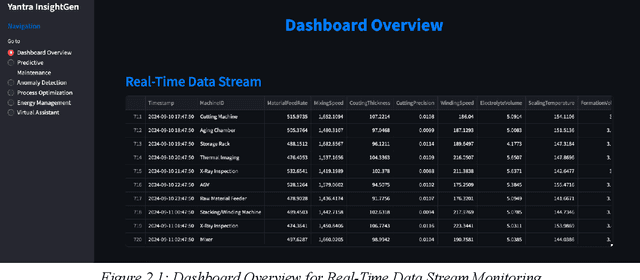
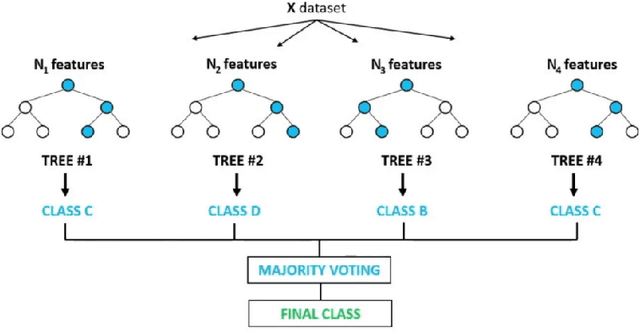
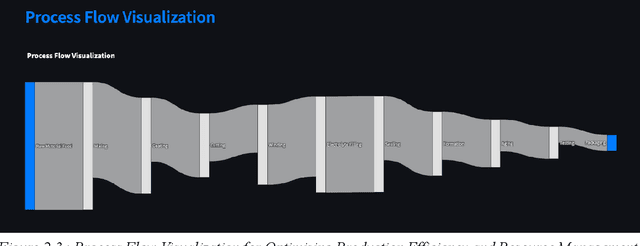
Industry 4.0 is growing quickly, which has changed smart production by encouraging the use of real-time tracking, machine learning, and AI-driven systems to make operations run more smoothly. The main focus of this dissertation is on creating and testing an intelligent production system for XRIT that solves important problems like energy management, predictive maintenance, and AI-powered decision support. Machine learning models are built into the system, such as the Random Forest Classifier for proactive maintenance and the Isolation Forest for finding outliers. These models help with decision-making and reducing downtime. Streamlit makes real-time data visualisation possible, giving workers access to dashboards that they can interact with and see real-time observations.The system was tested with fake data and is made to be scalable, so it can be used in real time in XRIT's production setting. Adding an AI-powered virtual assistant made with GPT-4 lets workers get real-time, useful information that makes complicated questions easier to answer and improves operational decisions. The testing shows that the system makes working efficiency, energy management, and the ability to plan repairs much better. Moving the system to real-time data merging and looking for other ways to make it better will be the main focus of future work.
Is GPT-OSS All You Need? Benchmarking Large Language Models for Financial Intelligence and the Surprising Efficiency Paradox
Dec 09, 2025The rapid adoption of large language models in financial services necessitates rigorous evaluation frameworks to assess their performance, efficiency, and practical applicability. This paper conducts a comprehensive evaluation of the GPT-OSS model family alongside contemporary LLMs across ten diverse financial NLP tasks. Through extensive experimentation on 120B and 20B parameter variants of GPT-OSS, we reveal a counterintuitive finding: the smaller GPT-OSS-20B model achieves comparable accuracy (65.1% vs 66.5%) while demonstrating superior computational efficiency with 198.4 Token Efficiency Score and 159.80 tokens per second processing speed [1]. Our evaluation encompasses sentiment analysis, question answering, and entity recognition tasks using real-world financial datasets including Financial PhraseBank, FiQA-SA, and FLARE FINERORD. We introduce novel efficiency metrics that capture the trade-off between model performance and resource utilization, providing critical insights for deployment decisions in production environments. The benchmark reveals that GPT-OSS models consistently outperform larger competitors including Qwen3-235B, challenging the prevailing assumption that model scale directly correlates with task performance [2]. Our findings demonstrate that architectural innovations and training strategies in GPT-OSS enable smaller models to achieve competitive performance with significantly reduced computational overhead, offering a pathway toward sustainable and cost-effective deployment of LLMs in financial applications.
Llama-based source code vulnerability detection: Prompt engineering vs Fine tuning
Dec 09, 2025The significant increase in software production, driven by the acceleration of development cycles over the past two decades, has led to a steady rise in software vulnerabilities, as shown by statistics published yearly by the CVE program. The automation of the source code vulnerability detection (CVD) process has thus become essential, and several methods have been proposed ranging from the well established program analysis techniques to the more recent AI-based methods. Our research investigates Large Language Models (LLMs), which are considered among the most performant AI models to date, for the CVD task. The objective is to study their performance and apply different state-of-the-art techniques to enhance their effectiveness for this task. We explore various fine-tuning and prompt engineering settings. We particularly suggest one novel approach for fine-tuning LLMs which we call Double Fine-tuning, and also test the understudied Test-Time fine-tuning approach. We leverage the recent open-source Llama-3.1 8B, with source code samples extracted from BigVul and PrimeVul datasets. Our conclusions highlight the importance of fine-tuning to resolve the task, the performance of Double tuning, as well as the potential of Llama models for CVD. Though prompting proved ineffective, Retrieval augmented generation (RAG) performed relatively well as an example selection technique. Overall, some of our research questions have been answered, and many are still on hold, which leaves us many future work perspectives. Code repository is available here: https://github.com/DynaSoumhaneOuchebara/Llama-based-vulnerability-detection.