 Add to Chrome
 Add to Firefox
 Add to Edge
Sola-Visibility-ISPM: Benchmarking Agentic AI for Identity Security Posture Management Visibility
Jan 11, 2026
Identity Security Posture Management (ISPM) is a core challenge for modern enterprises operating across cloud and SaaS environments. Answering basic ISPM visibility questions, such as understanding identity inventory and configuration hygiene, requires interpreting complex identity data, motivating growing interest in agentic AI systems. Despite this interest, there is currently no standardized way to evaluate how well such systems perform ISPM visibility tasks on real enterprise data. We introduce the Sola Visibility ISPM Benchmark, the first benchmark designed to evaluate agentic AI systems on foundational ISPM visibility tasks using a live, production-grade identity environment spanning AWS, Okta, and Google Workspace. The benchmark focuses on identity inventory and hygiene questions and is accompanied by the Sola AI Agent, a tool-using agent that translates natural-language queries into executable data exploration steps and produces verifiable, evidence-backed answers. Across 77 benchmark questions, the agent achieves strong overall performance, with an expert accuracy of 0.84 and a strict success rate of 0.77. Performance is highest on AWS hygiene tasks, where expert accuracy reaches 0.94, while results on Google Workspace and Okta hygiene tasks are more moderate, yet competitive. Overall, this work provides a practical and reproducible benchmark for evaluating agentic AI systems in identity security and establishes a foundation for future ISPM benchmarks covering more advanced identity analysis and governance tasks.

MenakBERT -- Hebrew Diacriticizer
Oct 03, 2024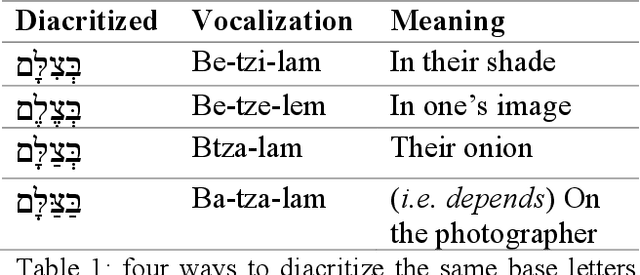
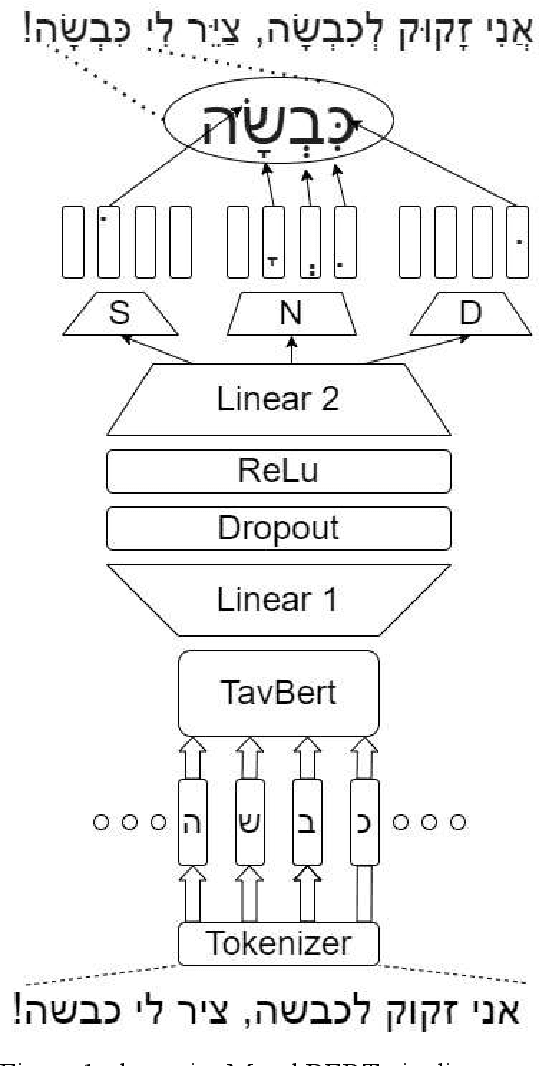
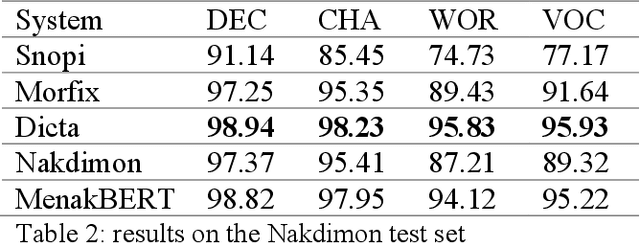
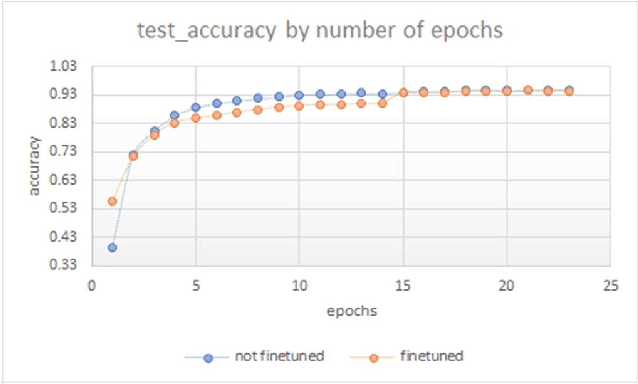
Diacritical marks in the Hebrew language give words their vocalized form. The task of adding diacritical marks to plain Hebrew text is still dominated by a system that relies heavily on human-curated resources. Recent models trained on diacritized Hebrew texts still present a gap in performance. We use a recently developed char-based PLM to narrowly bridge this gap. Presenting MenakBERT, a character level transformer pretrained on Hebrew text and fine-tuned to produce diacritical marks for Hebrew sentences. We continue to show how finetuning a model for diacritizing transfers to a task such as part of speech tagging.