 Add to Chrome
 Add to Firefox
 Add to Edge
Photometric Redshift Estimation
Papers and Code
Benchmarking Tabular Foundation Models for Conditional Density Estimation in Regression
Mar 27, 2026
Conditional density estimation (CDE) - recovering the full conditional distribution of a response given tabular covariates - is essential in settings with heteroscedasticity, multimodality, or asymmetric uncertainty. Recent tabular foundation models, such as TabPFN and TabICL, naturally produce predictive distributions, but their effectiveness as general-purpose CDE methods has not been systematically evaluated, unlike their performance for point prediction, which is well studied. We benchmark three tabular foundation model variants against a diverse set of parametric, tree-based, and neural CDE baselines on 39 real-world datasets, across training sizes from 50 to 20,000, using six metrics covering density accuracy, calibration, and computation time. Across all sample sizes, foundation models achieve the best CDE loss, log-likelihood, and CRPS on the large majority of datasets tested. Calibration is competitive at small sample sizes but, for some metrics and datasets, lags behind task-specific neural baselines at larger sample sizes, suggesting that post-hoc recalibration may be a valuable complement. In a photometric redshift case study using SDSS DR18, TabPFN exposed to 50,000 training galaxies outperforms all baselines trained on the full 500,000-galaxy dataset. Taken together, these results establish tabular foundation models as strong off-the-shelf conditional density estimators.

Improving Generalization and Uncertainty Quantification of Photometric Redshift Models
Jan 23, 2026Accurate redshift estimates are a vital component in understanding galaxy evolution and precision cosmology. In this paper, we explore approaches to increase the applicability of machine learning models for photometric redshift estimation on a broader range of galaxy types. Typical models are trained with ground-truth redshifts from spectroscopy. We test the utility and effectiveness of two approaches for combining spectroscopic redshifts and redshifts derived from multiband ($\sim$35 filters) photometry, which sample different types of galaxies compared to spectroscopic surveys. The two approaches are (1) training on a composite dataset and (2) transfer learning from one dataset to another. We compile photometric redshifts from the COSMOS2020 catalog (TransferZ) to complement an established spectroscopic redshift dataset (GalaxiesML). We used two architectures, deterministic neural networks (NN) and Bayesian neural networks (BNN), to examine and evaluate their performance with respect to the Legacy Survey of Space and Time (LSST) photo-$z$ science requirements. We also use split conformal prediction for calibrating uncertainty estimates and producing prediction intervals for the BNN and NN, respectively. We find that a NN trained on a composite dataset predicts photo-$z$'s that are 4.5 times less biased within the redshift range $0.3<z<1.5$, 1.1 times less scattered, and has a 1.4 times lower outlier rate than a model trained on only spectroscopic ground truths. We also find that BNNs produce reliable uncertainty estimates, but are sensitive to the different ground truths. This investigation leverages different sources of ground truths to develop models that can accurately predict photo-$z$'s for a broader population of galaxies crucial for surveys such as Euclid and LSST.
Photometric Redshift Estimation Using Scaled Ensemble Learning
Jan 12, 2026The development of the state-of-the-art telescopic systems capable of performing expansive sky surveys such as the Sloan Digital Sky Survey, Euclid, and the Rubin Observatory's Legacy Survey of Space and Time (LSST) has significantly advanced efforts to refine cosmological models. These advances offer deeper insight into persistent challenges in astrophysics and our understanding of the Universe's evolution. A critical component of this progress is the reliable estimation of photometric redshifts (Pz). To improve the precision and efficiency of such estimations, the application of machine learning (ML) techniques to large-scale astronomical datasets has become essential. This study presents a new ensemble-based ML framework aimed at predicting Pz for faint galaxies and higher redshift ranges, relying solely on optical (grizy) photometric data. The proposed architecture integrates several learning algorithms, including gradient boosting machine, extreme gradient boosting, k-nearest neighbors, and artificial neural networks, within a scaled ensemble structure. By using bagged input data, the ensemble approach delivers improved predictive performance compared to stand-alone models. The framework demonstrates consistent accuracy in estimating redshifts, maintaining strong performance up to z ~ 4. The model is validated using publicly available data from the Hyper Suprime-Cam Strategic Survey Program by the Subaru Telescope. Our results show marked improvements in the precision and reliability of Pz estimation. Furthermore, this approach closely adheres to-and in certain instances exceeds-the benchmarks specified in the LSST Science Requirements Document. Evaluation metrics include catastrophic outlier, bias, and rms.
* 10 pages, 2 figures, 3 tables
Combining datasets with different ground truths using Low-Rank Adaptation to generalize image-based CNN models for photometric redshift prediction
Jan 01, 2026In this work, we demonstrate how Low-Rank Adaptation (LoRA) can be used to combine different galaxy imaging datasets to improve redshift estimation with CNN models for cosmology. LoRA is an established technique for large language models that adds adapter networks to adjust model weights and biases to efficiently fine-tune large base models without retraining. We train a base model using a photometric redshift ground truth dataset, which contains broad galaxy types but is less accurate. We then fine-tune using LoRA on a spectroscopic redshift ground truth dataset. These redshifts are more accurate but limited to bright galaxies and take orders of magnitude more time to obtain, so are less available for large surveys. Ideally, the combination of the two datasets would yield more accurate models that generalize well. The LoRA model performs better than a traditional transfer learning method, with $\sim2.5\times$ less bias and $\sim$2.2$\times$ less scatter. Retraining the model on a combined dataset yields a model that generalizes better than LoRA but at a cost of greater computation time. Our work shows that LoRA is useful for fine-tuning regression models in astrophysics by providing a middle ground between full retraining and no retraining. LoRA shows potential in allowing us to leverage existing pretrained astrophysical models, especially for data sparse tasks.
Dark Energy Survey Year 3 results: Simulation-based $w$CDM inference from weak lensing and galaxy clustering maps with deep learning. I. Analysis design
Nov 06, 2025Data-driven approaches using deep learning are emerging as powerful techniques to extract non-Gaussian information from cosmological large-scale structure. This work presents the first simulation-based inference (SBI) pipeline that combines weak lensing and galaxy clustering maps in a realistic Dark Energy Survey Year 3 (DES Y3) configuration and serves as preparation for a forthcoming analysis of the survey data. We develop a scalable forward model based on the CosmoGridV1 suite of N-body simulations to generate over one million self-consistent mock realizations of DES Y3 at the map level. Leveraging this large dataset, we train deep graph convolutional neural networks on the full survey footprint in spherical geometry to learn low-dimensional features that approximately maximize mutual information with target parameters. These learned compressions enable neural density estimation of the implicit likelihood via normalizing flows in a ten-dimensional parameter space spanning cosmological $w$CDM, intrinsic alignment, and linear galaxy bias parameters, while marginalizing over baryonic, photometric redshift, and shear bias nuisances. To ensure robustness, we extensively validate our inference pipeline using synthetic observations derived from both systematic contaminations in our forward model and independent Buzzard galaxy catalogs. Our forecasts yield significant improvements in cosmological parameter constraints, achieving $2-3\times$ higher figures of merit in the $\Omega_m - S_8$ plane relative to our implementation of baseline two-point statistics and effectively breaking parameter degeneracies through probe combination. These results demonstrate the potential of SBI analyses powered by deep learning for upcoming Stage-IV wide-field imaging surveys.
Template-Fitting Meets Deep Learning: Redshift Estimation Using Physics-Guided Neural Networks
Jul 01, 2025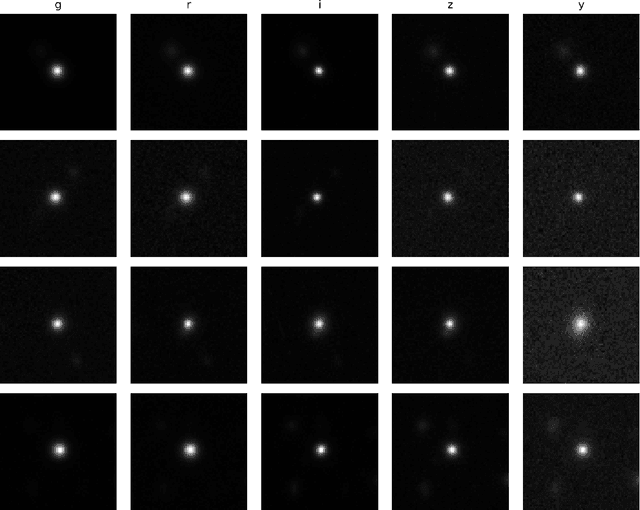
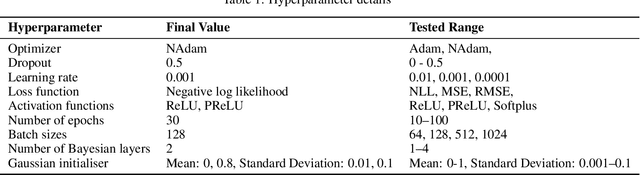
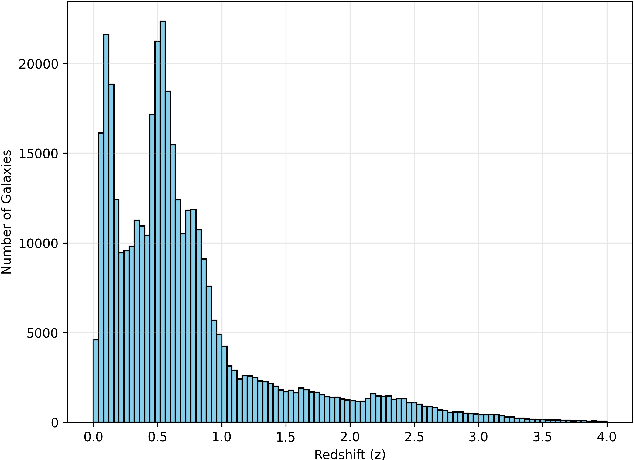
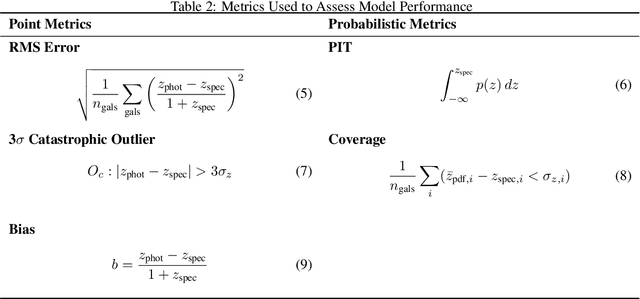
Accurate photometric redshift estimation is critical for observational cosmology, especially in large-scale surveys where spectroscopic measurements are impractical. Traditional approaches include template fitting and machine learning, each with distinct strengths and limitations. We present a hybrid method that integrates template fitting with deep learning using physics-guided neural networks. By embedding spectral energy distribution templates into the network architecture, our model encodes physical priors into the training process. The system employs a multimodal design, incorporating cross-attention mechanisms to fuse photometric and image data, along with Bayesian layers for uncertainty estimation. We evaluate our model on the publicly available PREML dataset, which includes approximately 400,000 galaxies from the Hyper Suprime-Cam PDR3 release, with 5-band photometry, multi-band imaging, and spectroscopic redshifts. Our approach achieves an RMS error of 0.0507, a 3-sigma catastrophic outlier rate of 0.13%, and a bias of 0.0028. The model satisfies two of the three LSST photometric redshift requirements for redshifts below 3. These results highlight the potential of combining physically motivated templates with data-driven models for robust redshift estimation in upcoming cosmological surveys.
Mantis Shrimp: Exploring Photometric Band Utilization in Computer Vision Networks for Photometric Redshift Estimation
Jan 15, 2025We present Mantis Shrimp, a multi-survey deep learning model for photometric redshift estimation that fuses ultra-violet (GALEX), optical (PanSTARRS), and infrared (UnWISE) imagery. Machine learning is now an established approach for photometric redshift estimation, with generally acknowledged higher performance in areas with a high density of spectroscopically identified galaxies over template-based methods. Multiple works have shown that image-based convolutional neural networks can outperform tabular-based color/magnitude models. In comparison to tabular models, image models have additional design complexities: it is largely unknown how to fuse inputs from different instruments which have different resolutions or noise properties. The Mantis Shrimp model estimates the conditional density estimate of redshift using cutout images. The density estimates are well calibrated and the point estimates perform well in the distribution of available spectroscopically confirmed galaxies with (bias = 1e-2), scatter (NMAD = 2.44e-2) and catastrophic outlier rate ($\eta$=17.53$\%$). We find that early fusion approaches (e.g., resampling and stacking images from different instruments) match the performance of late fusion approaches (e.g., concatenating latent space representations), so that the design choice ultimately is left to the user. Finally, we study how the models learn to use information across bands, finding evidence that our models successfully incorporates information from all surveys. The applicability of our model to the analysis of large populations of galaxies is limited by the speed of downloading cutouts from external servers; however, our model could be useful in smaller studies such as generating priors over redshift for stellar population synthesis.
Using different sources of ground truths and transfer learning to improve the generalization of photometric redshift estimation
Nov 27, 2024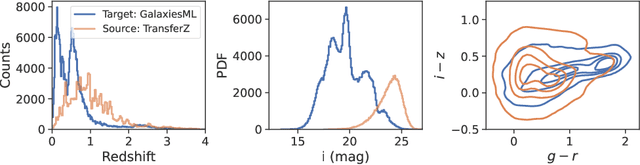
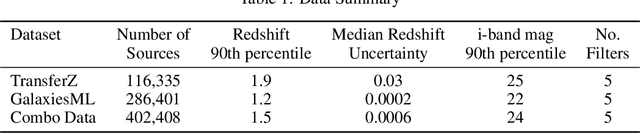
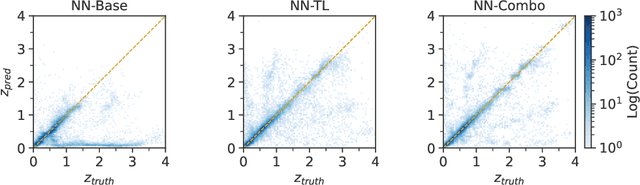
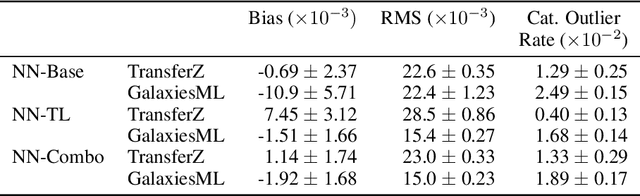
In this work, we explore methods to improve galaxy redshift predictions by combining different ground truths. Traditional machine learning models rely on training sets with known spectroscopic redshifts, which are precise but only represent a limited sample of galaxies. To make redshift models more generalizable to the broader galaxy population, we investigate transfer learning and directly combining ground truth redshifts derived from photometry and spectroscopy. We use the COSMOS2020 survey to create a dataset, TransferZ, which includes photometric redshift estimates derived from up to 35 imaging filters using template fitting. This dataset spans a wider range of galaxy types and colors compared to spectroscopic samples, though its redshift estimates are less accurate. We first train a base neural network on TransferZ and then refine it using transfer learning on a dataset of galaxies with more precise spectroscopic redshifts (GalaxiesML). In addition, we train a neural network on a combined dataset of TransferZ and GalaxiesML. Both methods reduce bias by $\sim$ 5x, RMS error by $\sim$ 1.5x, and catastrophic outlier rates by 1.3x on GalaxiesML, compared to a baseline trained only on TransferZ. However, we also find a reduction in performance for RMS and bias when evaluated on TransferZ data. Overall, our results demonstrate these approaches can meet cosmological requirements.
CLAP. I. Resolving miscalibration for deep learning-based galaxy photometric redshift estimation
Oct 25, 2024


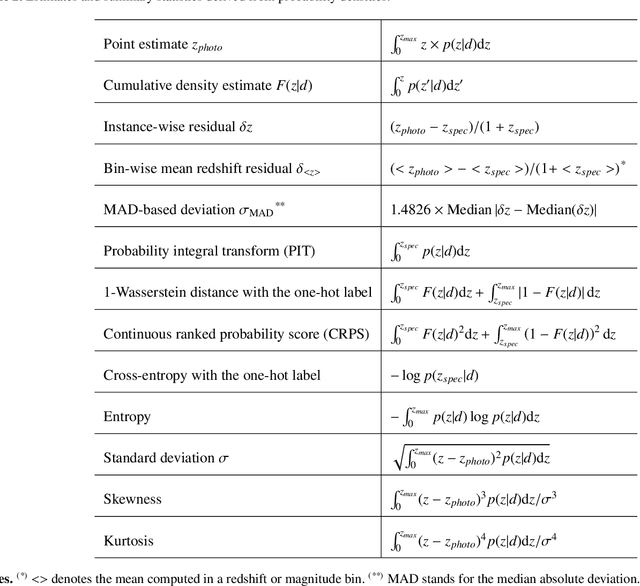
Obtaining well-calibrated photometric redshift probability densities for galaxies without a spectroscopic measurement remains a challenge. Deep learning discriminative models, typically fed with multi-band galaxy images, can produce outputs that mimic probability densities and achieve state-of-the-art accuracy. However, such models may be affected by miscalibration that would result in discrepancies between the model outputs and the actual distributions of true redshifts. Our work develops a novel method called the Contrastive Learning and Adaptive KNN for Photometric Redshift (CLAP) that resolves this issue. It leverages supervised contrastive learning (SCL) and k-nearest neighbours (KNN) to construct and calibrate raw probability density estimates, and implements a refitting procedure to resume end-to-end discriminative models ready to produce final estimates for large-scale imaging data. The harmonic mean is adopted to combine an ensemble of estimates from multiple realisations for improving accuracy. Our experiments demonstrate that CLAP takes advantage of both deep learning and KNN, outperforming benchmark methods on the calibration of probability density estimates and retaining high accuracy and computational efficiency. With reference to CLAP, we point out that miscalibration is particularly sensitive to the method-induced excessive correlations among data instances in addition to the unaccounted-for epistemic uncertainties. Reducing the uncertainties may not guarantee the removal of miscalibration due to the presence of such excessive correlations, yet this is a problem for conventional deep learning methods rather than CLAP. These discussions underscore the robustness of CLAP for obtaining photometric redshift probability densities required by astrophysical and cosmological applications. This is the first paper in our series on CLAP.
Determination of galaxy photometric redshifts using Conditional Generative Adversarial Networks (CGANs)
Jan 11, 2025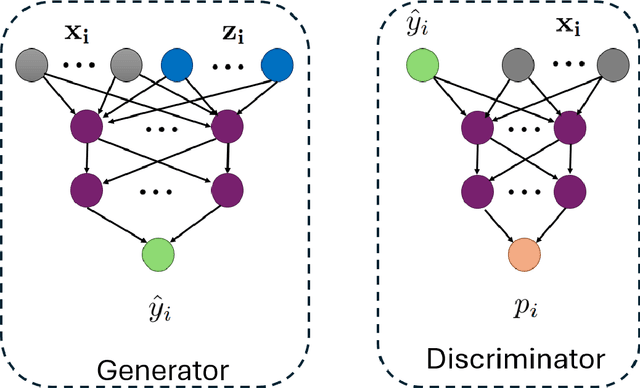
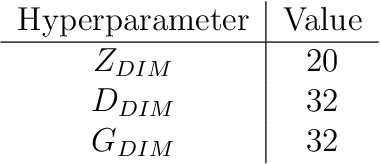
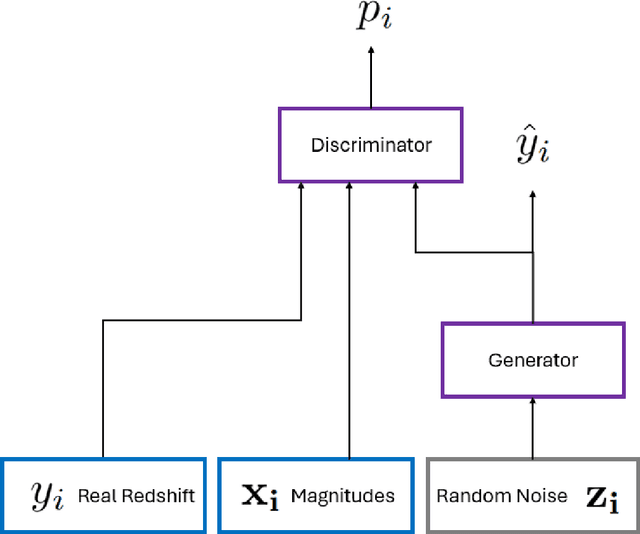
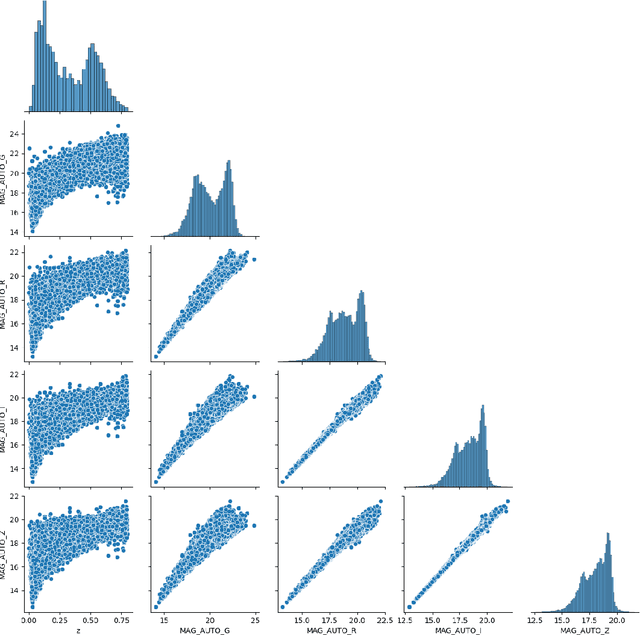
Accurate and reliable photometric redshifts determination is one of the key aspects for wide-field photometric surveys. Determination of photometric redshift for galaxies, has been traditionally solved by use of machine-learning and artificial intelligence techniques trained on a calibration sample of galaxies, where both photometry and spectrometry are determined. On this paper, we present a new algorithmic approach for determining photometric redshifts of galaxies using Conditional Generative Adversarial Networks (CGANs). Proposed CGAN implementation, approaches photometric redshift determination as a probabilistic regression, where instead of determining a single value for the estimated redshift of the galaxy, a full probability density is computed. The methodology proposed, is tested with data from Dark Energy Survey (DES) Y1 data and compared with other existing algorithm such as a Random Forest regressor.