 Add to Chrome
 Add to Firefox
 Add to Edge
Extreme Summarization
Papers and Code
Uncertainty-Guided Label Rebalancing for CPS Safety Monitoring
Mar 27, 2026
Safety monitoring is essential for Cyber-Physical Systems (CPSs). However, unsafe events are rare in real-world CPS operations, creating an extreme class imbalance that degrades safety predictors. Standard rebalancing techniques perform poorly on time-series CPS telemetry, either generating unrealistic synthetic samples or overfitting on the minority class. Meanwhile, behavioral uncertainty in CPS operations, defined as the degree of doubt or uncertainty in CPS decisions , is often correlated with safety outcomes but unexplored in safety monitoring. To that end, we propose U-Balance, a supervised approach that leverages behavioral uncertainty to rebalance imbalanced datasets prior to training a safety predictor. U-Balance first trains a GatedMLP-based uncertainty predictor that summarizes each telemetry window into distributional kinematic features and outputs an uncertainty score. It then applies an uncertainty-guided label rebalancing (uLNR) mechanism that probabilistically relabels $\textit{safe}$-labeled windows with unusually high uncertainty as $\textit{unsafe}$, thereby enriching the minority class with informative boundary samples without synthesizing new data. Finally, a safety predictor is trained on the rebalanced dataset for safety monitoring. We evaluate U-Balance on a large-scale UAV benchmark with a 46:1 safe-to-unsafe ratio. Results confirm a moderate but significant correlation between behavioral uncertainty and safety. We then identify uLNR as the most effective strategy to exploit uncertainty information, compared to direct early and late fusion. U-Balance achieves a 0.806 F1 score, outperforming the strongest baseline by 14.3 percentage points, while maintaining competitive inference efficiency. Ablation studies confirm that both the GatedMLP-based uncertainty predictor and the uLNR mechanism contribute significantly to U-Balance's effectiveness.

Supporting Humans in Evaluating AI Summaries of Legal Depositions
Jan 21, 2026While large language models (LLMs) are increasingly used to summarize long documents, this trend poses significant challenges in the legal domain, where the factual accuracy of deposition summaries is crucial. Nugget-based methods have been shown to be extremely helpful for the automated evaluation of summarization approaches. In this work, we translate these methods to the user side and explore how nuggets could directly assist end users. Although prior systems have demonstrated the promise of nugget-based evaluation, its potential to support end users remains underexplored. Focusing on the legal domain, we present a prototype that leverages a factual nugget-based approach to support legal professionals in two concrete scenarios: (1) determining which of two summaries is better, and (2) manually improving an automatically generated summary.
CoMeT: Collaborative Memory Transformer for Efficient Long Context Modeling
Feb 02, 2026The quadratic complexity and indefinitely growing key-value (KV) cache of standard Transformers pose a major barrier to long-context processing. To overcome this, we introduce the Collaborative Memory Transformer (CoMeT), a novel architecture that enables LLMs to handle arbitrarily long sequences with constant memory usage and linear time complexity. Designed as an efficient, plug-in module, CoMeT can be integrated into pre-trained models with only minimal fine-tuning. It operates on sequential data chunks, using a dual-memory system to manage context: a temporary memory on a FIFO queue for recent events, and a global memory with a gated update rule for long-range dependencies. These memories then act as a dynamic soft prompt for the next chunk. To enable efficient fine-tuning on extremely long contexts, we introduce a novel layer-level pipeline parallelism strategy. The effectiveness of our approach is remarkable: a model equipped with CoMeT and fine-tuned on 32k contexts can accurately retrieve a passkey from any position within a 1M token sequence. On the SCROLLS benchmark, CoMeT surpasses other efficient methods and achieves performance comparable to a full-attention baseline on summarization tasks. Its practical effectiveness is further validated on real-world agent and user behavior QA tasks. The code is available at: https://anonymous.4open.science/r/comet-B00B/
HALT: Hallucination Assessment via Log-probs as Time series
Feb 02, 2026Hallucinations remain a major obstacle for large language models (LLMs), especially in safety-critical domains. We present HALT (Hallucination Assessment via Log-probs as Time series), a lightweight hallucination detector that leverages only the top-20 token log-probabilities from LLM generations as a time series. HALT uses a gated recurrent unit model combined with entropy-based features to learn model calibration bias, providing an extremely efficient alternative to large encoders. Unlike white-box approaches, HALT does not require access to hidden states or attention maps, relying only on output log-probabilities. Unlike black-box approaches, it operates on log-probs rather than surface-form text, which enables stronger domain generalization and compatibility with proprietary LLMs without requiring access to internal weights. To benchmark performance, we introduce HUB (Hallucination detection Unified Benchmark), which consolidates prior datasets into ten capabilities covering both reasoning tasks (Algorithmic, Commonsense, Mathematical, Symbolic, Code Generation) and general purpose skills (Chat, Data-to-Text, Question Answering, Summarization, World Knowledge). While being 30x smaller, HALT outperforms Lettuce, a fine-tuned modernBERT-base encoder, achieving a 60x speedup gain on HUB. HALT and HUB together establish an effective framework for hallucination detection across diverse LLM capabilities.
Bridging the Data Gap: Creating a Hindi Text Summarization Dataset from the English XSUM
Jan 04, 2026Current advancements in Natural Language Processing (NLP) have largely favored resource-rich languages, leaving a significant gap in high-quality datasets for low-resource languages like Hindi. This scarcity is particularly evident in text summarization, where the development of robust models is hindered by a lack of diverse, specialized corpora. To address this disparity, this study introduces a cost-effective, automated framework for creating a comprehensive Hindi text summarization dataset. By leveraging the English Extreme Summarization (XSUM) dataset as a source, we employ advanced translation and linguistic adaptation techniques. To ensure high fidelity and contextual relevance, we utilize the Crosslingual Optimized Metric for Evaluation of Translation (COMET) for validation, supplemented by the selective use of Large Language Models (LLMs) for curation. The resulting dataset provides a diverse, multi-thematic resource that mirrors the complexity of the original XSUM corpus. This initiative not only provides a direct tool for Hindi NLP research but also offers a scalable methodology for democratizing NLP in other underserved languages. By reducing the costs associated with dataset creation, this work fosters the development of more nuanced, culturally relevant models in computational linguistics.
EEG-Titans: Long-Horizon Seizure Forecasting via Dual-Branch Attention and Neural Memory
Jan 20, 2026Accurate epileptic seizure prediction from electroencephalography (EEG) remains challenging because pre-ictal dynamics may span long time horizons while clinically relevant signatures can be subtle and transient. Many deep learning models face a persistent trade-off between capturing local spatiotemporal patterns and maintaining informative long-range context when operating on ultralong sequences. We propose EEG-Titans, a dualbranch architecture that incorporates a modern neural memory mechanism for long-context modeling. The model combines sliding-window attention to capture short-term anomalies with a recurrent memory pathway that summarizes slower, progressive trends over time. On the CHB-MIT scalp EEG dataset, evaluated under a chronological holdout protocol, EEG-Titans achieves 99.46% average segment-level sensitivity across 18 subjects. We further analyze safety-first operating points on artifact-prone recordings and show that a hierarchical context strategy extending the receptive field for high-noise subjects can markedly reduce false alarms (down to 0.00 FPR/h in an extreme outlier) without sacrificing sensitivity. These results indicate that memory-augmented long-context modeling can provide robust seizure forecasting under clinically constrained evaluation
Not too long do read: Evaluating LLM-generated extreme scientific summaries
Dec 29, 2025High-quality scientific extreme summary (TLDR) facilitates effective science communication. How do large language models (LLMs) perform in generating them? How are LLM-generated summaries different from those written by human experts? However, the lack of a comprehensive, high-quality scientific TLDR dataset hinders both the development and evaluation of LLMs' summarization ability. To address these, we propose a novel dataset, BiomedTLDR, containing a large sample of researcher-authored summaries from scientific papers, which leverages the common practice of including authors' comments alongside bibliography items. We then test popular open-weight LLMs for generating TLDRs based on abstracts. Our analysis reveals that, although some of them successfully produce humanoid summaries, LLMs generally exhibit a greater affinity for the original text's lexical choices and rhetorical structures, hence tend to be more extractive rather than abstractive in general, compared to humans. Our code and datasets are available at https://github.com/netknowledge/LLM_summarization (Lyu and Ke, 2025).
AI-Driven Channel State Information (CSI) Extrapolation for 6G: Current Situations, Challenges and Future Research
Jan 01, 2026CSI extrapolation is an effective method for acquiring channel state information (CSI), essential for optimizing performance of sixth-generation (6G) communication systems. Traditional channel estimation methods face scalability challenges due to the surging overhead in emerging high-mobility, extremely large-scale multiple-input multiple-output (EL-MIMO), and multi-band systems. CSI extrapolation techniques mitigate these challenges by using partial CSI to infer complete CSI, significantly reducing overhead. Despite growing interest, a comprehensive review of state-of-the-art (SOTA) CSI extrapolation techniques is lacking. This paper addresses this gap by comprehensively reviewing the current status, challenges, and future directions of CSI extrapolation for the first time. Firstly, we analyze the performance metrics specific to CSI extrapolation in 6G, including extrapolation accuracy, adaption to dynamic scenarios and algorithm costs. We then review both model-driven and artificial intelligence (AI)-driven approaches for time, frequency, antenna, and multi-domain CSI extrapolation. Key insights and takeaways from these methods are summarized. Given the promise of AI-driven methods in meeting performance requirements, we also examine the open-source channel datasets and simulators that could be used to train high-performance AI-driven CSI extrapolation models. Finally, we discuss the critical challenges of the existing research and propose perspective research opportunities.
A Review of Statistical and Machine Learning Approaches for Coral Bleaching Assessment
Nov 15, 2025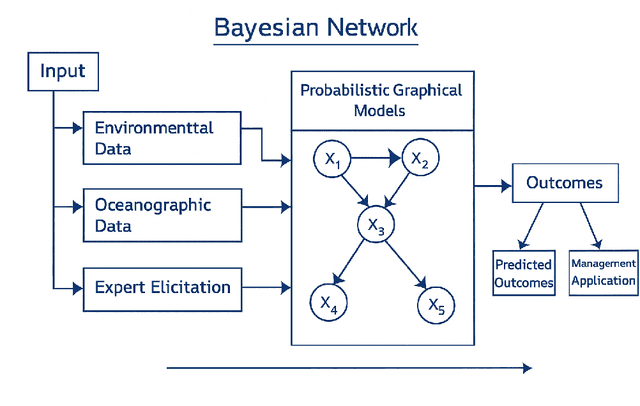


Coral bleaching is a major concern for marine ecosystems; more than half of the world's coral reefs have either bleached or died over the past three decades. Increasing sea surface temperatures, along with various spatiotemporal environmental factors, are considered the primary reasons behind coral bleaching. The statistical and machine learning communities have focused on multiple aspects of the environment in detail. However, the literature on various stochastic modeling approaches for assessing coral bleaching is extremely scarce. Data-driven strategies are crucial for effective reef management, and this review article provides an overview of existing statistical and machine learning methods for assessing coral bleaching. Statistical frameworks, including simple regression models, generalized linear models, generalized additive models, Bayesian regression models, spatiotemporal models, and resilience indicators, such as Fisher's Information and Variance Index, are commonly used to explore how different environmental stressors influence coral bleaching. On the other hand, machine learning methods, including random forests, decision trees, support vector machines, and spatial operators, are more popular for detecting nonlinear relationships, analyzing high-dimensional data, and allowing integration of heterogeneous data from diverse sources. In addition to summarizing these models, we also discuss potential data-driven future research directions, with a focus on constructing statistical and machine learning models in specific contexts related to coral bleaching.
Multi Robot Coordination in Highly Dynamic Environments: Tackling Asymmetric Obstacles and Limited Communication
Sep 09, 2025Coordinating a fully distributed multi-agent system (MAS) can be challenging when the communication channel has very limited capabilities in terms of sending rate and packet payload. When the MAS has to deal with active obstacles in a highly partially observable environment, the communication channel acquires considerable relevance. In this paper, we present an approach to deal with task assignments in extremely active scenarios, where tasks need to be frequently reallocated among the agents participating in the coordination process. Inspired by market-based task assignments, we introduce a novel distributed coordination method to orchestrate autonomous agents' actions efficiently in low communication scenarios. In particular, our algorithm takes into account asymmetric obstacles. While in the real world, the majority of obstacles are asymmetric, they are usually treated as symmetric ones, thus limiting the applicability of existing methods. To summarize, the presented architecture is designed to tackle scenarios where the obstacles are active and asymmetric, the communication channel is poor and the environment is partially observable. Our approach has been validated in simulation and in the real world, using a team of NAO robots during official RoboCup competitions. Experimental results show a notable reduction in task overlaps in limited communication settings, with a decrease of 52% in the most frequent reallocated task.