 Add to Chrome
 Add to Firefox
 Add to Edge
A Statistical Assessment of Amortized Inference Under Signal-to-Noise Variation and Distribution Shift
Jan 12, 2026
Since the turn of the century, approximate Bayesian inference has steadily evolved as new computational techniques have been incorporated to handle increasingly complex and large-scale predictive problems. The recent success of deep neural networks and foundation models has now given rise to a new paradigm in statistical modeling, in which Bayesian inference can be amortized through large-scale learned predictors. In amortized inference, substantial computation is invested upfront to train a neural network that can subsequently produce approximate posterior or predictions at negligible marginal cost across a wide range of tasks. At deployment, amortized inference offers substantial computational savings compared with traditional Bayesian procedures, which generally require repeated likelihood evaluations or Monte Carlo simulations for predictions for each new dataset. Despite the growing popularity of amortized inference, its statistical interpretation and its role within Bayesian inference remain poorly understood. This paper presents statistical perspectives on the working principles of several major neural architectures, including feedforward networks, Deep Sets, and Transformers, and examines how these architectures naturally support amortized Bayesian inference. We discuss how these models perform structured approximation and probabilistic reasoning in ways that yield controlled generalization error across a wide range of deployment scenarios, and how these properties can be harnessed for Bayesian computation. Through simulation studies, we evaluate the accuracy, robustness, and uncertainty quantification of amortized inference under varying signal-to-noise ratios and distributional shifts, highlighting both its strengths and its limitations.

A Review of Statistical and Machine Learning Approaches for Coral Bleaching Assessment
Nov 15, 2025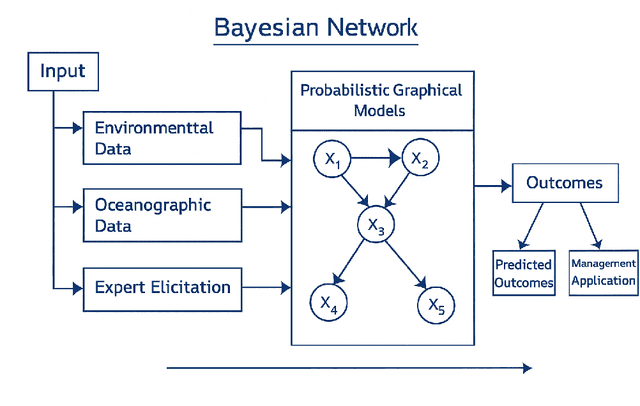
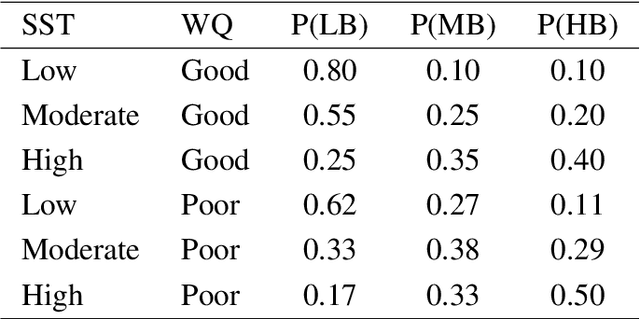


Coral bleaching is a major concern for marine ecosystems; more than half of the world's coral reefs have either bleached or died over the past three decades. Increasing sea surface temperatures, along with various spatiotemporal environmental factors, are considered the primary reasons behind coral bleaching. The statistical and machine learning communities have focused on multiple aspects of the environment in detail. However, the literature on various stochastic modeling approaches for assessing coral bleaching is extremely scarce. Data-driven strategies are crucial for effective reef management, and this review article provides an overview of existing statistical and machine learning methods for assessing coral bleaching. Statistical frameworks, including simple regression models, generalized linear models, generalized additive models, Bayesian regression models, spatiotemporal models, and resilience indicators, such as Fisher's Information and Variance Index, are commonly used to explore how different environmental stressors influence coral bleaching. On the other hand, machine learning methods, including random forests, decision trees, support vector machines, and spatial operators, are more popular for detecting nonlinear relationships, analyzing high-dimensional data, and allowing integration of heterogeneous data from diverse sources. In addition to summarizing these models, we also discuss potential data-driven future research directions, with a focus on constructing statistical and machine learning models in specific contexts related to coral bleaching.