 Add to Chrome
 Add to Firefox
 Add to Edge
Decipherment
Papers and Code
Towards Computational Chinese Paleography
Jan 11, 2026
Chinese paleography, the study of ancient Chinese writing, is undergoing a computational turn powered by artificial intelligence. This position paper charts the trajectory of this emerging field, arguing that it is evolving from automating isolated visual tasks to creating integrated digital ecosystems for scholarly research. We first map the landscape of digital resources, analyzing critical datasets for oracle bone, bronze, and bamboo slip scripts. The core of our analysis follows the field's methodological pipeline: from foundational visual processing (image restoration, character recognition), through contextual analysis (artifact rejoining, dating), to the advanced reasoning required for automated decipherment and human-AI collaboration. We examine the technological shift from classical computer vision to modern deep learning paradigms, including transformers and large multimodal models. Finally, we synthesize the field's core challenges -- notably data scarcity and a disconnect between current AI capabilities and the holistic nature of humanistic inquiry -- and advocate for a future research agenda focused on creating multimodal, few-shot, and human-centric systems to augment scholarly expertise.

Stop saying LLM: Large Discourse Models (LDM) and Artificial Discursive Agent (ADA)?
Dec 22, 2025This paper proposes an epistemological shift in the analysis of large generative models, replacing the category ''Large Language Models'' (LLM) with that of ''Large Discourse Models'' (LDM), and then with that of Artificial Discursive Agent (ADA). The theoretical framework is based on an ontological triad distinguishing three regulatory instances: the apprehension of the phenomenal regularities of the referential world, the structuring of embodied cognition, and the structural-linguistic sedimentation of the utterance within a socio-historical context. LDMs, operating on the product of these three instances (the document), model the discursive projection of a portion of human experience reified by the learning corpus. The proposed program aims to replace the ''fascination/fear'' dichotomy with public trials and procedures that make the place, uses, and limits of artificial discursive agents in contemporary social space decipherable, situating this approach within a perspective of governance and co-regulation involving the State, industry, civil society, and academia.
ALICE: An Interpretable Neural Architecture for Generalization in Substitution Ciphers
Sep 08, 2025We present cryptogram solving as an ideal testbed for studying neural network generalization in combinatorially complex domains. In this task, models must decrypt text encoded with substitution ciphers, choosing from 26! possible mappings without explicit access to the cipher. We develop ALICE (an Architecture for Learning Interpretable Cryptogram dEcipherment): a simple encoder-only Transformer that sets a new state-of-the-art for both accuracy and speed on this decryption problem. Surprisingly, ALICE generalizes to unseen ciphers after training on only ${\sim}1500$ unique ciphers, a minute fraction ($3.7 \times 10^{-24}$) of the possible cipher space. To enhance interpretability, we introduce a novel bijective decoding head that explicitly models permutations via the Gumbel-Sinkhorn method, enabling direct extraction of learned cipher mappings. Through early exit analysis, we reveal how ALICE progressively refines its predictions in a way that appears to mirror common human strategies for this task: early layers employ frequency-based heuristics, middle layers form word structures, and final layers correct individual characters. Our architectural innovations and analysis methods extend beyond cryptograms to any domain with bijective mappings and combinatorial structure, offering new insights into neural network generalization and interpretability.
Interpretable Oracle Bone Script Decipherment through Radical and Pictographic Analysis with LVLMs
Aug 13, 2025As the oldest mature writing system, Oracle Bone Script (OBS) has long posed significant challenges for archaeological decipherment due to its rarity, abstractness, and pictographic diversity. Current deep learning-based methods have made exciting progress on the OBS decipherment task, but existing approaches often ignore the intricate connections between glyphs and the semantics of OBS. This results in limited generalization and interpretability, especially when addressing zero-shot settings and undeciphered OBS. To this end, we propose an interpretable OBS decipherment method based on Large Vision-Language Models, which synergistically combines radical analysis and pictograph-semantic understanding to bridge the gap between glyphs and meanings of OBS. Specifically, we propose a progressive training strategy that guides the model from radical recognition and analysis to pictographic analysis and mutual analysis, thus enabling reasoning from glyph to meaning. We also design a Radical-Pictographic Dual Matching mechanism informed by the analysis results, significantly enhancing the model's zero-shot decipherment performance. To facilitate model training, we propose the Pictographic Decipherment OBS Dataset, which comprises 47,157 Chinese characters annotated with OBS images and pictographic analysis texts. Experimental results on public benchmarks demonstrate that our approach achieves state-of-the-art Top-10 accuracy and superior zero-shot decipherment capabilities. More importantly, our model delivers logical analysis processes, possibly providing archaeologically valuable reference results for undeciphered OBS, and thus has potential applications in digital humanities and historical research. The dataset and code will be released in https://github.com/PKXX1943/PD-OBS.
Ancient Script Image Recognition and Processing: A Review
Jun 24, 2025Ancient scripts, e.g., Egyptian hieroglyphs, Oracle Bone Inscriptions, and Ancient Greek inscriptions, serve as vital carriers of human civilization, embedding invaluable historical and cultural information. Automating ancient script image recognition has gained importance, enabling large-scale interpretation and advancing research in archaeology and digital humanities. With the rise of deep learning, this field has progressed rapidly, with numerous script-specific datasets and models proposed. While these scripts vary widely, spanning phonographic systems with limited glyphs to logographic systems with thousands of complex symbols, they share common challenges and methodological overlaps. Moreover, ancient scripts face unique challenges, including imbalanced data distribution and image degradation, which have driven the development of various dedicated methods. This survey provides a comprehensive review of ancient script image recognition methods. We begin by categorizing existing studies based on script types and analyzing respective recognition methods, highlighting both their differences and shared strategies. We then focus on challenges unique to ancient scripts, systematically examining their impact and reviewing recent solutions, including few-shot learning and noise-robust techniques. Finally, we summarize current limitations and outline promising future directions. Our goal is to offer a structured, forward-looking perspective to support ongoing advancements in the recognition, interpretation, and decipherment of ancient scripts.
Reasoning Over the Glyphs: Evaluation of LLM's Decipherment of Rare Scripts
Jan 29, 2025We explore the capabilities of LVLMs and LLMs in deciphering rare scripts not encoded in Unicode. We introduce a novel approach to construct a multimodal dataset of linguistic puzzles involving such scripts, utilizing a tokenization method for language glyphs. Our methods include the Picture Method for LVLMs and the Description Method for LLMs, enabling these models to tackle these challenges. We conduct experiments using prominent models, GPT-4o, Gemini, and Claude 3.5 Sonnet, on linguistic puzzles. Our findings reveal the strengths and limitations of current AI methods in linguistic decipherment, highlighting the impact of Unicode encoding on model performance and the challenges of modeling visual language tokens through descriptions. Our study advances understanding of AI's potential in linguistic decipherment and underscores the need for further research.
Determination of language families using deep learning
Sep 04, 2024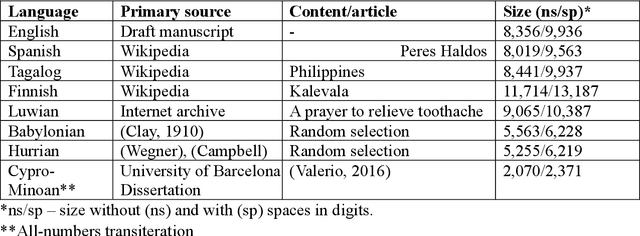

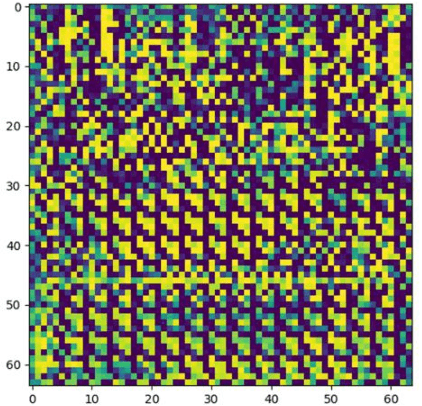
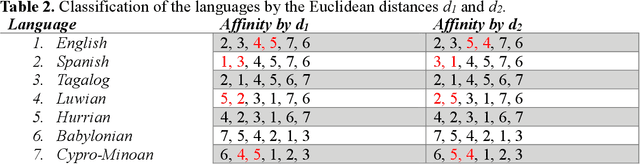
We use a c-GAN (convolutional generative adversarial) neural network to analyze transliterated text fragments of extant, dead comprehensible, and one dead non-deciphered (Cypro-Minoan) language to establish linguistic affinities. The paper is agnostic with respect to translation and/or deciphering. However, there is hope that the proposed approach can be useful for decipherment with more sophisticated neural network techniques.
Forbes: Face Obfuscation Rendering via Backpropagation Refinement Scheme
Jul 19, 2024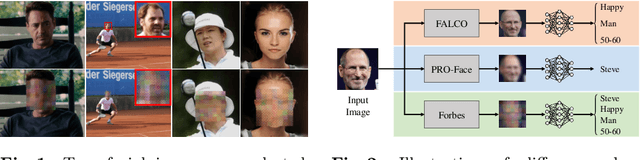
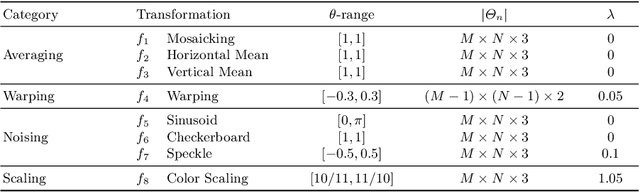
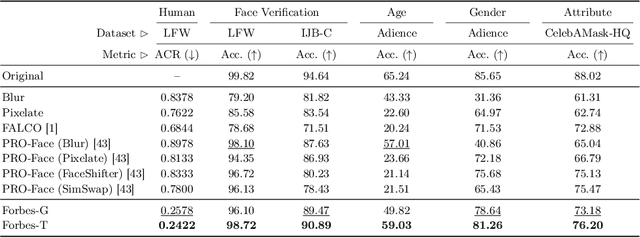

A novel algorithm for face obfuscation, called Forbes, which aims to obfuscate facial appearance recognizable by humans but preserve the identity and attributes decipherable by machines, is proposed in this paper. Forbes first applies multiple obfuscating transformations with random parameters to an image to remove the identity information distinguishable by humans. Then, it optimizes the parameters to make the transformed image decipherable by machines based on the backpropagation refinement scheme. Finally, it renders an obfuscated image by applying the transformations with the optimized parameters. Experimental results on various datasets demonstrate that Forbes achieves both human indecipherability and machine decipherability excellently. The source codes are available at https://github.com/mcljtkim/Forbes.
Oracle Bone Inscriptions Multi-modal Dataset
Jul 04, 2024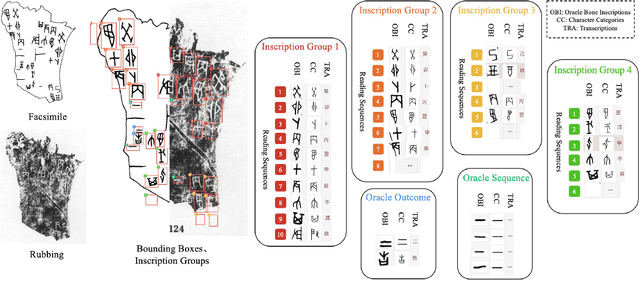
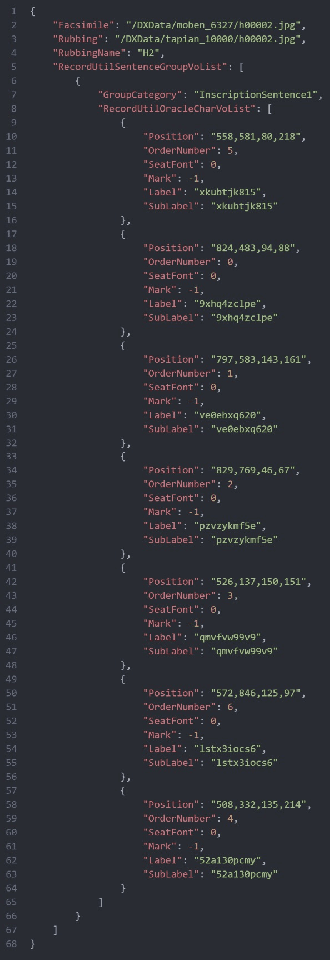
Oracle bone inscriptions(OBI) is the earliest developed writing system in China, bearing invaluable written exemplifications of early Shang history and paleography. However, the task of deciphering OBI, in the current climate of the scholarship, can prove extremely challenging. Out of the 4,500 oracle bone characters excavated, only a third have been successfully identified. Therefore, leveraging the advantages of advanced AI technology to assist in the decipherment of OBI is a highly essential research topic. However, fully utilizing AI's capabilities in these matters is reliant on having a comprehensive and high-quality annotated OBI dataset at hand whereas most existing datasets are only annotated in just a single or a few dimensions, limiting the value of their potential application. For instance, the Oracle-MNIST dataset only offers 30k images classified into 10 categories. Therefore, this paper proposes an Oracle Bone Inscriptions Multi-modal Dataset(OBIMD), which includes annotation information for 10,077 pieces of oracle bones. Each piece has two modalities: pixel-level aligned rubbings and facsimiles. The dataset annotates the detection boxes, character categories, transcriptions, corresponding inscription groups, and reading sequences in the groups of each oracle bone character, providing a comprehensive and high-quality level of annotations. This dataset can be used for a variety of AI-related research tasks relevant to the field of OBI, such as OBI Character Detection and Recognition, Rubbing Denoising, Character Matching, Character Generation, Reading Sequence Prediction, Missing Characters Completion task and so on. We believe that the creation and publication of a dataset like this will help significantly advance the application of AI algorithms in the field of OBI research.
Decipherment-Aware Multilingual Learning in Jointly Trained Language Models
Jun 11, 2024The principle that governs unsupervised multilingual learning (UCL) in jointly trained language models (mBERT as a popular example) is still being debated. Many find it surprising that one can achieve UCL with multiple monolingual corpora. In this work, we anchor UCL in the context of language decipherment and show that the joint training methodology is a decipherment process pivotal for UCL. In a controlled setting, we investigate the effect of different decipherment settings on the multilingual learning performance and consolidate the existing opinions on the contributing factors to multilinguality. From an information-theoretic perspective we draw a limit to the UCL performance and demonstrate the importance of token alignment in challenging decipherment settings caused by differences in the data domain, language order and tokenization granularity. Lastly, we apply lexical alignment to mBERT and investigate the contribution of aligning different lexicon groups to downstream performance.