 Add to Chrome
 Add to Firefox
 Add to Edge
Traj-LeWM: Path-Aware World-Model Planning via Latent Trajectory Cost
Aug 14, 2026
LeWM is a lightweight visual world model that learns latent dynamics end-to-end from pixels and ranks candidate action sequences by the distance between their predicted endpoints and the goal. However, LeWM has two limitations. First, during training, it learns local next-step transitions without evaluating complete trajectories relative to the task goal. Second, during planning, it ranks candidates solely by predicted endpoint distance. Because model predictions may differ from actual execution outcomes, the candidate whose predicted endpoint is closest to the goal may not perform best when executed in the environment. The evolution of the complete predicted trajectory can therefore provide complementary information beyond endpoint distance. To address these limitations, we propose Traj-LeWM, which retains LeWM's local-dynamics objective and endpoint score while introducing a goal-conditioned latent trajectory cost (LTC) that aggregates trajectory-level information as a complementary signal. During training, LTC-based trajectory-preference supervision complements next-step prediction in shaping the shared representation. During planning, LTC is combined with endpoint distance to incorporate intermediate-path information into candidate ranking. With joint endpoint-plus-LTC scoring, Traj-LeWM outperforms LeWM on Push-T, OGBench-Cube, Reacher, and Two-Room by $3$, $14$, $7$, and $7$ percentage points, respectively. Controlled experiments and ablations further verify the complementary roles of trajectory-level representation shaping and path-aware candidate ranking.

Causal Tongue-Tie: LLMs Can Encode Causal Direction, But Their Yes/No Outputs Fail to Express
May 25, 2026We find a mismatch between what large language models encode about a causal question and what they answer. On anti-commonsense CLadder items, a fixed linear probe recovers the evidence-supported answer from the model's hidden state (accuracy approximately 0.97), while the spoken Yes/No reverts to the commonsense one (accuracy approximately 0.5). We call this approximately +0.5 gap Causal Tongue-Tie: a wrong Yes/No decomposes into two separable failure modes: no internal signal versus a signal the verbal interface cannot say. The implication cuts both ways for output-only causal benchmarks: a benchmark "correct" need not mean the model has understood, and a benchmark "wrong" need not mean it cannot. Sweeping claims about whether LLMs can do causal reasoning, drawn from a single accuracy number, deserve a second look.
Iterative Identification Closure: Amplifying Causal Identifiability in Linear SEMs
Apr 10, 2026The Half-Trek Criterion (HTC) is the primary graphical tool for determining generic identifiability of causal effect coefficients in linear structural equation models (SEMs) with latent confounders. However, HTC is inherently node-wise: it simultaneously resolves all incoming edges of a node, leaving a gap of "inconclusive" causal effects (15-23% in moderate graphs). We introduce Iterative Identification Closure (IIC), a general framework that decouples causal identification into two phases: (1) a seed function S_0 that identifies an initial set of edges from any external source of information (instrumental variables, interventions, non-Gaussianity, prior knowledge, etc.); and (2) Reduced HTC propagation that iteratively substitutes known coefficients to reduce system dimension, enabling identification of edges that standard HTC cannot resolve. The core novelty is iterative identification propagation: newly identified edges feed back to unlock further identification -- a mechanism absent from all existing graphical criteria, which treat each edge (or node) in isolation. This propagation is non-trivial: coefficient substitution alters the covariance structure, and soundness requires proving that the modified Jacobian retains generic full rank -- a new theoretical result (Reduced HTC Theorem). We prove that IIC is sound, monotone, converges in O(|E|) iterations (empirically <=2), and strictly subsumes both HTC and ancestor decomposition. Exhaustive verification on all graphs with n<=5 (134,144 edges) confirms 100% precision (zero false positives); with combined seeds, IIC reduces the HTC gap by over 80%. The propagation gain is gamma~4x (2 seeds identifying ~3% of edges to 97.5% total identification), far exceeding gamma<=1.2x of prior methods that incorporate side information without iterative feedback.
CausalVAE as a Plug-in for World Models: Towards Reliable Counterfactual Dynamics
Apr 09, 2026In this work, CausalVAE is introduced as a plug-in structural module for latent world models and is attached to diverse encoder-transition backbones. Across the reported benchmarks, competitive factual prediction is preserved and intervention-aware counterfactual retrieval is improved after the plug-in is added, suggesting stronger robustness under distribution shift and interventions. The largest gains are observed on the Physics benchmark: when averaged over 8 paired baselines, CF-H@1 is improved by +102.5%. In a representative GNN-NLL setting on Physics, CF-H@1 is increased from 11.0 to 41.0 (+272.7%). Through causal analysis, learned structural dependencies are shown to recover meaningful first-order physical interaction trends, supporting the interpretability of the learned latent causal structure.
Step-by-Step Causality: Transparent Causal Discovery with Multi-Agent Tree-Query and Adversarial Confidence Estimation
Jan 15, 2026Causal discovery aims to recover ``what causes what'', but classical constraint-based methods (e.g., PC, FCI) suffer from error propagation, and recent LLM-based causal oracles often behave as opaque, confidence-free black boxes. This paper introduces Tree-Query, a tree-structured, multi-expert LLM framework that reduces pairwise causal discovery to a short sequence of queries about backdoor paths, (in)dependence, latent confounding, and causal direction, yielding interpretable judgments with robustness-aware confidence scores. Theoretical guarantees are provided for asymptotic identifiability of four pairwise relations. On data-free benchmarks derived from Mooij et al. and UCI causal graphs, Tree-Query improves structural metrics over direct LLM baselines, and a diet--weight case study illustrates confounder screening and stable, high-confidence causal conclusions. Tree-Query thus offers a principled way to obtain data-free causal priors from LLMs that can complement downstream data-driven causal discovery. Code is available at https://anonymous.4open.science/r/Repo-9B3E-4F96.
FIPGNet:Pyramid grafting network with feature interaction strategies
Jul 04, 2024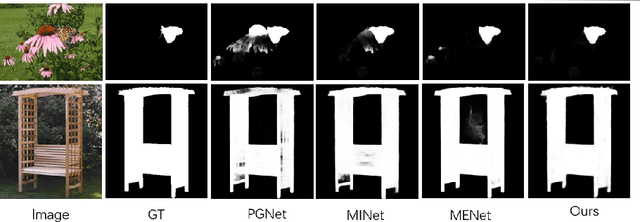
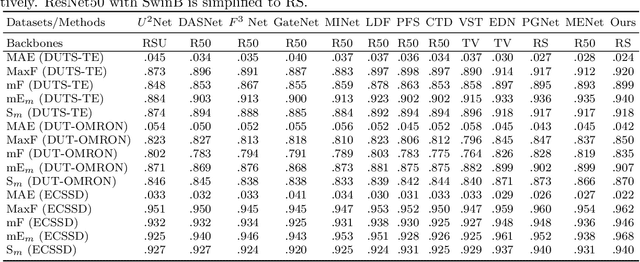
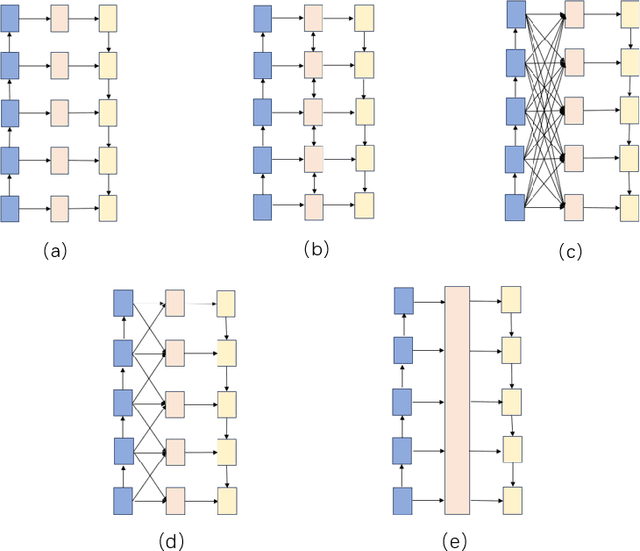
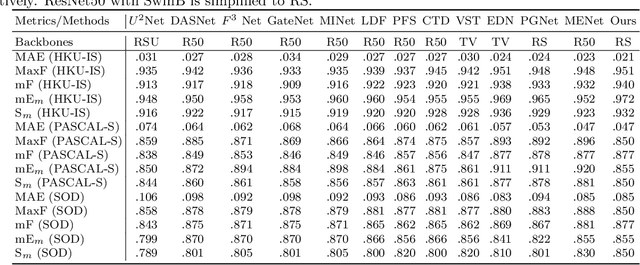
Salient object detection is designed to identify the objects in an image that attract the most visual attention.Currently, the most advanced method of significance object detection adopts pyramid grafting network architecture.However, pyramid-graft network architecture still has the problem of failing to accurately locate significant targets.We observe that this is mainly due to the fact that current salient object detection methods simply aggregate different scale features, ignoring the correlation between different scale features.To overcome these problems, we propose a new salience object detection framework(FIPGNet),which is a pyramid graft network with feature interaction strategies.Specifically, we propose an attention-mechanism based feature interaction strategy (FIA) that innovatively introduces spatial agent Cross Attention (SACA) to achieve multi-level feature interaction, highlighting important spatial regions from a spatial perspective, thereby enhancing salient regions.And the channel proxy Cross Attention Module (CCM), which is used to effectively connect the features extracted by the backbone network and the features processed using the spatial proxy cross attention module, eliminating inconsistencies.Finally, under the action of these two modules, the prominent target location problem in the current pyramid grafting network model is solved.Experimental results on six challenging datasets show that the proposed method outperforms the current 12 salient object detection methods on four indicators.