 Add to Chrome
 Add to Firefox
 Add to Edge
ORCA: ORgan-Centroid Aggregation for Training-Free 3D CT Visual Token Compression
Jul 31, 2026
A 3D CT scan entering a vision-language model produces a long sequence of visual tokens, often thousands to tens of thousands per volume, and this sequence must be compressed before a language model can consume it. Token compression is well studied in general vision, but little of it targets 3D CT specifically. A common baseline is grid average, which pools regular grid cells and can blend distinct anatomy, lesion, and air into one token. We present \textbf{ORCA} (ORgan-Centroid Aggregation), a token compressor for 3D CT. It merges adjacent tokens with organ guidance and adds a sinusoidal encoding of each region's centroid to preserve spatial layout. This preserves the anatomical information a downstream model needs. ORCA is training-free and plug-and-play, producing an adjustable token set without any model change or text query. We evaluate it across two datasets (CT-RATE and Merlin) and five encoders. The evaluation spans two task types: attribute prediction over five families (size, density, location, texture, and disease) and text generation (visual question answering and report generation). At matched token budgets, ORCA improves consistently over existing compression methods. It shrinks the visual context $64\times$ and its KV-cache $50\times$, and is $31\times$ faster to process each volume. Code released at https://github.com/renjie-liang/ORCA-3DCT.

Fewer Clarifications, Better Code: Benchmarking Cross-Session Personalized Ambiguity Adaptation in Coding Assistants
Jul 29, 2026AI-assisted coding increasingly translates informal user intent into executable software, yet coding requests often contain ambiguities that recur in user-specific ways across tasks and sessions. Existing disambiguation methods typically address each ambiguous request in isolation within the current coding session, often through eliciting additional clarification. However, whether resolved session history from the same user can serve as memory for resolving recurring personalized ambiguity in a newly opened session remains underexplored. We formulate personalized ambiguity adaptation as a new task: given a user's previously resolved coding sessions and a new ambiguous request, an assistant should identify the recurring ambiguity pattern, produce the intended executable solution, and minimize clarification. To benchmark this task, we introduce CAPA, which characterizes personalized coding ambiguity through six mechanisms and injects these mechanisms into unambiguous executable tasks using a controlled three-stage generation pipeline. CAPA contains 600 coding sessions across 60 balanced user--ambiguity cells, including 300 held-out evaluation sessions. We evaluate 12 recent LLMs under no-history and same-user-history conditions using executable success, first-turn success, and turns-to-completion. Our analyses examine task difficulty, user identity, and memory-based history use, and we further propose same-user history gating as a lightweight inference-time method. CAPA provides a foundation for developing long-term coding assistants that better align generated code with user intent while reducing repeated clarification.
Multi-Scale Gaussian-Language Map for Zero-shot Embodied Navigation and Reasoning
May 03, 2026Understanding the geometric and semantic structure of environments is essential for embodied navigation and reasoning. Existing semantic mapping methods trade off between explicit geometry and multi-scale semantics, and lack a native interface for large models, thus requiring additional training of feature projection for semantic alignment. To this end, we propose the multi-scale Gaussian-Language Map (GLMap), which introduces three key designs: (1) explicit geometry, (2) multi-scale semantics covering both instance and region concepts, and (3) a dual-modality interface where each semantic unit jointly stores a natural language description and a 3D Gaussian representation. The 3D Gaussians enable compact storage and fast rendering of task-relevant images via Gaussian splatting. To enable efficient incremental construction, we further propose a Gaussian Estimator that analytically derives Gaussian parameters from dense point clouds without gradient-based optimization. Experiments on ObjectNav, InstNav, and SQA tasks show that GLMap effectively enhances target navigation and contextual reasoning, while remaining compatible with large-model-based methods in a zero-shot manner. The code is available at https://github.com/sx-zhang/GLMap.
DT-BEHRT: Disease Trajectory-aware Transformer for Interpretable Patient Representation Learning
Mar 10, 2026The growing adoption of electronic health record (EHR) systems has provided unprecedented opportunities for predictive modeling to guide clinical decision making. Structured EHRs contain longitudinal observations of patients across hospital visits, where each visit is represented by a set of medical codes. While sequence-based, graph-based, and graph-enhanced sequence approaches have been developed to capture rich code interactions over time or within the same visits, they often overlook the inherent heterogeneous roles of medical codes arising from distinct clinical characteristics and contexts. To this end, in this study we propose the Disease Trajectory-aware Transformer for EHR (DT-BEHRT), a graph-enhanced sequential architecture that disentangles disease trajectories by explicitly modeling diagnosis-centric interactions within organ systems and capturing asynchronous progression patterns. To further enhance the representation robustness, we design a tailored pre-training methodology that combines trajectory-level code masking with ontology-informed ancestor prediction, promoting semantic alignment across multiple modeling modules. Extensive experiments on multiple benchmark datasets demonstrate that DT-BEHRT achieves strong predictive performance and provides interpretable patient representations that align with clinicians' disease-centered reasoning. The source code is publicly accessible at https://github.com/GatorAIM/DT-BEHRT.git.
Solving NP-Hard Problems on Graphs by Reinforcement Learning without Domain Knowledge
May 28, 2019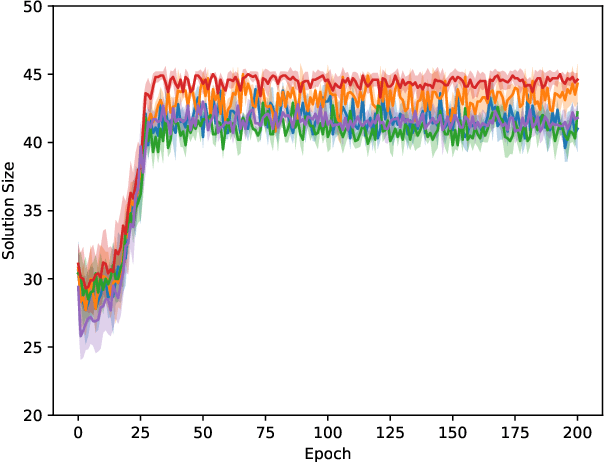
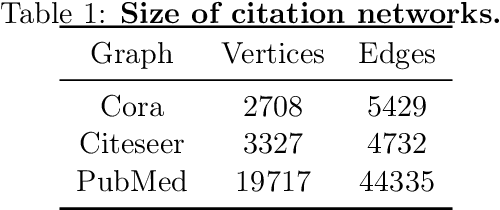
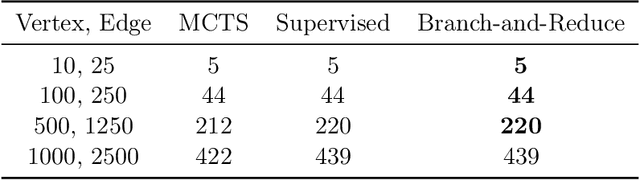
We propose an algorithm based on reinforcement learning for solving NP-hard problems on graphs. We combine Graph Isomorphism Networks and the Monte-Carlo Tree Search, which was originally used for game searches, for solving combinatorial optimization on graphs. Similarly to AlphaGo Zero, our method does not require any problem-specific knowledge or labeled datasets (exact solutions), which are difficult to calculate in principle. We show that our method, which is trained by generated random graphs, successfully finds near-optimal solutions for the Maximum Independent Set problem on citation networks. Experiments illustrate that the performance of our method is comparable to SOTA solvers, but we do not require any problem-specific reduction rules, which is highly desirable in practice since collecting hand-crafted reduction rules is costly and not adaptive for a wide range of problems.