 Add to Chrome
 Add to Firefox
 Add to Edge
RealICU: Do LLM Agents Understand Long-Context ICU Data? A Benchmark Beyond Behavior Imitation
May 13, 2026
Intensive care units (ICU) generate long, dense and evolving streams of clinical information, where physicians must repeatedly reassess patient states under time pressure, underscoring a clear need for reliable AI decision support. Existing ICU benchmarks typically treat historical clinician actions as ground truth. However, these actions are made under incomplete information and limited temporal context of the underlying patient state, and may therefore be suboptimal, making it difficult to assess the true reasoning capabilities of AI systems. We introduce RealICU, a hindsight-annotated benchmark for evaluating large language models (LLMs) under realistic ICU conditions, where labels are created after senior physicians review the full patient trajectory. We formulate four physician-motivated tasks: assess Patient Status, Acute Problems, Recommended Actions, and Red Flag actions that risk unsafe outcomes. We partition each trajectory with 30-min windows and release two datasets: RealICU-Gold with 930-window annotations from 94 MIMIC-IV patients, and RealICU-Scale with 11,862 windows extended by Oracle, a physician-validated LLM hindsight labeler. Existing LLMs including memory-augmented ones performed poorly on RealICU, exposing two failure modes: a recall-safety tradeoff for clinical recommendations, and an anchoring bias to early interpretations of the patient. We further introduce ICU-Evo to study structured-memory agents that improves long-horizon reasoning but does not fully eliminate safety failures. Together, RealICU provides a clinically grounded testbed for measuring and improving AI sequential decision-support in high-stakes care. Project page: https://chengzhi-leo.github.io/RealICU-Bench/

Standardized Evaluation of Automatic Methods for Perivascular Spaces Segmentation in MRI -- MICCAI 2024 Challenge Results
Dec 20, 2025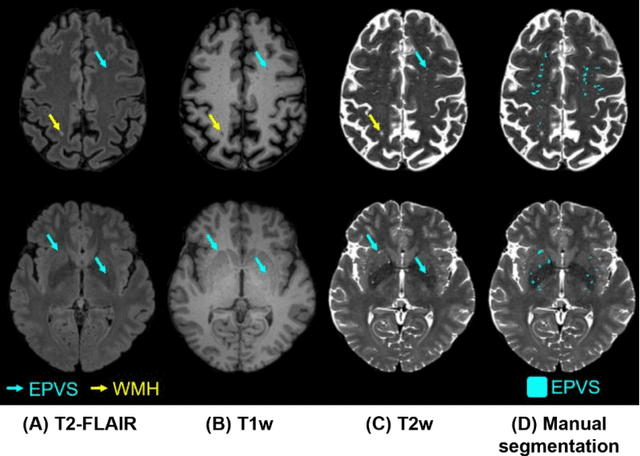
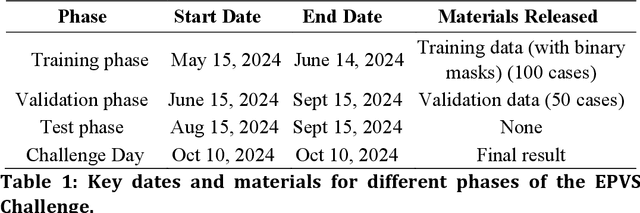
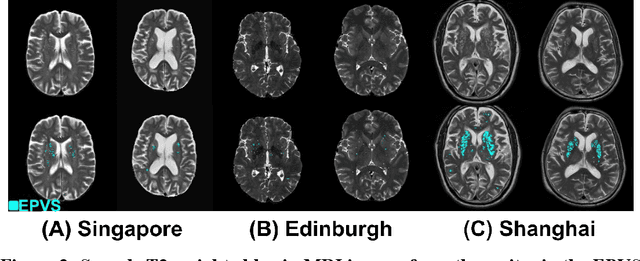
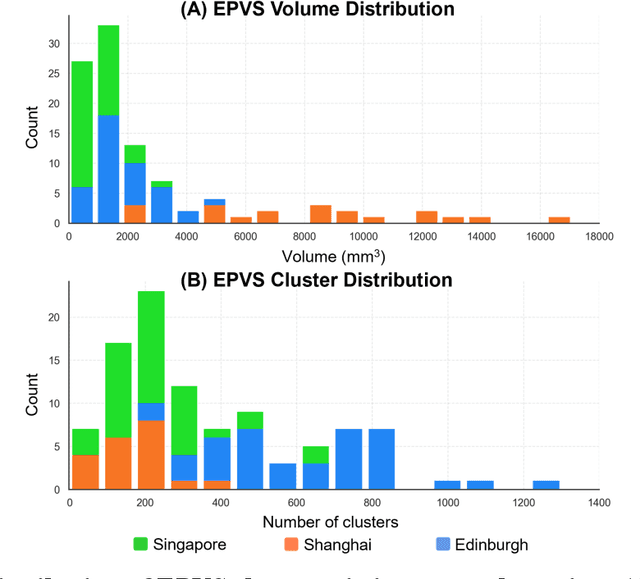
Perivascular spaces (PVS), when abnormally enlarged and visible in magnetic resonance imaging (MRI) structural sequences, are important imaging markers of cerebral small vessel disease and potential indicators of neurodegenerative conditions. Despite their clinical significance, automatic enlarged PVS (EPVS) segmentation remains challenging due to their small size, variable morphology, similarity with other pathological features, and limited annotated datasets. This paper presents the EPVS Challenge organized at MICCAI 2024, which aims to advance the development of automated algorithms for EPVS segmentation across multi-site data. We provided a diverse dataset comprising 100 training, 50 validation, and 50 testing scans collected from multiple international sites (UK, Singapore, and China) with varying MRI protocols and demographics. All annotations followed the STRIVE protocol to ensure standardized ground truth and covered the full brain parenchyma. Seven teams completed the full challenge, implementing various deep learning approaches primarily based on U-Net architectures with innovations in multi-modal processing, ensemble strategies, and transformer-based components. Performance was evaluated using dice similarity coefficient, absolute volume difference, recall, and precision metrics. The winning method employed MedNeXt architecture with a dual 2D/3D strategy for handling varying slice thicknesses. The top solutions showed relatively good performance on test data from seen datasets, but significant degradation of performance was observed on the previously unseen Shanghai cohort, highlighting cross-site generalization challenges due to domain shift. This challenge establishes an important benchmark for EPVS segmentation methods and underscores the need for the continued development of robust algorithms that can generalize in diverse clinical settings.
Learning Brain Tumor Representation in 3D High-Resolution MR Images via Interpretable State Space Models
Sep 12, 2024



Learning meaningful and interpretable representations from high-dimensional volumetric magnetic resonance (MR) images is essential for advancing personalized medicine. While Vision Transformers (ViTs) have shown promise in handling image data, their application to 3D multi-contrast MR images faces challenges due to computational complexity and interpretability. To address this, we propose a novel state-space-model (SSM)-based masked autoencoder which scales ViT-like models to handle high-resolution data effectively while also enhancing the interpretability of learned representations. We propose a latent-to-spatial mapping technique that enables direct visualization of how latent features correspond to specific regions in the input volumes in the context of SSM. We validate our method on two key neuro-oncology tasks: identification of isocitrate dehydrogenase mutation status and 1p/19q co-deletion classification, achieving state-of-the-art accuracy. Our results highlight the potential of SSM-based self-supervised learning to transform radiomics analysis by combining efficiency and interpretability.