 Add to Chrome
 Add to Firefox
 Add to Edge
LUMINA: A Grid Foundation Model for Benchmarking AC Optimal Power Flow Surrogate Learning
May 04, 2026
AC optimal power flow (ACOPF) is foundational yet computationally expensive in power grid operations, driving learning-based surrogates for large-scale grid analysis. These surrogates, however, often fail to generalize across network topologies, a critical gap for deployment on grids not seen during training and for routine operational what-if studies. We introduce LUMINA-Bench, a comprehensive benchmark suite for ACOPF surrogate learning covering multi-topology pretraining, transfer, and adaptation. The benchmark evaluates homogeneous and heterogeneous architectures under single- and multi-topology learning settings using unified metrics that capture both predictive accuracy and physics-informed constraint violations. We additionally compare constraint-aware training objectives, including MSE, augmented Lagrangian, and violation-based Lagrangian losses, to characterize accuracy-robustness trade-offs across settings. Data processing, training, and evaluation frameworks are open-sourced as the LUMINA suite to support reproducibility and accelerate future research on feasibility-aware OPF surrogates.

Towards Systematic Generalization for Power Grid Optimization Problems
May 03, 2026AC Optimal Power Flow (ACOPF) and Security-Constrained Unit Commitment (SCUC) are fundamental optimization problems in power system operations. ACOPF serves as the physical backbone of grid simulation and real-time operation, enforcing nonlinear power flow feasibility and network limits, while SCUC represents a core market-level decision process that schedules generation under operational and security constraints. Although these problems share the same underlying transmission network and physical laws, they differ in decision variables and temporal coupling, and prior learning-based approaches address them in isolation, resulting in disjoint models and representations.We propose a learning framework that jointly models ACOPF and SCUC through a shared graph-based backbone that captures grid topology and physical interactions, coupled with task-specific decoders for static and temporal decision-making. Training includes solver supervision with physics-informed objectives to enforce AC feasibility and inter-temporal operational constraints. To evaluate generalization, we assess cross-case transfer on unseen grid topologies for ACOPF and SCUC without retraining, and systematic generalization on the UC-ACOPF problem using unsupervised, physics-based objectives and a power-dispatch consensus mechanism. Experiments across multiple grid scales demonstrate improved performance and transferability relative to existing learning-based baselines, indicating that the model can support learning across heterogeneous power system optimization problems.
Toward World Models for Epidemiology
Apr 13, 2026World models have emerged as a unifying paradigm for learning latent dynamics, simulating counterfactual futures, and supporting planning under uncertainty. In this paper, we argue that computational epidemiology is a natural and underdeveloped setting for world models. This is because epidemic decision-making requires reasoning about latent disease burden, imperfect and policy-dependent surveillance signals, and intervention effects are mediated by adaptive human behavior. We introduce a conceptual framework for epidemiological world models, formulating epidemics as controlled, partially observed dynamical systems in which (i) the true epidemic state is latent, (ii) observations are noisy and endogenous to policy, and (iii) interventions act as sequential actions whose effects propagate through behavioral and social feedback. We present three case studies that illustrate why explicit world modeling is necessary for policy-relevant reasoning: strategic misreporting in behavioral surveillance, systematic delays in time-lagged signals such as hospitalizations and deaths, and counterfactual intervention analysis where identical histories diverge under alternative action sequences.
LUMINA: Foundation Models for Topology Transferable ACOPF
Mar 04, 2026Foundation models in general promise to accelerate scientific computation by learning reusable representations across problem instances, yet constrained scientific systems, where predictions must satisfy physical laws and safety limits, pose unique challenges that stress conventional training paradigms. We derive design principles for constrained scientific foundation models through systematic investigation of AC optimal power flow (ACOPF), a representative optimization problem in power grid operations where power balance equations and operational constraints are non-negotiable. Through controlled experiments spanning architectures, training objectives, and system diversity, we extract three empirically grounded principles governing scientific foundation model design. These principles characterize three design trade-offs: learning physics-invariant representations while respecting system-specific constraints, optimizing accuracy while ensuring constraint satisfaction, and ensuring reliability in high-impact operating regimes. We present the LUMINA framework, including data processing and training pipelines to support reproducible research on physics-informed, feasibility-aware foundation models across scientific applications.
On the Fundamental Limits of LLMs at Scale
Nov 17, 2025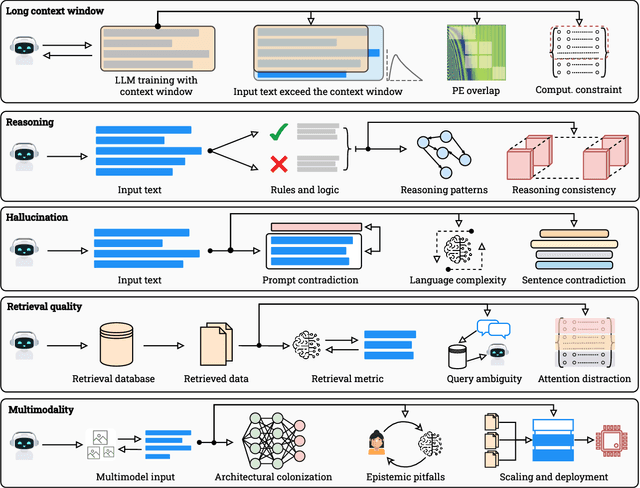
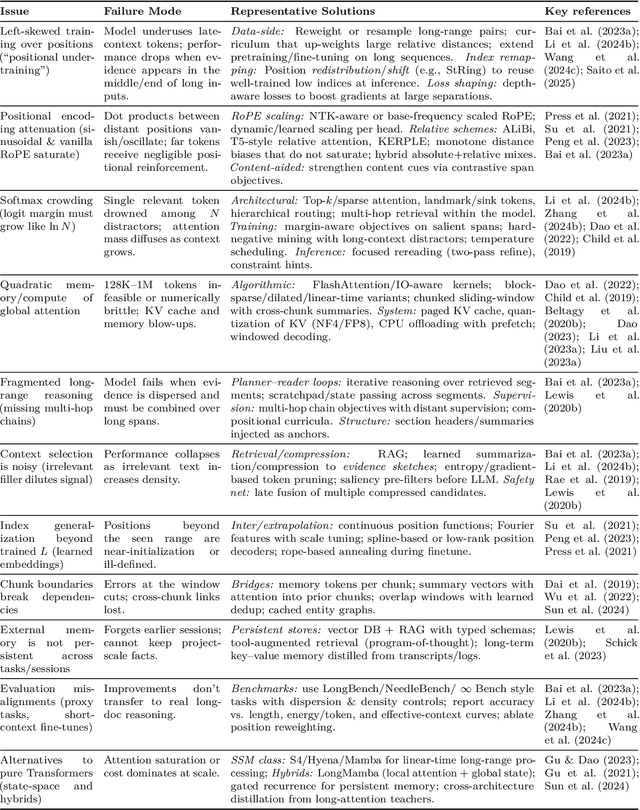
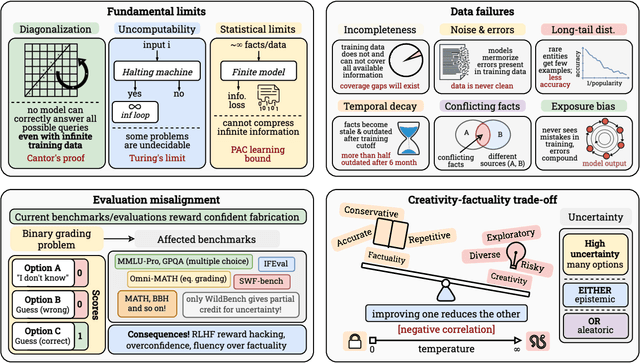
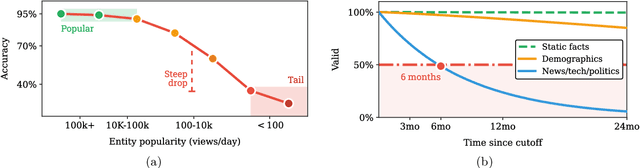
Large Language Models (LLMs) have benefited enormously from scaling, yet these gains are bounded by five fundamental limitations: (1) hallucination, (2) context compression, (3) reasoning degradation, (4) retrieval fragility, and (5) multimodal misalignment. While existing surveys describe these phenomena empirically, they lack a rigorous theoretical synthesis connecting them to the foundational limits of computation, information, and learning. This work closes that gap by presenting a unified, proof-informed framework that formalizes the innate theoretical ceilings of LLM scaling. First, computability and uncomputability imply an irreducible residue of error: for any computably enumerable model family, diagonalization guarantees inputs on which some model must fail, and undecidable queries (e.g., halting-style tasks) induce infinite failure sets for all computable predictors. Second, information-theoretic and statistical constraints bound attainable accuracy even on decidable tasks, finite description length enforces compression error, and long-tail factual knowledge requires prohibitive sample complexity. Third, geometric and computational effects compress long contexts far below their nominal size due to positional under-training, encoding attenuation, and softmax crowding. We further show how likelihood-based training favors pattern completion over inference, how retrieval under token limits suffers from semantic drift and coupling noise, and how multimodal scaling inherits shallow cross-modal alignment. Across sections, we pair theorems and empirical evidence to outline where scaling helps, where it saturates, and where it cannot progress, providing both theoretical foundations and practical mitigation paths like bounded-oracle retrieval, positional curricula, and sparse or hierarchical attention.