 Add to Chrome
 Add to Firefox
 Add to Edge
Small Models Scout Bottleneck Order for Large-Model Data Control
Aug 14, 2026
Small proxy models are commonly used to identify data mixtures for larger-scale training. We ask whether their training trajectories reveal another transferable structure: the order in which larger models should resolve skill bottlenecks. We formulate first-passage skill training, where each monitored skill has a target floor and the objective is to minimize the tokens required to reach all floors. We introduce LogFloor, a closed-loop controller that directs each round toward current bottlenecks, producing phase-ordered resolution trajectories. Across five bAbI skill slices on Qwen2.5-1.5B, LogFloor reduces token cost by 56.2% on average. In 70M-to-12B transfer, three-round replay of a 70M scout path reaches every floor in all eight target runs, saving 30.9% by pair mean, 39.4% in pooled training tokens, and 37.6% under source-cost accounting. On MMLU-control, a frozen scout path succeeds across all eight 12B runs. Collapsing a path to its static marginal mixture or reversing its phase order removes most benefits, while bottleneck labels alone remain partially useful. These results identify phase-ordered bottleneck resolution as a transferable curriculum structure for monitored skill-targeted training.

Refining Over Resampling: Test-Time Self-Correction for LLM Reasoning
Aug 06, 2026Test-time scaling improves LLM reasoning by using additional inference compute, but wider sampling alone can suffer from diminishing returns: new rollouts often repeat existing answer patterns instead of adding useful reasoning diversity. Verifier-based selection offers an alternative, but its performance depends on the calibration of an external reward model. We propose a verifier-free breadth--depth refinement framework that uses test-time compute to both explore and improve candidate solutions. The method samples multiple independent reasoning rollouts, refines each rollout through iterative self-critique and self-correction, and aggregates the refined answers by majority voting. Breadth preserves diverse initial attempts, while depth repairs local reasoning errors before aggregation. Across AIME24, AIME25, AMC, OlympiadBench, and MATH500, our method consistently improves over greedy decoding, majority voting, verifier-based best-of-$N$, beam search, and lookahead decoding across multiple open-weight models. For instance, with Qwen2.5-1.5B, accuracy increases from the strongest verifier-based baseline to $58.0\%$ on MATH500, and from $25.0\%$ to $32.5\%$ on AMC. These results show that test-time compute can be more effective when used to refine sampled trajectories rather than only to sample more candidates or rely on verifier-guided selection.
General Preference Reinforcement Learning
May 21, 2026Post-training has split large language model (LLM) alignment into two largely disconnected tracks. Online reinforcement learning (RL) with verifiable rewards drives emergent reasoning on math and code but depends on a programmatic verifier that cannot reach open-ended tasks, while preference optimization handles open-ended generation yet forgoes the continuous exploration that powers online RL. Closing this gap requires a verifier for open-ended quality, but a scalar reward model is the wrong shape for the job. Quality is multi-dimensional, and any scalar score is an incomplete proxy that lets online RL collapse onto whichever axis the score is most sensitive to. We turn instead to the General Preference Model (GPM), which embeds responses into $k$ skew-symmetric subspaces and represents preference as a structured, intransitivity-aware comparison. Building on this, we propose General Preference Reinforcement Learning (GPRL), which carries the $k$-way structure through to the policy update. GPRL computes per-dimension group-relative advantages, normalizes each on its own scale so no axis can dominate, and aggregates them with context-dependent eigenvalues. The same structure powers a closed-loop drift monitor that detects single-axis exploitation and corrects it on the fly by reweighting dimensions and tightening the trust region. Starting from $\texttt{Llama-3-8B-Instruct}$, GPRL reaches a length-controlled win rate of $56.51\%$ on AlpacaEval~2.0 while also outperforming SimPO and SPPO on Arena-Hard, MT-Bench, and WildBench by resisting reward hacking across extended training runs.
Canonical Optimization for MIMO MAC Design
May 04, 2026Resource allocation in the multiple-input multiple-output (MIMO) multiple access channel (MAC) is a fundamental problem in multiuser communications, yet it is increasingly treated as non-convex and computationally intractable. This has motivated a large body of heuristic machine learning and successive-approximation methods. Results here show that the MIMO MAC admits canonical convex formulations and present four solvers that together characterize its capacity region. maxRMAC performs weighted sum-rate maximization under per-user energy constraints, minPMAC finds the minimum weighted energy required to support target rates, maxRESMAC performs weighted sum-rate maximization under a total energy constraint, and admMAC tests rate-region feasibility. The solvers exploit the polymatroid structure of the MAC rate region and the separability of the dual Lagrangian across frequency tones, which reduces the problem to parallel per-tone covariance optimizations solved via limited-memory Broyden-Fletcher-Goldfarb-Shanno (L-BFGS) over Cholesky-like covariance factors. Experiments on spatially correlated MIMO orthogonal frequency-division multiplexing (OFDM) channels show that the proposed solvers match a commercial convex solver in solution quality while running up to two orders of magnitude faster and scaling to regimes where the commercial solver times out. Through broadcast channel (BC) to MAC duality, the same solvers also enable optimal precoder design for the MIMO BC. All solvers are open-sourced and available at https://github.com/muhd-umer/canonical-mac.
Pressure, What Pressure? Sycophancy Disentanglement in Language Models via Reward Decomposition
Apr 07, 2026Large language models exhibit sycophancy, the tendency to shift their stated positions toward perceived user preferences or authority cues regardless of evidence. Standard alignment methods fail to correct this because scalar reward models conflate two distinct failure modes into a single signal: pressure capitulation, where the model changes a correct answer under social pressure, and evidence blindness, where the model ignores the provided context entirely. We operationalise sycophancy through formal definitions of pressure independence and evidence responsiveness, serving as a working framework for disentangled training rather than a definitive characterisation of the phenomenon. We propose the first approach to sycophancy reduction via reward decomposition, introducing a multi-component Group Relative Policy Optimisation (GRPO) reward that decomposes the training signal into five terms: pressure resistance, context fidelity, position consistency, agreement suppression, and factual correctness. We train using a contrastive dataset pairing pressure-free baselines with pressured variants across three authority levels and two opposing evidence contexts. Across five base models, our two-phase pipeline consistently reduces sycophancy on all metric axes, with ablations confirming that each reward term governs an independent behavioural dimension. The learned resistance to pressure generalises beyond our training methodology and prompt structure, reducing answer-priming sycophancy by up to 17 points on SycophancyEval despite the absence of such pressure forms during training.
$S^3$: Stratified Scaling Search for Test-Time in Diffusion Language Models
Apr 07, 2026Test-time scaling investigates whether a fixed diffusion language model (DLM) can generate better outputs when given more inference compute, without additional training. However, naive best-of-$K$ sampling is fundamentally limited because it repeatedly draws from the same base diffusion distribution, whose high-probability regions are often misaligned with high-quality outputs. We propose $S^3$ (Stratified Scaling Search), a classical verifier-guided search method that improves generation by reallocating compute during the denoising process rather than only at the final output stage. At each denoising step, $S^3$ expands multiple candidate trajectories, evaluates them with a lightweight reference-free verifier, and selectively resamples promising candidates while preserving diversity within the search frontier. This procedure effectively approximates a reward-tilted sampling distribution that favors higher-quality outputs while remaining anchored to the model prior. Experiments with LLaDA-8B-Instruct on MATH-500, GSM8K, ARC-Challenge, and TruthfulQA demonstrate that $S^3$ consistently improves performance across benchmarks, achieving the largest gains on mathematical reasoning tasks while leaving the underlying model and decoding schedule unchanged. These results show that classical search over denoising trajectories provides a practical mechanism for test-time scaling in DLMs.
What If We Allocate Test-Time Compute Adaptively?
Feb 01, 2026Test-time compute scaling allocates inference computation uniformly, uses fixed sampling strategies, and applies verification only for reranking. In contrast, we propose a verifier-guided adaptive framework treating reasoning as iterative trajectory generation and selection. For each problem, the agent runs multiple inference iterations. In each iteration, it optionally produces a high-level plan, selects a set of reasoning tools and a compute strategy together with an exploration parameter, and then generates a candidate reasoning trajectory. A process reward model (PRM) serves as a unified control signal: within each iteration, step-level PRM scores are aggregated to guide pruning and expansion during generation, and across iterations, aggregated trajectory rewards are used to select the final response. Across datasets, our dynamic, PRM-guided approach consistently outperforms direct test-time scaling, yielding large gains on MATH-500 and several-fold improvements on harder benchmarks such as AIME24 and AMO-Bench. We characterize efficiency using theoretical FLOPs and a compute intensity metric penalizing wasted generation and tool overhead, demonstrating that verification-guided allocation concentrates computation on high-utility reasoning paths.
Continuous-Utility Direct Preference Optimization
Jan 31, 2026Large language model reasoning is often treated as a monolithic capability, relying on binary preference supervision that fails to capture partial progress or fine-grained reasoning quality. We introduce Continuous Utility Direct Preference Optimization (CU-DPO), a framework that aligns models to a portfolio of prompt-based cognitive strategies by replacing binary labels with continuous scores that capture fine-grained reasoning quality. We prove that learning with K strategies yields a Theta(K log K) improvement in sample complexity over binary preferences, and that DPO converges to the entropy-regularized utility-maximizing policy. To exploit this signal, we propose a two-stage training pipeline: (i) strategy selection, which optimizes the model to choose the best strategy for a given problem via best-vs-all comparisons, and (ii) execution refinement, which trains the model to correctly execute the selected strategy using margin-stratified pairs. On mathematical reasoning benchmarks, CU-DPO improves strategy selection accuracy from 35-46 percent to 68-78 percent across seven base models, yielding consistent downstream reasoning gains of up to 6.6 points on in-distribution datasets with effective transfer to out-of-distribution tasks.
On the Fundamental Limits of LLMs at Scale
Nov 17, 2025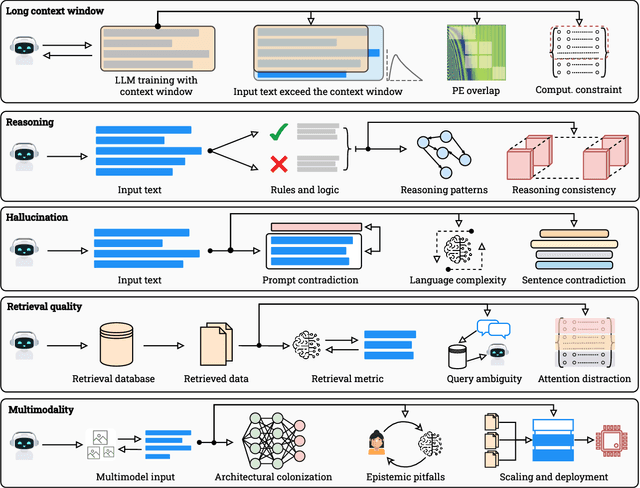
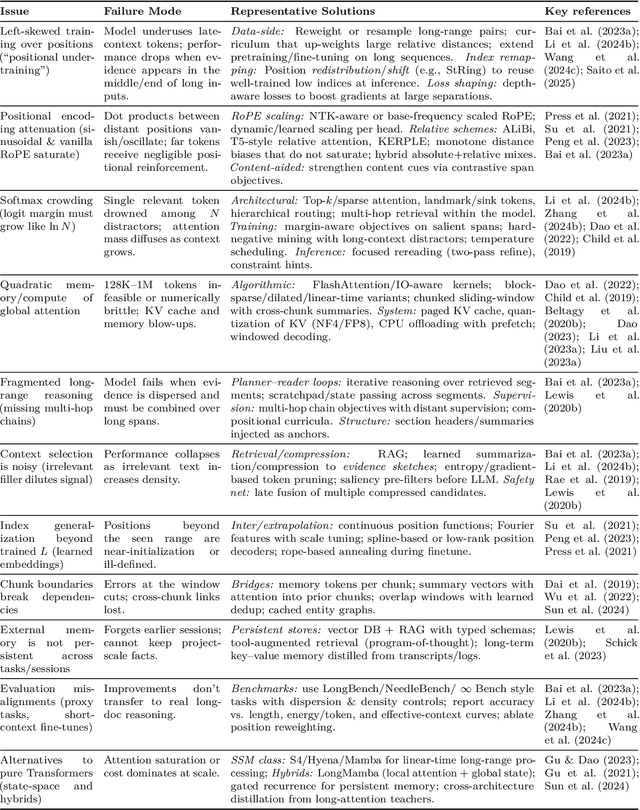
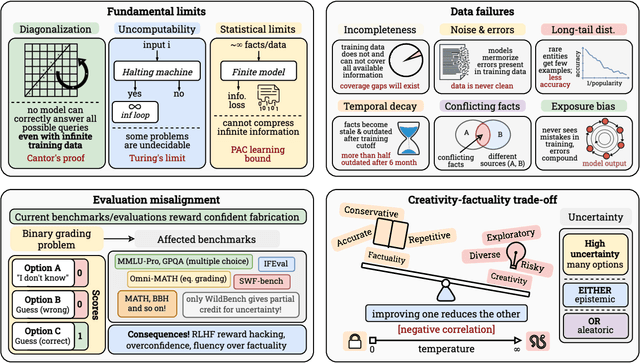
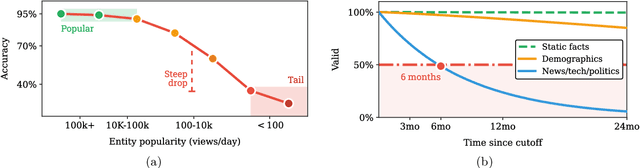
Large Language Models (LLMs) have benefited enormously from scaling, yet these gains are bounded by five fundamental limitations: (1) hallucination, (2) context compression, (3) reasoning degradation, (4) retrieval fragility, and (5) multimodal misalignment. While existing surveys describe these phenomena empirically, they lack a rigorous theoretical synthesis connecting them to the foundational limits of computation, information, and learning. This work closes that gap by presenting a unified, proof-informed framework that formalizes the innate theoretical ceilings of LLM scaling. First, computability and uncomputability imply an irreducible residue of error: for any computably enumerable model family, diagonalization guarantees inputs on which some model must fail, and undecidable queries (e.g., halting-style tasks) induce infinite failure sets for all computable predictors. Second, information-theoretic and statistical constraints bound attainable accuracy even on decidable tasks, finite description length enforces compression error, and long-tail factual knowledge requires prohibitive sample complexity. Third, geometric and computational effects compress long contexts far below their nominal size due to positional under-training, encoding attenuation, and softmax crowding. We further show how likelihood-based training favors pattern completion over inference, how retrieval under token limits suffers from semantic drift and coupling noise, and how multimodal scaling inherits shallow cross-modal alignment. Across sections, we pair theorems and empirical evidence to outline where scaling helps, where it saturates, and where it cannot progress, providing both theoretical foundations and practical mitigation paths like bounded-oracle retrieval, positional curricula, and sparse or hierarchical attention.
Meta-Thinking in LLMs via Multi-Agent Reinforcement Learning: A Survey
Apr 20, 2025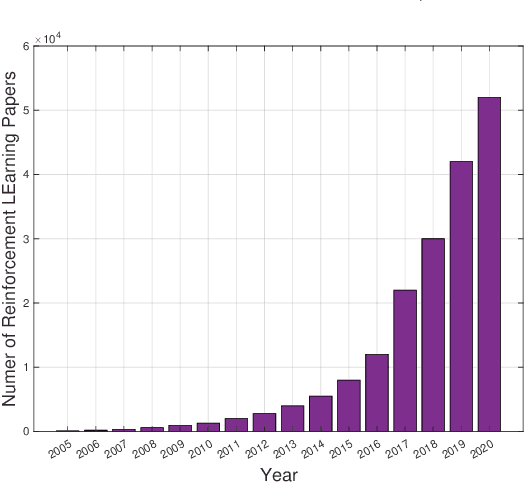
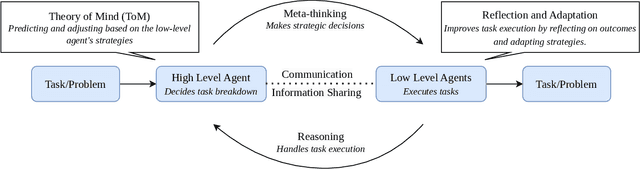

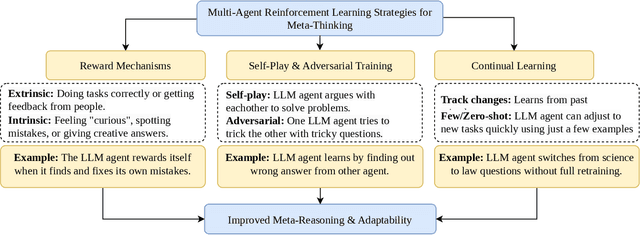
This survey explores the development of meta-thinking capabilities in Large Language Models (LLMs) from a Multi-Agent Reinforcement Learning (MARL) perspective. Meta-thinking self-reflection, assessment, and control of thinking processes is an important next step in enhancing LLM reliability, flexibility, and performance, particularly for complex or high-stakes tasks. The survey begins by analyzing current LLM limitations, such as hallucinations and the lack of internal self-assessment mechanisms. It then talks about newer methods, including RL from human feedback (RLHF), self-distillation, and chain-of-thought prompting, and each of their limitations. The crux of the survey is to talk about how multi-agent architectures, namely supervisor-agent hierarchies, agent debates, and theory of mind frameworks, can emulate human-like introspective behavior and enhance LLM robustness. By exploring reward mechanisms, self-play, and continuous learning methods in MARL, this survey gives a comprehensive roadmap to building introspective, adaptive, and trustworthy LLMs. Evaluation metrics, datasets, and future research avenues, including neuroscience-inspired architectures and hybrid symbolic reasoning, are also discussed.