 Add to Chrome
 Add to Firefox
 Add to Edge
TileMix: Tile-Centric Mixed-Precision Attention for LLM Inference Acceleration
Aug 18, 2026
Long-context prefill in large language models (LLMs) incurs substantial computation and memory traffic because dense self-attention computes quadratic query-key scores. Existing methods either use a uniform low-precision path or select token interactions, leaving spatial precision routing over hardware-aligned score tiles outside fused dense attention. We introduce TileMix, a tile-centric precision-routing kernel that makes numerical precision an executable spatial decision over score-tile groups within fused dense attention. TileMix partitions the attention matrix into hardware-aligned score tiles, packs routing decisions into compact bitmasks, and dispatches each tile group through FP16 or INT8 score computation while both paths update a shared online-softmax state. Scalable precision grouping lets each routing bit govern multiple adjacent key tiles, preserving hardware-aligned compute tiles and compact metadata at long contexts. By routing all legal tile groups, TileMix preserves dense token connectivity, requires no training, and supports grouped-query attention, variable-length batches, and INT8 key/value caches. Across LongEval, LV-Eval, and A100 prefill benchmarks on LLaMA, Qwen, and Vicuna, TileMix recovers long-context quality lost under uniform INT8 and improves prefill throughput over FP16, yielding a controllable accuracy-efficiency frontier across model families. The implementation is available at https://github.com/HanzhiZhang-Ulrica/TileMix.

Beyond Refusal: A Same-Lineage Study of Aligned and Abliterated LLMs for Vulnerability Analysis
Jul 07, 2026Large language model (LLM)-assisted software security operates at a difficult boundary: the vulnerability-analysis terminology needed for legitimate code review, triage, and repair can closely resemble terminology associated with misuse. Existing safety and cybersecurity evaluations are difficult to interpret in this setting because they often compare unrelated model families, thereby conflating safety behavior with differences in architecture, scale, training data, and deployment. To isolate this factor, we study safety state: whether refusal behavior remains intact (Aligned) or has been refusal-ablated (Abliterated) within same-lineage models. We ask how this safety state affects defensive utility across software-security workflows. We compare aligned instruction-tuned models with publicly released refusal-ablated descendants from two model families, Gemma and Qwen. We evaluate Aligned and Abliterated states on vulnerability detection, CWE attribution, vulnerable-line localization, root-cause localization, and executable patch validation. We further treat prompt wording as a controlled framing dimension: prompts begin with neutral code-review language, add authorization context, and vary the density of cybersecurity terminology. In a Gemma-based Java/Vul4J repair-validation study, Abliterated achieves higher early-stage validation rates, with 67.8%, 65.0%, and 32.8% of patches judged usable, successfully applied, and successfully compiled, respectively, compared with 29.9%, 24.9%, and 9.0% for Aligned. In the Qwen pair, Abliterated improves localization performance, increasing line-level F1 from 2.08% to 3.91% and Top-1 accuracy from 4.10% to 6.95%. These findings suggest that evaluations of LLM-based security assistants should jointly measure whether models respond, whether their usable responses are correct, and whether their outputs remain actionable across the engineering workflow.
Digital Skin, Digital Bias: Uncovering Tone-Based Biases in LLMs and Emoji Embeddings
Apr 08, 2026Skin-toned emojis are crucial for fostering personal identity and social inclusion in online communication. As AI models, particularly Large Language Models (LLMs), increasingly mediate interactions on web platforms, the risk that these systems perpetuate societal biases through their representation of such symbols is a significant concern. This paper presents the first large-scale comparative study of bias in skin-toned emoji representations across two distinct model classes. We systematically evaluate dedicated emoji embedding models (emoji2vec, emoji-sw2v) against four modern LLMs (Llama, Gemma, Qwen, and Mistral). Our analysis first reveals a critical performance gap: while LLMs demonstrate robust support for skin tone modifiers, widely-used specialized emoji models exhibit severe deficiencies. More importantly, a multi-faceted investigation into semantic consistency, representational similarity, sentiment polarity, and core biases uncovers systemic disparities. We find evidence of skewed sentiment and inconsistent meanings associated with emojis across different skin tones, highlighting latent biases within these foundational models. Our findings underscore the urgent need for developers and platforms to audit and mitigate these representational harms, ensuring that AI's role on the web promotes genuine equity rather than reinforcing societal biases.
Towards Visual Query Segmentation in the Wild
Mar 09, 2026In this paper, we introduce visual query segmentation (VQS), a new paradigm of visual query localization (VQL) that aims to segment all pixel-level occurrences of an object of interest in an untrimmed video, given an external visual query. Compared to existing VQL locating only the last appearance of a target using bounding boxes, VQS enables more comprehensive (i.e., all object occurrences) and precise (i.e., pixel-level masks) localization, making it more practical for real-world scenarios. To foster research on this task, we present VQS-4K, a large-scale benchmark dedicated to VQS. Specifically, VQS-4K contains 4,111 videos with more than 1.3 million frames and covers a diverse set of 222 object categories. Each video is paired with a visual query defined by a frame outside the search video and its target mask, and annotated with spatial-temporal masklets corresponding to the queried target. To ensure high quality, all videos in VQS-4K are manually labeled with meticulous inspection and iterative refinement. To the best of our knowledge, VQS-4K is the first benchmark specifically designed for VQS. Furthermore, to stimulate future research, we present a simple yet effective method, named VQ-SAM, which extends SAM 2 by leveraging target-specific and background distractor cues from the video to progressively evolve the memory through a novel multi-stage framework with an adaptive memory generation (AMG) module for VQS, significantly improving the performance. In our extensive experiments on VQS-4K, VQ-SAM achieves promising results and surpasses all existing approaches, demonstrating its effectiveness. With the proposed VQS-4K and VQ-SAM, we expect to go beyond the current VQL paradigm and inspire more future research and practical applications on VQS. Our benchmark, code, and results will be made publicly available.
Initial Risk Probing and Feasibility Testing of Glow: a Generative AI-Powered Dialectical Behavior Therapy Skills Coach for Substance Use Recovery and HIV Prevention
Feb 08, 2026Background: HIV and substance use represent interacting epidemics with shared psychological drivers - impulsivity and maladaptive coping. Dialectical behavior therapy (DBT) targets these mechanisms but faces scalability challenges. Generative artificial intelligence (GenAI) offers potential for delivering personalized DBT coaching at scale, yet rapid development has outpaced safety infrastructure. Methods: We developed Glow, a GenAI-powered DBT skills coach delivering chain and solution analysis for individuals at risk for HIV and substance use. In partnership with a Los Angeles community health organization, we conducted usability testing with clinical staff (n=6) and individuals with lived experience (n=28). Using the Helpful, Honest, and Harmless (HHH) framework, we employed user-driven adversarial testing wherein participants identified target behaviors and generated contextually realistic risk probes. We evaluated safety performance across 37 risk probe interactions. Results: Glow appropriately handled 73% of risk probes, but performance varied by agent. The solution analysis agent demonstrated 90% appropriate handling versus 44% for the chain analysis agent. Safety failures clustered around encouraging substance use and normalizing harmful behaviors. The chain analysis agent fell into an "empathy trap," providing validation that reinforced maladaptive beliefs. Additionally, 27 instances of DBT skill misinformation were identified. Conclusions: This study provides the first systematic safety evaluation of GenAI-delivered DBT coaching for HIV and substance use risk reduction. Findings reveal vulnerabilities requiring mitigation before clinical trials. The HHH framework and user-driven adversarial testing offer replicable methods for evaluating GenAI mental health interventions.
OLC-WA: Drift Aware Tuning-Free Online Classification with Weighted Average
Dec 14, 2025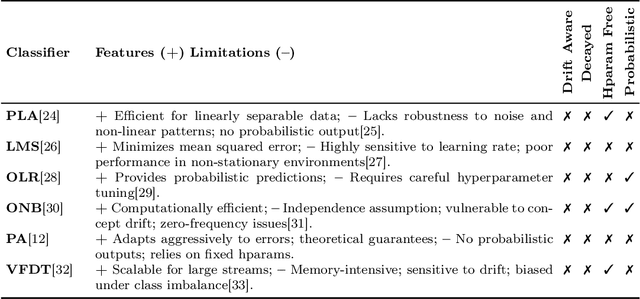
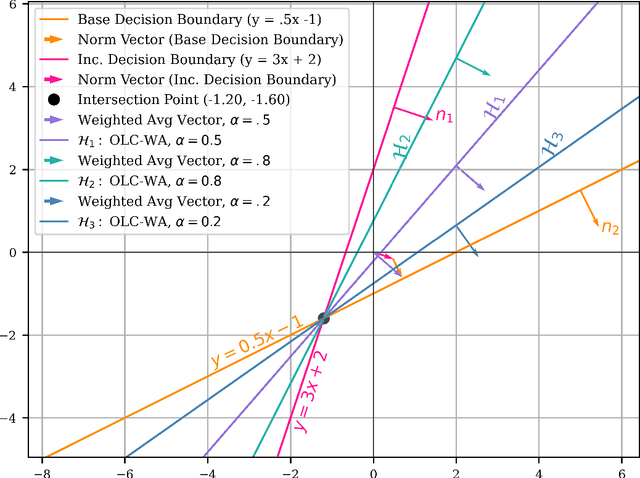
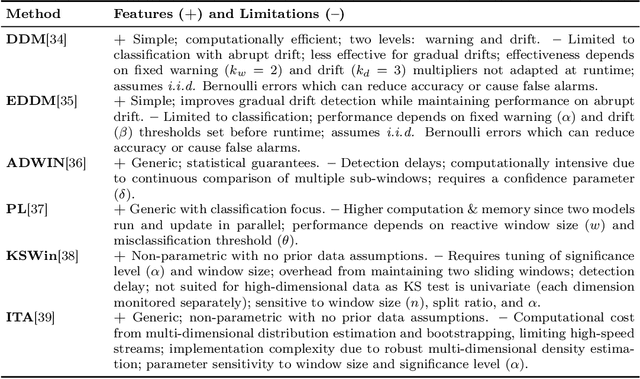
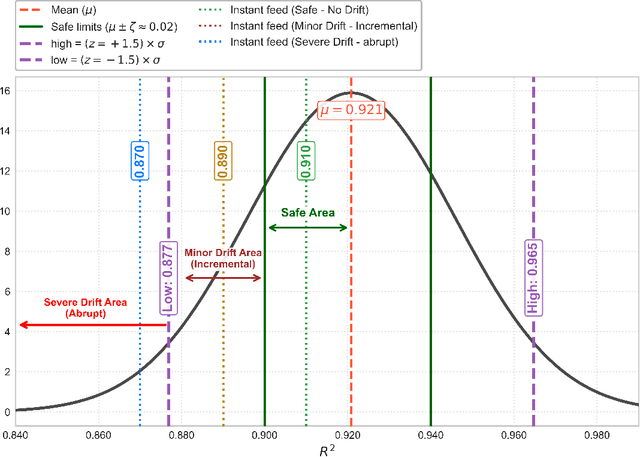
Real-world data sets often exhibit temporal dynamics characterized by evolving data distributions. Disregarding this phenomenon, commonly referred to as concept drift, can significantly diminish a model's predictive accuracy. Furthermore, the presence of hyperparameters in online models exacerbates this issue. These parameters are typically fixed and cannot be dynamically adjusted by the user in response to the evolving data distribution. This paper introduces Online Classification with Weighted Average (OLC-WA), an adaptive, hyperparameter-free online classification model equipped with an automated optimization mechanism. OLC-WA operates by blending incoming data streams with an existing base model. This blending is facilitated by an exponentially weighted moving average. Furthermore, an integrated optimization mechanism dynamically detects concept drift, quantifies its magnitude, and adjusts the model based on the observed data stream characteristics. This approach empowers the model to effectively adapt to evolving data distributions within streaming environments. Rigorous empirical evaluation across diverse benchmark datasets shows that OLC-WA achieves performance comparable to batch models in stationary environments, maintaining accuracy within 1-3%, and surpasses leading online baselines by 10-25% under drift, demonstrating its effectiveness in adapting to dynamic data streams.
Poly-FEVER: A Multilingual Fact Verification Benchmark for Hallucination Detection in Large Language Models
Mar 19, 2025Hallucinations in generative AI, particularly in Large Language Models (LLMs), pose a significant challenge to the reliability of multilingual applications. Existing benchmarks for hallucination detection focus primarily on English and a few widely spoken languages, lacking the breadth to assess inconsistencies in model performance across diverse linguistic contexts. To address this gap, we introduce Poly-FEVER, a large-scale multilingual fact verification benchmark specifically designed for evaluating hallucination detection in LLMs. Poly-FEVER comprises 77,973 labeled factual claims spanning 11 languages, sourced from FEVER, Climate-FEVER, and SciFact. It provides the first large-scale dataset tailored for analyzing hallucination patterns across languages, enabling systematic evaluation of LLMs such as ChatGPT and the LLaMA series. Our analysis reveals how topic distribution and web resource availability influence hallucination frequency, uncovering language-specific biases that impact model accuracy. By offering a multilingual benchmark for fact verification, Poly-FEVER facilitates cross-linguistic comparisons of hallucination detection and contributes to the development of more reliable, language-inclusive AI systems. The dataset is publicly available to advance research in responsible AI, fact-checking methodologies, and multilingual NLP, promoting greater transparency and robustness in LLM performance. The proposed Poly-FEVER is available at: https://huggingface.co/datasets/HanzhiZhang/Poly-FEVER.
DP-GTR: Differentially Private Prompt Protection via Group Text Rewriting
Mar 06, 2025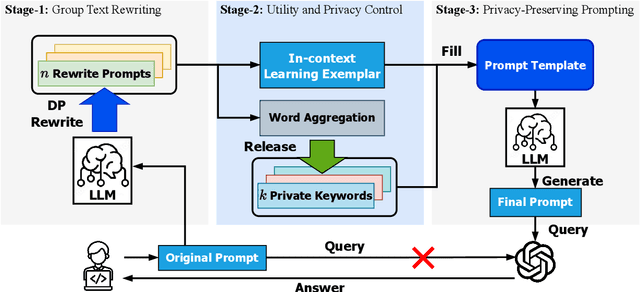
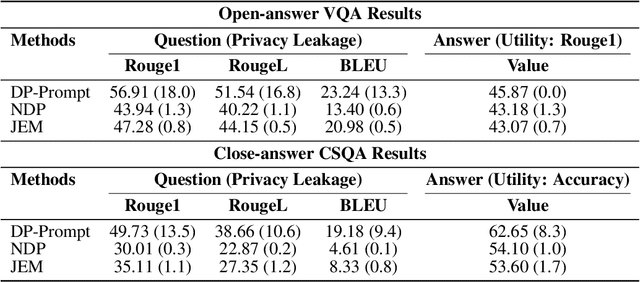
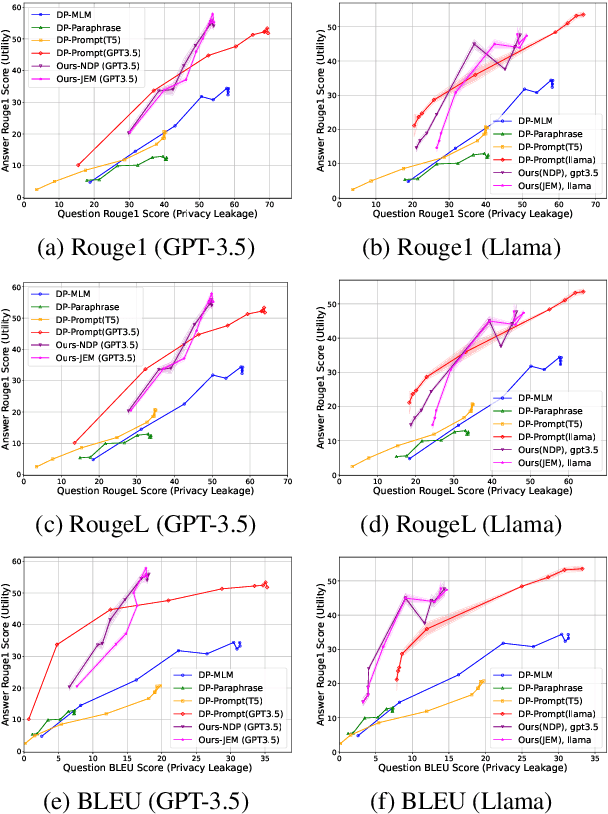
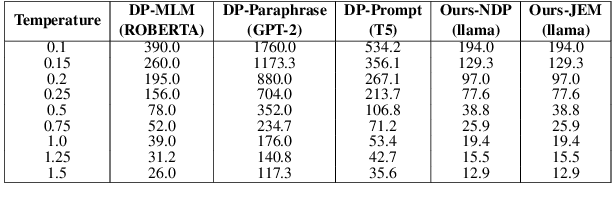
Prompt privacy is crucial, especially when using online large language models (LLMs), due to the sensitive information often contained within prompts. While LLMs can enhance prompt privacy through text rewriting, existing methods primarily focus on document-level rewriting, neglecting the rich, multi-granular representations of text. This limitation restricts LLM utilization to specific tasks, overlooking their generalization and in-context learning capabilities, thus hindering practical application. To address this gap, we introduce DP-GTR, a novel three-stage framework that leverages local differential privacy (DP) and the composition theorem via group text rewriting. DP-GTR is the first framework to integrate both document-level and word-level information while exploiting in-context learning to simultaneously improve privacy and utility, effectively bridging local and global DP mechanisms at the individual data point level. Experiments on CommonSense QA and DocVQA demonstrate that DP-GTR outperforms existing approaches, achieving a superior privacy-utility trade-off. Furthermore, our framework is compatible with existing rewriting techniques, serving as a plug-in to enhance privacy protection. Our code is publicly available at https://github.com/FatShion-FTD/DP-GTR for reproducibility.
PRVQL: Progressive Knowledge-guided Refinement for Robust Egocentric Visual Query Localization
Feb 11, 2025Egocentric visual query localization (EgoVQL) focuses on localizing the target of interest in space and time from first-person videos, given a visual query. Despite recent progressive, existing methods often struggle to handle severe object appearance changes and cluttering background in the video due to lacking sufficient target cues, leading to degradation. Addressing this, we introduce PRVQL, a novel Progressive knowledge-guided Refinement framework for EgoVQL. The core is to continuously exploit target-relevant knowledge directly from videos and utilize it as guidance to refine both query and video features for improving target localization. Our PRVQL contains multiple processing stages. The target knowledge from one stage, comprising appearance and spatial knowledge extracted via two specially designed knowledge learning modules, are utilized as guidance to refine the query and videos features for the next stage, which are used to generate more accurate knowledge for further feature refinement. With such a progressive process, target knowledge in PRVQL can be gradually improved, which, in turn, leads to better refined query and video features for localization in the final stage. Compared to previous methods, our PRVQL, besides the given object cues, enjoys additional crucial target information from a video as guidance to refine features, and hence enhances EgoVQL in complicated scenes. In our experiments on challenging Ego4D, PRVQL achieves state-of-the-art result and largely surpasses other methods, showing its efficacy. Our code, model and results will be released at https://github.com/fb-reps/PRVQL.
Unlocking Cross-Lingual Sentiment Analysis through Emoji Interpretation: A Multimodal Generative AI Approach
Dec 23, 2024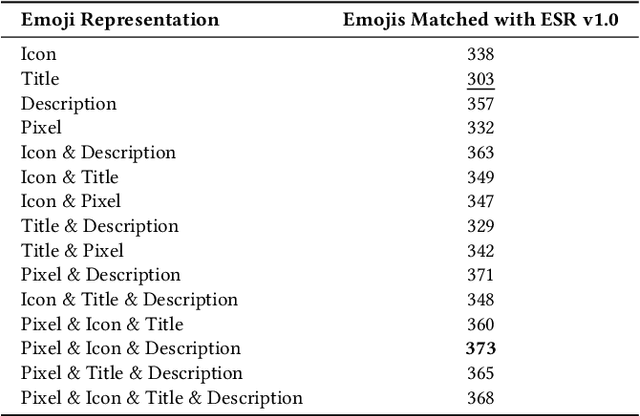
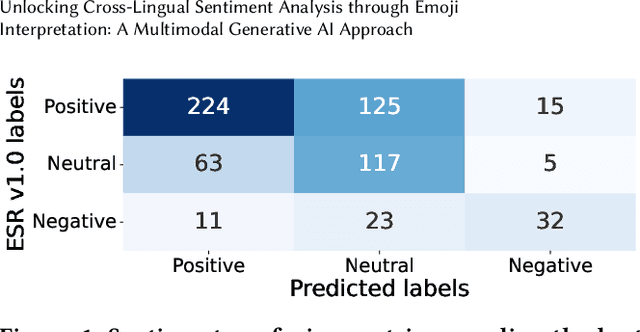
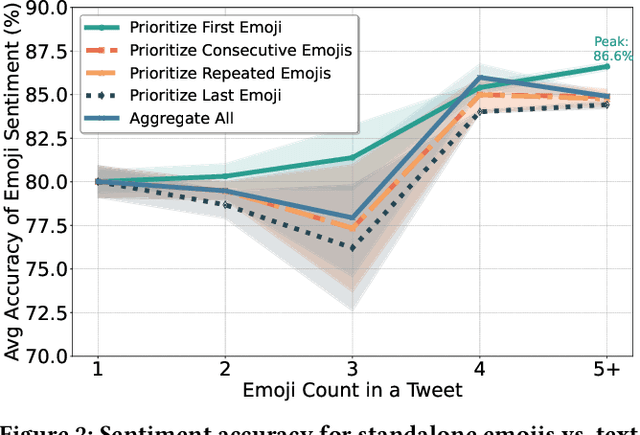
Emojis have become ubiquitous in online communication, serving as a universal medium to convey emotions and decorative elements. Their widespread use transcends language and cultural barriers, enhancing understanding and fostering more inclusive interactions. While existing work gained valuable insight into emojis understanding, exploring emojis' capability to serve as a universal sentiment indicator leveraging large language models (LLMs) has not been thoroughly examined. Our study aims to investigate the capacity of emojis to serve as reliable sentiment markers through LLMs across languages and cultures. We leveraged the multimodal capabilities of ChatGPT to explore the sentiments of various representations of emojis and evaluated how well emoji-conveyed sentiment aligned with text sentiment on a multi-lingual dataset collected from 32 countries. Our analysis reveals that the accuracy of LLM-based emoji-conveyed sentiment is 81.43%, underscoring emojis' significant potential to serve as a universal sentiment marker. We also found a consistent trend that the accuracy of sentiment conveyed by emojis increased as the number of emojis grew in text. The results reinforce the potential of emojis to serve as global sentiment indicators, offering insight into fields such as cross-lingual and cross-cultural sentiment analysis on social media platforms. Code: https://github.com/ResponsibleAILab/emoji-universal-sentiment.