 Add to Chrome
 Add to Firefox
 Add to Edge
LFQA-HP-1M: A Large-Scale Human Preference Dataset for Long-Form Question Answering
Feb 27, 2026
Long-form question answering (LFQA) demands nuanced evaluation of multi-sentence explanatory responses, yet existing metrics often fail to reflect human judgment. We present LFQA-HP-1M, a large-scale dataset comprising 1.3M human pairwise preference annotations for LFQA. We propose nine rubrics for answer quality evaluation, and show that simple linear models based on these features perform comparably to state-of-the-art LLM evaluators. We further examine transitivity consistency, positional bias, and verbosity biases in LLM evaluators and demonstrate their vulnerability to adversarial perturbations. Overall, this work provides one of the largest public LFQA preference datasets and a rubric-driven framework for transparent and reliable evaluation.

Unlocking Cross-Lingual Sentiment Analysis through Emoji Interpretation: A Multimodal Generative AI Approach
Dec 23, 2024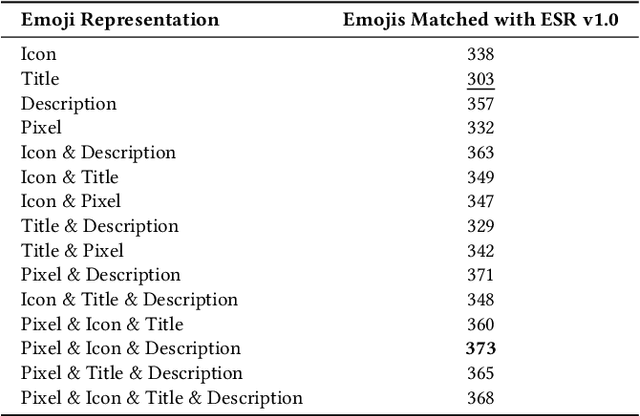
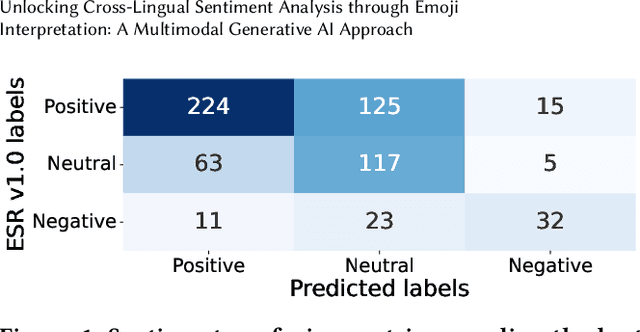
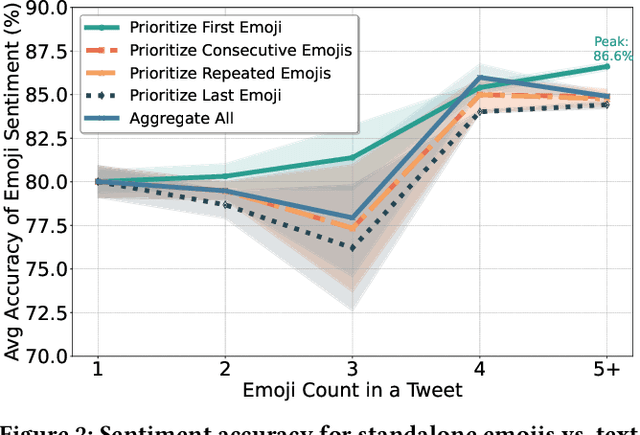
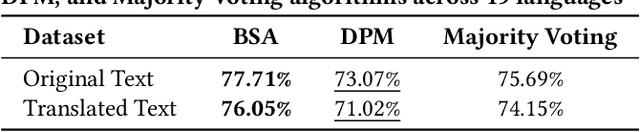
Emojis have become ubiquitous in online communication, serving as a universal medium to convey emotions and decorative elements. Their widespread use transcends language and cultural barriers, enhancing understanding and fostering more inclusive interactions. While existing work gained valuable insight into emojis understanding, exploring emojis' capability to serve as a universal sentiment indicator leveraging large language models (LLMs) has not been thoroughly examined. Our study aims to investigate the capacity of emojis to serve as reliable sentiment markers through LLMs across languages and cultures. We leveraged the multimodal capabilities of ChatGPT to explore the sentiments of various representations of emojis and evaluated how well emoji-conveyed sentiment aligned with text sentiment on a multi-lingual dataset collected from 32 countries. Our analysis reveals that the accuracy of LLM-based emoji-conveyed sentiment is 81.43%, underscoring emojis' significant potential to serve as a universal sentiment marker. We also found a consistent trend that the accuracy of sentiment conveyed by emojis increased as the number of emojis grew in text. The results reinforce the potential of emojis to serve as global sentiment indicators, offering insight into fields such as cross-lingual and cross-cultural sentiment analysis on social media platforms. Code: https://github.com/ResponsibleAILab/emoji-universal-sentiment.