 Add to Chrome
 Add to Firefox
 Add to Edge
Pointwise Generalization in Deep Neural Networks
May 18, 2026
We address the fundamental question of why deep neural networks generalize by establishing a pointwise generalization theory for fully connected networks. This framework resolves long-standing barriers to characterizing the rich nonlinear feature-learning regime and builds a new statistical foundation for representation learning. For each trained model, we characterize the hypothesis via a pointwise Riemannian Dimension, derived from the eigenvalues of the learned feature representations across layers. This establishes a principled framework for deriving hypothesis-dependent, representation-aware generalization bounds. These bounds offer a systematic upgrade over approaches based on model size, products of norms, and infinite-width linearizations, yielding guarantees that are orders of magnitude tighter in both theory and experiment. Analytically, we identify the structural properties and mathematical principles that explain the tractability of deep networks. Empirically, the pointwise Riemannian Dimension exhibits substantial feature compression, decreases with increased over-parameterization, and captures the implicit bias of optimizers. Taken together, our results indicate that deep networks are mathematically tractable in practical regimes and that their generalization is sharply explained by pointwise, feature-spectrum-aware complexity.

In-Context Learning for Data-Driven Censored Inventory Control
May 14, 2026We study inventory control with decision-dependent censoring, focusing on the censored or repeated newsvendor (R-NV), where each order quantity determines whether demand is fully observed or censored by sales. Existing approaches based on parametric Thompson sampling (TS) can be brittle under prior mismatch, while offline imputation methods need not transfer to online learning. Motivated by the predictive view of decision making, we combine these ideas by taking oracle actions on learned completions of latent demand. We propose in-context generative posterior sampling (ICGPS), which uses modern generative models that are meta-trained offline and deployed online by in-context autoregressive generation. Theoretically, we show that the Bayesian regret of ICGPS with a learned completion kernel is bounded by the Bayesian regret of a TS benchmark with the ideal completion kernel plus a deployment penalty scaling as $\sqrt{T}$ times the square root of the completion mismatch. This yields a plug-in template for operational problems with known TS regret bounds. For R-NV, we derive sublinear Bayesian regret by reducing censored feedback to bandit convex optimization feedback. We also show that, under reasonable coverage and stability assumptions, the online completion mismatch is controlled by the offline censored predictive mismatch, so offline predictive quality transfers to online performance. Practically, we instantiate ICGPS with ChronosFlow, which combines a frozen time-series transformer backbone with a trainable conditional normalizing-flow head for fast censoring-consistent sampling. In benchmark experiments, ChronosFlow-ICGPS matches correctly specified TS, outperforms myopic and UCB-style baselines, and is robust to prior mismatch and distribution shift. ChronosFlow-ICGPS also performs well for the real-world SuperStore dataset, especially under heavy censoring.
Autoregressive Learning in Joint KL: Sharp Oracle Bounds and Lower Bounds
May 12, 2026We study the fundamental and timely problem of learning long sequences in autoregressive modeling and next-token prediction under model misspecification, measured by the joint Kullback--Leibler (KL) divergence. Our goal is to characterize how the sequence horizon \(H\) affects both approximation and estimation errors in this joint-distribution, sequence-level regime. By establishing matching upper and lower bounds, we provide, to our knowledge, the first complete characterization of long-horizon error behavior under the natural joint KL objective, with improved rates and optimality justification relative to existing work. On the approximation side, we show that joint KL admits a horizon-free approximation factor, in sharp contrast to Hellinger-based analyses that exhibit an \(Ω(H)\) dependence for computationally efficient methods; this isolates the choice of divergence as the source of approximation amplification. On the estimation side, we prove a fundamental information-theoretic lower bound of order \(Ω(H)\) that holds for both decomposable policy classes and fully shared policies, matching the \(\widetilde O(H)\) upper bounds achieved by computationally efficient algorithms. Our analysis clarifies the landscape of recent autoregressive learning results by aligning the log-loss training objective, the sequence-level evaluation metric, and the approximation metric {\color{black}through a sharp joint-KL oracle theory}. We further show that these joint-KL guarantees imply policy learning regret bounds at rates matching prior imitation learning literature.
On the Blessing of Pre-training in Weak-to-Strong Generalization
May 07, 2026The paradigm of Weak-to-Strong Generalization (W2SG) suggests that a pre-trained strong model can surpass its weak supervisor, yet the decisive role of pre-training remains theoretically and empirically under-explored. In this work, we identify pre-training as the essential prerequisite for the emergence of W2SG. Theoretically, we formalize the W2SG problem within a high-dimensional single-index model framework using spiked Gaussian data, modeling pre-training as a spectral initialization step. Building upon prior impossibility results regarding the failure of learning under random initialization, we prove that W2SG is achievable when pre-training provides a geometric warm start that places the model within an "effective region" characterized by a perturbed strong-convexity geometry. Within this region, we derive a rigorous generalization bound that naturally captures the optimization dynamics: an initial performance improvement followed by a saturation bottleneck dictated by the weak supervisor's bias. Empirically, we first validate all our assumptions and theoretical insights through controlled synthetic simulations. Finally, through a massive-scale evaluation of hundreds of intermediate pre-training checkpoints from large language models, we demonstrate that W2SG is not an innate capability but emerges via a phase transition tightly coupled with the progression of pre-training.
Assouad, Fano, and Le Cam with Interaction: A Unifying Lower Bound Framework and Characterization for Bandit Learnability
Oct 07, 2024In this paper, we develop a unified framework for lower bound methods in statistical estimation and interactive decision making. Classical lower bound techniques -- such as Fano's inequality, Le Cam's method, and Assouad's lemma -- have been central to the study of minimax risk in statistical estimation, yet they are insufficient for the analysis of methods that collect data in an interactive manner. The recent minimax lower bounds for interactive decision making via the Decision-Estimation Coefficient (DEC) appear to be genuinely different from the classical methods. We propose a unified view of these distinct methodologies through a general algorithmic lower bound method. We further introduce a novel complexity measure, decision dimension, which facilitates the derivation of new lower bounds for interactive decision making. In particular, decision dimension provides a characterization of bandit learnability for any structured bandit model class. Further, we characterize the sample complexity of learning convex model class up to a polynomial gap with the decision dimension, addressing the remaining gap between upper and lower bounds in Foster et al. (2021, 2023).
Statistical Properties of Robust Satisficing
May 30, 2024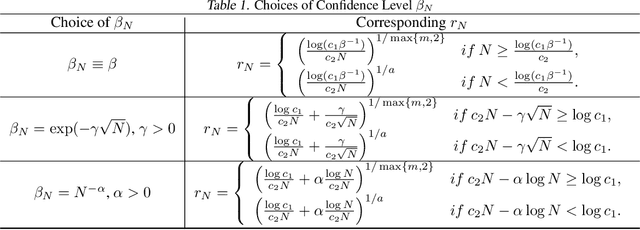
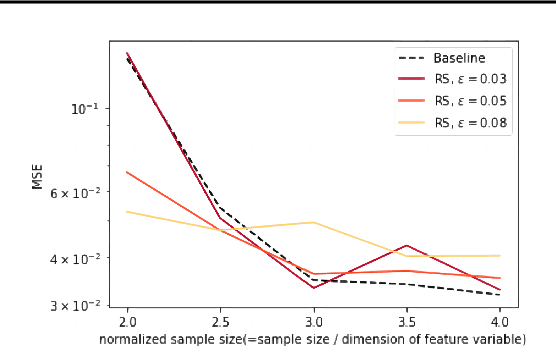
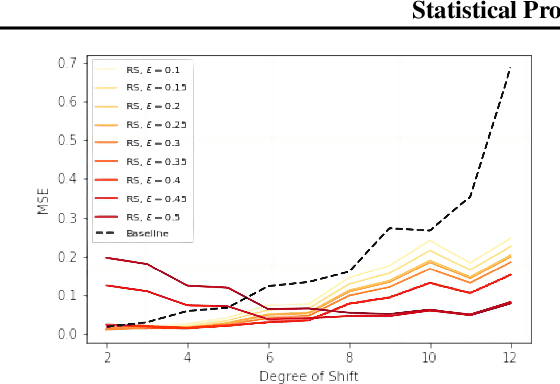
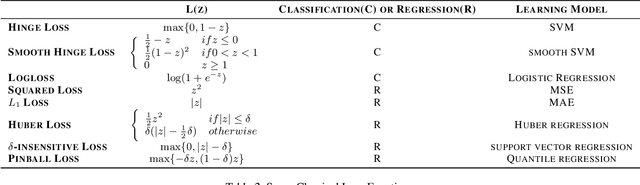
The Robust Satisficing (RS) model is an emerging approach to robust optimization, offering streamlined procedures and robust generalization across various applications. However, the statistical theory of RS remains unexplored in the literature. This paper fills in the gap by comprehensively analyzing the theoretical properties of the RS model. Notably, the RS structure offers a more straightforward path to deriving statistical guarantees compared to the seminal Distributionally Robust Optimization (DRO), resulting in a richer set of results. In particular, we establish two-sided confidence intervals for the optimal loss without the need to solve a minimax optimization problem explicitly. We further provide finite-sample generalization error bounds for the RS optimizer. Importantly, our results extend to scenarios involving distribution shifts, where discrepancies exist between the sampling and target distributions. Our numerical experiments show that the RS model consistently outperforms the baseline empirical risk minimization in small-sample regimes and under distribution shifts. Furthermore, compared to the DRO model, the RS model exhibits lower sensitivity to hyperparameter tuning, highlighting its practicability for robustness considerations.
Bayesian Design Principles for Frequentist Sequential Learning
Oct 01, 2023


We develop a general theory to optimize the frequentist regret for sequential learning problems, where efficient bandit and reinforcement learning algorithms can be derived from unified Bayesian principles. We propose a novel optimization approach to generate "algorithmic beliefs" at each round, and use Bayesian posteriors to make decisions. The optimization objective to create "algorithmic beliefs," which we term "Algorithmic Information Ratio," represents an intrinsic complexity measure that effectively characterizes the frequentist regret of any algorithm. To the best of our knowledge, this is the first systematical approach to make Bayesian-type algorithms prior-free and applicable to adversarial settings, in a generic and optimal manner. Moreover, the algorithms are simple and often efficient to implement. As a major application, we present a novel algorithm for multi-armed bandits that achieves the "best-of-all-worlds" empirical performance in the stochastic, adversarial, and non-stationary environments. And we illustrate how these principles can be used in linear bandits, bandit convex optimization, and reinforcement learning.
Towards Optimal Problem Dependent Generalization Error Bounds in Statistical Learning Theory
Dec 03, 2020We study problem-dependent rates, i.e., generalization errors that scale near-optimally with the variance, the effective loss, or the gradient norms evaluated at the "best hypothesis." We introduce a principled framework dubbed "uniform localized convergence," and characterize sharp problem-dependent rates for central statistical learning problems. From a methodological viewpoint, our framework resolves several fundamental limitations of existing uniform convergence and localization analysis approaches. It also provides improvements and some level of unification in the study of localized complexities, one-sided uniform inequalities, and sample-based iterative algorithms. In the so-called "slow rate" regime, we provides the first (moment-penalized) estimator that achieves the optimal variance-dependent rate for general "rich" classes; we also establish improved loss-dependent rate for standard empirical risk minimization. In the "fast rate" regime, we establish finite-sample problem-dependent bounds that are comparable to precise asymptotics. In addition, we show that efficient algorithms like gradient descent and first-order Expectation-Maximization can achieve optimal generalization error in several representative problems across the areas of non-convex learning, stochastic optimization, and learning with missing data.
Upper Counterfactual Confidence Bounds: a New Optimism Principle for Contextual Bandits
Jul 16, 2020The principle of optimism in the face of uncertainty is one of the most widely used and successful ideas in multi-armed bandits and reinforcement learning. However, existing optimistic algorithms (primarily UCB and its variants) are often unable to deal with large context spaces. Essentially all existing well performing algorithms for general contextual bandit problems rely on weighted action allocation schemes; and theoretical guarantees for optimism-based algorithms are only known for restricted formulations. In this paper we study general contextual bandits under the realizability condition, and propose a simple generic principle to design optimistic algorithms, dubbed "Upper Counterfactual Confidence Bounds" (UCCB). We show that these algorithms are provably optimal and efficient in the presence of large context spaces. Key components of UCCB include: 1) a systematic analysis of confidence bounds in policy space rather than in action space; and 2) the potential function perspective that is used to express the power of optimism in the contextual setting. We further show how the UCCB principle can be extended to infinite action spaces, by constructing confidence bounds via the newly introduced notion of "counterfactual action divergence."