 Add to Chrome
 Add to Firefox
 Add to Edge
INFANiTE: Implicit Neural representation for high-resolution Fetal brain spatio-temporal Atlas learNing from clinical Thick-slicE MRI
May 11, 2026
Spatio-temporal fetal brain atlases are important for characterizing normative neurodevelopment and identifying congenital anomalies. However, existing atlas construction pipelines necessitate days for slice-to-volume reconstruction (SVR) to generate high-resolution 3D brain volumes and several additional days for iterative volume registration, thereby rendering atlas construction from large-scale cohorts prohibitively impractical. We address these limitations with INFANiTE, an Implicit Neural Representation (INR) framework for high-resolution Fetal brain spatio-temporal Atlas learNing from clinical Thick-slicE MRI scans, bypassing both the costly SVR and the iterative non-rigid registration steps entirely, thereby substantially accelerating atlas construction. Extensive experiments demonstrate that INFANiTE outperforms existing baselines in subject consistency, reference fidelity, intrinsic quality and biological plausibility, even under challenging sparse-data settings. Additionally, INFANiTE reduces the end-to-end processing time (i.e., from raw scans to the final atlas) from days to hours compared to the traditional 3D volume-based pipeline (e.g., SyGN), facilitating large-scale population-level fetal brain analysis. Our code is publicly available at: https://anonymous.4open.science/r/INFANiTE-5D74

Master-Auxiliary: an efficient aggregation strategy for video anomaly detection
May 24, 2020


The aim of surveillance video anomaly detection is to detect events that rarely or never happened in a specified scene. Different detectors can detect different anomalies. This paper proposes an efficient strategy to aggregate multiple detectors together. At first, the aggregation strategy chooses one detector as master detector, and sets the other detectors as auxiliary detectors. Then, the aggregation strategy extracts credible information from auxiliary detectors, which includes credible abnormal (Cred-a) frames and credible normal (Cred-n) frames, and counts their Cred-a and Cred-n frequencies. Finally, the aggregation strategy utilizes the Cred-a and Cred-n frequencies to calculate soft weights in a voting manner, and uses the soft weights to assist the master detector. Experiments are carried out on multiple datasets. Compared with existing aggregation strategies, the proposed strategy achieves state-of-the-art performance.
A Wasserstein GAN model with the total variational regularization
Dec 03, 2018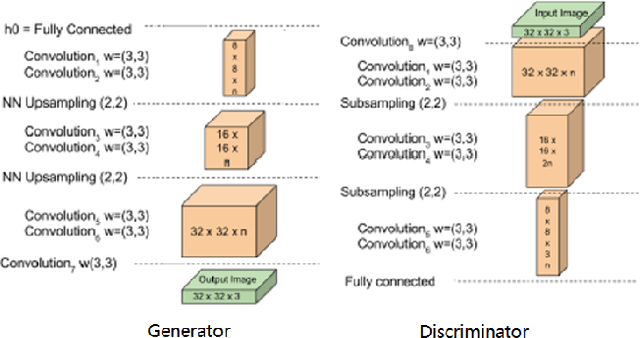
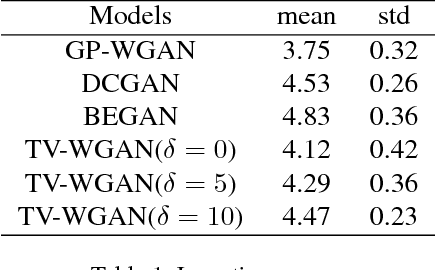
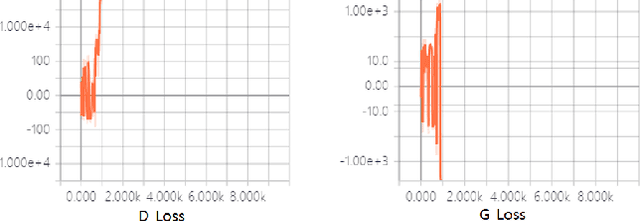

It is well known that the generative adversarial nets (GANs) are remarkably difficult to train. The recently proposed Wasserstein GAN (WGAN) creates principled research directions towards addressing these issues. But we found in practice that gradient penalty WGANs (GP-WGANs) still suffer from training instability. In this paper, we combine a Total Variational (TV) regularizing term into the WGAN formulation instead of weight clipping or gradient penalty, which implies that the Lipschitz constraint is enforced on the critic network. Our proposed method is more stable at training than GP-WGANs and works well across varied GAN architectures. We also present a method to control the trade-off between image diversity and visual quality. It does not bring any computation burden.
An Image dehazing approach based on the airlight field estimation
May 06, 2018


This paper proposes a scheme for single image haze removal based on the airlight field (ALF) estimation. Conventional image dehazing methods which are based on a physical model generally take the global atmospheric light as a constant. However, the constant-airlight assumption may be unsuitable for images with large sky regions, which causes unacceptable brightness imbalance and color distortion in recovery images. This paper models the atmospheric light as a field function, and presents a maximum a-priori (MAP) method for jointly estimating the airlight field, the transmission rate and the haze free image. We also introduce a valid haze-level prior for effective estimate of transmission. Evaluation on real world images shows that the proposed approach outperforms existing methods in single image dehazing, especially when the large sky region is included.