 Add to Chrome
 Add to Firefox
 Add to Edge
Neuromorphic Speech Enhancement with Dual-Branch Spiking Neural Networks
Jun 22, 2026
Spiking neural network (SNN)-based neuromorphic speech enhancement has emerged as a promising paradigm due to its energy efficiency, yet it still underperforms classical artificial neural network (ANN)-based approaches owing to binary activations and the lack of well-designed network architectures. To overcome this limitation, we propose a novel dual-branch spiking neural network architecture equipped with a gated spiking unit (GSU), termed GSU-DBNet. Specifically, GSU-DBNet simultaneously models the speech magnitude spectrum and complex spectrum, predicting the corresponding magnitude and complex spectral masks. Meanwhile, a dual-path GSU module is adopted to exploit temporal and frequency information for enhanced spatiotemporal feature representation. Experiments on a popular benchmark dataset show that GSU-DBNet achieves a PESQ score of 3.04 with only 394K parameters, outperforming existing SNN-based methods while using only 4.5%--10.6% of the parameters of representative ANN-based models.

PassNet: Scaling Large Language Models for Graph Compiler Pass Generation
May 28, 2026Modern tensor compilers such as TorchInductor deliver substantial speedups on mainstream models, yet face a systematic performance ceiling on long-tail workloads -- our profiling shows that 43% of real-world subgraphs experience end-to-end slowdowns under default compilation. While LLMs offer a path toward automated optimization, existing efforts focus on standalone kernel generation. We argue that pass generation -- where LLMs author structured graph transformations that integrate directly into compiler pipelines -- is the more appropriate abstraction. We propose PassNet, the first large-scale ecosystem for LLM-based compiler pass generation, comprising: (1) PassNet-Dataset, over 18K unique computational graphs from 100K real-world models; and (2) PassBench, 200 curated long-tail fusible tasks (comprising 2,060 subgraphs in total) evaluated under the Error-aware Speedup Score (ES_t) -- a metric unifying correctness, stability, and performance -- with layered integrity defenses against systematic LLM exploitation. Experiments reveal that PassBench is both highly discriminative and genuinely unsaturated: the best frontier model trails TorchInductor by 37% in aggregate, yet on individual subgraphs LLMs achieve up to 3x speedup over the same compiler -- indicating that the bottleneck is consistency, not capability. Fine-tuning a small model on merely ~4K PassNet trajectories yields a 2.67x improvement approaching frontier-model performance, demonstrating substantial headroom and validating PassNet as live training infrastructure for advancing LLM-driven compiler optimization. All data, benchmarks, and tooling are publicly available.
A Survey on Data Quality Dimensions and Tools for Machine Learning
Jun 28, 2024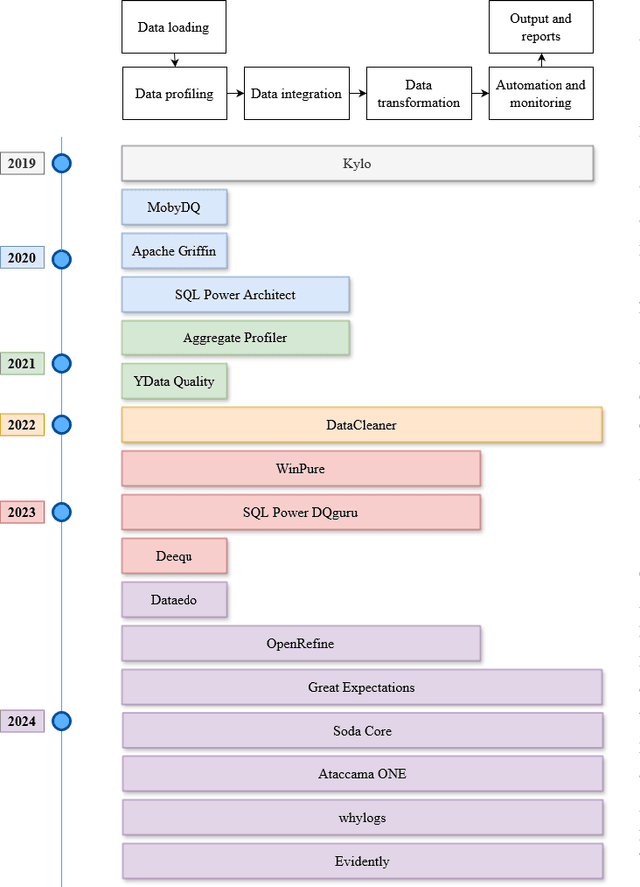
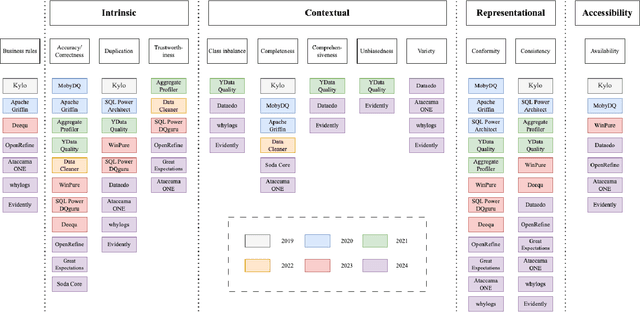
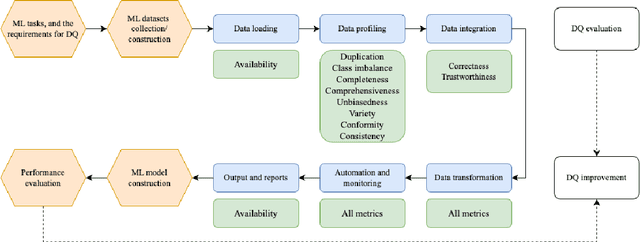
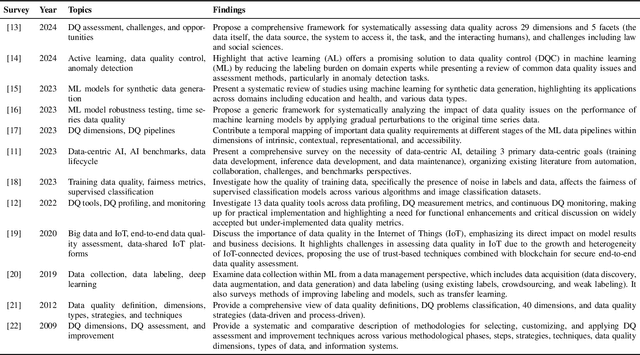
Machine learning (ML) technologies have become substantial in practically all aspects of our society, and data quality (DQ) is critical for the performance, fairness, robustness, safety, and scalability of ML models. With the large and complex data in data-centric AI, traditional methods like exploratory data analysis (EDA) and cross-validation (CV) face challenges, highlighting the importance of mastering DQ tools. In this survey, we review 17 DQ evaluation and improvement tools in the last 5 years. By introducing the DQ dimensions, metrics, and main functions embedded in these tools, we compare their strengths and limitations and propose a roadmap for developing open-source DQ tools for ML. Based on the discussions on the challenges and emerging trends, we further highlight the potential applications of large language models (LLMs) and generative AI in DQ evaluation and improvement for ML. We believe this comprehensive survey can enhance understanding of DQ in ML and could drive progress in data-centric AI. A complete list of the literature investigated in this survey is available on GitHub at: https://github.com/haihua0913/awesome-dq4ml.
Multi-View Spatial-Temporal Graph Convolutional Networks with Domain Generalization for Sleep Stage Classification
Sep 04, 2021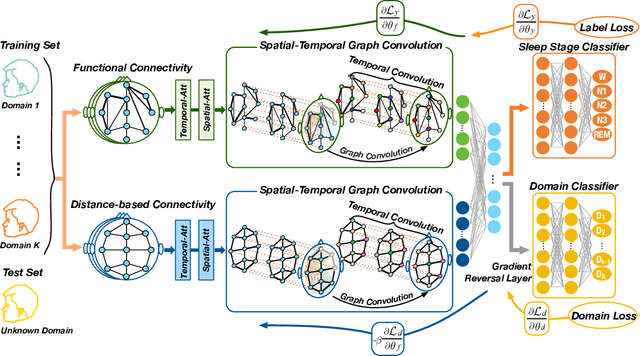
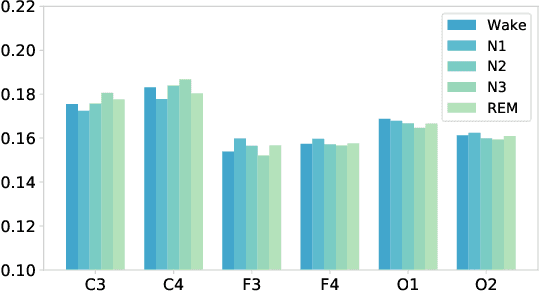
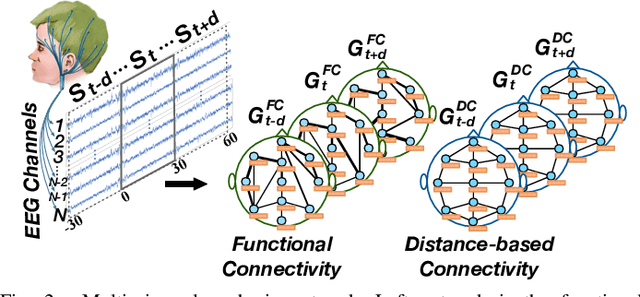
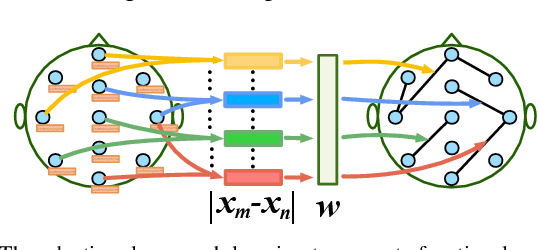
Sleep stage classification is essential for sleep assessment and disease diagnosis. Although previous attempts to classify sleep stages have achieved high classification performance, several challenges remain open: 1) How to effectively utilize time-varying spatial and temporal features from multi-channel brain signals remains challenging. Prior works have not been able to fully utilize the spatial topological information among brain regions. 2) Due to the many differences found in individual biological signals, how to overcome the differences of subjects and improve the generalization of deep neural networks is important. 3) Most deep learning methods ignore the interpretability of the model to the brain. To address the above challenges, we propose a multi-view spatial-temporal graph convolutional networks (MSTGCN) with domain generalization for sleep stage classification. Specifically, we construct two brain view graphs for MSTGCN based on the functional connectivity and physical distance proximity of the brain regions. The MSTGCN consists of graph convolutions for extracting spatial features and temporal convolutions for capturing the transition rules among sleep stages. In addition, attention mechanism is employed for capturing the most relevant spatial-temporal information for sleep stage classification. Finally, domain generalization and MSTGCN are integrated into a unified framework to extract subject-invariant sleep features. Experiments on two public datasets demonstrate that the proposed model outperforms the state-of-the-art baselines.