 Add to Chrome
 Add to Firefox
 Add to Edge
Back to Source: Open-Set Continual Test-Time Adaptation via Domain Compensation
Apr 23, 2026
Test-Time Adaptation (TTA) aims to mitigate distributional shifts between training and test domains during inference time. However, existing TTA methods fall short in the realistic scenario where models face both continually changing domains and the simultaneous emergence of unknown semantic classes, a challenging setting we term Open-set Continual Test-Time Adaptation (OCTTA). The coupling of domain and semantic shifts often collapses the feature space, severely degrading both classification and out-of-distribution detection. To tackle this, we propose DOmain COmpensation (DOCO), a lightweight and effective framework that robustly performs domain adaptation and OOD detection in a synergistic, closed loop. DOCO first performs dynamic, adaptation-conditioned sample splitting to separate likely ID from OOD samples. Then, using only the ID samples, it learns a domain compensation prompt by aligning feature statistics with the source domain, guided by a structural preservation regularizer that prevents semantic distortion. This learned prompt is then propagated to the OOD samples within the same batch, effectively isolating their semantic novelty for more reliable detection. Extensive experiments on multiple challenging benchmarks demonstrate that DOCO outperforms prior CTTA and OSTTA methods, establishing a new state-of-the-art for the demanding OCTTA setting.

Passenger hazard perception based on EEG signals for highly automated driving vehicles
Aug 29, 2024

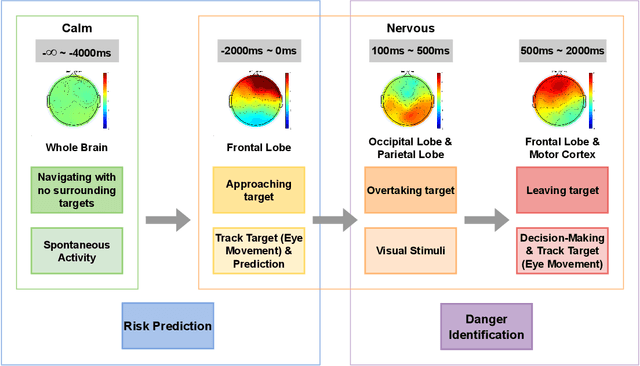
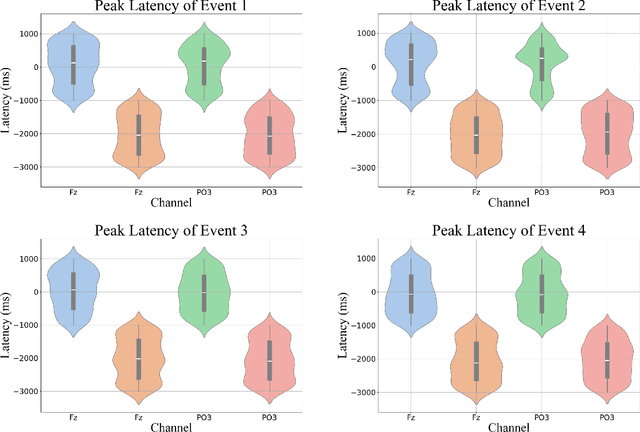
Enhancing the safety of autonomous vehicles is crucial, especially given recent accidents involving automated systems. As passengers in these vehicles, humans' sensory perception and decision-making can be integrated with autonomous systems to improve safety. This study explores neural mechanisms in passenger-vehicle interactions, leading to the development of a Passenger Cognitive Model (PCM) and the Passenger EEG Decoding Strategy (PEDS). Central to PEDS is a novel Convolutional Recurrent Neural Network (CRNN) that captures spatial and temporal EEG data patterns. The CRNN, combined with stacking algorithms, achieves an accuracy of $85.0\% \pm 3.18\%$. Our findings highlight the predictive power of pre-event EEG data, enhancing the detection of hazardous scenarios and offering a network-driven framework for safer autonomous vehicles.