 Add to Chrome
 Add to Firefox
 Add to Edge
Unmixing-Guided Spatial-Spectral Mamba with Clustering Tokens for Hyperspectral Image Classification
Apr 10, 2026
Although hyperspectral image (HSI) classification is critical for supporting various environmental applications, it is a challenging task due to the spectral-mixture effect, the spatial-spectral heterogeneity and the difficulty to preserve class boundaries and details. This letter presents a novel unmixing-guided spatial-spectral Mamba with clustering tokens for improved HSI classification, with the following contributions. First, to disentangle the spectral mixture effect in HSI for improved pattern discovery, we design a novel spectral unmixing network that not only automatically learns endmembers and abundance maps from HSI but also accounts for endmember variabilities. Second, to generate Mamba token sequences, based on the clusters defined by abundance maps, we design an efficient Top-\textit{K} token selection strategy to adaptively sequence the tokens for improved representational capability. Third, to improve spatial-spectral feature learning and detail preservation, based on the Top-\textit{K} token sequences, we design a novel unmixing-guided spatial-spectral Mamba module that greatly improves traditional Mamba models in terms of token learning and sequencing. Fourth, to learn simultaneously the endmember-abundance patterns and classification labels, a multi-task scheme is designed for model supervision, leading to a new unmixing-classification framework that outputs not only accurate classification maps but also a comprehensive spectral-library and abundance maps. Comparative experiments on four HSI datasets demonstrate that our model can greatly outperform the other state-of-the-art approaches. Code is available at https://github.com/GSIL-UCalgary/Unmixing_guided_Mamba.git

mHC-HSI: Clustering-Guided Hyper-Connection Mamba for Hyperspectral Image Classification
Mar 03, 2026Recently, DeepSeek has invented the manifold-constrained hyper-connection (mHC) approach which has demonstrated significant improvements over the traditional residual connection in deep learning models \cite{xie2026mhc}. Nevertheless, this approach has not been tailor-designed for improving hyperspectral image (HSI) classification. This paper presents a clustering-guided mHC Mamba model (mHC-HSI) for enhanced HSI classification, with the following contributions. First, to improve spatial-spectral feature learning, we design a novel clustering-guided Mamba module, based on the mHC framework, that explicitly learns both spatial and spectral information in HSI. Second, to decompose the complex and heterogeneous HSI into smaller clusters, we design a new implementation of the residual matrix in mHC, which can be treated as soft cluster membership maps, leading to improved explainability of the mHC approach. Third, to leverage the physical spectral knowledge, we divide the spectral bands into physically-meaningful groups and use them as the "parallel streams" in mHC, leading to a physically-meaningful approach with enhanced interpretability. The proposed approach is tested on benchmark datasets in comparison with the state-of-the-art methods, and the results suggest that the proposed model not only improves the accuracy but also enhances the model explainability. Code is available here: https://github.com/GSIL-UCalgary/mHC_HyperSpectral
Clustering-Guided Spatial-Spectral Mamba for Hyperspectral Image Classification
Jan 22, 2026Although Mamba models greatly improve Hyperspectral Image (HSI) classification, they have critical challenges in terms defining efficient and adaptive token sequences for improve performance. This paper therefore presents CSSMamba (Clustering-guided Spatial-Spectral Mamba) framework to better address the challenges, with the following contributions. First, to achieve efficient and adaptive token sequences for improved Mamba performance, we integrate the clustering mechanism into a spatial Mamba architecture, leading to a cluster-guided spatial Mamba module (CSpaMamba) that reduces the Mamba sequence length and improves Mamba feature learning capability. Second, to improve the learning of both spatial and spectral information, we integrate the CSpaMamba module with a spectral mamba module (SpeMamba), leading to a complete clustering-guided spatial-spectral Mamba framework. Third, to further improve feature learning capability, we introduce an Attention-Driven Token Selection mechanism to optimize Mamba token sequencing. Last, to seamlessly integrate clustering into the Mamba model in a coherent manner, we design a Learnable Clustering Module that learns the cluster memberships in an adaptive manner. Experiments on the Pavia University, Indian Pines, and Liao-Ning 01 datasets demonstrate that CSSMamba achieves higher accuracy and better boundary preservation compared to state-of-the-art CNN, Transformer, and Mamba-based methods.
White-Box mHC: Electromagnetic Spectrum-Aware and Interpretable Stream Interactions for Hyperspectral Image Classification
Jan 22, 2026In hyperspectral image classification (HSIC), most deep learning models rely on opaque spectral-spatial feature mixing, limiting their interpretability and hindering understanding of internal decision mechanisms. We present physical spectrum-aware white-box mHC, named ES-mHC, a hyper-connection framework that explicitly models interactions among different electromagnetic spectrum groupings (residual stream in mHC) interactions using structured, directional matrices. By separating feature representation from interaction structure, ES-mHC promotes electromagnetic spectrum grouping specialization, reduces redundancy, and exposes internal information flow that can be directly visualized and spatially analyzed. Using hyperspectral image classification as a representative testbed, we demonstrate that the learned hyper-connection matrices exhibit coherent spatial patterns and asymmetric interaction behaviors, providing mechanistic insight into the model internal dynamics. Furthermore, we find that increasing the expansion rate accelerates the emergence of structured interaction patterns. These results suggest that ES-mHC transforms HSIC from a purely black-box prediction task into a structurally transparent, partially white-box learning process.
FROST-Drive: Scalable and Efficient End-to-End Driving with a Frozen Vision Encoder
Jan 06, 2026End-to-end (E2E) models in autonomous driving aim to directly map sensor inputs to control commands, but their ability to generalize to novel and complex scenarios remains a key challenge. The common practice of fully fine-tuning the vision encoder on driving datasets potentially limits its generalization by causing the model to specialize too heavily in the training data. This work challenges the necessity of this training paradigm. We propose FROST-Drive, a novel E2E architecture designed to preserve and leverage the powerful generalization capabilities of a pretrained vision encoder from a Vision-Language Model (VLM). By keeping the encoder's weights frozen, our approach directly transfers the rich, generalized world knowledge from the VLM to the driving task. Our model architecture combines this frozen encoder with a transformer-based adapter for multimodal fusion and a GRU-based decoder for smooth waypoint generation. Furthermore, we introduce a custom loss function designed to directly optimize for Rater Feedback Score (RFS), a metric that prioritizes robust trajectory planning. We conduct extensive experiments on Waymo Open E2E Dataset, a large-scale datasets deliberately curated to capture the long-tail scenarios, demonstrating that our frozen-encoder approach significantly outperforms models that employ full fine-tuning. Our results provide substantial evidence that preserving the broad knowledge of a capable VLM is a more effective strategy for achieving robust, generalizable driving performance than intensive domain-specific adaptation. This offers a new pathway for developing vision-based models that can better handle the complexities of real-world application domains.
Trustworthy Data-Driven Wildfire Risk Prediction and Understanding in Western Canada
Jan 04, 2026In recent decades, the intensification of wildfire activity in western Canada has resulted in substantial socio-economic and environmental losses. Accurate wildfire risk prediction is hindered by the intrinsic stochasticity of ignition and spread and by nonlinear interactions among fuel conditions, meteorology, climate variability, topography, and human activities, challenging the reliability and interpretability of purely data-driven models. We propose a trustworthy data-driven wildfire risk prediction framework based on long-sequence, multi-scale temporal modeling, which integrates heterogeneous drivers while explicitly quantifying predictive uncertainty and enabling process-level interpretation. Evaluated over western Canada during the record-breaking 2023 and 2024 fire seasons, the proposed model outperforms existing time-series approaches, achieving an F1 score of 0.90 and a PR-AUC of 0.98 with low computational cost. Uncertainty-aware analysis reveals structured spatial and seasonal patterns in predictive confidence, highlighting increased uncertainty associated with ambiguous predictions and spatiotemporal decision boundaries. SHAP-based interpretation provides mechanistic understanding of wildfire controls, showing that temperature-related drivers dominate wildfire risk in both years, while moisture-related constraints play a stronger role in shaping spatial and land-cover-specific contrasts in 2024 compared to the widespread hot and dry conditions of 2023. Data and code are available at https://github.com/SynUW/mmFire.
Diffusion Posterior Sampler for Hyperspectral Unmixing with Spectral Variability Modeling
Dec 10, 2025Linear spectral mixture models (LMM) provide a concise form to disentangle the constituent materials (endmembers) and their corresponding proportions (abundance) in a single pixel. The critical challenges are how to model the spectral prior distribution and spectral variability. Prior knowledge and spectral variability can be rigorously modeled under the Bayesian framework, where posterior estimation of Abundance is derived by combining observed data with endmember prior distribution. Considering the key challenges and the advantages of the Bayesian framework, a novel method using a diffusion posterior sampler for semiblind unmixing, denoted as DPS4Un, is proposed to deal with these challenges with the following features: (1) we view the pretrained conditional spectrum diffusion model as a posterior sampler, which can combine the learned endmember prior with observation to get the refined abundance distribution. (2) Instead of using the existing spectral library as prior, which may raise bias, we establish the image-based endmember bundles within superpixels, which are used to train the endmember prior learner with diffusion model. Superpixels make sure the sub-scene is more homogeneous. (3) Instead of using the image-level data consistency constraint, the superpixel-based data fidelity term is proposed. (4) The endmember is initialized as Gaussian noise for each superpixel region, DPS4Un iteratively updates the abundance and endmember, contributing to spectral variability modeling. The experimental results on three real-world benchmark datasets demonstrate that DPS4Un outperforms the state-of-the-art hyperspectral unmixing methods.
A Class of Dual-Frame Passively-Tilting Fully-Actuated Hexacopter
Nov 19, 2025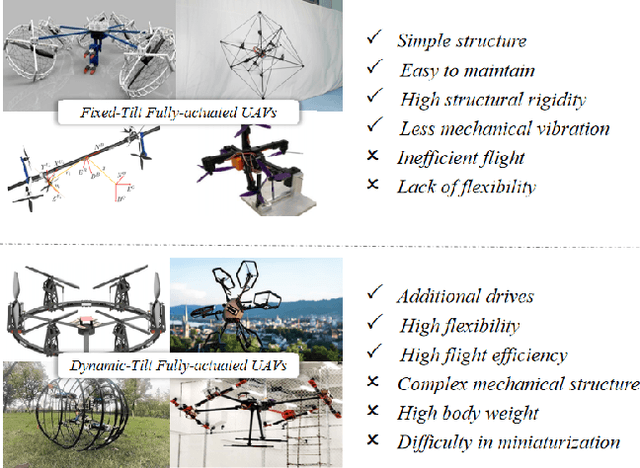
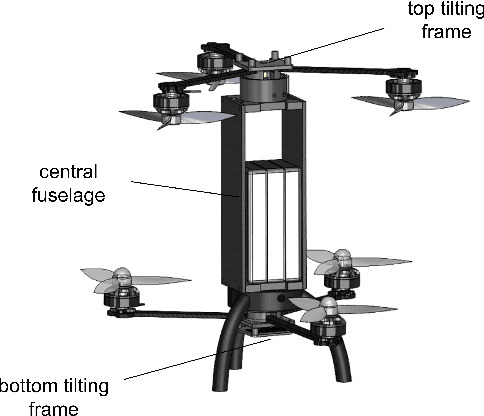
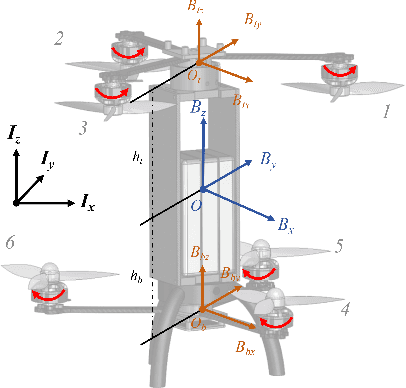
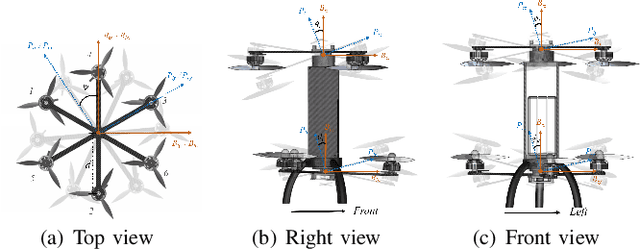
This paper proposed a novel fully-actuated hexacopter. It features a dual-frame passive tilting structure and achieves independent control of translational motion and attitude with minimal actuators. Compared to previous fully-actuated UAVs, it liminates internal force cancellation, resulting in higher flight efficiency and endurance under equivalent payload conditions. Based on the dynamic model of fully-actuated hexacopter, a full-actuation controller is designed to achieve efficient and stable control. Finally, simulation is conducted, validating the superior fully-actuated motion capability of fully-actuated hexacopter and the effectiveness of the proposed control strategy.
Multitask GLocal OBIA-Mamba for Sentinel-2 Landcover Mapping
Nov 13, 2025Although Sentinel-2 based land use and land cover (LULC) classification is critical for various environmental monitoring applications, it is a very difficult task due to some key data challenges (e.g., spatial heterogeneity, context information, signature ambiguity). This paper presents a novel Multitask Glocal OBIA-Mamba (MSOM) for enhanced Sentinel-2 classification with the following contributions. First, an object-based image analysis (OBIA) Mamba model (OBIA-Mamba) is designed to reduce redundant computation without compromising fine-grained details by using superpixels as Mamba tokens. Second, a global-local (GLocal) dual-branch convolutional neural network (CNN)-mamba architecture is designed to jointly model local spatial detail and global contextual information. Third, a multitask optimization framework is designed to employ dual loss functions to balance local precision with global consistency. The proposed approach is tested on Sentinel-2 imagery in Alberta, Canada, in comparison with several advanced classification approaches, and the results demonstrate that the proposed approach achieves higher classification accuracy and finer details that the other state-of-the-art methods.
Sparse Deformable Mamba for Hyperspectral Image Classification
Apr 15, 2025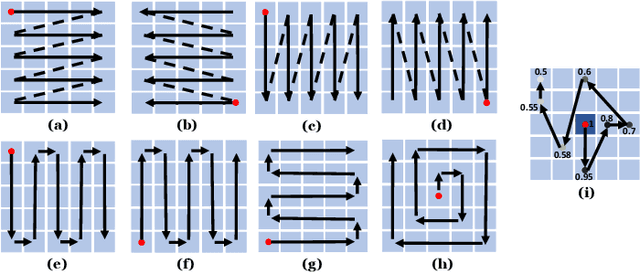
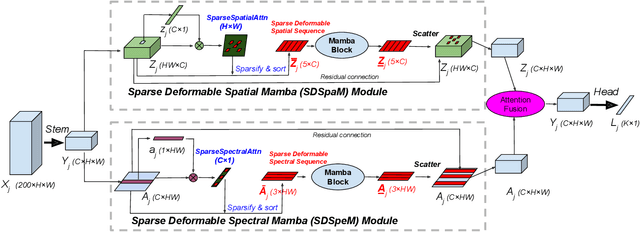
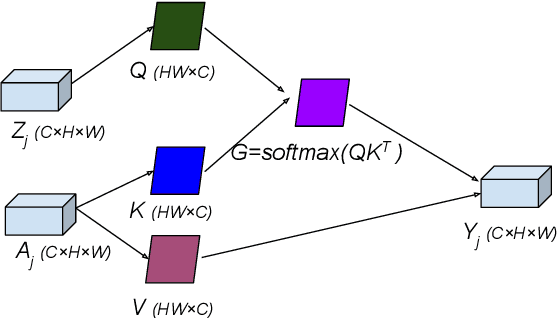
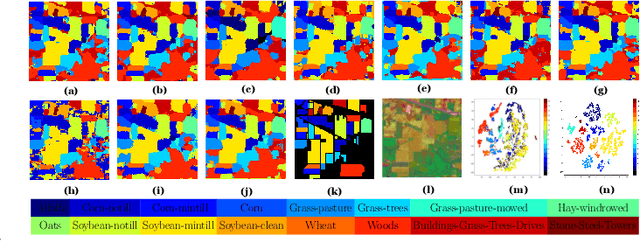
Although Mamba models significantly improve hyperspectral image (HSI) classification, one critical challenge is the difficulty in building the sequence of Mamba tokens efficiently. This paper presents a Sparse Deformable Mamba (SDMamba) approach for enhanced HSI classification, with the following contributions. First, to enhance Mamba sequence, an efficient Sparse Deformable Sequencing (SDS) approach is designed to adaptively learn the ''optimal" sequence, leading to sparse and deformable Mamba sequence with increased detail preservation and decreased computations. Second, to boost spatial-spectral feature learning, based on SDS, a Sparse Deformable Spatial Mamba Module (SDSpaM) and a Sparse Deformable Spectral Mamba Module (SDSpeM) are designed for tailored modeling of the spatial information spectral information. Last, to improve the fusion of SDSpaM and SDSpeM, an attention based feature fusion approach is designed to integrate the outputs of the SDSpaM and SDSpeM. The proposed method is tested on several benchmark datasets with many state-of-the-art approaches, demonstrating that the proposed approach can achieve higher accuracy with less computation, and better detail small-class preservation capability.