 Add to Chrome
 Add to Firefox
 Add to Edge
Metis: Learning to Jailbreak LLMs via Self-Evolving Metacognitive Policy Optimization
May 11, 2026
Red teaming is critical for uncovering vulnerabilities in Large Language Models (LLMs). While automated methods have improved scalability, existing approaches often rely on static heuristics or stochastic search, rendering them brittle against advanced safety alignment. To address this, we introduce Metis, a framework that reformulates jailbreaking as inference-time policy optimization within an adversarial Partially Observable Markov Decision Process (POMDP). Metis employs a self-evolving metacognitive loop to perform causal diagnosis of a target's defense logic and leverages structured feedback as a semantic gradient to refine its policy, offering enhanced interpretability through transparent reasoning traces. Extensive evaluations across 10 diverse models demonstrate that Metis achieves the strongest average Attack Success Rate (ASR) among compared methods at 89.2%, maintaining high efficacy on resilient frontier models (e.g., 76.0% on O1 and 78.0% on GPT-5-chat) where traditional baselines exhibit substantial performance degradation. By replacing redundant exploration with directed optimization, Metis reduces token costs by an average of 8.2x and up to 11.4x. Our analysis reveals that current defenses remain vulnerable to internally-steered, closed-loop reasoning trajectories under the tested settings, highlighting a critical need for next-generation defenses capable of reasoning about safety dynamically during inference.

AI Code in the Wild: Measuring Security Risks and Ecosystem Shifts of AI-Generated Code in Modern Software
Dec 21, 2025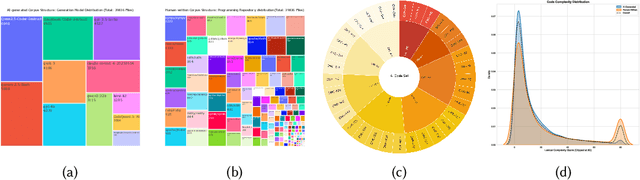
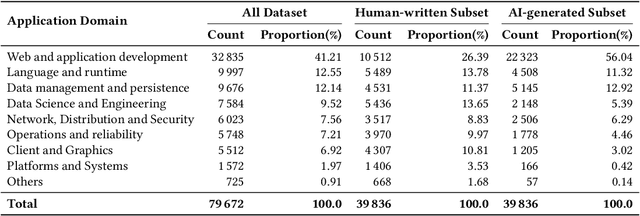
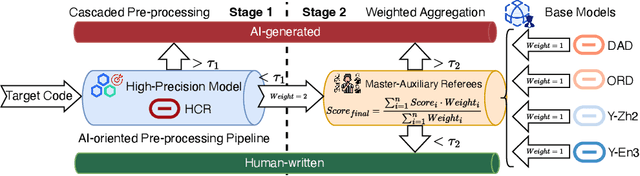
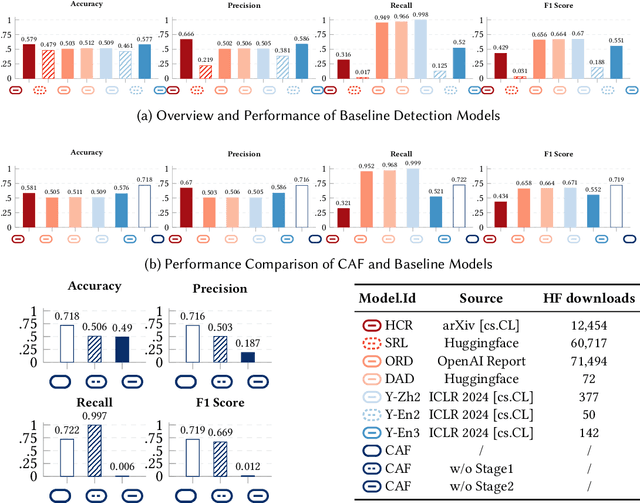
Large language models (LLMs) for code generation are becoming integral to modern software development, but their real-world prevalence and security impact remain poorly understood. We present the first large-scale empirical study of AI-generated code (AIGCode) in the wild. We build a high-precision detection pipeline and a representative benchmark to distinguish AIGCode from human-written code, and apply them to (i) development commits from the top 1,000 GitHub repositories (2022-2025) and (ii) 7,000+ recent CVE-linked code changes. This lets us label commits, files, and functions along a human/AI axis and trace how AIGCode moves through projects and vulnerability life cycles. Our measurements show three ecological patterns. First, AIGCode is already a substantial fraction of new code, but adoption is structured: AI concentrates in glue code, tests, refactoring, documentation, and other boilerplate, while core logic and security-critical configurations remain mostly human-written. Second, adoption has security consequences: some CWE families are overrepresented in AI-tagged code, and near-identical insecure templates recur across unrelated projects, suggesting "AI-induced vulnerabilities" propagated by shared models rather than shared maintainers. Third, in human-AI edit chains, AI introduces high-throughput changes while humans act as security gatekeepers; when review is shallow, AI-introduced defects persist longer, remain exposed on network-accessible surfaces, and spread to more files and repositories. We will open-source the complete dataset and release analysis artifacts and fine-grained documentation of our methodology and findings.
A.S.E: A Repository-Level Benchmark for Evaluating Security in AI-Generated Code
Aug 25, 2025The increasing adoption of large language models (LLMs) in software engineering necessitates rigorous security evaluation of their generated code. However, existing benchmarks are inadequate, as they focus on isolated code snippets, employ unstable evaluation methods that lack reproducibility, and fail to connect the quality of input context with the security of the output. To address these gaps, we introduce A.S.E (AI Code Generation Security Evaluation), a benchmark for repository-level secure code generation. A.S.E constructs tasks from real-world repositories with documented CVEs, preserving full repository context like build systems and cross-file dependencies. Its reproducible, containerized evaluation framework uses expert-defined rules to provide stable, auditable assessments of security, build quality, and generation stability. Our evaluation of leading LLMs on A.S.E reveals three key findings: (1) Claude-3.7-Sonnet achieves the best overall performance. (2) The security gap between proprietary and open-source models is narrow; Qwen3-235B-A22B-Instruct attains the top security score. (3) Concise, ``fast-thinking'' decoding strategies consistently outperform complex, ``slow-thinking'' reasoning for security patching.