 Add to Chrome
 Add to Firefox
 Add to Edge
Decode-Time Grammars: Constrained LLM Generation over a Refinement Order of Grammar Fragments
Jul 20, 2026
Large language models now write a growing share of the world's code, increasingly inside agents and serving systems that compile, execute, or dispatch generated code without line-by-line review. This works well for mainstream languages but remains brittle for low-resource programming surfaces such as domain-specific languages, custom library APIs, and command-line tools. Even under grammar-constrained decoding, a model can still produce references invalid in the current environment: a buffer never declared, a column absent from the schema, a function the library does not provide, or an unsupported CLI option. This paper introduces decode-time grammars: grammar fragments instantiated during generation from a runtime environment Gamma. A region-specific policy selects a fragment for each hole, and a tightening operator replaces open reference positions with Gamma-typed slots whose candidates are exactly the names, fields, APIs, or options available at that point. Newly generated declarations enter Gamma before later regions are decoded, so the constraining grammar can depend on the prefix already generated. This ensures not only grammatical correctness but also semantic correctness, by preventing references to undefined symbols. We formalize grammar fragments as environment-indexed grammars ordered by refinement, prove No-Ghost soundness for Gamma-slotted fragments, show that refinement preserves this support-set guarantee, and characterize the boundary of mask-enforceable properties. We implement the approach in gproj with offline grammar induction and online policy resolution. Across TileLang, SQL, and P4, with models from 0.6B to 236B parameters, gproj eliminates ghost references by construction at moderate overhead over standard constrained decoding.

Learning When to Optimize: Verified Optimization Skills from Expert GPU-Kernel Lineages
May 27, 2026LLM-based agents are increasingly used to generate GPU kernels, but they often know what optimizations to try without knowing when those optimizations are sound. We introduce KLineage, which learns this missing "when" knowledge from expert kernels: instead of relying on forward rollouts, KLineage walks expert implementations backward through validation-gated simplifications and reverses each accepted step into a reusable optimization skill. Each skill records not only the optimization intent, but also where it applies in code, what conditions made it valid, what effect it had, and what failures its assumptions avoid. A downstream LLM materializes these skills on new code surfaces under the same compile/correctness/profile gate. On five expert workloads across two NVIDIA architectures, these lineage-derived skills serve as an effective optimization curriculum, exceeding recent memory-based LLM-kernel baselines in both final kernel quality and optimization efficiency under the same fixed budget. We additionally use a separate 22-instance held-out check as a sanity test against source-case memorization.
VeriScale: Adversarial Test-Suite Scaling for Verifiable Code Generation
May 21, 2026As large language models (LLMs) are increasingly deployed for software engineering, constructing high-quality benchmarks is crucial for evaluating not just the functional correctness, but also the formal verifiability of generated code. However, existing benchmarks are limited by the quantity and quality of positive and negative test cases, leading to an overestimation of model capabilities in generating specifications and implementations. To address this, we propose VeriScale, a novel framework driven by the adversarial implementations. It consists of two stages: test-suite expansion to construct diverse and challenging test cases, and test-suite reduction to distill them into compact yet discriminative suites. While VeriScale is general, we instantiate it on Verina to construct VerinaPlus, which expands the original test suites by over 83$\times$, and VerinaLite, a lightweight 14$\times$ variant. Our experiments across eight state-of-the-art LLMs demonstrate that VerinaPlus exposes substantial model weaknesses hidden by the original benchmark, evidenced by sharp score drops on both SpecGen and CodeGen tasks, whereas VerinaLite maintains this discriminative power at a fraction of the evaluation cost. The enhanced benchmarks and source code are publicly available at https://github.com/XiaoyangLiu-sjtu/VeriScale.
Autonomous Sparse Mean-CVaR Portfolio Optimization
May 13, 2024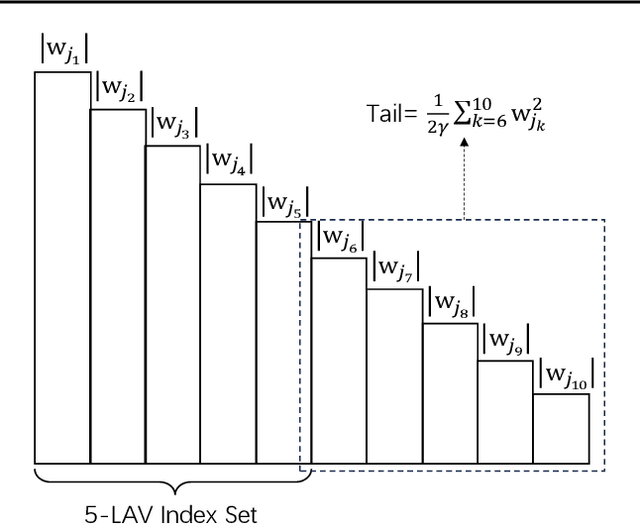
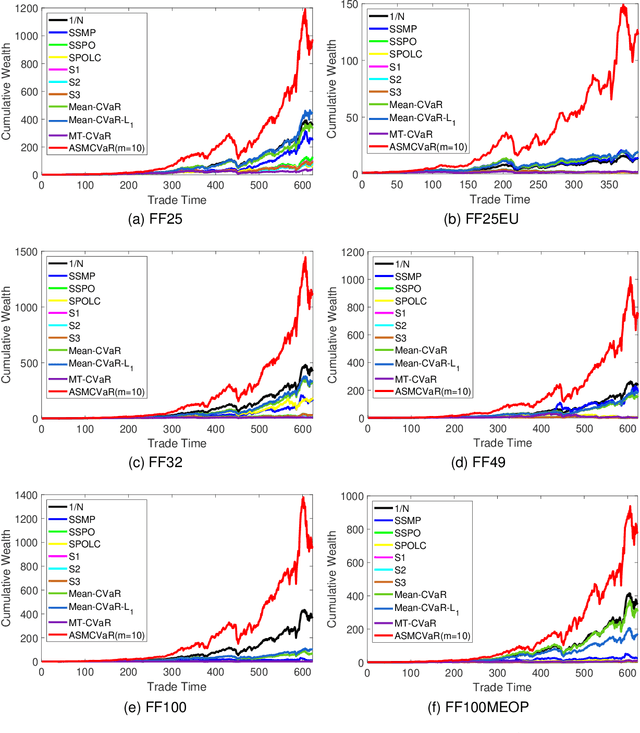
The $\ell_0$-constrained mean-CVaR model poses a significant challenge due to its NP-hard nature, typically tackled through combinatorial methods characterized by high computational demands. From a markedly different perspective, we propose an innovative autonomous sparse mean-CVaR portfolio model, capable of approximating the original $\ell_0$-constrained mean-CVaR model with arbitrary accuracy. The core idea is to convert the $\ell_0$ constraint into an indicator function and subsequently handle it through a tailed approximation. We then propose a proximal alternating linearized minimization algorithm, coupled with a nested fixed-point proximity algorithm (both convergent), to iteratively solve the model. Autonomy in sparsity refers to retaining a significant portion of assets within the selected asset pool during adjustments in pool size. Consequently, our framework offers a theoretically guaranteed approximation of the $\ell_0$-constrained mean-CVaR model, improving computational efficiency while providing a robust asset selection scheme.