 Add to Chrome
 Add to Firefox
 Add to Edge
VeriScale: Adversarial Test-Suite Scaling for Verifiable Code Generation
May 21, 2026
As large language models (LLMs) are increasingly deployed for software engineering, constructing high-quality benchmarks is crucial for evaluating not just the functional correctness, but also the formal verifiability of generated code. However, existing benchmarks are limited by the quantity and quality of positive and negative test cases, leading to an overestimation of model capabilities in generating specifications and implementations. To address this, we propose VeriScale, a novel framework driven by the adversarial implementations. It consists of two stages: test-suite expansion to construct diverse and challenging test cases, and test-suite reduction to distill them into compact yet discriminative suites. While VeriScale is general, we instantiate it on Verina to construct VerinaPlus, which expands the original test suites by over 83$\times$, and VerinaLite, a lightweight 14$\times$ variant. Our experiments across eight state-of-the-art LLMs demonstrate that VerinaPlus exposes substantial model weaknesses hidden by the original benchmark, evidenced by sharp score drops on both SpecGen and CodeGen tasks, whereas VerinaLite maintains this discriminative power at a fraction of the evaluation cost. The enhanced benchmarks and source code are publicly available at https://github.com/XiaoyangLiu-sjtu/VeriScale.

The XPRESS Challenge: Xray Projectomic Reconstruction -- Extracting Segmentation with Skeletons
Feb 24, 2023
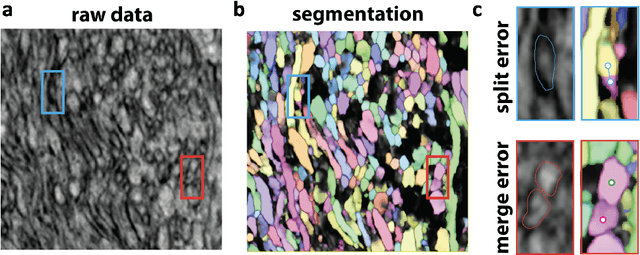
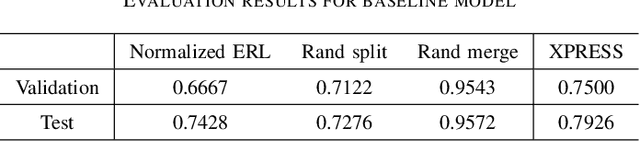
The wiring and connectivity of neurons form a structural basis for the function of the nervous system. Advances in volume electron microscopy (EM) and image segmentation have enabled mapping of circuit diagrams (connectomics) within local regions of the mouse brain. However, applying volume EM over the whole brain is not currently feasible due to technological challenges. As a result, comprehensive maps of long-range connections between brain regions are lacking. Recently, we demonstrated that X-ray holographic nanotomography (XNH) can provide high-resolution images of brain tissue at a much larger scale than EM. In particular, XNH is wellsuited to resolve large, myelinated axon tracts (white matter) that make up the bulk of long-range connections (projections) and are critical for inter-region communication. Thus, XNH provides an imaging solution for brain-wide projectomics. However, because XNH data is typically collected at lower resolutions and larger fields-of-view than EM, accurate segmentation of XNH images remains an important challenge that we present here. In this task, we provide volumetric XNH images of cortical white matter axons from the mouse brain along with ground truth annotations for axon trajectories. Manual voxel-wise annotation of ground truth is a time-consuming bottleneck for training segmentation networks. On the other hand, skeleton-based ground truth is much faster to annotate, and sufficient to determine connectivity. Therefore, we encourage participants to develop methods to leverage skeleton-based training. To this end, we provide two types of ground-truth annotations: a small volume of voxel-wise annotations and a larger volume with skeleton-based annotations. Entries will be evaluated on how accurately the submitted segmentations agree with the ground-truth skeleton annotations.