 Add to Chrome
 Add to Firefox
 Add to Edge
402Pilot: An x402 Decision Layer for Autonomous Agent Micropayments
Aug 02, 2026
Programmable-payment protocols such as x402 enable per-request micropayments, but they do not determine which payable service an autonomous agent should buy under a finite wallet. We formulate this buyer-side problem as agent-native payment decision-making: contextual provider selection under wallet pressure, chosen-only paid feedback, and changing market conditions. We propose 402Pilot, a protocol-agnostic buyer-side decision layer between autonomous agents and payment execution that implements purchasing policies for selecting among payable providers. We instantiate it with PA-DCT, a payment-aware discounted contextual Thompson-sampling policy that adapts purchasing decisions under wallet pressure while learning from post-payment feedback. To evaluate buyer-side payment policies, we introduce 402Pilot-Bench, a frozen-replay benchmark spanning 823 tasks, five heterogeneous provider pipelines, and three market regimes, each evaluated over 30 paired seeds. PA-DCT achieves the strongest fixed-wallet adaptive trade-off among non-oracle policies: it maintains competitive service quality while spending only 39 to 43 percent of the wallet and reallocates spending as market conditions change. It attains the best non-oracle PA-gap/T under the price shock and the best mean and worst-case ranks across the nine scenario-metric combinations of quality, ROI, and PA-gap/T. Comparisons with learning baselines and component ablations further support the effectiveness and design of the proposed decision policy. These results suggest that programmable payment must be complemented by buyer-side decision-making capable of learning service value and adapting purchasing decisions accordingly.

A mmWave Oscillator Design Utilizing High-Q Active-Mode On-Chip MEMS Resonators for Improved Fundamental Limits of Phase Noise
Jul 05, 2021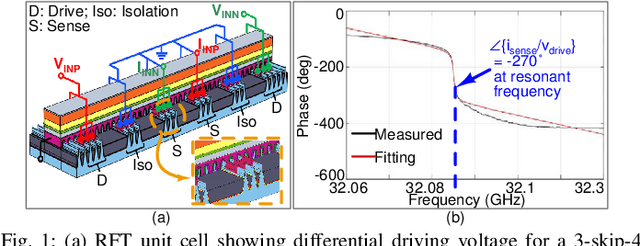
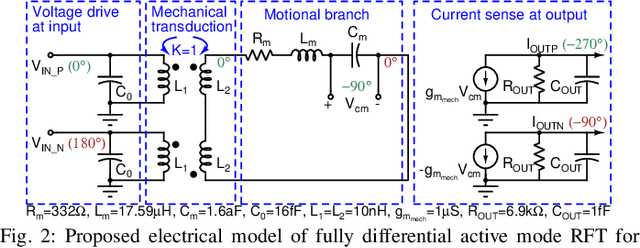
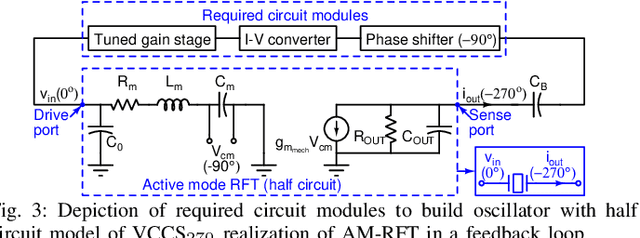
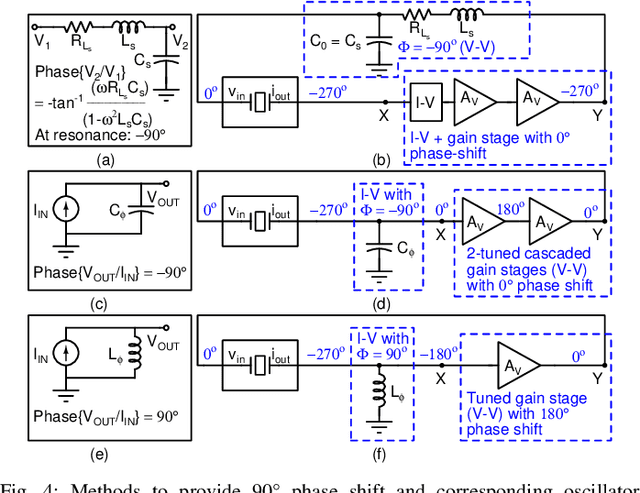
(RFT) allows very high-Q active mode resonators, promising crystal-less monolithic clock generation for mmWave systems. However, there is a strong need for design of mmWave oscillators that utilize the high-Q of active-mode RFT (AM-RFT) optimally, while handling unique challenges such as resonator's low electromechanical transduction. In this brief, we develop a theory and through design and post-layout simulations in 14 nm Global Foundry process, we show the first active oscillator with AM-RFT at 30 GHz, which improves the fundamental limits of phase noise and figure-of-merit as compared to the oscillators with conventional LC resonators. For AM-RFT with Q factor of 10K, post layout simulation results show that the proposed oscillator exhibits phase noise less than -140 dBc per Hz and figure-of-merit greater than 228 dBc per Hz at 1 MHz offset for 30 GHz center frequency, which are more than 25 dB better than the existing monolithic LC oscillators.