 Add to Chrome
 Add to Firefox
 Add to Edge
FrequencyFormer: A Co-Designed Sensor-to-Processor Pipeline for Frequency-Domain Vision Transformer Inference
Jun 17, 2026
Deploying vision transformers (ViTs) on sensor-edge systems is limited not only by on-device compute, but also by the energy and bandwidth required to transmit high-dimensional image data from the sensor to the processor. While in-sensor and near-sensor computing reduce this cost through early feature extraction, existing methods often provide only modest compression. We observe that the frequency domain provides a naturally compact representation of visual information and can be exploited at the sensor level to reduce sensor-to-processor data movement. Building on this insight, we present FrequencyFormer, a co-designed sensor-to-processor pipeline for efficient ViT inference. FrequencyFormer includes: (1) a multi-scale DCT tokenizer that compresses a 224x224 image into compact frequency-domain tokens, achieving up to 128x reduction in off-chip data volume with modest accuracy loss; (2) a LUT-based near-sensor hardware implementation that leverages fixed DCT coefficients for multiplier-free, energy- and area-efficient tokenization; and (3) a modified MIPI-based low-power communication architecture that further reduces transfer energy. FrequencyFormer serves as a drop-in replacement for standard ViT patch embedding and remains compatible with pretrained backbones across classification, detection, and segmentation tasks. The pipeline achieves 28.8 TOPS/W, reduces communication energy by 230x, and lowers total sensor-side energy by 2.22x, demonstrating frequency-domain tokenization as a scalable foundation for in-sensor ViT deployment.

Ablation Study of Block Size, Weight Precision, and Scale Precision in NVFP4 Inference for Low-Power Edge-Efficient Neural Networks
Jun 03, 2026Energy-efficient edge inference requires reducing arithmetic cost, memory traffic, and hardware overhead. This paper presents an ablation-focused study of NVFP4 LUT-based inference for edge-efficient neural networks. The proposed NVLUT framework combines 4-bit NVFP4 activations, two-level scaling, LUT-based mantissa computation, voltage-scaled storage, and selective ECC protection. Multiplication is decomposed into sign, exponent, and mantissa paths, where sign uses XOR logic, exponent uses integer addition, and mantissa multiplication is replaced by compact LUT access. NVFP4 activations use FP4 data with an FP8 block scale and an FP32 tensor scale. Across six edge-efficient models, block-size ablation shows that B = 16 offers a practical accuracy/storage trade-off, requiring only 4.5078 bits per input for N = 4096. Weight-precision ablation shows that FP8 and FP16 weights provide only modest gains over FP4 weights under the same NVFP4 activation path. Compared with pure unscaled FP4, NVFP4 without retraining recovers substantial accuracy by restoring activation dynamic range, while NVFP4 with retraining achieves the best accuracy across models. Hardware analysis shows that NVLUT achieves up to 26.85x energy reduction over traditional LUTs with ECC plus voltage scaling and up to 22.85x under mixed-voltage operation. Area is reduced by up to 2.21x and 1.52x, respectively. These results demonstrate that NVFP4 two-level scaling with selective reliability protection enables robust, low-energy edge inference.
A Systematic Method for Optimum Biomedical Wireless Power Transfer using Inductive Links in Area-Constrained Implants
Jan 15, 2025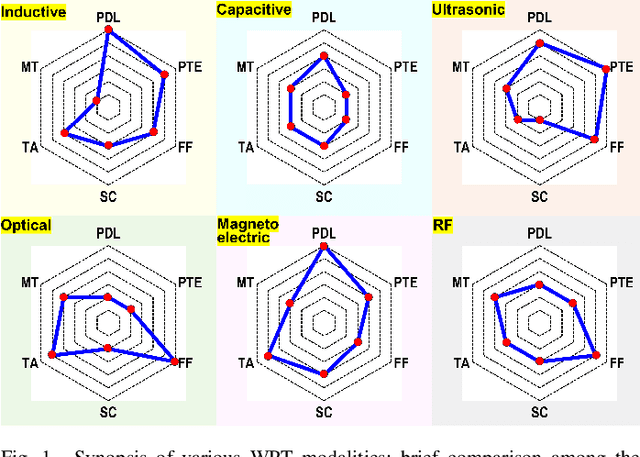
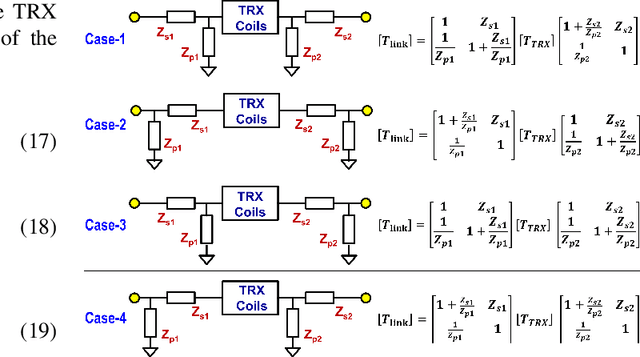
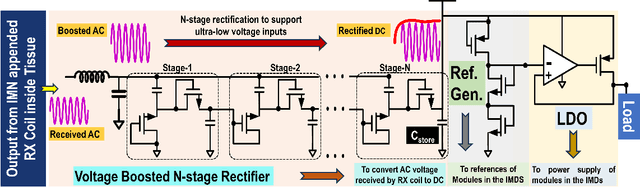
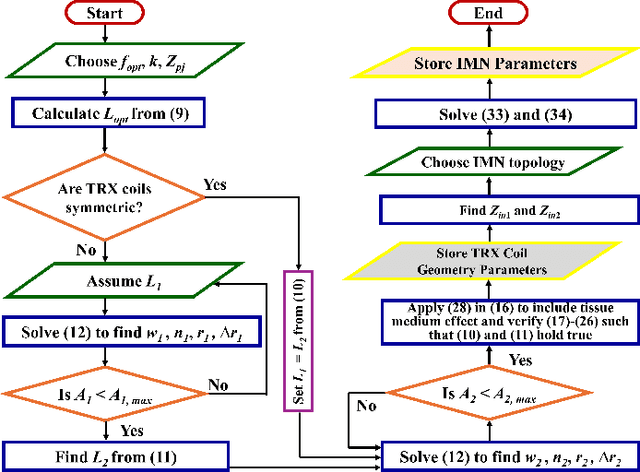
In the context of implantable bioelectronics, this work provides new insights into maximizing biomedical wireless power transfer (BWPT) via the systematic development of inductive links. This approach addresses the specific challenges of power transfer efficiency (PTE) optimization within the area constraints of bio-implants embedded in tissue. Key contributions include the derivation of an optimal self-inductance with S-parameter-based analyses leading to the co-design of planar spiral coils and L-section impedance matching networks. To validate the proposed design methodology, two coil prototypes -- one symmetric (type-1) and one asymmetric (type-2) -- were fabricated and tested for PTE in pork tissue. Targeting a 20 MHz design frequency, the type-1 coil demonstrated a state-of-the-art PTE of $\sim$ 4\% (channel length = 15 mm) with a return loss (RL) $>$ 20 dB on both the input and output sides, within an area constraint of $<$ 18 $ \times $ 18 mm$^{2}$. In contrast, the type-2 coil achieved a PTE of $\sim$ 2\% with an RL $>$ 15 dB, for a smaller receiving coil area of $<$ 5x5 mm$^{2}$ for the same tissue environment. To complement the coils, we demonstrate a 65 nm test chip with an integrated energy harvester, which includes \asif{a} 30-stage rectifier and low-dropout regulator (LDO), producing a stable $\sim$ 1V DC output within tissue medium, matching theoretical predictions and simulations. Furthermore, we provide a robust and comprehensive guideline for advancing efficient inductive links for various BWPT applications, with shared resources in GitHub available for utilization by the broader community.
Galvanic Body-Coupled Powering for Wireless Implanted Neurostimulators
Dec 04, 2024
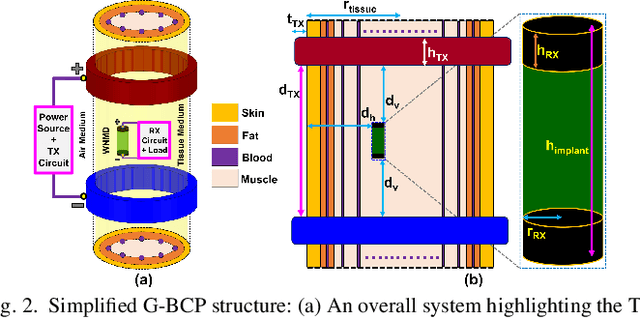
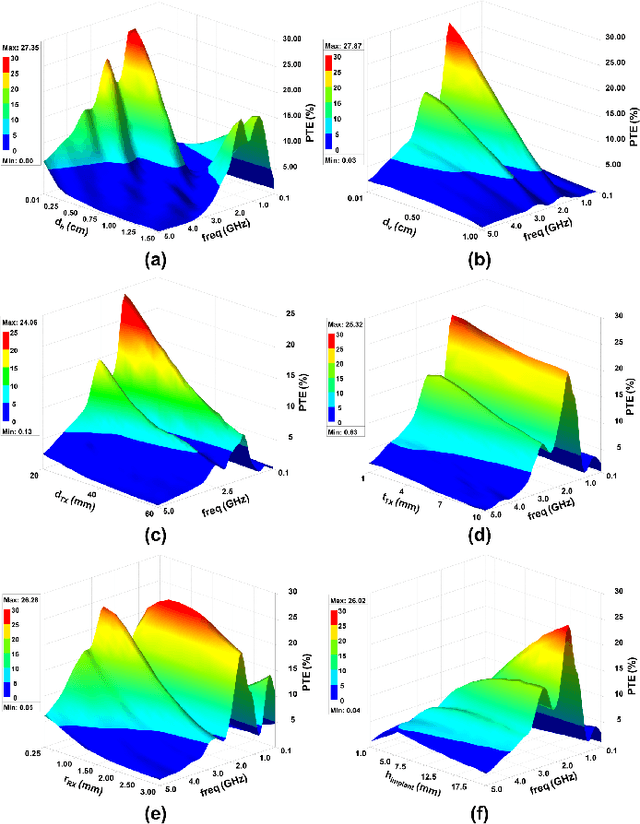

Body-coupled powering (BCP) is an innovative wireless power transfer (WPT) technique, recently explored for its potential to deliver power to cutting-edge biomedical implants such as nerve and muscle stimulators. This paper demonstrates the efficient technique of designing WPT systems embedding BCP via galvanic coupling (G-BCP). The G-BCP configuration utilizes two metal circular rings surrounding the body area of interest as the transmitter (TX) electrodes required for galvanic (differential) excitation and a wireless implant as the receiver (RX) equipped with two electrodes for differential power reception accordingly. By focusing on the unique advantages of this approach - such as enhanced targeting accuracy, improved power transfer efficiency (PTE), and favorable tissue penetration characteristics, G-BCP emerges as a superior alternative to traditional WPT methods. A comprehensive analysis is conducted to obtain the optimized device parameters while simultaneously allowing flexible placement of implants at different depths and alignments. To substantiate the proposed design concept, a prototype was simulated in Ansys HFSS, employing a multi-layered tissue medium of 10mm radius and targeting the sciatic nerve of a rat. Impressively, this prototype achieves > 20% PTE at 1.25 GHz, with the implant (radius of RX electrodes = 1 mm) located 2 mm deep inside the tissue model having complex load impedance of Rload = 1000 Ohm and Cload = 5pF. Therefore, the G-BCP-based wirelessly powered microdevices are envisaged to be a key enabler in neural recording and stimulation, specifically for the peripheral nervous system, enhancing therapeutic outcomes and patient experiences.
Sub-1ms Instinctual Interference Adaptive GaN LNA Front-End with Power and Linearity Tuning
Nov 27, 2022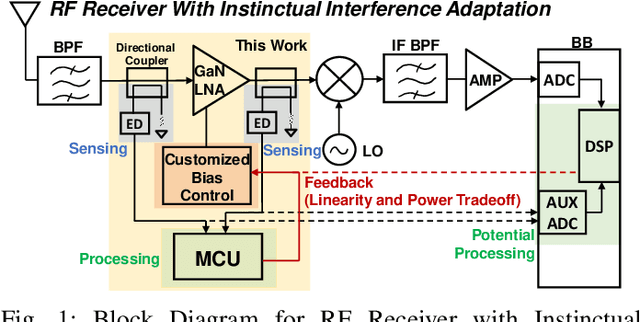
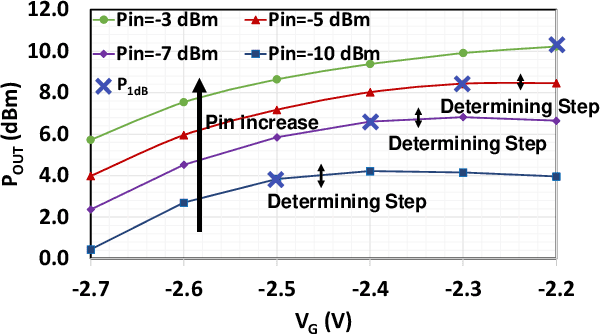
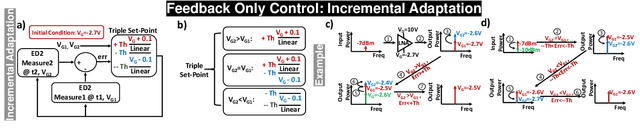
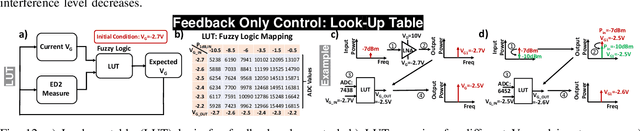
One of the major challenges in communication, radar, and electronic warfare receivers arises from nearby device interference. The paper presents a 2-6 GHz GaN LNA front-end with onboard sensing, processing, and feedback utilizing microcontroller-based controls to achieve adaptation to a variety of interference scenarios through power and linearity regulations. The utilization of GaN LNA provides high power handling capability (30 dBm) and high linearity (OIP3= 30 dBm) for radar and EW applications. The system permits an LNA power consumption to tune from 500 mW to 2 W (4X increase) in order to adjust the linearity from P\textsubscript{1dB,IN}=-10.5 dBm to 0.5 dBm (>10X increase). Across the tuning range, the noise figure increases by approximately 0.4 dB. Feedback control methods are presented with backgrounds from control theory. The rest of the controls consume $\leq$10$\%$ (100 mW) of nominal LNA power (1 W) to achieve an adaptation time <1 ms.
TD-BPQBC: A 1.8μW 5.5mm3 ADC-less Neural Implant SoC utilizing 13.2pJ/Sample Time-domain Bi-phasic Quasi-static Brain Communication
Sep 24, 2022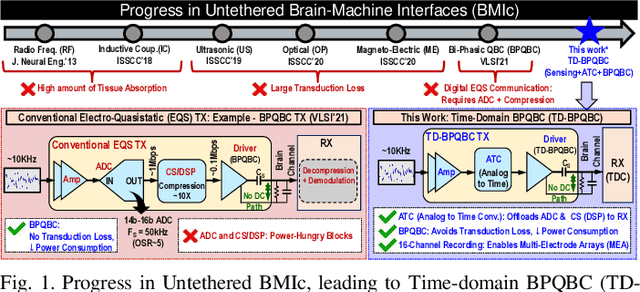
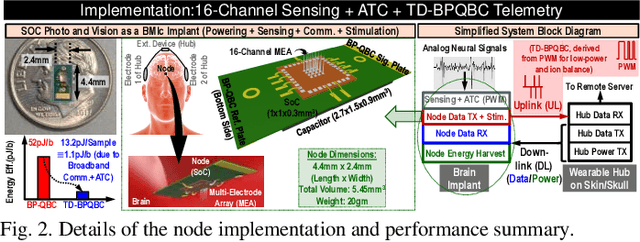
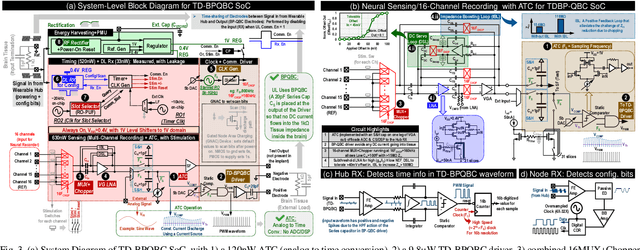
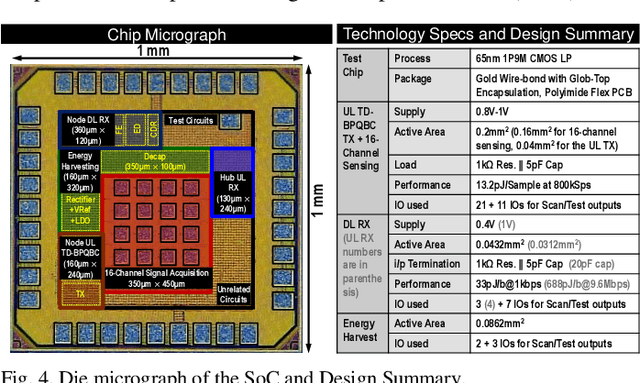
Untethered miniaturized wireless neural sensor nodes with data transmission and energy harvesting capabilities call for circuit and system-level innovations to enable ultra-low energy deep implants for brain-machine interfaces. Realizing that the energy and size constraints of a neural implant motivate highly asymmetric system design (a small, low-power sensor and transmitter at the implant, with a relatively higher power receiver at a body-worn hub), we present Time-Domain Bi-Phasic Quasi-static Brain Communication (TD- BPQBC), offloading the burden of analog to digital conversion (ADC) and digital signal processing (DSP) to the receiver. The input analog signal is converted to time-domain pulse-width modulated (PWM) waveforms, and transmitted using the recently developed BPQBC method for reducing communication power in implants. The overall SoC consumes only 1.8{\mu}W power while sensing and communicating at 800kSps. The transmitter energy efficiency is only 1.1pJ/b, which is >30X better than the state-of-the-art, enabling a fully-electrical, energy-harvested, and connected in-brain sensor/stimulator node.
Bi-Phasic Quasistatic Brain Communication for Fully Untethered Connected Brain Implants
May 18, 2022Wireless communication using electro-magnetic (EM) fields acts as the backbone for information exchange among wearable devices around the human body. However, for Implanted devices, EM fields incur high amount of absorption in the tissue, while alternative modes of transmission including ultrasound, optical and magneto-electric methods result in large amount of transduction losses due to conversion of one form of energy to another, thereby increasing the overall end-to-end energy loss. To solve the challenge of powering and communication in a brain implant with low end-end channel loss, we present Bi-Phasic Quasistatic Brain Communication (BP-QBC), achieving < 60dB worst-case end-to-end channel loss at a channel length of 55mm, by avoiding the transduction losses during field-modality conversion. BP-QBC utilizes dipole coupling based signal transmission within the brain tissue using differential excitation in the transmitter and differential signal pick-up at the receiver, and offers 41X lower power w.r.t. traditional Galvanic Human Body Communication at a carrier frequency of 1MHz, by blocking any DC current paths through the brain tissue. Since the electrical signal transfer through the human tissue is electro-quasistatic up to several 10's of MHz range, BP-QBC allows a scalable (bps-10Mbps) duty-cycled uplink from the implant to an external wearable. The power consumption in the BP-QBC TX is only 0.52uW at 1Mbps (with 1% duty cycling), which is within the range of harvested body-coupled power in the downlink from an external wearable to the brain implant. Furthermore, BP-QBC eliminates the need for sub-cranial repeaters, as it utilizes quasi-static electrical signals, thereby avoiding any transduction losses. Such low end-to-end channel loss with high data rates would find applications in neuroscience, brain-machine interfaces, electroceuticals and connected healthcare.
Channel Modeling for Physically Secure Electro-Quasistatic In-Body to Out-of-Body Communication with Galvanic Tx and Multimodal Rx
Apr 27, 2022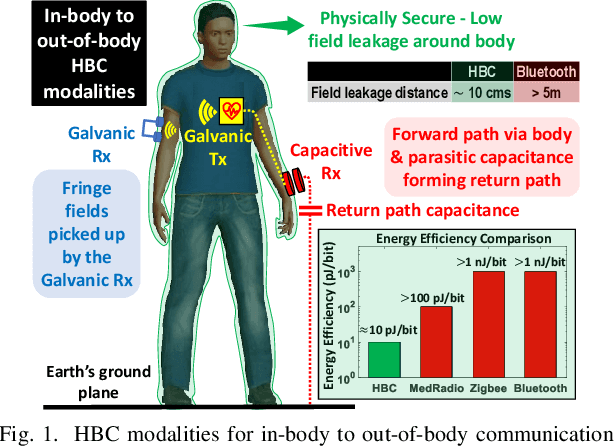
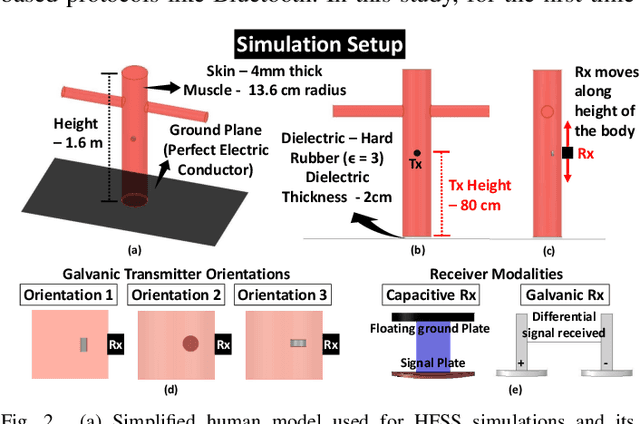
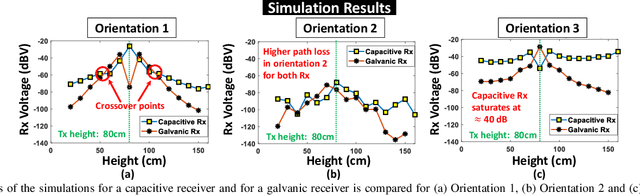
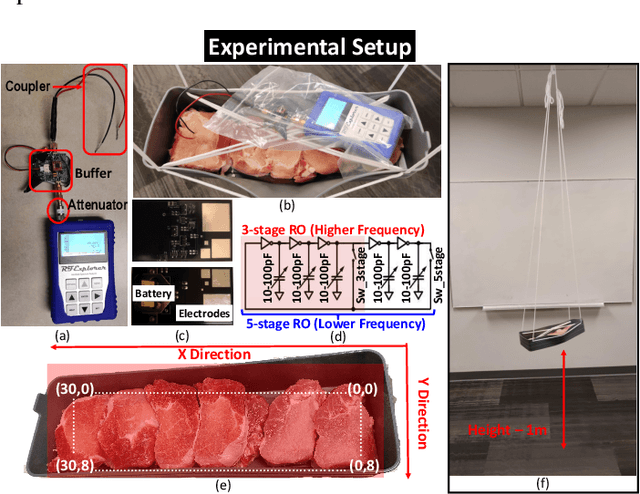
Increasing number of devices being used in and around the human body has resulted in the exploration of the human body as a communication medium. In this paper, we design a channel model for implantable devices communicating outside the body using physically secure Electro-Quasistatic Human Body Communication. A galvanic receiver shows 5dB lower path loss than capacitive receiver when placed close to transmitter whereas a capacitive receiver has around 15dB lower path loss for larger separation between the transmitter and receiver. Finite Element Method (FEM) based simulations are used to analyze the communication channel for different receiver topologies and experimental data is used to validate the simulation results.
A Quantitative Analysis of Physical Security and Path Loss With Frequency for IBOB Channel
Apr 27, 2022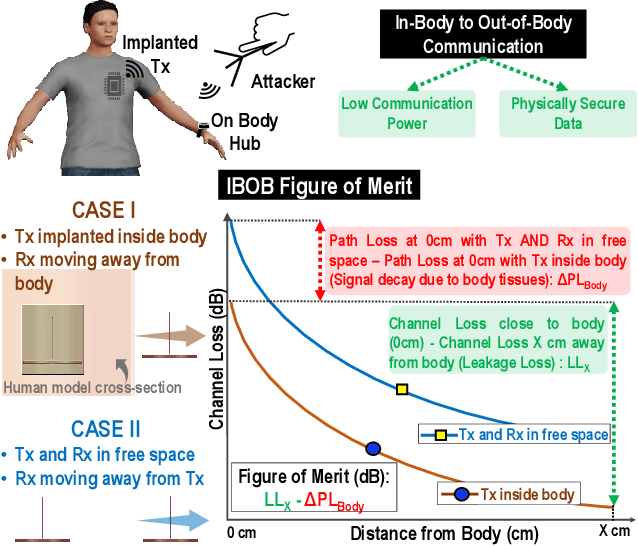
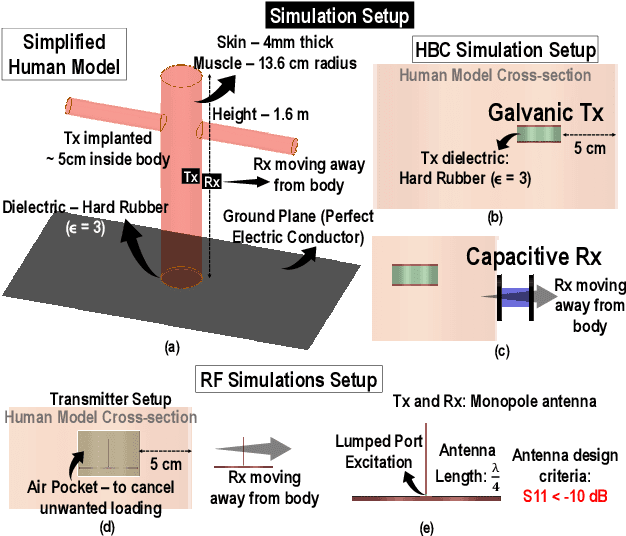
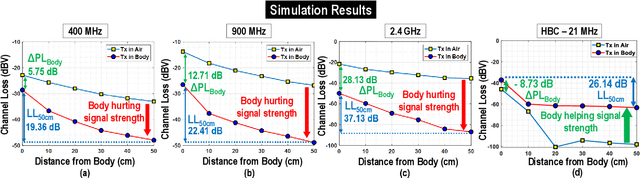
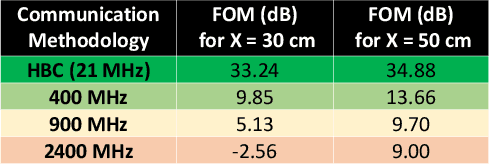
Security vulnerabilities demonstrated in implantable medical devices have opened the door for research into physically secure and low power communication methodologies. In this study, we perform a comparative analysis of commonly used ISM frequency bands and human body communication (HBC) for data transfer from in-body to out-of-body (IBOB). We develop a figure of merit (FoM) that comprises of the critical parameters to quantitatively compare the communication methodologies. We perform finite-element method (FEM)-based simulations and experiments to validate the FoM developed.
EICO: Energy-Harvesting Long-Range Environmental Sensor Nodes with Energy-Information Dynamic Co-Optimization
Jul 15, 2021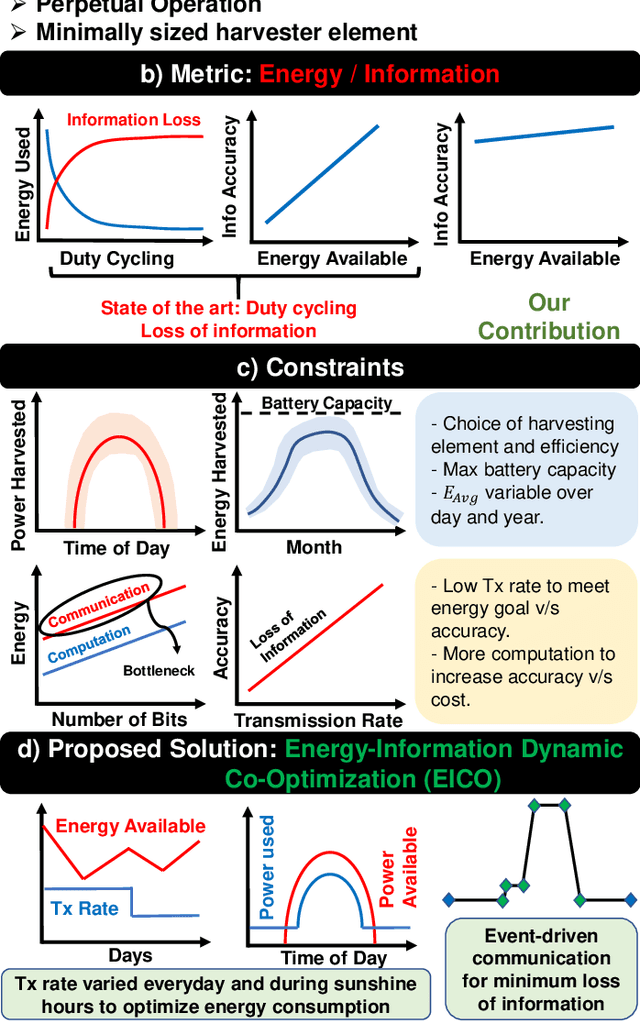
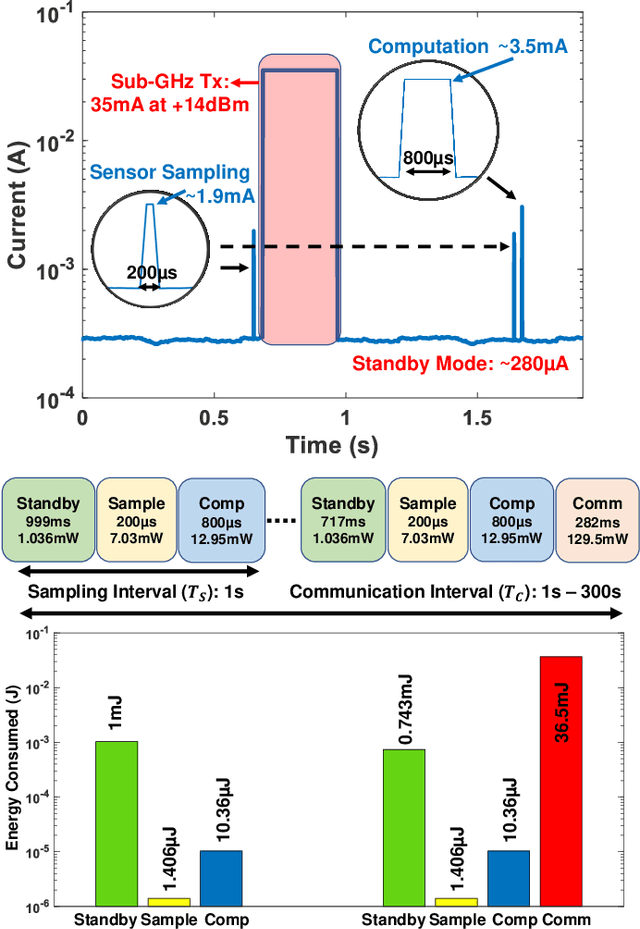
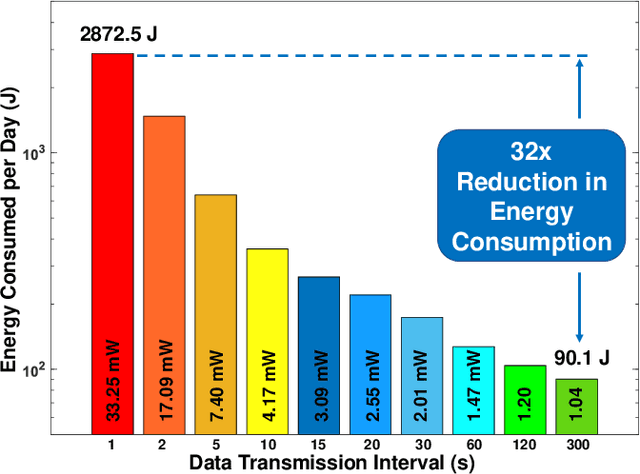
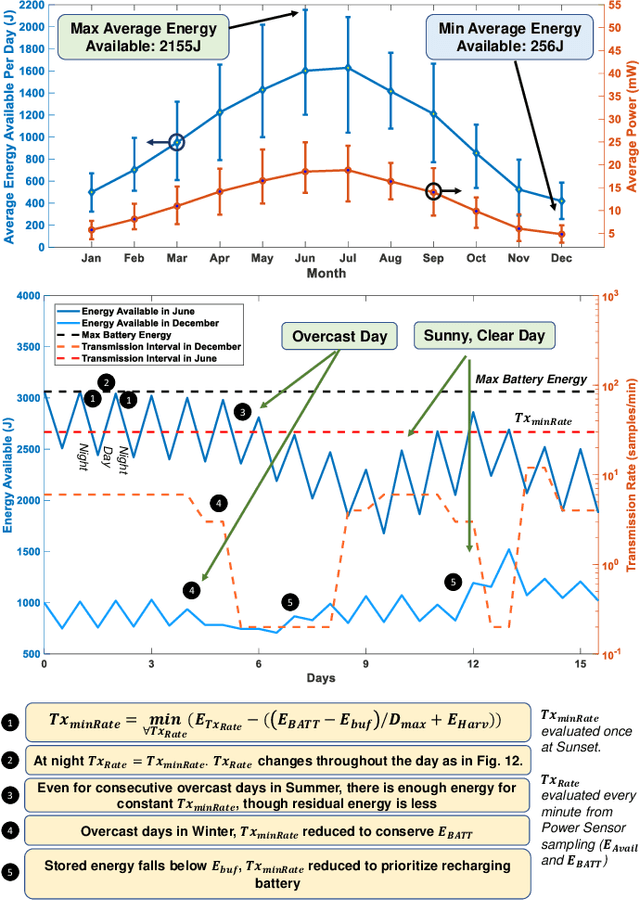
Intensive research on energy harvested sensor nodes with traditional battery powered devices has been driven by the challenges in achieving the stringent design goals of battery lifetime, information accuracy, transmission distance, and cost. This challenge is further amplified by the inherent power intensive nature of long-range communication when sensor networks are required to span vast areas such as agricultural fields and remote terrain. Solar power is a common energy source is wireless sensor nodes, however, it is not reliable due to fluctuations in power stemming from the changing seasons and weather conditions. This paper tackles these issues by presenting a perpetually-powered, energy-harvesting sensor node which utilizes a minimally sized solar cell and is capable of long range communication by dynamically co-optimizing energy consumption and information transfer, termed as Energy-Information Dynamic Co-Optimization (EICO). This energy-information intelligence is achieved by adaptive duty cycling of information transfer based on the total amount of energy available from the harvester and charge storage element to optimize the energy consumption of the sensor node, while employing in-sensor analytics (ISA) to minimize loss of information. This is the first reported sensor node < 35cm2 in dimension, which is capable of long-range communication over > 1Km at continuous information transfer rates of upto 1 packet/second which is enabled by EICO and ISA.