 Add to Chrome
 Add to Firefox
 Add to Edge
From Manipulation to Mistrust: Explaining Diverse Micro-Video Misinformation for Robust Debunking in the Wild
Mar 26, 2026
The rise of micro-videos has reshaped how misinformation spreads, amplifying its speed, reach, and impact on public trust. Existing benchmarks typically focus on a single deception type, overlooking the diversity of real-world cases that involve multimodal manipulation, AI-generated content, cognitive bias, and out-of-context reuse. Meanwhile, most detection models lack fine-grained attribution, limiting interpretability and practical utility. To address these gaps, we introduce WildFakeBench, a large-scale benchmark of over 10,000 real-world micro-videos covering diverse misinformation types and sources, each annotated with expert-defined attribution labels. Building on this foundation, we develop FakeAgent, a Delphi-inspired multi-agent reasoning framework that integrates multimodal understanding with external evidence for attribution-grounded analysis. FakeAgent jointly analyzes content and retrieved evidence to identify manipulation, recognize cognitive and AI-generated patterns, and detect out-of-context misinformation. Extensive experiments show that FakeAgent consistently outperforms existing MLLMs across all misinformation types, while WildFakeBench provides a realistic and challenging testbed for advancing explainable micro-video misinformation detection. Data and code are available at: https://github.com/Aiyistan/FakeAgent.

A Systematic Analysis of Biases in Large Language Models
Dec 16, 2025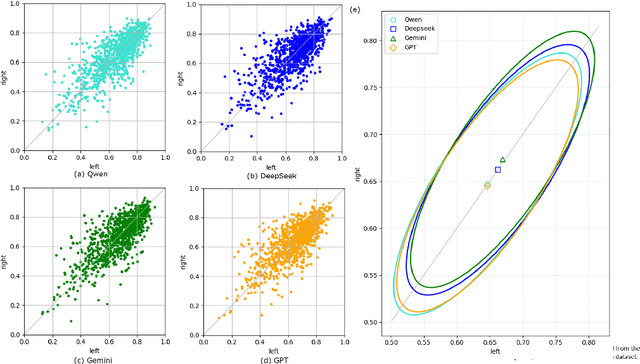
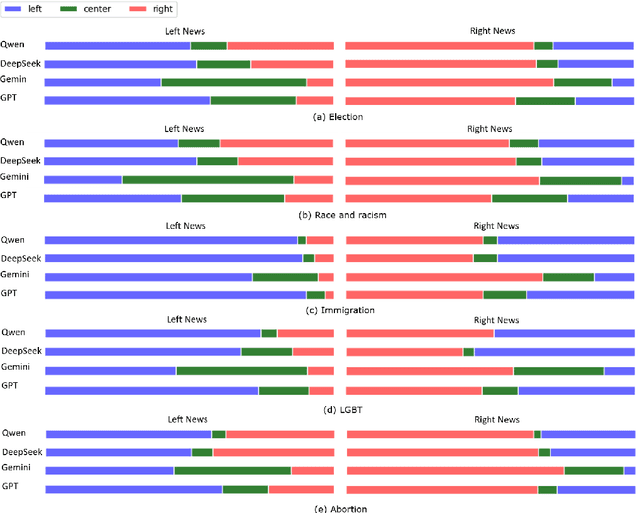
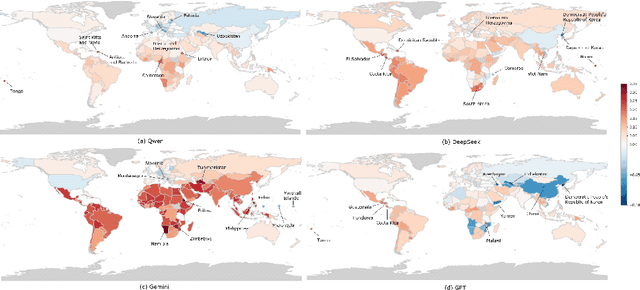
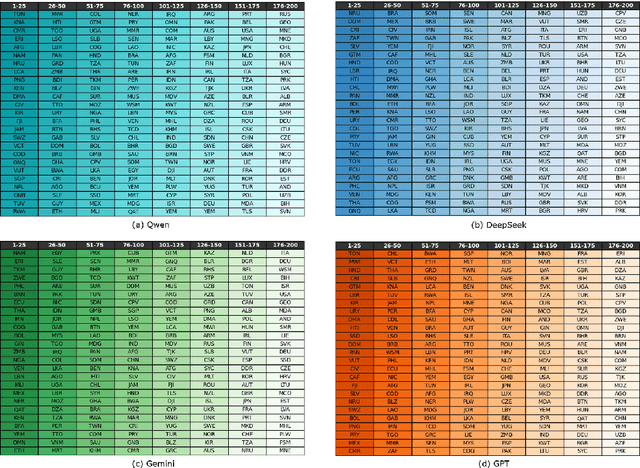
Large language models (LLMs) have rapidly become indispensable tools for acquiring information and supporting human decision-making. However, ensuring that these models uphold fairness across varied contexts is critical to their safe and responsible deployment. In this study, we undertake a comprehensive examination of four widely adopted LLMs, probing their underlying biases and inclinations across the dimensions of politics, ideology, alliance, language, and gender. Through a series of carefully designed experiments, we investigate their political neutrality using news summarization, ideological biases through news stance classification, tendencies toward specific geopolitical alliances via United Nations voting patterns, language bias in the context of multilingual story completion, and gender-related affinities as revealed by responses to the World Values Survey. Results indicate that while the LLMs are aligned to be neutral and impartial, they still show biases and affinities of different types.
A Survey on Semantic Processing Techniques
Oct 22, 2023Semantic processing is a fundamental research domain in computational linguistics. In the era of powerful pre-trained language models and large language models, the advancement of research in this domain appears to be decelerating. However, the study of semantics is multi-dimensional in linguistics. The research depth and breadth of computational semantic processing can be largely improved with new technologies. In this survey, we analyzed five semantic processing tasks, e.g., word sense disambiguation, anaphora resolution, named entity recognition, concept extraction, and subjectivity detection. We study relevant theoretical research in these fields, advanced methods, and downstream applications. We connect the surveyed tasks with downstream applications because this may inspire future scholars to fuse these low-level semantic processing tasks with high-level natural language processing tasks. The review of theoretical research may also inspire new tasks and technologies in the semantic processing domain. Finally, we compare the different semantic processing techniques and summarize their technical trends, application trends, and future directions.
GPTEval: A Survey on Assessments of ChatGPT and GPT-4
Aug 24, 2023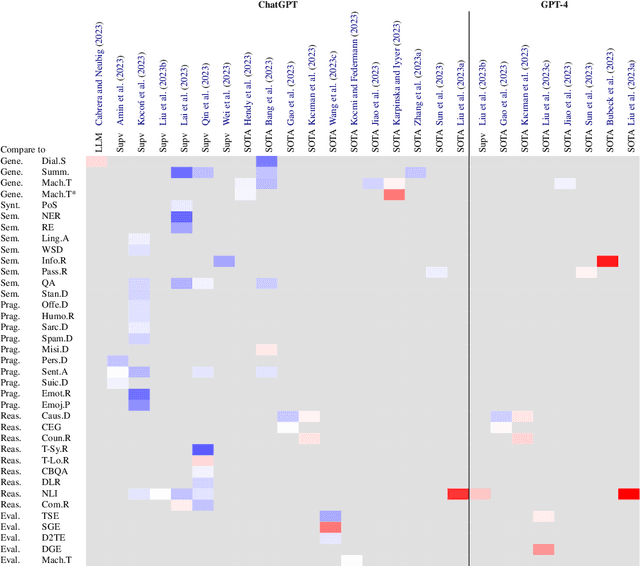
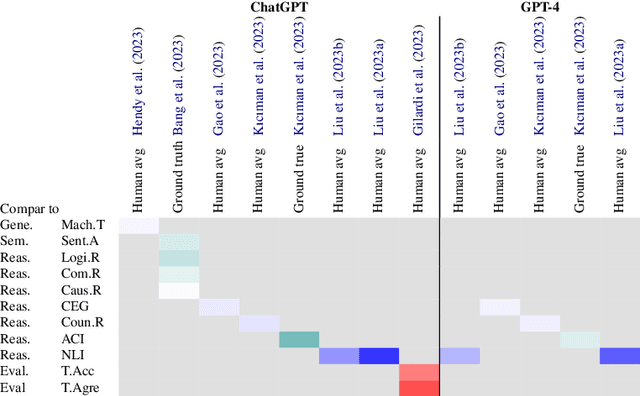
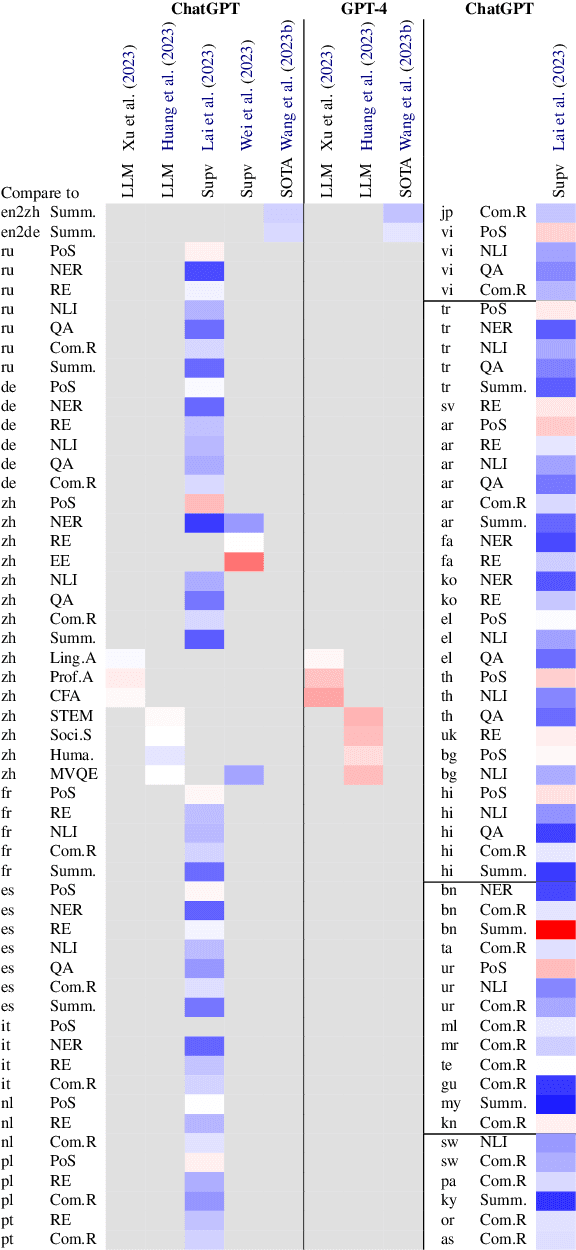
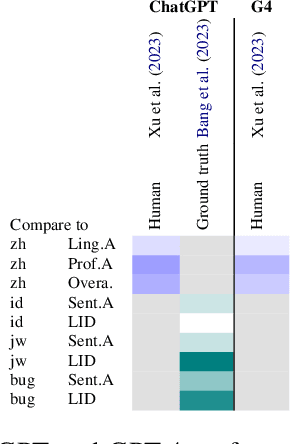
The emergence of ChatGPT has generated much speculation in the press about its potential to disrupt social and economic systems. Its astonishing language ability has aroused strong curiosity among scholars about its performance in different domains. There have been many studies evaluating the ability of ChatGPT and GPT-4 in different tasks and disciplines. However, a comprehensive review summarizing the collective assessment findings is lacking. The objective of this survey is to thoroughly analyze prior assessments of ChatGPT and GPT-4, focusing on its language and reasoning abilities, scientific knowledge, and ethical considerations. Furthermore, an examination of the existing evaluation methods is conducted, offering several recommendations for future research in evaluating large language models.