 Add to Chrome
 Add to Firefox
 Add to Edge
Continuous Data Assimilation with Learned Surrogate Dynamics
May 30, 2026
Continuous data assimilation seeks to estimate the state of a dynamical system from partial observations. In many applications, however, the state dynamics are unknown or prohibitively expensive to simulate at the required resolution, leading to model error. Motivated by this challenge and the increasing adoption of machine learning surrogates in data assimilation, this paper develops a unified finite-dimensional analysis of nudging algorithms that employ learned surrogate models of the dynamics. We first establish general conditions on the dynamics and observations that guarantee accurate tracking for nudging with the true dynamics model, both in the noise-free and noisy settings. We then show that nudging algorithms that employ surrogate models retain exponential convergence up to an explicit error floor that quantifies the effects of surrogate approximation error and observation noise. Finally, we analyze surrogate models obtained by learning either the vector field or the short-time solution map of the system, and quantify the amount of training data needed to ensure accurate nudging in the noise-free setting. Numerical experiments support the theory.

Asynchronous Remote Sensing Time-Series Fusion for Cloud Removal and Anytime Reconstruction
May 26, 2026Frequent cloud cover severely limits the usability of Sentinel-2 (S2) optical time series for Earth surface monitoring. Sentinel-1 (S1) SAR provides all-weather complementary observations, but practical S1/S2 fusion remains difficult because acquisitions are irregular and asynchronous. Many existing approaches assume temporally aligned inputs (or require external nearest-date matching) and typically restore only observed timestamps, limiting reconstruction under long gaps and preventing on-demand synthesis. We propose AGFlow (Time Aligned Generative Flow Matching), a spatiotemporal flow-matching model for S1/S2 cloud removal and time-series reconstruction with three capabilities: (1) timestamp-conditioned internal alignment that fuses asynchronous S1 and cloudy S2 observations without preprocessing-based pairing; (2) spatiotemporal, context-aware denoising that models spatial structure jointly with temporal dynamics (rather than independent per-pixel time series); and (3) anytime querying, enabling generation of cloud-free S2 frames at both observed and user-specified timestamps within the monitoring window. We evaluate on the RESTORE-DiT benchmark protocol with quantitative metrics, qualitative comparisons, and component ablations. AGFlow notably improves fully missing-frame reconstruction (MAE and RMSE reduce by 16-19% over RESTORE-DiT) and provides reliable reconstructions under persistent gaps, while also yielding competitive cloud removal performance and flexible temporal querying for downstream tasks such as dense vegetation monitoring.
Lang2MLIP: End-to-End Language-to-Machine Learning Interatomic Potential Development with Autonomous Agentic Workflows
May 14, 2026Developing machine learning interatomic potentials (MLIPs) for complex materials systems remains challenging because it requires expertise in atomistic simulations, machine learning, and workflow design, as well as iterative active learning procedures. Existing automated pipelines typically assume a fixed sequence of stages or depend on domain experts, which limits their adaptability to heterogeneous materials systems where the optimal curriculum is not known in advance. To lower the barrier to developing MLIPs for non-experts, we propose Lang2MLIP, a multi-agent framework that takes natural-language input and formulates end-to-end MLIP development as a sequential decision-making problem solved by large language models (LLMs). At each step, a decision-making agent observes the current dataset, model, evaluation results, and execution log, and then automatically selects an appropriate action to improve the model. This removes the need for a predefined pipeline and enables the agent to self-correct by revisiting earlier subsystems when new failures arise. We evaluate this approach on a solid electrolyte interphase (SEI) system with multiple components and interfaces. These results suggest that LLM-based multi-agent systems are a promising direction for automating MLIP development and making it more accessible to non-experts.
A Spatially Masked Adaptive Gated Network for multimodal post-flood water extent mapping using SAR and incomplete multispectral data
Dec 31, 2025Mapping water extent during a flood event is essential for effective disaster management throughout all phases: mitigation, preparedness, response, and recovery. In particular, during the response stage, when timely and accurate information is important, Synthetic Aperture Radar (SAR) data are primarily employed to produce water extent maps. Recently, leveraging the complementary characteristics of SAR and MSI data through a multimodal approach has emerged as a promising strategy for advancing water extent mapping using deep learning models. This approach is particularly beneficial when timely post-flood observations, acquired during or shortly after the flood peak, are limited, as it enables the use of all available imagery for more accurate post-flood water extent mapping. However, the adaptive integration of partially available MSI data into the SAR-based post-flood water extent mapping process remains underexplored. To bridge this research gap, we propose the Spatially Masked Adaptive Gated Network (SMAGNet), a multimodal deep learning model that utilizes SAR data as the primary input for post-flood water extent mapping and integrates complementary MSI data through feature fusion. In experiments on the C2S-MS Floods dataset, SMAGNet consistently outperformed other multimodal deep learning models in prediction performance across varying levels of MSI data availability. Furthermore, we found that even when MSI data were completely missing, the performance of SMAGNet remained statistically comparable to that of a U-Net model trained solely on SAR data. These findings indicate that SMAGNet enhances the model robustness to missing data as well as the applicability of multimodal deep learning in real-world flood management scenarios.
* 50 pages, 12 figures, 6 tables
How AI Agents Follow the Herd of AI? Network Effects, History, and Machine Optimism
Dec 12, 2025Understanding decision-making in multi-AI-agent frameworks is crucial for analyzing strategic interactions in network-effect-driven contexts. This study investigates how AI agents navigate network-effect games, where individual payoffs depend on peer participatio--a context underexplored in multi-agent systems despite its real-world prevalence. We introduce a novel workflow design using large language model (LLM)-based agents in repeated decision-making scenarios, systematically manipulating price trajectories (fixed, ascending, descending, random) and network-effect strength. Our key findings include: First, without historical data, agents fail to infer equilibrium. Second, ordered historical sequences (e.g., escalating prices) enable partial convergence under weak network effects but strong effects trigger persistent "AI optimism"--agents overestimate participation despite contradictory evidence. Third, randomized history disrupts convergence entirely, demonstrating that temporal coherence in data shapes LLMs' reasoning, unlike humans. These results highlight a paradigm shift: in AI-mediated systems, equilibrium outcomes depend not just on incentives, but on how history is curated, which is impossible for human.
Landslide Hazard Mapping with Geospatial Foundation Models: Geographical Generalizability, Data Scarcity, and Band Adaptability
Nov 06, 2025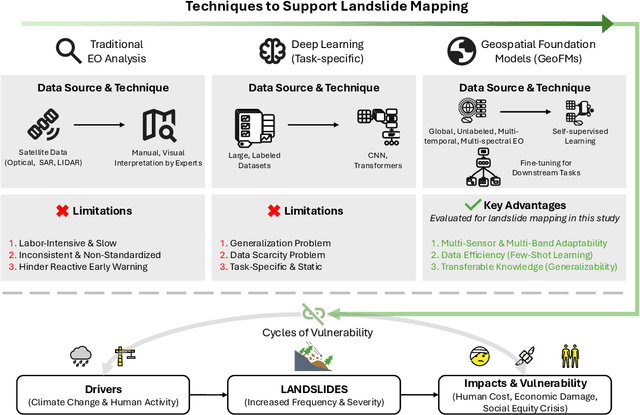
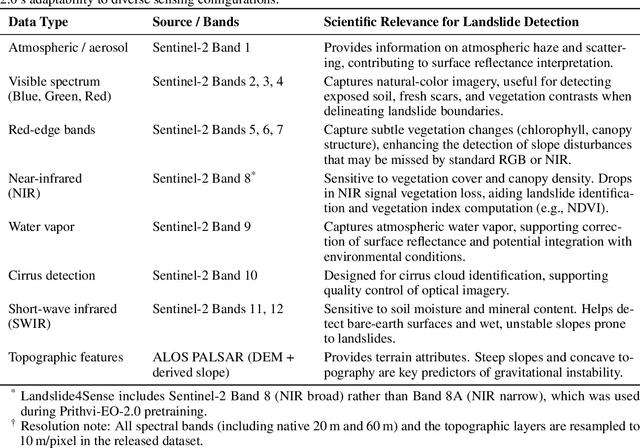
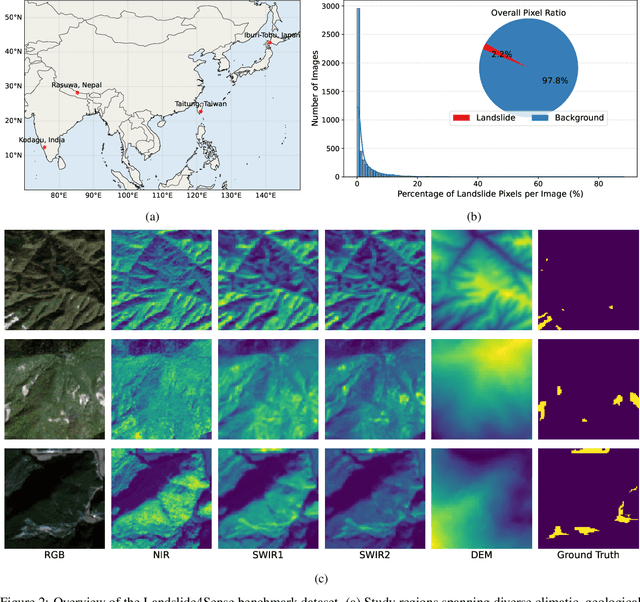
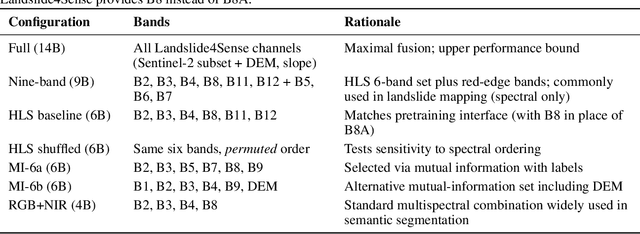
Landslides cause severe damage to lives, infrastructure, and the environment, making accurate and timely mapping essential for disaster preparedness and response. However, conventional deep learning models often struggle when applied across different sensors, regions, or under conditions of limited training data. To address these challenges, we present a three-axis analytical framework of sensor, label, and domain for adapting geospatial foundation models (GeoFMs), focusing on Prithvi-EO-2.0 for landslide mapping. Through a series of experiments, we show that it consistently outperforms task-specific CNNs (U-Net, U-Net++), vision transformers (Segformer, SwinV2-B), and other GeoFMs (TerraMind, SatMAE). The model, built on global pretraining, self-supervision, and adaptable fine-tuning, proved resilient to spectral variation, maintained accuracy under label scarcity, and generalized more reliably across diverse datasets and geographic settings. Alongside these strengths, we also highlight remaining challenges such as computational cost and the limited availability of reusable AI-ready training data for landslide research. Overall, our study positions GeoFMs as a step toward more robust and scalable approaches for landslide risk reduction and environmental monitoring.
Bayesian Optimization on Networks
Oct 31, 2025This paper studies optimization on networks modeled as metric graphs. Motivated by applications where the objective function is expensive to evaluate or only available as a black box, we develop Bayesian optimization algorithms that sequentially update a Gaussian process surrogate model of the objective to guide the acquisition of query points. To ensure that the surrogates are tailored to the network's geometry, we adopt Whittle-Mat\'ern Gaussian process prior models defined via stochastic partial differential equations on metric graphs. In addition to establishing regret bounds for optimizing sufficiently smooth objective functions, we analyze the practical case in which the smoothness of the objective is unknown and the Whittle-Mat\'ern prior is represented using finite elements. Numerical results demonstrate the effectiveness of our algorithms for optimizing benchmark objective functions on a synthetic metric graph and for Bayesian inversion via maximum a posteriori estimation on a telecommunication network.
A multi-scale vision transformer-based multimodal GeoAI model for mapping Arctic permafrost thaw
Apr 23, 2025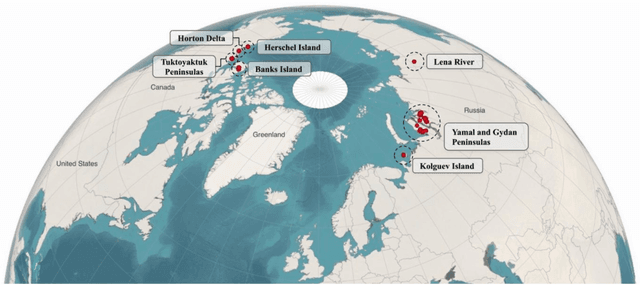
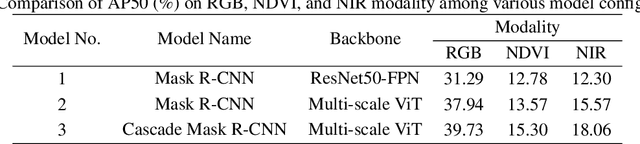
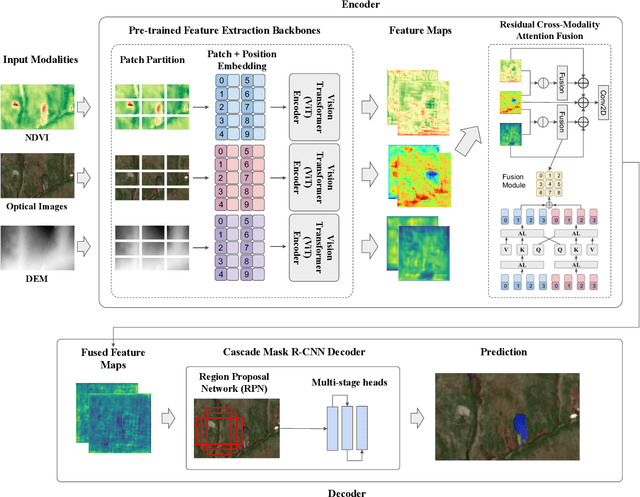
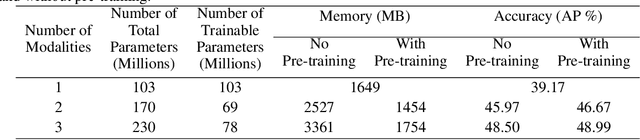
Retrogressive Thaw Slumps (RTS) in Arctic regions are distinct permafrost landforms with significant environmental impacts. Mapping these RTS is crucial because their appearance serves as a clear indication of permafrost thaw. However, their small scale compared to other landform features, vague boundaries, and spatiotemporal variation pose significant challenges for accurate detection. In this paper, we employed a state-of-the-art deep learning model, the Cascade Mask R-CNN with a multi-scale vision transformer-based backbone, to delineate RTS features across the Arctic. Two new strategies were introduced to optimize multimodal learning and enhance the model's predictive performance: (1) a feature-level, residual cross-modality attention fusion strategy, which effectively integrates feature maps from multiple modalities to capture complementary information and improve the model's ability to understand complex patterns and relationships within the data; (2) pre-trained unimodal learning followed by multimodal fine-tuning to alleviate high computing demand while achieving strong model performance. Experimental results demonstrated that our approach outperformed existing models adopting data-level fusion, feature-level convolutional fusion, and various attention fusion strategies, providing valuable insights into the efficient utilization of multimodal data for RTS mapping. This research contributes to our understanding of permafrost landforms and their environmental implications.
Geospatial Artificial Intelligence for Satellite-based Flood Extent Mapping: Concepts, Advances, and Future Perspectives
Apr 03, 2025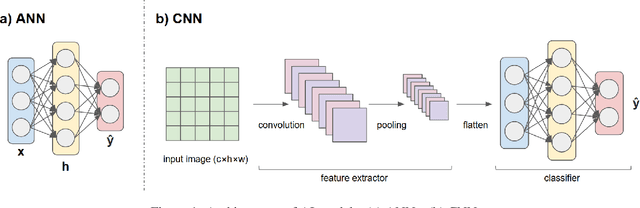
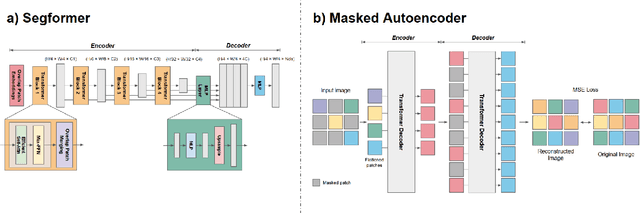
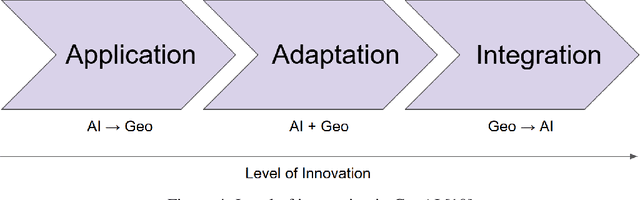
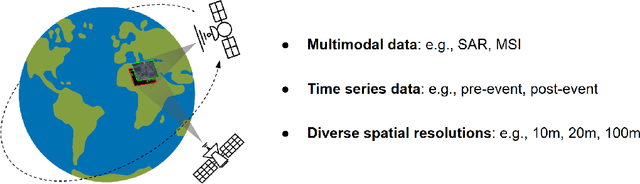
Geospatial Artificial Intelligence (GeoAI) for satellite-based flood extent mapping systematically integrates artificial intelligence techniques with satellite data to identify flood events and assess their impacts, for disaster management and spatial decision-making. The primary output often includes flood extent maps, which delineate the affected areas, along with additional analytical outputs such as uncertainty estimation and change detection.
GIScience in the Era of Artificial Intelligence: A Research Agenda Towards Autonomous GIS
Apr 01, 2025The advent of generative AI exemplified by large language models (LLMs) opens new ways to represent and compute geographic information and transcend the process of geographic knowledge production, driving geographic information systems (GIS) towards autonomous GIS. Leveraging LLMs as the decision core, autonomous GIS can independently generate and execute geoprocessing workflows to perform spatial analysis. In this vision paper, we elaborate on the concept of autonomous GIS and present a framework that defines its five autonomous goals, five levels of autonomy, five core functions, and three operational scales. We demonstrate how autonomous GIS could perform geospatial data retrieval, spatial analysis, and map making with four proof-of-concept GIS agents. We conclude by identifying critical challenges and future research directions, including fine-tuning and self-growing decision cores, autonomous modeling, and examining the ethical and practical implications of autonomous GIS. By establishing the groundwork for a paradigm shift in GIScience, this paper envisions a future where GIS moves beyond traditional workflows to autonomously reason, derive, innovate, and advance solutions to pressing global challenges.