 Add to Chrome
 Add to Firefox
 Add to Edge
Seeking Necessary and Sufficient Information from Multimodal Medical Data
Feb 27, 2026
Learning multimodal representations from medical images and other data sources can provide richer information for decision-making. While various multimodal models have been developed for this, they overlook learning features that are both necessary (must be present for the outcome to occur) and sufficient (enough to determine the outcome). We argue learning such features is crucial as they can improve model performance by capturing essential predictive information, and enhance model robustness to missing modalities as each modality can provide adequate predictive signals. Such features can be learned by leveraging the Probability of Necessity and Sufficiency (PNS) as a learning objective, an approach that has proven effective in unimodal settings. However, extending PNS to multimodal scenarios remains underexplored and is non-trivial as key conditions of PNS estimation are violated. We address this by decomposing multimodal representations into modality-invariant and modality-specific components, then deriving tractable PNS objectives for each. Experiments on synthetic and real-world medical datasets demonstrate our method's effectiveness. Code will be available on GitHub.

Large Language Models Meet Virtual Cell: A Survey
Oct 09, 2025Large language models (LLMs) are transforming cellular biology by enabling the development of "virtual cells"--computational systems that represent, predict, and reason about cellular states and behaviors. This work provides a comprehensive review of LLMs for virtual cell modeling. We propose a unified taxonomy that organizes existing methods into two paradigms: LLMs as Oracles, for direct cellular modeling, and LLMs as Agents, for orchestrating complex scientific tasks. We identify three core tasks--cellular representation, perturbation prediction, and gene regulation inference--and review their associated models, datasets, evaluation benchmarks, as well as the critical challenges in scalability, generalizability, and interpretability.
Medical Image Quality Assessment based on Probability of Necessity and Sufficiency
Oct 10, 2024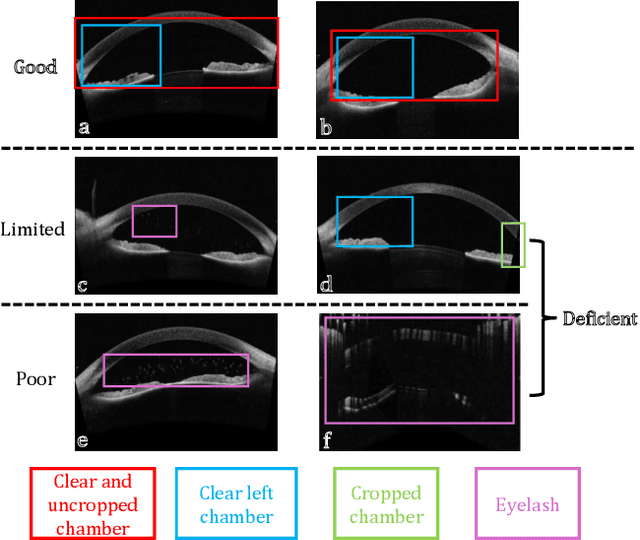
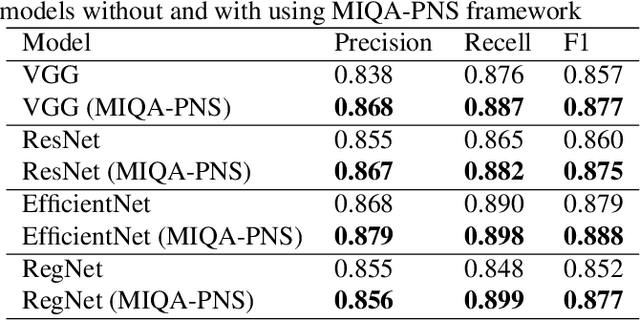
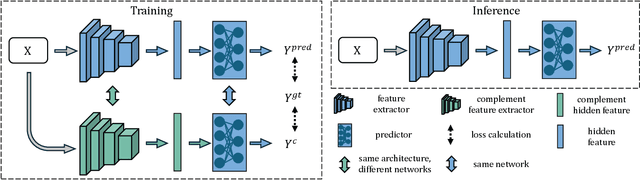
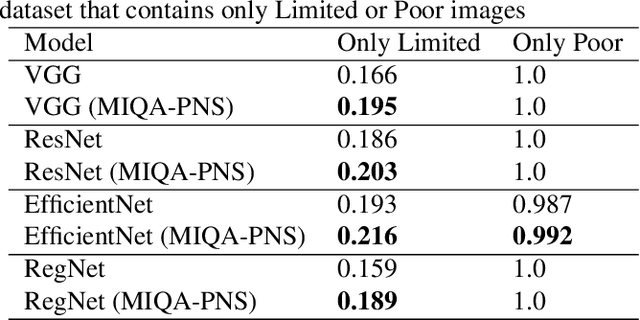
Medical image quality assessment (MIQA) is essential for reliable medical image analysis. While deep learning has shown promise in this field, current models could be misled by spurious correlations learned from data and struggle with out-of-distribution (OOD) scenarios. To that end, we propose an MIQA framework based on a concept from causal inference: Probability of Necessity and Sufficiency (PNS). PNS measures how likely a set of features is to be both necessary (always present for an outcome) and sufficient (capable of guaranteeing an outcome) for a particular result. Our approach leverages this concept by learning hidden features from medical images with high PNS values for quality prediction. This encourages models to capture more essential predictive information, enhancing their robustness to OOD scenarios. We evaluate our framework on an Anterior Segment Optical Coherence Tomography (AS-OCT) dataset for the MIQA task and experimental results demonstrate the effectiveness of our framework.