 Add to Chrome
 Add to Firefox
 Add to Edge
Creating Virtual Universes Using Generative Adversarial Networks
Aug 17, 2018
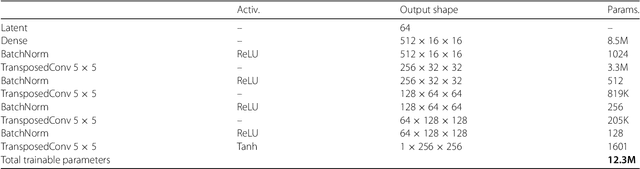
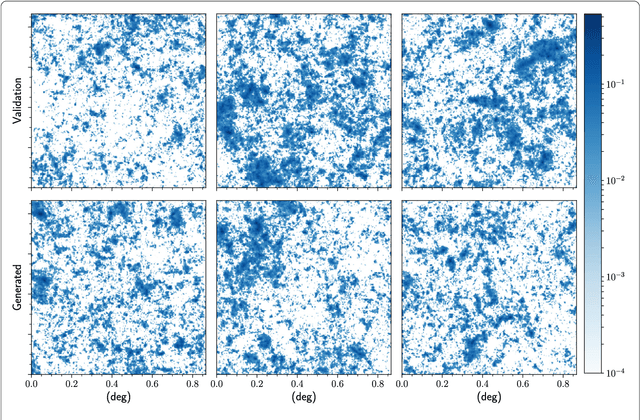
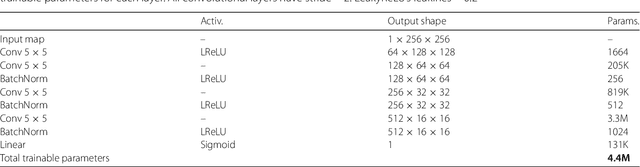
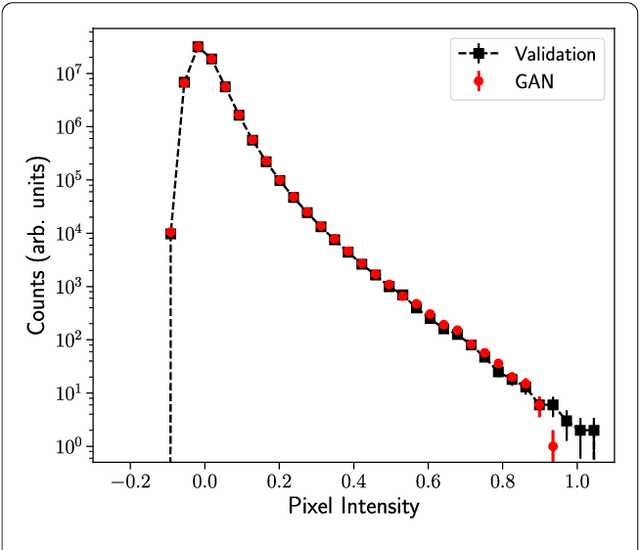
Inferring model parameters from experimental data is a grand challenge in many sciences, including cosmology. This often relies critically on high fidelity numerical simulations, which are prohibitively computationally expensive. The application of deep learning techniques to generative modeling is renewing interest in using high dimensional density estimators as computationally inexpensive emulators of fully-fledged simulations. These generative models have the potential to make a dramatic shift in the field of scientific simulations, but for that shift to happen we need to study the performance of such generators in the precision regime needed for science applications. To this end, in this letter we apply Generative Adversarial Networks to the problem of generating cosmological weak lensing convergence maps. We show that our generator network produces maps that are described by, with high statistical confidence, the same summary statistics as the fully simulated maps.

Machine Learning in High Energy Physics Community White Paper
Jul 08, 2018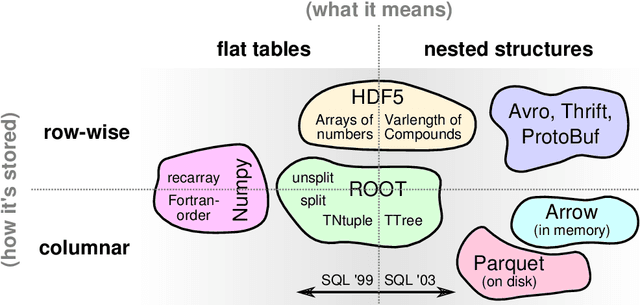
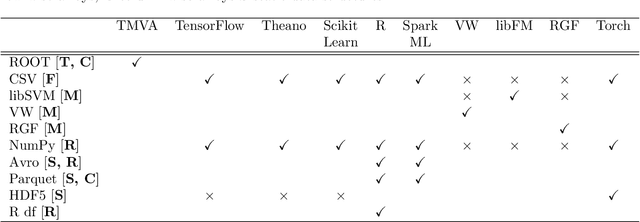
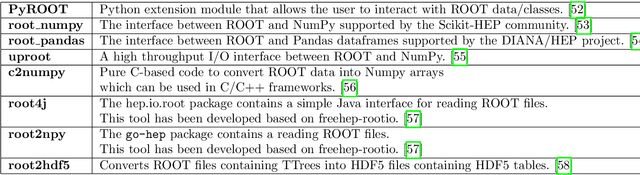
Machine learning is an important research area in particle physics, beginning with applications to high-level physics analysis in the 1990s and 2000s, followed by an explosion of applications in particle and event identification and reconstruction in the 2010s. In this document we discuss promising future research and development areas in machine learning in particle physics with a roadmap for their implementation, software and hardware resource requirements, collaborative initiatives with the data science community, academia and industry, and training the particle physics community in data science. The main objective of the document is to connect and motivate these areas of research and development with the physics drivers of the High-Luminosity Large Hadron Collider and future neutrino experiments and identify the resource needs for their implementation. Additionally we identify areas where collaboration with external communities will be of great benefit.
Improvements to Inference Compilation for Probabilistic Programming in Large-Scale Scientific Simulators
Dec 21, 2017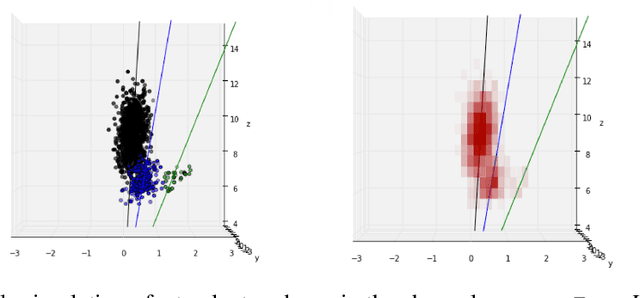
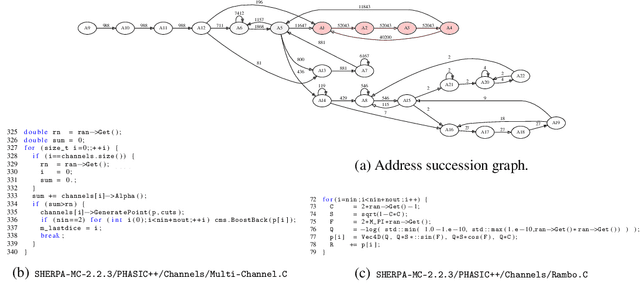
We consider the problem of Bayesian inference in the family of probabilistic models implicitly defined by stochastic generative models of data. In scientific fields ranging from population biology to cosmology, low-level mechanistic components are composed to create complex generative models. These models lead to intractable likelihoods and are typically non-differentiable, which poses challenges for traditional approaches to inference. We extend previous work in "inference compilation", which combines universal probabilistic programming and deep learning methods, to large-scale scientific simulators, and introduce a C++ based probabilistic programming library called CPProb. We successfully use CPProb to interface with SHERPA, a large code-base used in particle physics. Here we describe the technical innovations realized and planned for this library.
Deep Neural Networks for Physics Analysis on low-level whole-detector data at the LHC
Nov 29, 2017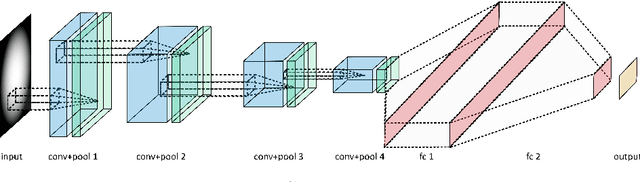
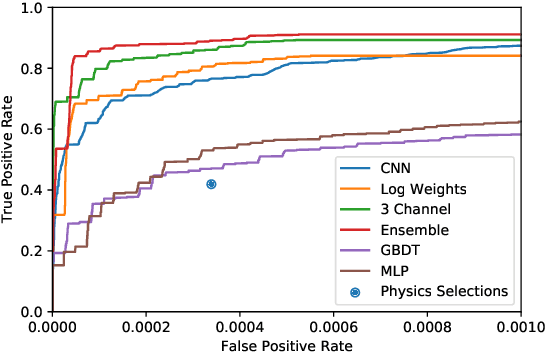
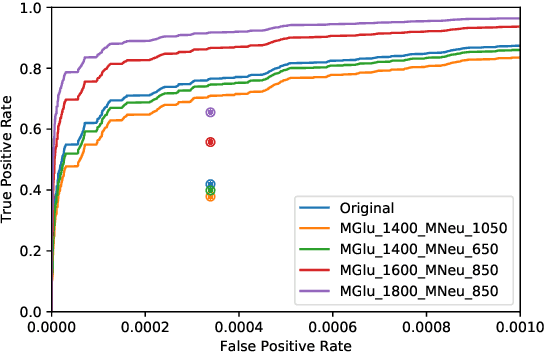
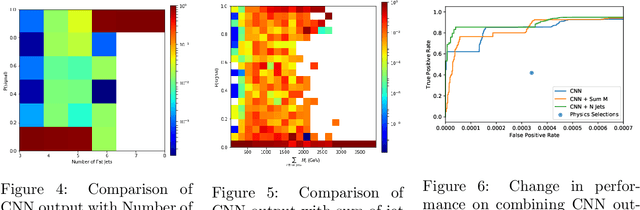
There has been considerable recent activity applying deep convolutional neural nets (CNNs) to data from particle physics experiments. Current approaches on ATLAS/CMS have largely focussed on a subset of the calorimeter, and for identifying objects or particular particle types. We explore approaches that use the entire calorimeter, combined with track information, for directly conducting physics analyses: i.e. classifying events as known-physics background or new-physics signals. We use an existing RPV-Supersymmetry analysis as a case study and explore CNNs on multi-channel, high-resolution sparse images: applied on GPU and multi-node CPU architectures (including Knights Landing (KNL) Xeon Phi nodes) on the Cori supercomputer at NERSC.
Deep Learning at 15PF: Supervised and Semi-Supervised Classification for Scientific Data
Aug 17, 2017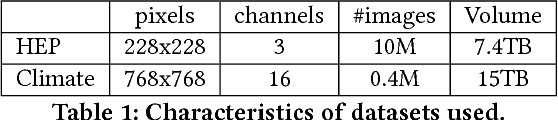
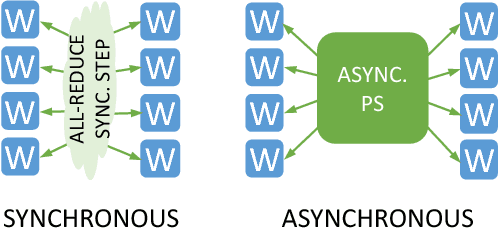
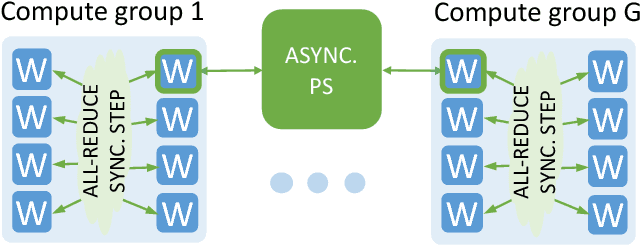
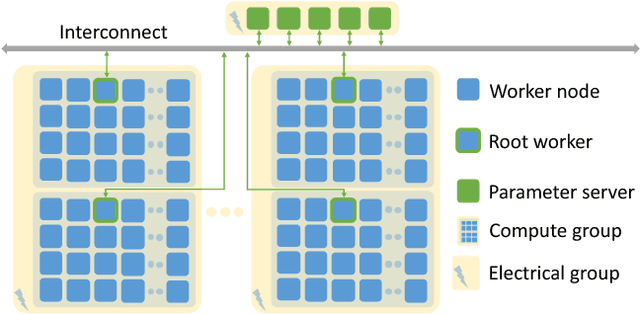
This paper presents the first, 15-PetaFLOP Deep Learning system for solving scientific pattern classification problems on contemporary HPC architectures. We develop supervised convolutional architectures for discriminating signals in high-energy physics data as well as semi-supervised architectures for localizing and classifying extreme weather in climate data. Our Intelcaffe-based implementation obtains $\sim$2TFLOP/s on a single Cori Phase-II Xeon-Phi node. We use a hybrid strategy employing synchronous node-groups, while using asynchronous communication across groups. We use this strategy to scale training of a single model to $\sim$9600 Xeon-Phi nodes; obtaining peak performance of 11.73-15.07 PFLOP/s and sustained performance of 11.41-13.27 PFLOP/s. At scale, our HEP architecture produces state-of-the-art classification accuracy on a dataset with 10M images, exceeding that achieved by selections on high-level physics-motivated features. Our semi-supervised architecture successfully extracts weather patterns in a 15TB climate dataset. Our results demonstrate that Deep Learning can be optimized and scaled effectively on many-core, HPC systems.
Revealing Fundamental Physics from the Daya Bay Neutrino Experiment using Deep Neural Networks
Dec 06, 2016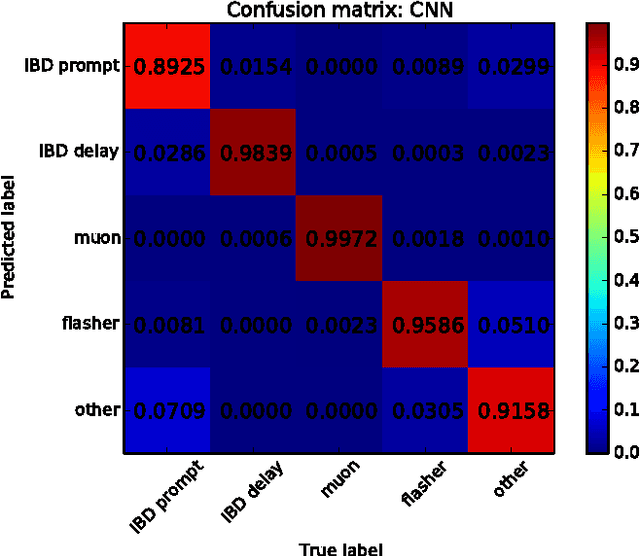
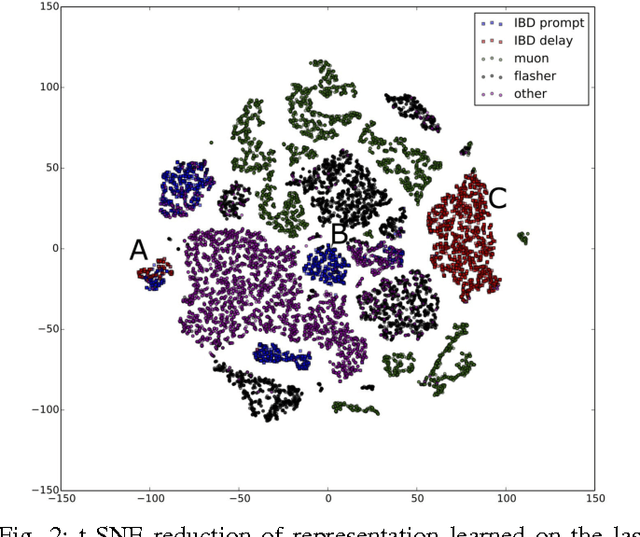
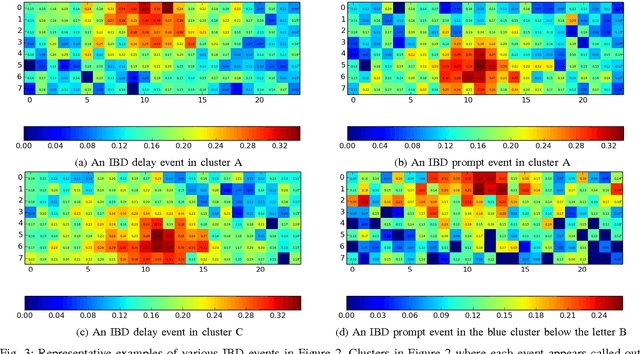
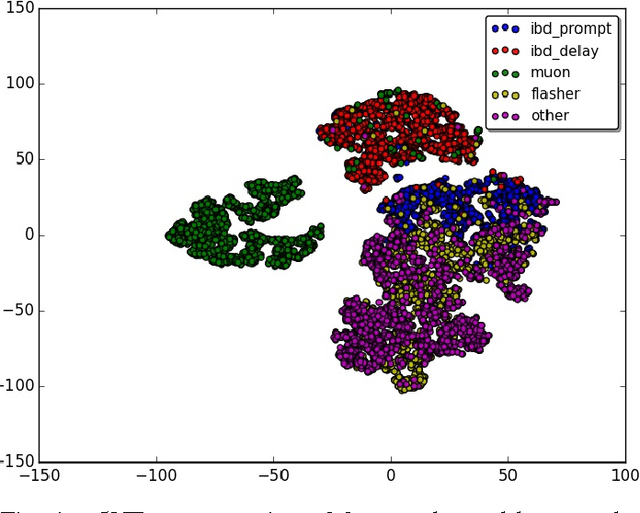
Experiments in particle physics produce enormous quantities of data that must be analyzed and interpreted by teams of physicists. This analysis is often exploratory, where scientists are unable to enumerate the possible types of signal prior to performing the experiment. Thus, tools for summarizing, clustering, visualizing and classifying high-dimensional data are essential. In this work, we show that meaningful physical content can be revealed by transforming the raw data into a learned high-level representation using deep neural networks, with measurements taken at the Daya Bay Neutrino Experiment as a case study. We further show how convolutional deep neural networks can provide an effective classification filter with greater than 97% accuracy across different classes of physics events, significantly better than other machine learning approaches.