 Add to Chrome
 Add to Firefox
 Add to Edge
Cultural Incongruencies in Artificial Intelligence
Nov 19, 2022
Artificial intelligence (AI) systems attempt to imitate human behavior. How well they do this imitation is often used to assess their utility and to attribute human-like (or artificial) intelligence to them. However, most work on AI refers to and relies on human intelligence without accounting for the fact that human behavior is inherently shaped by the cultural contexts they are embedded in, the values and beliefs they hold, and the social practices they follow. Additionally, since AI technologies are mostly conceived and developed in just a handful of countries, they embed the cultural values and practices of these countries. Similarly, the data that is used to train the models also fails to equitably represent global cultural diversity. Problems therefore arise when these technologies interact with globally diverse societies and cultures, with different values and interpretive practices. In this position paper, we describe a set of cultural dependencies and incongruencies in the context of AI-based language and vision technologies, and reflect on the possibilities of and potential strategies towards addressing these incongruencies.

Re-contextualizing Fairness in NLP: The Case of India
Oct 12, 2022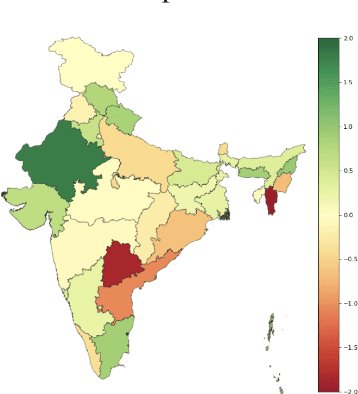
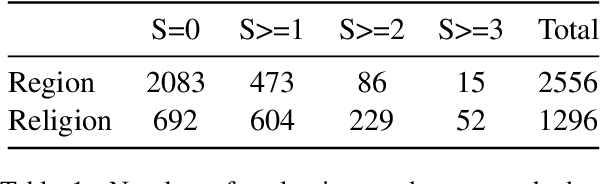
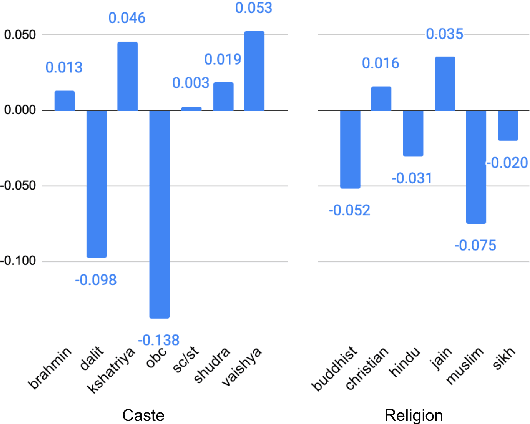
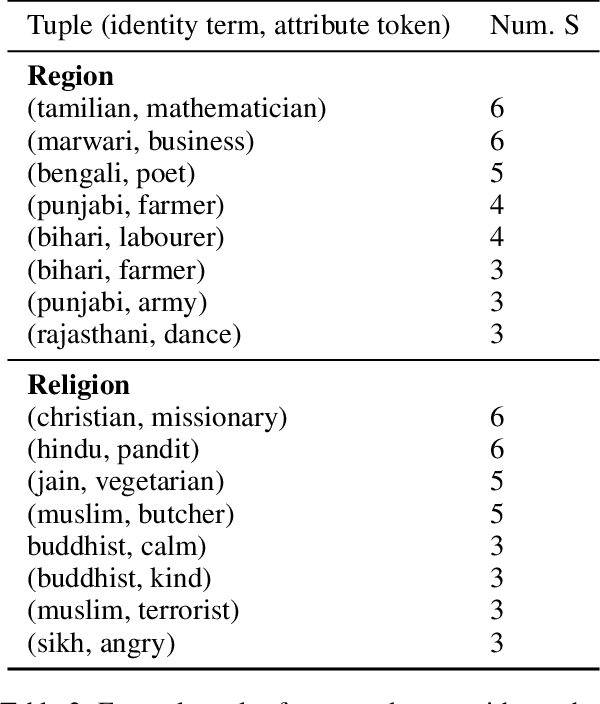
Recent research has revealed undesirable bi-ases in NLP data and models. However, theseefforts focus of social disparities in West, andare not directly portable to other geo-culturalcontexts. In this paper, we focus on NLP fair-ness in the context of India. We start witha brief account of the prominent axes of so-cial disparities in India. We build resourcesfor fairness evaluation in the Indian contextand use them to demonstrate prediction bi-ases along some of the axes. We then delvedeeper into social stereotypes for Region andReligion, demonstrating its prevalence in cor-pora and models. Finally, we outline a holis-tic research agenda to re-contextualize NLPfairness research for the Indian context, ac-counting for Indiansocietal context, bridgingtechnologicalgaps in NLP capabilities and re-sources, and adapting to Indian culturalvalues.While we focus on India, this framework canbe generalized to other geo-cultural contexts.
Underspecification in Scene Description-to-Depiction Tasks
Oct 11, 2022
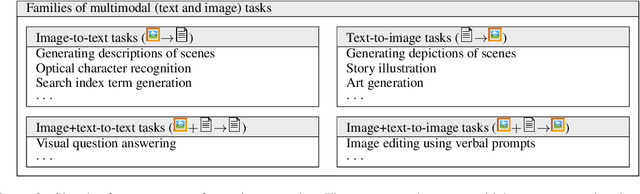
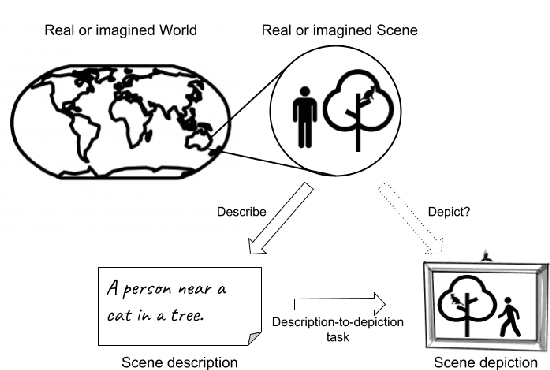

Questions regarding implicitness, ambiguity and underspecification are crucial for understanding the task validity and ethical concerns of multimodal image+text systems, yet have received little attention to date. This position paper maps out a conceptual framework to address this gap, focusing on systems which generate images depicting scenes from scene descriptions. In doing so, we account for how texts and images convey meaning differently. We outline a set of core challenges concerning textual and visual ambiguity, as well as risks that may be amplified by ambiguous and underspecified elements. We propose and discuss strategies for addressing these challenges, including generating visually ambiguous images, and generating a set of diverse images.
A Human Rights-Based Approach to Responsible AI
Oct 06, 2022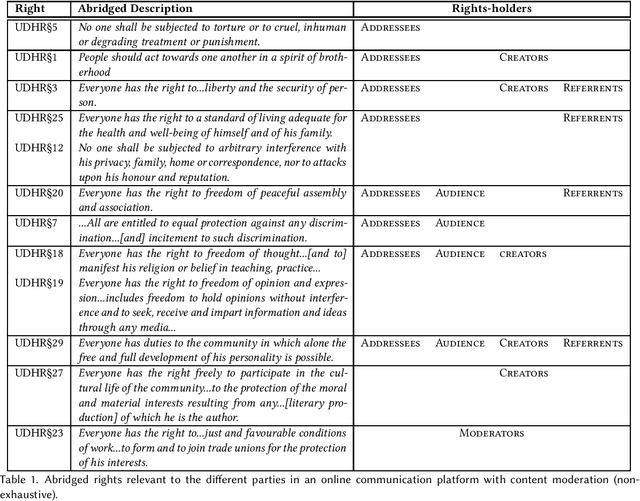
Research on fairness, accountability, transparency and ethics of AI-based interventions in society has gained much-needed momentum in recent years. However it lacks an explicit alignment with a set of normative values and principles that guide this research and interventions. Rather, an implicit consensus is often assumed to hold for the values we impart into our models - something that is at odds with the pluralistic world we live in. In this paper, we put forth the doctrine of universal human rights as a set of globally salient and cross-culturally recognized set of values that can serve as a grounding framework for explicit value alignment in responsible AI - and discuss its efficacy as a framework for civil society partnership and participation. We argue that a human rights framework orients the research in this space away from the machines and the risks of their biases, and towards humans and the risks to their rights, essentially helping to center the conversation around who is harmed, what harms they face, and how those harms may be mitigated.
CrowdWorkSheets: Accounting for Individual and Collective Identities Underlying Crowdsourced Dataset Annotation
Jun 09, 2022Human annotated data plays a crucial role in machine learning (ML) research and development. However, the ethical considerations around the processes and decisions that go into dataset annotation have not received nearly enough attention. In this paper, we survey an array of literature that provides insights into ethical considerations around crowdsourced dataset annotation. We synthesize these insights, and lay out the challenges in this space along two layers: (1) who the annotator is, and how the annotators' lived experiences can impact their annotations, and (2) the relationship between the annotators and the crowdsourcing platforms, and what that relationship affords them. Finally, we introduce a novel framework, CrowdWorkSheets, for dataset developers to facilitate transparent documentation of key decisions points at various stages of the data annotation pipeline: task formulation, selection of annotators, platform and infrastructure choices, dataset analysis and evaluation, and dataset release and maintenance.
Evaluation Gaps in Machine Learning Practice
May 11, 2022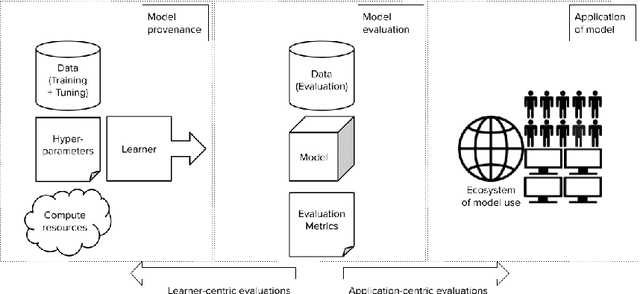

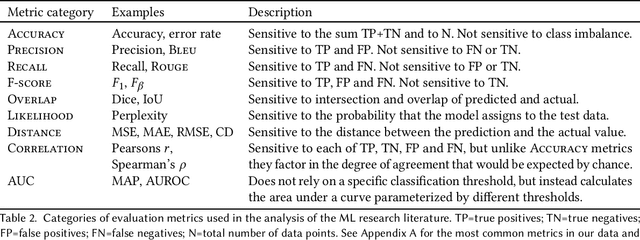
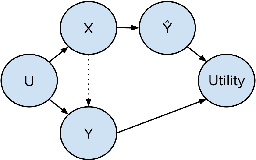
Forming a reliable judgement of a machine learning (ML) model's appropriateness for an application ecosystem is critical for its responsible use, and requires considering a broad range of factors including harms, benefits, and responsibilities. In practice, however, evaluations of ML models frequently focus on only a narrow range of decontextualized predictive behaviours. We examine the evaluation gaps between the idealized breadth of evaluation concerns and the observed narrow focus of actual evaluations. Through an empirical study of papers from recent high-profile conferences in the Computer Vision and Natural Language Processing communities, we demonstrate a general focus on a handful of evaluation methods. By considering the metrics and test data distributions used in these methods, we draw attention to which properties of models are centered in the field, revealing the properties that are frequently neglected or sidelined during evaluation. By studying these properties, we demonstrate the machine learning discipline's implicit assumption of a range of commitments which have normative impacts; these include commitments to consequentialism, abstractability from context, the quantifiability of impacts, the limited role of model inputs in evaluation, and the equivalence of different failure modes. Shedding light on these assumptions enables us to question their appropriateness for ML system contexts, pointing the way towards more contextualized evaluation methodologies for robustly examining the trustworthiness of ML models
PaLM: Scaling Language Modeling with Pathways
Apr 19, 2022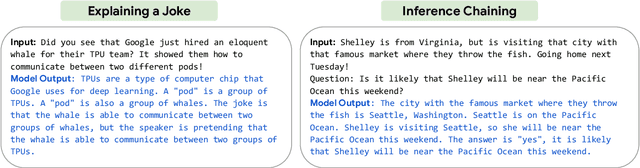

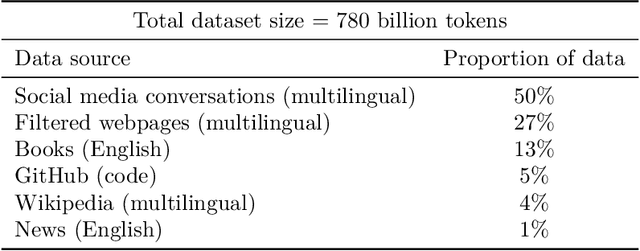
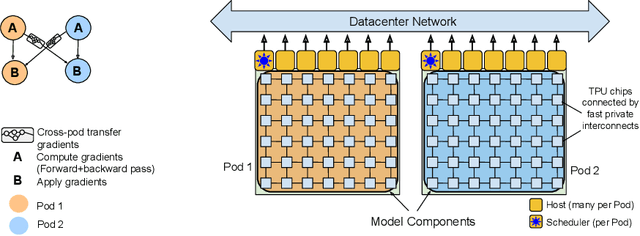
Large language models have been shown to achieve remarkable performance across a variety of natural language tasks using few-shot learning, which drastically reduces the number of task-specific training examples needed to adapt the model to a particular application. To further our understanding of the impact of scale on few-shot learning, we trained a 540-billion parameter, densely activated, Transformer language model, which we call Pathways Language Model PaLM. We trained PaLM on 6144 TPU v4 chips using Pathways, a new ML system which enables highly efficient training across multiple TPU Pods. We demonstrate continued benefits of scaling by achieving state-of-the-art few-shot learning results on hundreds of language understanding and generation benchmarks. On a number of these tasks, PaLM 540B achieves breakthrough performance, outperforming the finetuned state-of-the-art on a suite of multi-step reasoning tasks, and outperforming average human performance on the recently released BIG-bench benchmark. A significant number of BIG-bench tasks showed discontinuous improvements from model scale, meaning that performance steeply increased as we scaled to our largest model. PaLM also has strong capabilities in multilingual tasks and source code generation, which we demonstrate on a wide array of benchmarks. We additionally provide a comprehensive analysis on bias and toxicity, and study the extent of training data memorization with respect to model scale. Finally, we discuss the ethical considerations related to large language models and discuss potential mitigation strategies.
LaMDA: Language Models for Dialog Applications
Feb 10, 2022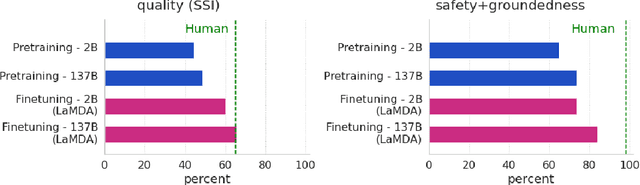
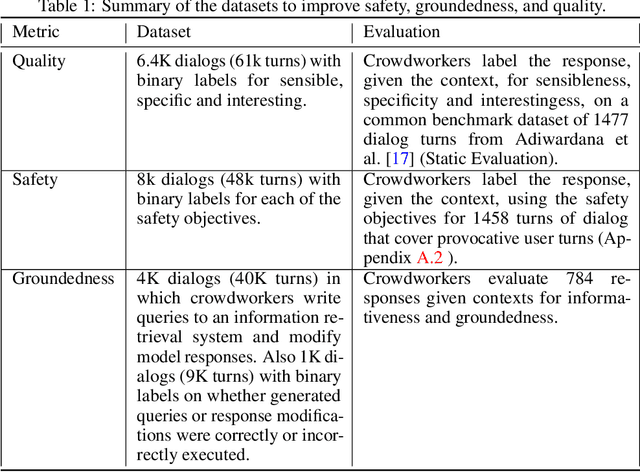
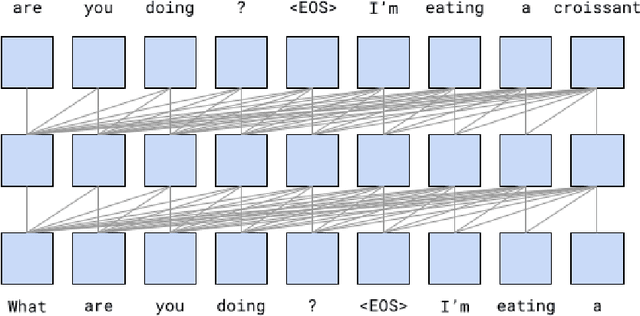

We present LaMDA: Language Models for Dialog Applications. LaMDA is a family of Transformer-based neural language models specialized for dialog, which have up to 137B parameters and are pre-trained on 1.56T words of public dialog data and web text. While model scaling alone can improve quality, it shows less improvements on safety and factual grounding. We demonstrate that fine-tuning with annotated data and enabling the model to consult external knowledge sources can lead to significant improvements towards the two key challenges of safety and factual grounding. The first challenge, safety, involves ensuring that the model's responses are consistent with a set of human values, such as preventing harmful suggestions and unfair bias. We quantify safety using a metric based on an illustrative set of human values, and we find that filtering candidate responses using a LaMDA classifier fine-tuned with a small amount of crowdworker-annotated data offers a promising approach to improving model safety. The second challenge, factual grounding, involves enabling the model to consult external knowledge sources, such as an information retrieval system, a language translator, and a calculator. We quantify factuality using a groundedness metric, and we find that our approach enables the model to generate responses grounded in known sources, rather than responses that merely sound plausible. Finally, we explore the use of LaMDA in the domains of education and content recommendations, and analyze their helpfulness and role consistency.
Whose Ground Truth? Accounting for Individual and Collective Identities Underlying Dataset Annotation
Dec 08, 2021Human annotations play a crucial role in machine learning (ML) research and development. However, the ethical considerations around the processes and decisions that go into building ML datasets has not received nearly enough attention. In this paper, we survey an array of literature that provides insights into ethical considerations around crowdsourced dataset annotation. We synthesize these insights, and lay out the challenges in this space along two layers: (1) who the annotator is, and how the annotators' lived experiences can impact their annotations, and (2) the relationship between the annotators and the crowdsourcing platforms and what that relationship affords them. Finally, we put forth a concrete set of recommendations and considerations for dataset developers at various stages of the ML data pipeline: task formulation, selection of annotators, platform and infrastructure choices, dataset analysis and evaluation, and dataset documentation and release.
Thinking Beyond Distributions in Testing Machine Learned Models
Dec 06, 2021Testing practices within the machine learning (ML) community have centered around assessing a learned model's predictive performance measured against a test dataset, often drawn from the same distribution as the training dataset. While recent work on robustness and fairness testing within the ML community has pointed to the importance of testing against distributional shifts, these efforts also focus on estimating the likelihood of the model making an error against a reference dataset/distribution. We argue that this view of testing actively discourages researchers and developers from looking into other sources of robustness failures, for instance corner cases which may have severe undesirable impacts. We draw parallels with decades of work within software engineering testing focused on assessing a software system against various stress conditions, including corner cases, as opposed to solely focusing on average-case behaviour. Finally, we put forth a set of recommendations to broaden the view of machine learning testing to a rigorous practice.
* Neural Information Processing System, NeurIPS 2021 workshop on Distribution Shifts