 Add to Chrome
 Add to Firefox
 Add to Edge
An Actionable Diagnosis of Multilingual, Multi-Agent Planning Failures
Aug 04, 2026
Multilingual multi-agent systems exhibit substantial degradation beyond English, yet prior work rarely identifies how task-critical information is lost when user requests are converted into executable plans. We study the planner in a multi-agent system as the request-to-action interface and derive an actionable taxonomy of planning-grounding failures from failed real-world task executions. LLM-based analysis shows that these failures constitute an increasing share of unsuccessful executions as language-resource availability declines, with the strongest effects in low-resource languages. To test whether the taxonomy supports mitigation, we introduce TART, Taxonomy-Guided Actionable Representation, that makes the taxonomy's key aspects explicit to the planner and downstream sub-agents. Across multiple languages, three LLM backbones, two datasets, and two agentic configurations, TART consistently improves performance. On multilingual GAIA, it raises a state-of-the-art system's accuracy by 5.6 percentage points averaged across eleven languages spanning low- to high-resource settings.

Adversarial Intent is a Latent Variable: Stateful Trust Inference for Securing Multimodal Agentic RAG
Feb 24, 2026Current stateless defences for multimodal agentic RAG fail to detect adversarial strategies that distribute malicious semantics across retrieval, planning, and generation components. We formulate this security challenge as a Partially Observable Markov Decision Process (POMDP), where adversarial intent is a latent variable inferred from noisy multi-stage observations. We introduce MMA-RAG^T, an inference-time control framework governed by a Modular Trust Agent (MTA) that maintains an approximate belief state via structured LLM reasoning. Operating as a model-agnostic overlay, MMA-RAGT mediates a configurable set of internal checkpoints to enforce stateful defence-in-depth. Extensive evaluation on 43,774 instances demonstrates a 6.50x average reduction factor in Attack Success Rate relative to undefended baselines, with negligible utility cost. Crucially, a factorial ablation validates our theoretical bounds: while statefulness and spatial coverage are individually necessary (26.4 pp and 13.6 pp gains respectively), stateless multi-point intervention can yield zero marginal benefit under homogeneous stateless filtering when checkpoint detections are perfectly correlated.
MAPS: A Multilingual Benchmark for Global Agent Performance and Security
May 21, 2025Agentic AI systems, which build on Large Language Models (LLMs) and interact with tools and memory, have rapidly advanced in capability and scope. Yet, since LLMs have been shown to struggle in multilingual settings, typically resulting in lower performance and reduced safety, agentic systems risk inheriting these limitations. This raises concerns about the global accessibility of such systems, as users interacting in languages other than English may encounter unreliable or security-critical agent behavior. Despite growing interest in evaluating agentic AI, existing benchmarks focus exclusively on English, leaving multilingual settings unexplored. To address this gap, we propose MAPS, a multilingual benchmark suite designed to evaluate agentic AI systems across diverse languages and tasks. MAPS builds on four widely used agentic benchmarks - GAIA (real-world tasks), SWE-bench (code generation), MATH (mathematical reasoning), and the Agent Security Benchmark (security). We translate each dataset into ten diverse languages, resulting in 805 unique tasks and 8,855 total language-specific instances. Our benchmark suite enables a systematic analysis of how multilingual contexts affect agent performance and robustness. Empirically, we observe consistent degradation in both performance and security when transitioning from English to other languages, with severity varying by task and correlating with the amount of translated input. Building on these findings, we provide actionable recommendations to guide agentic AI systems development and assessment under multilingual settings. This work establishes a standardized evaluation framework, encouraging future research towards equitable, reliable, and globally accessible agentic AI. MAPS benchmark suite is publicly available at https://huggingface.co/datasets/Fujitsu-FRE/MAPS
Insights and Current Gaps in Open-Source LLM Vulnerability Scanners: A Comparative Analysis
Oct 21, 2024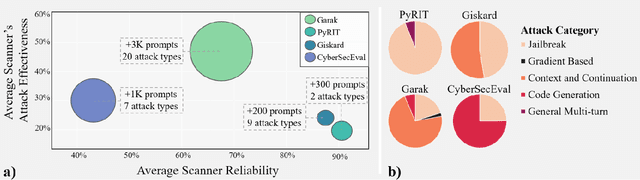
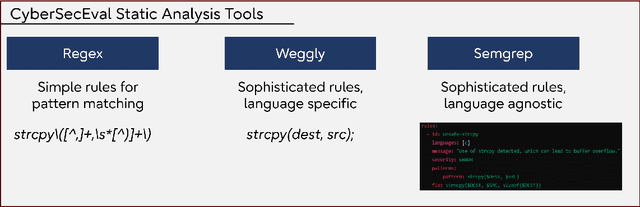
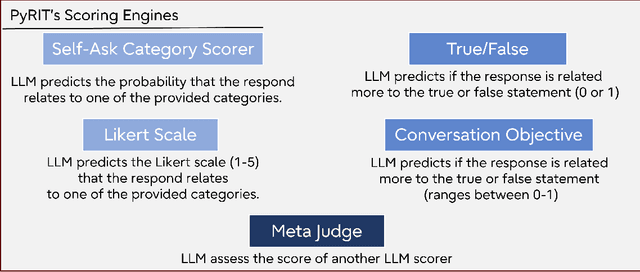
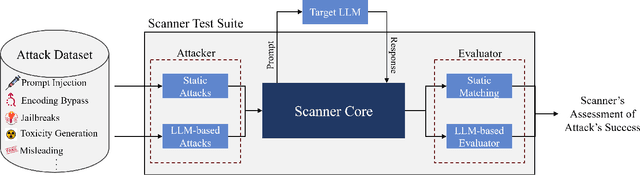
This report presents a comparative analysis of open-source vulnerability scanners for conversational large language models (LLMs). As LLMs become integral to various applications, they also present potential attack surfaces, exposed to security risks such as information leakage and jailbreak attacks. Our study evaluates prominent scanners - Garak, Giskard, PyRIT, and CyberSecEval - that adapt red-teaming practices to expose these vulnerabilities. We detail the distinctive features and practical use of these scanners, outline unifying principles of their design and perform quantitative evaluations to compare them. These evaluations uncover significant reliability issues in detecting successful attacks, highlighting a fundamental gap for future development. Additionally, we contribute a preliminary labelled dataset, which serves as an initial step to bridge this gap. Based on the above, we provide strategic recommendations to assist organizations choose the most suitable scanner for their red-teaming needs, accounting for customizability, test suite comprehensiveness, and industry-specific use cases.