 Add to Chrome
 Add to Firefox
 Add to Edge
SOL-ExecBench: Speed-of-Light Benchmarking for Real-World GPU Kernels Against Hardware Limits
Mar 19, 2026
As agentic AI systems become increasingly capable of generating and optimizing GPU kernels, progress is constrained by benchmarks that reward speedup over software baselines rather than proximity to hardware-efficient execution. We present SOL-ExecBench, a benchmark of 235 CUDA kernel optimization problems extracted from 124 production and emerging AI models spanning language, diffusion, vision, audio, video, and hybrid architectures, targeting NVIDIA Blackwell GPUs. The benchmark covers forward and backward workloads across BF16, FP8, and NVFP4, including kernels whose best performance is expected to rely on Blackwell-specific capabilities. Unlike prior benchmarks that evaluate kernels primarily relative to software implementations, SOL-ExecBench measures performance against analytically derived Speed-of-Light (SOL) bounds computed by SOLAR, our pipeline for deriving hardware-grounded SOL bounds, yielding a fixed target for hardware-efficient optimization. We report a SOL Score that quantifies how much of the gap between a release-defined scoring baseline and the hardware SOL bound a candidate kernel closes. To support robust evaluation of agentic optimizers, we additionally provide a sandboxed harness with GPU clock locking, L2 cache clearing, isolated subprocess execution, and static analysis based checks against common reward-hacking strategies. SOL-ExecBench reframes GPU kernel benchmarking from beating a mutable software baseline to closing the remaining gap to hardware Speed-of-Light.

TiDAR: Think in Diffusion, Talk in Autoregression
Nov 12, 2025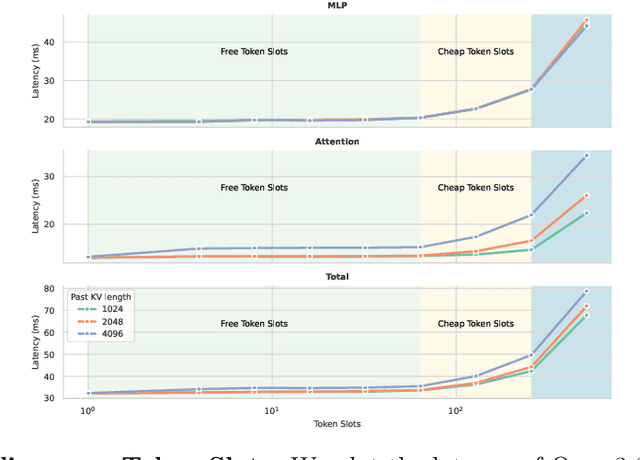
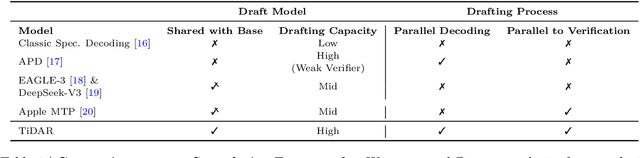
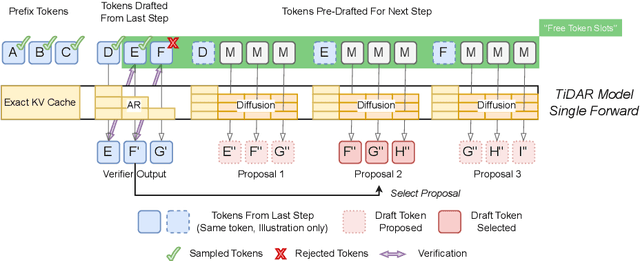
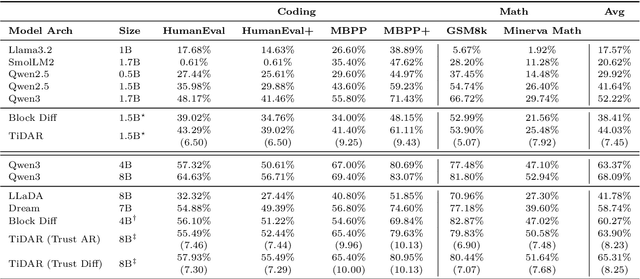
Diffusion language models hold the promise of fast parallel generation, while autoregressive (AR) models typically excel in quality due to their causal structure aligning naturally with language modeling. This raises a fundamental question: can we achieve a synergy with high throughput, higher GPU utilization, and AR level quality? Existing methods fail to effectively balance these two aspects, either prioritizing AR using a weaker model for sequential drafting (speculative decoding), leading to lower drafting efficiency, or using some form of left-to-right (AR-like) decoding logic for diffusion, which still suffers from quality degradation and forfeits its potential parallelizability. We introduce TiDAR, a sequence-level hybrid architecture that drafts tokens (Thinking) in Diffusion and samples final outputs (Talking) AutoRegressively - all within a single forward pass using specially designed structured attention masks. This design exploits the free GPU compute density, achieving a strong balance between drafting and verification capacity. Moreover, TiDAR is designed to be serving-friendly (low overhead) as a standalone model. We extensively evaluate TiDAR against AR models, speculative decoding, and diffusion variants across generative and likelihood tasks at 1.5B and 8B scales. Thanks to the parallel drafting and sampling as well as exact KV cache support, TiDAR outperforms speculative decoding in measured throughput and surpasses diffusion models like Dream and Llada in both efficiency and quality. Most notably, TiDAR is the first architecture to close the quality gap with AR models while delivering 4.71x to 5.91x more tokens per second.
An Empirical Study of Mamba-based Language Models
Jun 12, 2024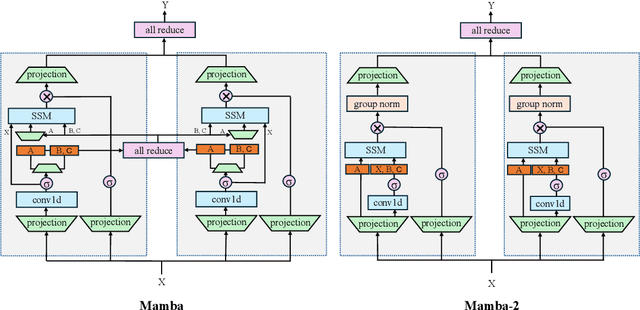


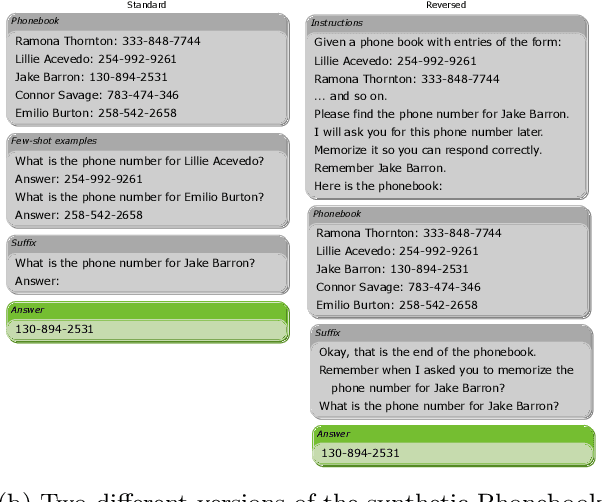
Selective state-space models (SSMs) like Mamba overcome some of the shortcomings of Transformers, such as quadratic computational complexity with sequence length and large inference-time memory requirements from the key-value cache. Moreover, recent studies have shown that SSMs can match or exceed the language modeling capabilities of Transformers, making them an attractive alternative. In a controlled setting (e.g., same data), however, studies so far have only presented small scale experiments comparing SSMs to Transformers. To understand the strengths and weaknesses of these architectures at larger scales, we present a direct comparison between 8B-parameter Mamba, Mamba-2, and Transformer models trained on the same datasets of up to 3.5T tokens. We also compare these models to a hybrid architecture consisting of 43% Mamba-2, 7% attention, and 50% MLP layers (Mamba-2-Hybrid). Using a diverse set of tasks, we answer the question of whether Mamba models can match Transformers at larger training budgets. Our results show that while pure SSMs match or exceed Transformers on many tasks, they lag behind Transformers on tasks which require strong copying or in-context learning abilities (e.g., 5-shot MMLU, Phonebook) or long-context reasoning. In contrast, we find that the 8B Mamba-2-Hybrid exceeds the 8B Transformer on all 12 standard tasks we evaluated (+2.65 points on average) and is predicted to be up to 8x faster when generating tokens at inference time. To validate long-context capabilities, we provide additional experiments evaluating variants of the Mamba-2-Hybrid and Transformer extended to support 16K, 32K, and 128K sequences. On an additional 23 long-context tasks, the hybrid model continues to closely match or exceed the Transformer on average. To enable further study, we release the checkpoints as well as the code used to train our models as part of NVIDIA's Megatron-LM project.