 Add to Chrome
 Add to Firefox
 Add to Edge
Layers Matter: Why Continual Learning Regularization Should Be Layer-Adaptive
Aug 16, 2026
Continual learning regularizers like EWC fight forgetting by penalizing changes from previous-task parameters with per-parameter importance, typically diagonal Fisher values. Per-parameter looks more flexible than per-layer, but each layer's diagonal Fisher is a weak summary of its actual curvature, missing the top-eigenvalue information that controls forgetting. Adversarial bit-flip attacks and Hessian-spectrum studies show that this missing per-layer sensitivity spans orders of magnitude in neural networks. Under a block-diagonal Hessian assumption, the layer-level analogue of EWC's existing diagonal assumption, we prove three things. Forgetting decomposes as a sum of per-layer terms weighted by each layer's top Hessian eigenvalue. Diagonal-Fisher weights cannot recover this eigenvalue. For instance, two layers with identical Fisher averages can have top eigenvalues differing by a factor as large as the layer width. For the same level of forgetting, uniform regularization loses new-task performance by an amount scaling with the layer condition number. Our theoretical analysis leads to a simple recipe: protect early layers strongly, let deeper layers move. We apply this recipe to EWC and SLCA and show clear improvements in average performance and forgetting metrics.

LUMA: Benchmarking Segmentation via a Lightweight Universal Mask Adapter
Jul 01, 2026Comparing transformer backbones for image segmentation is confounded: each is paired with a different decoder, recipe, and pretraining, so reported differences rarely reflect the backbone itself. We introduce the Lightweight Universal Mask Adapter (LUMA), a lightweight, backbone-agnostic mask-transformer head that treats any backbone as a black-box feature extractor, letting a set of queries read from its features through cheap cross-attention. LUMA matches the accuracy of EoMT, the state-of-the-art efficient ViT-segmenter, at lower cost, while attaching unchanged to isotropic, hierarchical, convolutional, and mixture-of-experts backbones alike. Holding this head fixed, we benchmark 20 backbones, 11 pretraining schemes and a range of resolutions on ADE20K and Cityscapes under one modern recipe. We find that ``efficient'' token mixers fail to deliver efficiency even at the high resolutions that motivate them, with plain ViT holding the throughput Pareto-front at every resolution. Additionally, the pretraining objective, not the architecture, the lever the field has tuned hardest, governs segmentation quality.
OA-CutMix: Correcting the Label Bias of CutMix
Jun 03, 2026CutMix has become the de facto standard mixing augmentation, yet its label assignment rests on a flawed assumption: The area of the pasted patch faithfully reflects its semantic contribution to the mixed image. In practice, however, patches frequently land on background regions, assigning label credit to classes whose objects are not visible. The mean discrepancy of the CutMix label and the semantic object area is $21.5\%$. In $17\%$ of samples an image contributes zero visible object pixels yet receives nonzero label weight. We propose Object-Aware CutMix (OA-CutMix), which corrects this bias by replacing the area-based CutMix weight with one derived from precomputed segmentation masks, assigning labels in proportion to the visible object area each image contributes to the mix. The image mixing procedure is left entirely unchanged. We evaluate OA-CutMix against 10+ static and dynamic mixing methods across 4 architectures and 6 datasets. OA-CutMix consistently achieves the highest accuracy over all tasks, outperforming even dynamic mixing methods, but at a fraction of the training-time cost. Improvements are largest for small objects, where the label bias from CutMix is greatest. Thus, correcting the label is sufficient to match or exceed the performance of methods modifying the image mixing algorithm.
TextTeacher: What Can Language Teach About Images?
May 21, 2026The platonic representation hypothesis suggests that sufficiently large models converge to a shared representation geometry, even across modalities. Motivated by this, we ask: Can the semantic knowledge of a language model efficiently improve a vision model? As an answer, we introduce TextTeacher, a simple auxiliary objective that injects text embeddings as additional information into image classification training. TextTeacher uses readily available image captions, a pre-trained and frozen text encoder, and a lightweight projection to produce semantic anchors that efficiently guide representations during training while leaving the inference-time model unchanged. On ImageNet with standard ViT backbones, TextTeacher improves accuracy by up to +2.7 percentage points (p.p.) and yields consistent transfer gains (on average +1.0 p.p.) under the same recipe and compute. It outperforms vision knowledge distillation, yielding more accuracy at a constant compute budget or similar accuracy, but 33% faster. Our analysis indicates that TextTeacher acts as a feature-space preconditioner, shaping deeper layers in the first stages of training, and aiding generalization by supplying complementary semantic cues. TextTeacher adds negligible overhead, requires no costly multimodal training of the target model and preserves the simplicity and latency of pure vision models. Project page with code and captions: https://nauen-it.de/publications/text-teacher
* Published at TMLR
When Pretty Isn't Useful: Investigating Why Modern Text-to-Image Models Fail as Reliable Training Data Generators
Feb 24, 2026Recent text-to-image (T2I) diffusion models produce visually stunning images and demonstrate excellent prompt following. But do they perform well as synthetic vision data generators? In this work, we revisit the promise of synthetic data as a scalable substitute for real training sets and uncover a surprising performance regression. We generate large-scale synthetic datasets using state-of-the-art T2I models released between 2022 and 2025, train standard classifiers solely on this synthetic data, and evaluate them on real test data. Despite observable advances in visual fidelity and prompt adherence, classification accuracy on real test data consistently declines with newer T2I models as training data generators. Our analysis reveals a hidden trend: These models collapse to a narrow, aesthetic-centric distribution that undermines diversity and label-image alignment. Overall, our findings challenge a growing assumption in vision research, namely that progress in generative realism implies progress in data realism. We thus highlight an urgent need to rethink the capabilities of modern T2I models as reliable training data generators.
ForAug: Recombining Foregrounds and Backgrounds to Improve Vision Transformer Training with Bias Mitigation
Mar 12, 2025Transformers, particularly Vision Transformers (ViTs), have achieved state-of-the-art performance in large-scale image classification. However, they often require large amounts of data and can exhibit biases that limit their robustness and generalizability. This paper introduces ForAug, a novel data augmentation scheme that addresses these challenges and explicitly includes inductive biases, which commonly are part of the neural network architecture, into the training data. ForAug is constructed by using pretrained foundation models to separate and recombine foreground objects with different backgrounds, enabling fine-grained control over image composition during training. It thus increases the data diversity and effective number of training samples. We demonstrate that training on ForNet, the application of ForAug to ImageNet, significantly improves the accuracy of ViTs and other architectures by up to 4.5 percentage points (p.p.) on ImageNet and 7.3 p.p. on downstream tasks. Importantly, ForAug enables novel ways of analyzing model behavior and quantifying biases. Namely, we introduce metrics for background robustness, foreground focus, center bias, and size bias and show that training on ForNet substantially reduces these biases compared to training on ImageNet. In summary, ForAug provides a valuable tool for analyzing and mitigating biases, enabling the development of more robust and reliable computer vision models. Our code and dataset are publicly available at https://github.com/tobna/ForAug.
A Low-Resolution Image is Worth 1x1 Words: Enabling Fine Image Super-Resolution with Transformers and TaylorShift
Nov 15, 2024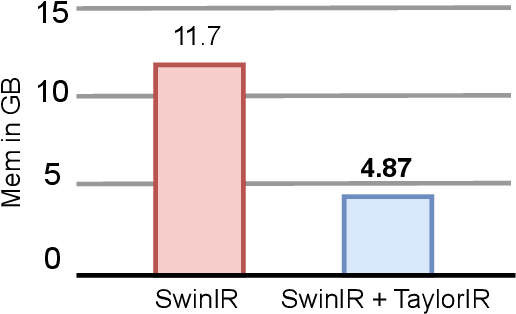

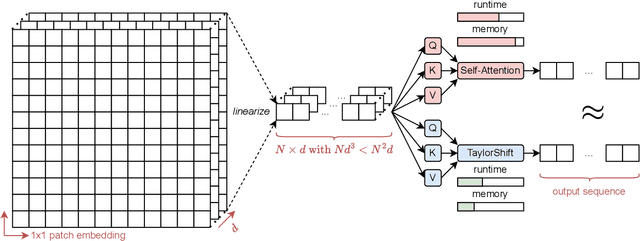
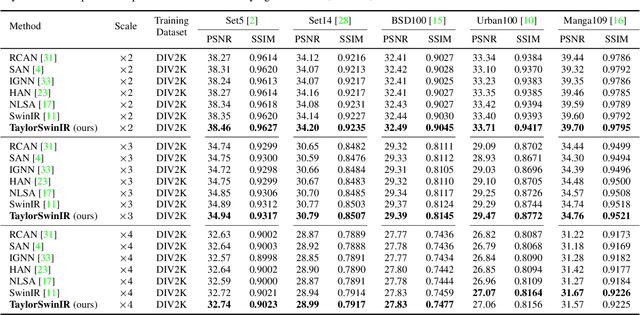
Transformer-based Super-Resolution (SR) models have recently advanced image reconstruction quality, yet challenges remain due to computational complexity and an over-reliance on large patch sizes, which constrain fine-grained detail enhancement. In this work, we propose TaylorIR to address these limitations by utilizing a patch size of 1x1, enabling pixel-level processing in any transformer-based SR model. To address the significant computational demands under the traditional self-attention mechanism, we employ the TaylorShift attention mechanism, a memory-efficient alternative based on Taylor series expansion, achieving full token-to-token interactions with linear complexity. Experimental results demonstrate that our approach achieves new state-of-the-art SR performance while reducing memory consumption by up to 60% compared to traditional self-attention-based transformers.
TaylorShift: Shifting the Complexity of Self-Attention from Squared to Linear (and Back) using Taylor-Softmax
Mar 05, 2024The quadratic complexity of the attention mechanism represents one of the biggest hurdles for processing long sequences using Transformers. Current methods, relying on sparse representations or stateful recurrence, sacrifice token-to-token interactions, which ultimately leads to compromises in performance. This paper introduces TaylorShift, a novel reformulation of the Taylor softmax that enables computing full token-to-token interactions in linear time and space. We analytically determine the crossover points where employing TaylorShift becomes more efficient than traditional attention, aligning closely with empirical measurements. Specifically, our findings demonstrate that TaylorShift enhances memory efficiency for sequences as short as 800 tokens and accelerates inference for inputs of approximately 1700 tokens and beyond. For shorter sequences, TaylorShift scales comparably with the vanilla attention. Furthermore, a classification benchmark across five tasks involving long sequences reveals no degradation in accuracy when employing Transformers equipped with TaylorShift. For reproducibility, we provide access to our code under https://github.com/tobna/TaylorShift.
Which Transformer to Favor: A Comparative Analysis of Efficiency in Vision Transformers
Aug 18, 2023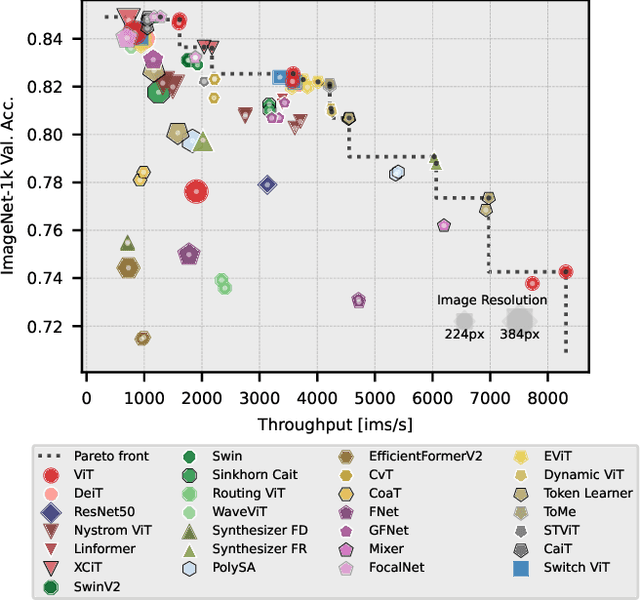


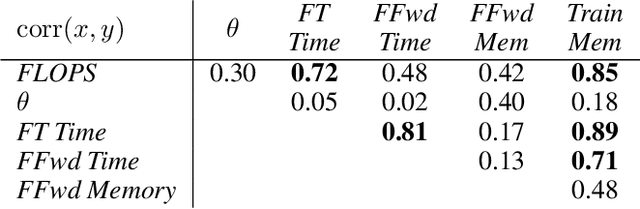
The growing popularity of Vision Transformers as the go-to models for image classification has led to an explosion of architectural modifications claiming to be more efficient than the original ViT. However, a wide diversity of experimental conditions prevents a fair comparison between all of them, based solely on their reported results. To address this gap in comparability, we conduct a comprehensive analysis of more than 30 models to evaluate the efficiency of vision transformers and related architectures, considering various performance metrics. Our benchmark provides a comparable baseline across the landscape of efficiency-oriented transformers, unveiling a plethora of surprising insights. For example, we discover that ViT is still Pareto optimal across multiple efficiency metrics, despite the existence of several alternative approaches claiming to be more efficient. Results also indicate that hybrid attention-CNN models fare particularly well when it comes to low inference memory and number of parameters, and also that it is better to scale the model size, than the image size. Furthermore, we uncover a strong positive correlation between the number of FLOPS and the training memory, which enables the estimation of required VRAM from theoretical measurements alone. Thanks to our holistic evaluation, this study offers valuable insights for practitioners and researchers, facilitating informed decisions when selecting models for specific applications. We publicly release our code and data at https://github.com/tobna/WhatTransformerToFavor