 Add to Chrome
 Add to Firefox
 Add to Edge
What's in a Name? Morphological Shortcuts by LLMs in Pharmacology
Jun 04, 2026
The morphological form of a word can often give cues to its meaning, but purely relying on these mappings can lead to overgeneralization in high-stakes domains. In the medical domain, for instance, LLMs can confidently reason about fictitious drugs from their affixes alone (e.g., wugcillin) and generate plausible-looking clinical content. We present a behavioral and mechanistic study of LLM "affix heuristics" in pharmacology. Using fictitious drug names built from real affixes, we show that affix signals alone elicit class-level pharmacological responses. We introduce a framework for identifying whether a model's drug semantics are driven mainly by the affix, the stem, or the drug name as a whole. Applied across 653 drugs, our framework reveals that models often induce drug meaning primarily through affix cues, yet rarely explicitly indicate this reliance, and sometimes incorrectly conflate properties among affix-sharing drugs. Activation patching across models further localizes this behavior to early-mid layers. These findings show that morphological shortcuts pose a subtle but measurable risk to safety.

PILOT: A Data-Free Continual Learning Approach for Real-Time Semantic Segmentation via Boundary Guidance
May 26, 2026Real-time semantic segmentation models offer an excellent balance between accuracy and inference speed. However, deploying these models in dynamic real world environments often requires the ability to learn novel classes incrementally without retraining on the entire dataset. This capability is known as continual learning. In this regard, the standard fine-tuning methods in deep learning often fail due to catastrophic forgetting, where the model learns new information but forgets previously trained and learned classes. Contributing to this crucial domain, the current paper proposes a novel continual learning framework tailored for PIDNet, which is a widely cited state-of-the-art real-time semantic segmentation model. Our method, PILOT(Parallel Incremental Learning Over Time), introduces a real-time and lightweight strategy by implementing a parallel Derivative-branch (D-branch) designed to capture the high frequency boundary information of novel classes while freezing the trained parameters of the original segmentation network. This novel setup allows the model to adapt to new semantic categories while preserving the knowledge of previously learned classes. By using only data associated with the new class, our model significantly reduces training overhead. Experimental results demonstrate that our approach successfully segments new classes while maintaining high mean Intersection over Union (mIoU) on the original base classes, thereby comfortably outperforming all major continual learning approaches in this domain. Overall, PILOT is shown to effectively mitigate catastrophic forgetting with minimal impact on inference latency, thus maintaining real-time performance.
Zero-Bias Deep Learning for Accurate Identification of Internet of Things (IoT) Devices
Aug 27, 2020

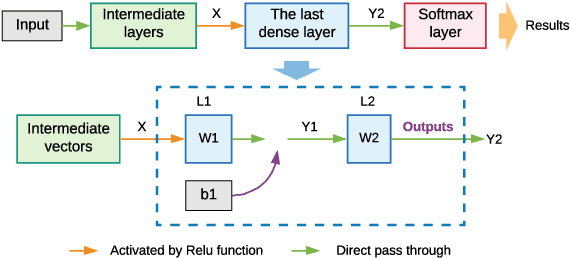
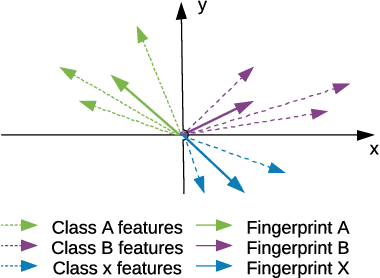
The Internet of Things (IoT) provides applications and services that would otherwise not be possible. However, the open nature of IoT make it vulnerable to cybersecurity threats. Especially, identity spoofing attacks, where an adversary passively listens to existing radio communications and then mimic the identity of legitimate devices to conduct malicious activities. Existing solutions employ cryptographic signatures to verify the trustworthiness of received information. In prevalent IoT, secret keys for cryptography can potentially be disclosed and disable the verification mechanism. Non-cryptographic device verification is needed to ensure trustworthy IoT. In this paper, we propose an enhanced deep learning framework for IoT device identification using physical layer signals. Specifically, we enable our framework to report unseen IoT devices and introduce the zero-bias layer to deep neural networks to increase robustness and interpretability. We have evaluated the effectiveness of the proposed framework using real data from ADS-B (Automatic Dependent Surveillance-Broadcast), an application of IoT in aviation. The proposed framework has the potential to be applied to accurate identification of IoT devices in a variety of IoT applications and services. Codes and data are available in IEEE Dataport.
* Accepted for publication by IEEE IoTJ on August, 2020. Data and codes are hosted at: [1] Yongxin Liu, Jian Wang, Houbing Song, Shuteng Niu, Thomas Yang, "A 24-hour signal recording dataset with labels for cybersecurity and IoT", IEEE Dataport, 2020. [Online]. Available: http://dx.doi.org/10.21227/gt9v-kz32. Accessed: Aug. 27, 2020