 Add to Chrome
 Add to Firefox
 Add to Edge
What's in a Name? Morphological Shortcuts by LLMs in Pharmacology
Jun 04, 2026
The morphological form of a word can often give cues to its meaning, but purely relying on these mappings can lead to overgeneralization in high-stakes domains. In the medical domain, for instance, LLMs can confidently reason about fictitious drugs from their affixes alone (e.g., wugcillin) and generate plausible-looking clinical content. We present a behavioral and mechanistic study of LLM "affix heuristics" in pharmacology. Using fictitious drug names built from real affixes, we show that affix signals alone elicit class-level pharmacological responses. We introduce a framework for identifying whether a model's drug semantics are driven mainly by the affix, the stem, or the drug name as a whole. Applied across 653 drugs, our framework reveals that models often induce drug meaning primarily through affix cues, yet rarely explicitly indicate this reliance, and sometimes incorrectly conflate properties among affix-sharing drugs. Activation patching across models further localizes this behavior to early-mid layers. These findings show that morphological shortcuts pose a subtle but measurable risk to safety.

Regularized Schrödinger Bridge: Alleviating Distortion and Exposure Bias in Solving Inverse Problems
Nov 19, 2025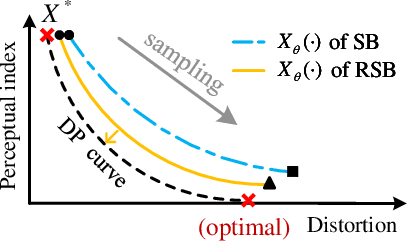
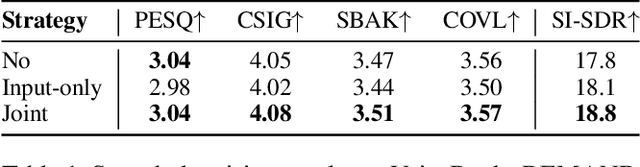
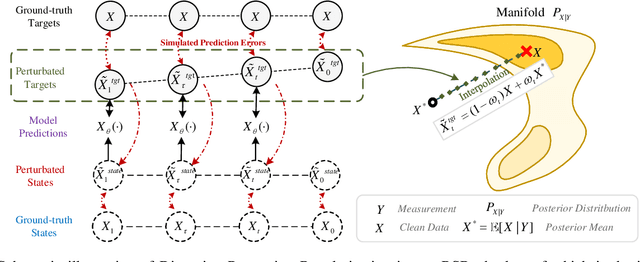

Diffusion models serve as a powerful generative framework for solving inverse problems. However, they still face two key challenges: 1) the distortion-perception tradeoff, where improving perceptual quality often degrades reconstruction fidelity, and 2) the exposure bias problem, where the training-inference input mismatch leads to prediction error accumulation and reduced reconstruction quality. In this work, we propose the Regularized Schrödinger Bridge (RSB), an adaptation of Schrödinger Bridge tailored for inverse problems that addresses the above limitations. RSB employs a novel regularized training strategy that perturbs both the input states and targets, effectively mitigating exposure bias by exposing the model to simulated prediction errors and also alleviating distortion by well-designed interpolation via the posterior mean. Extensive experiments on two typical inverse problems for speech enhancement demonstrate that RSB outperforms state-of-the-art methods, significantly improving distortion metrics and effectively reducing exposure bias.
Both Direct and Indirect Evidence Contribute to Dative Alternation Preferences in Language Models
Mar 26, 2025
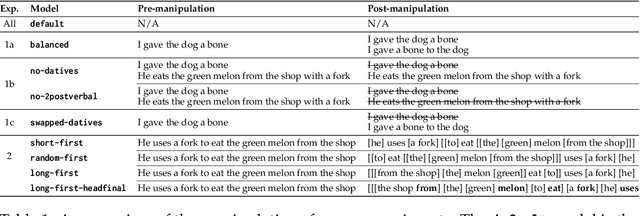
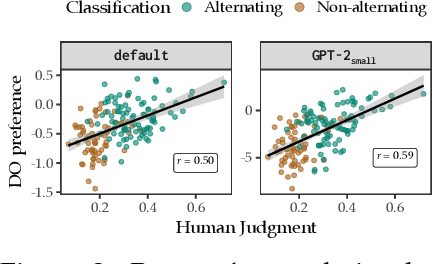
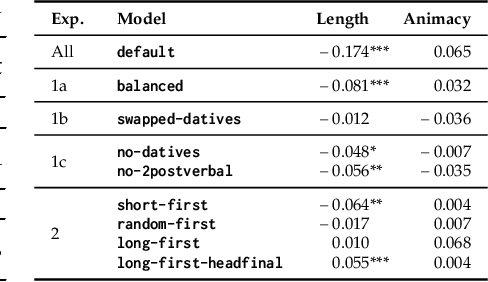
Language models (LMs) tend to show human-like preferences on a number of syntactic phenomena, but the extent to which these are attributable to direct exposure to the phenomena or more general properties of language is unclear. We explore this with the English dative alternation (DO: "gave Y the X" vs. PO: "gave the X to Y"), using a controlled rearing paradigm wherein we iteratively train small LMs on systematically manipulated input. We focus on properties that affect the choice of alternant: length and animacy. Both properties are directly present in datives but also reflect more global tendencies for shorter elements to precede longer ones and animates to precede inanimates. First, by manipulating and ablating datives for these biases in the input, we show that direct evidence of length and animacy matters, but easy-first preferences persist even without such evidence. Then, using LMs trained on systematically perturbed datasets to manipulate global length effects (re-linearizing sentences globally while preserving dependency structure), we find that dative preferences can emerge from indirect evidence. We conclude that LMs' emergent syntactic preferences come from a mix of direct and indirect sources.