 Add to Chrome
 Add to Firefox
 Add to Edge
OntoExtend: A Framework for Requirement-driven and Scalable Ontology Extension with LLMs
Jul 20, 2026
Ontology extension refers to the process of enriching an existing ontology in response to emerging requirements, making it more complete. This task is a resource-intensive and error-prone process. Large Language Models (LLMs) have shown promising performance on generating ontologies from scratch, but current approaches rarely tie ontology extension explicitly to requirements or reusable core models, and offer limited, systematic evaluation of LLM outputs. This paper introduces OntoExtend, a requirements-driven framework for ontology extension with LLMs. It uses retrieval-augmented generation (RAG) over relevant input ontologies and requirements in the form of competency questions to propose grounded extensions. We evaluate OntoExtend on 39 CQs from two use cases: a public EU-project ontology, Onto-DESIDE, and an industrial ontology from Bosch. The generated fragments show few structural issues, satisfy all functional evaluation tests, and are rated by ontology engineers as requiring minor to moderate revision before integration. These results suggest that OntoExtend is useful as a drafting assistant for requirement-driven ontology extension in real world scenarios, while remaining sensitive to CQ specificity and modelling profile.

SecureClaw: Clawing Back Control of LLM Agents
Jun 08, 2026Tool-using large language model (LLM) agents face two distinct security failures: unauthorized external actions and exposure of sensitive plaintext inside the runtime before any final output check can intervene. Existing defenses usually protect one boundary, either the planner/runtime or the action sink, and therefore do not by themselves secure both surfaces. We present SecureClaw, a dual-boundary architecture that places authorization at the effect sink and plaintext confinement at the read boundary. Sensitive reads pass through a trusted gateway that replaces raw values with opaque handles and, in the evaluated deployment, bounded summaries as an explicit declassification interface. Writes that change external state follow a PREVIEW$\rightarrow$COMMIT protocol in which only a trusted executor may commit the exact canonical request authorized by policy. The runtime can still plan over summaries and symbolic references, but cannot directly dereference secrets or perform side effects. Across AgentDojo, AgentLeak, and Agent Security Bench (ASB), SecureClaw is the only defense we evaluate in a common harness that simultaneously retains usable task utility and achieves 0\% attack success rate (ASR) on ASB, 0.64\% ASR on AgentDojo, and 3.23\% overall leak on AgentLeak's attacked parity lane, which measures final-output and internal-relay leakage.
FuseFSS: Efficient Secure LLM Inference with Function Secret Sharing
Jun 08, 2026Two-server secure inference allows a client to query a hosted large language model (LLM) without revealing prompts or embeddings. Recent GPU systems based on function secret sharing (FSS) make linear layers efficient, but fixed-point nonlinearities and helper operations remain a bottleneck because each operator is typically implemented as a bespoke protocol with its own comparisons, wrap-around corrections, and preprocessing material. We present FuseFSS, a compiler that replaces per-operator protocol design with a single compilation pipeline. For each scalar fixed-point operator, a compact specification lists its interval partition, low-degree arithmetic pieces, and required predicate bits. The compiler emits two batched FSS evaluations on the public masked value: one packed comparison that returns all predicate bits, and one vector interval lookup that returns the active coefficients and constants. Compared to the current state-of-the-art FSS-based GPU secure inference, FuseFSS preserves accuracy while achieving a $1.24\times$--$1.50\times$ end-to-end speedup and reducing online communication by $9\%$--$16\%$ on BERT and GPT-style models; preprocessing is also lighter, with $14\%$--$23\%$ lower key-generation time and $20\%$--$24\%$ smaller keys.
Resilient Byzantine Agreement with Predictions
May 19, 2026This paper studies the Byzantine Agreement problem where the nodes have access to a predictor that flags nodes for suspicion of faulty (Byzantine) behavior. We focus on algorithmic resilience -- the maximum number of faulty nodes an algorithm can tolerate -- and present algorithms and impossibility results whose resilience depend on the accuracy of the predictor. As our first main result, we bring a complete characterization of the consistency--robustness trade-offs in both the non-authenticated and authenticated settings: for $n$ nodes and a parameter $α\in [0, 1]$, we present algorithms that tolerate up to $α\cdot n$ faulty nodes when the predictor is correct (consistency), and up to $\frac{1-α}{2} \cdot n - 1$ faulty nodes when the predictor is arbitrarily wrong (robustness); in the authenticated setting the robustness bound improves to $(1-α) \cdot n - 1$. These trade-offs are exactly tight as we show that one additional faulty node renders the problem impossible. Our second main result characterizes smoothness: the rate at which resilience degrades as the predictor becomes less accurate. We show that resilience linearly decreases in the number of wrong predictions as long as that number stays within a constant fraction of $n$. Concretely, in the non-authenticated setting each additional wrong prediction loses one unit of resilience, whereas in the authenticated setting the decline is halved since two wrong predictions are needed to lose one unit of resilience.
Utility Function is All You Need: LLM-based Congestion Control
Mar 11, 2026Congestion is a critical and challenging problem in communication networks. Congestion control protocols allow network applications to tune their sending rate in a way that optimizes their performance and the network utilization. In the common distributed setting, the applications cannot collaborate with each other directly but instead obtain similar estimations about the state of the network using latency and loss measurements. These measurements can be fed into analytical functions, referred to by utility functions, whose gradients help each and all distributed senders to converge to a desired state. The above process becomes extremely complicated when each application has different optimization goals and requirements. Crafting these utilization functions has been a research subject for over a decade, with small incremental changes requiring rigorous mathematical analysis as well as real-world experiments. In this work, we present GenCC, a framework leveraging the code generation capabilities of large language models (LLMs) coupled with realistic network testbed, to design congestion control utility functions. Using GenCC, we analyze the impact of different guidance strategies on the performance of the generated protocols, considering application-specific requirements and network capacity. Our results show that LLMs, guided by either a generative code evolution strategy or mathematical chain-of-thought (CoT), can obtain close to optimal results, improving state-of-the-art congestion control protocols by 37%-142%, depending on the scenario.
Online Algorithms with Unreliable Guidance
Feb 24, 2026This paper introduces a new model for ML-augmented online decision making, called online algorithms with unreliable guidance (OAG). This model completely separates between the predictive and algorithmic components, thus offering a single well-defined analysis framework that relies solely on the considered problem. Formulated through the lens of request-answer games, an OAG algorithm receives, with each incoming request, a piece of guidance which is taken from the problem's answer space; ideally, this guidance is the optimal answer for the current request, however with probability $β$, the guidance is adversarially corrupted. The goal is to develop OAG algorithms that admit good competitiveness when $β= 0$ (a.k.a. consistency) as well as when $β= 1$ (a.k.a. robustness); the appealing notion of smoothness, that in most prior work required a dedicated loss function, now arises naturally as $β$ shifts from $0$ to $1$. We then describe a systematic method, called the drop or trust blindly (DTB) compiler, which transforms any online algorithm into a learning-augmented online algorithm in the OAG model. Given a prediction-oblivious online algorithm, its learning-augmented counterpart produced by applying the DTB compiler either follows the incoming guidance blindly or ignores it altogether and proceeds as the initial algorithm would have; the choice between these two alternatives is based on the outcome of a (biased) coin toss. As our main technical contribution, we prove (rigorously) that although remarkably simple, the class of algorithms produced via the DTB compiler includes algorithms with attractive consistency-robustness guarantees for three classic online problems: for caching and uniform metrical task systems our algorithms are optimal, whereas for bipartite matching (with adversarial arrival order), our algorithm outperforms the state-of-the-art.
Enhancing Manufacturing Knowledge Access with LLMs and Context-aware Prompting
Jul 30, 2025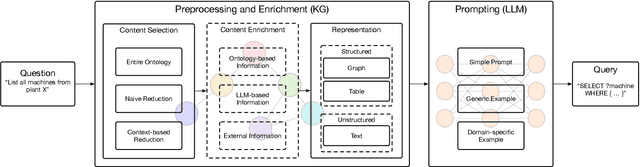

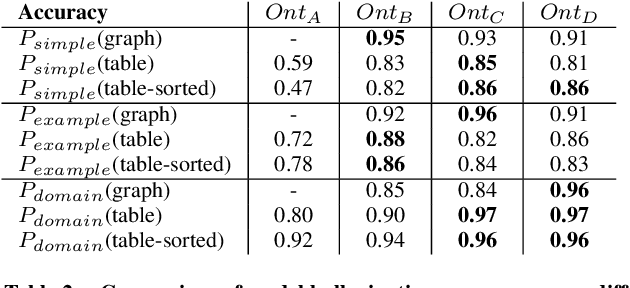
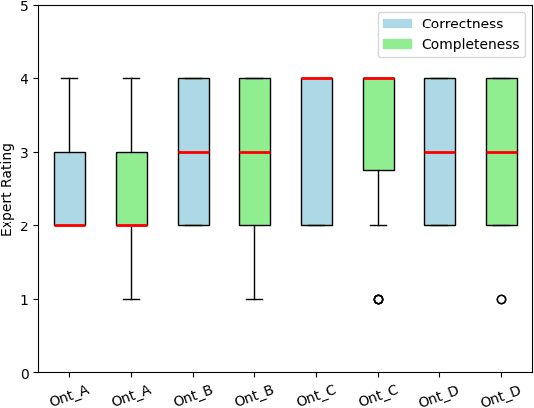
Knowledge graphs (KGs) have transformed data management within the manufacturing industry, offering effective means for integrating disparate data sources through shared and structured conceptual schemas. However, harnessing the power of KGs can be daunting for non-experts, as it often requires formulating complex SPARQL queries to retrieve specific information. With the advent of Large Language Models (LLMs), there is a growing potential to automatically translate natural language queries into the SPARQL format, thus bridging the gap between user-friendly interfaces and the sophisticated architecture of KGs. The challenge remains in adequately informing LLMs about the relevant context and structure of domain-specific KGs, e.g., in manufacturing, to improve the accuracy of generated queries. In this paper, we evaluate multiple strategies that use LLMs as mediators to facilitate information retrieval from KGs. We focus on the manufacturing domain, particularly on the Bosch Line Information System KG and the I40 Core Information Model. In our evaluation, we compare various approaches for feeding relevant context from the KG to the LLM and analyze their proficiency in transforming real-world questions into SPARQL queries. Our findings show that LLMs can significantly improve their performance on generating correct and complete queries when provided only the adequate context of the KG schema. Such context-aware prompting techniques help LLMs to focus on the relevant parts of the ontology and reduce the risk of hallucination. We anticipate that the proposed techniques help LLMs to democratize access to complex data repositories and empower informed decision-making in manufacturing settings.
Centroid Approximation for Byzantine-Tolerant Federated Learning
Jun 18, 2025Federated learning allows each client to keep its data locally when training machine learning models in a distributed setting. Significant recent research established the requirements that the input must satisfy in order to guarantee convergence of the training loop. This line of work uses averaging as the aggregation rule for the training models. In particular, we are interested in whether federated learning is robust to Byzantine behavior, and observe and investigate a tradeoff between the average/centroid and the validity conditions from distributed computing. We show that the various validity conditions alone do not guarantee a good approximation of the average. Furthermore, we show that reaching good approximation does not give good results in experimental settings due to possible Byzantine outliers. Our main contribution is the first lower bound of $\min\{\frac{n-t}{t},\sqrt{d}\}$ on the centroid approximation under box validity that is often considered in the literature, where $n$ is the number of clients, $t$ the upper bound on the number of Byzantine faults, and $d$ is the dimension of the machine learning model. We complement this lower bound by an upper bound of $2\min\{n,\sqrt{d}\}$, by providing a new analysis for the case $n<d$. In addition, we present a new algorithm that achieves a $\sqrt{2d}$-approximation under convex validity, which also proves that the existing lower bound in the literature is tight. We show that all presented bounds can also be achieved in the distributed peer-to-peer setting. We complement our analytical results with empirical evaluations in federated stochastic gradient descent and federated averaging settings.
MultiADS: Defect-aware Supervision for Multi-type Anomaly Detection and Segmentation in Zero-Shot Learning
Apr 09, 2025Precise optical inspection in industrial applications is crucial for minimizing scrap rates and reducing the associated costs. Besides merely detecting if a product is anomalous or not, it is crucial to know the distinct type of defect, such as a bent, cut, or scratch. The ability to recognize the "exact" defect type enables automated treatments of the anomalies in modern production lines. Current methods are limited to solely detecting whether a product is defective or not without providing any insights on the defect type, nevertheless detecting and identifying multiple defects. We propose MultiADS, a zero-shot learning approach, able to perform Multi-type Anomaly Detection and Segmentation. The architecture of MultiADS comprises CLIP and extra linear layers to align the visual- and textual representation in a joint feature space. To the best of our knowledge, our proposal, is the first approach to perform a multi-type anomaly segmentation task in zero-shot learning. Contrary to the other baselines, our approach i) generates specific anomaly masks for each distinct defect type, ii) learns to distinguish defect types, and iii) simultaneously identifies multiple defect types present in an anomalous product. Additionally, our approach outperforms zero/few-shot learning SoTA methods on image-level and pixel-level anomaly detection and segmentation tasks on five commonly used datasets: MVTec-AD, Visa, MPDD, MAD and Real-IAD.
Approximate Agreement Algorithms for Byzantine Collaborative Learning
Apr 02, 2025In Byzantine collaborative learning, $n$ clients in a peer-to-peer network collectively learn a model without sharing their data by exchanging and aggregating stochastic gradient estimates. Byzantine clients can prevent others from collecting identical sets of gradient estimates. The aggregation step thus needs to be combined with an efficient (approximate) agreement subroutine to ensure convergence of the training process. In this work, we study the geometric median aggregation rule for Byzantine collaborative learning. We show that known approaches do not provide theoretical guarantees on convergence or gradient quality in the agreement subroutine. To satisfy these theoretical guarantees, we present a hyperbox algorithm for geometric median aggregation. We practically evaluate our algorithm in both centralized and decentralized settings under Byzantine attacks on non-i.i.d. data. We show that our geometric median-based approaches can tolerate sign-flip attacks better than known mean-based approaches from the literature.