 Add to Chrome
 Add to Firefox
 Add to Edge
Multi-FRuGaL: Multimodal Flexible Redundancy-aware Decomposed Gated Learning for Cancer Diagnosis and Prognosis
Jun 05, 2026
Modern medicine relies on heterogeneous data sources spanning radiology, pathology, text reports, and structured clinical information. However, real-world patient data are frequently incomplete, with missing or sparsely acquired modalities, limiting the effectiveness of standard multimodal fusion approaches. To this end, we propose the Multimodal Flexible Redundancy-aware decomposed GAted Learning (Multi-FRuGaL) framework, a decomposition-aware, adaptive gated intermediate-fusion framework that performs modality-level representation learning under missing data. Multi-FRuGaL integrates per-modality encoders with a signal decomposition layer, an input-conditioned gating network, and an information-aware fusion objective to separate redundant from modality-specific complementary signals, selectively upweighting informative modalities and suppressing redundant or noisy inputs, and remaining well-defined even when multiple modalities are absent. We evaluate Multi-FRuGaL on two multimodal head and neck cancer cohorts: the HANCOCK challenge dataset (N = 763) comprising five modalities and two prognostic endpoints (5-year survival and 2-year recurrence), and the HECKTOR challenge dataset (N = 588) comprising three modalities for human papillomavirus (HPV) status classification. Multi-FRuGaL consistently achieves higher mean performance than the evaluated baselines across multiple tasks, improving AUC from 0.601 to 0.8496 for survival, from 0.672 to 0.8102 for recurrence, and achieving 0.975 AUC for HPV prediction on HECKTOR. For survival analysis, it further achieves a concordance index of 0.6814 for overall survival, 0.7421 for recurrence-free survival, and 0.7143 for progression-free survival on HANCOCK, and 0.7203 for recurrence-free survival on HECKTOR. Qualitative analyses further show that Multi-FRuGaL learns discriminative and robust multimodal representations, even under severe missing-modality conditions.

Medical Imaging AI Competitions Lack Fairness
Dec 19, 2025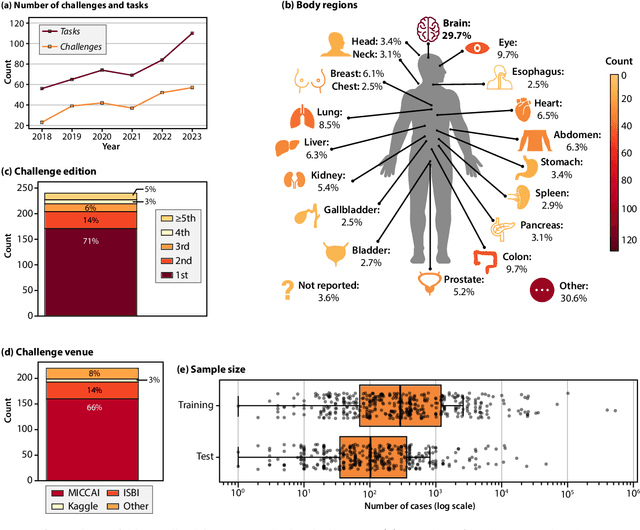
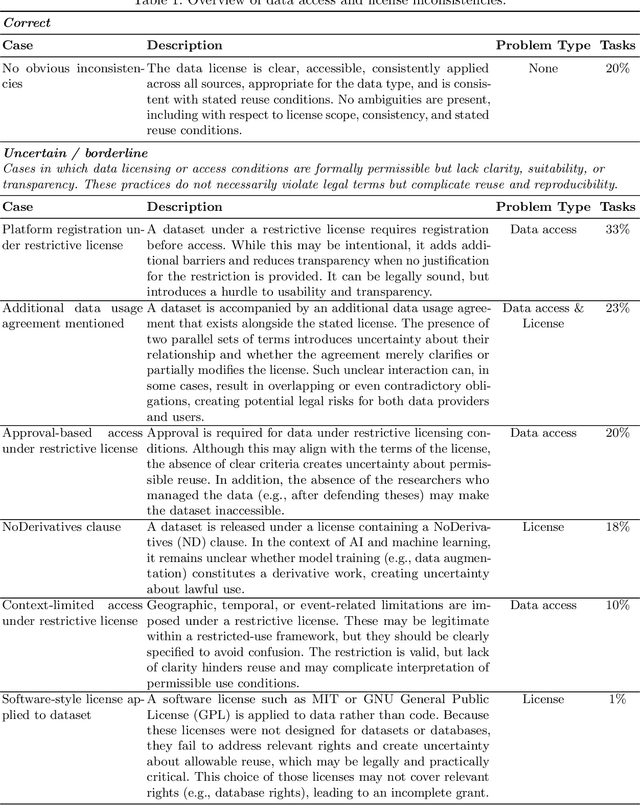
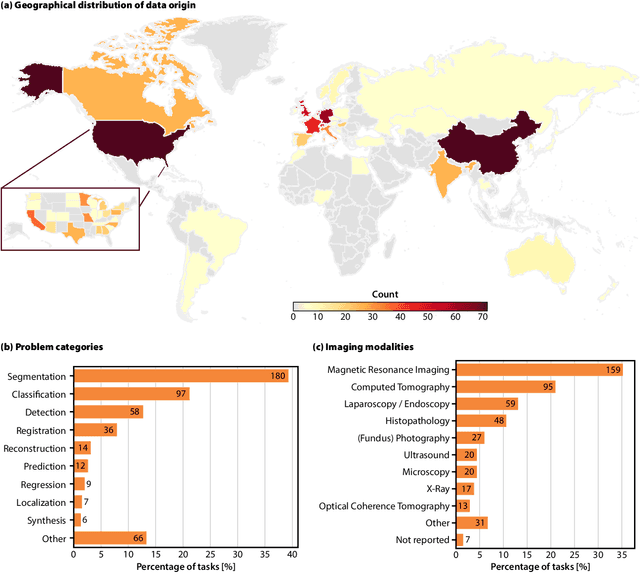
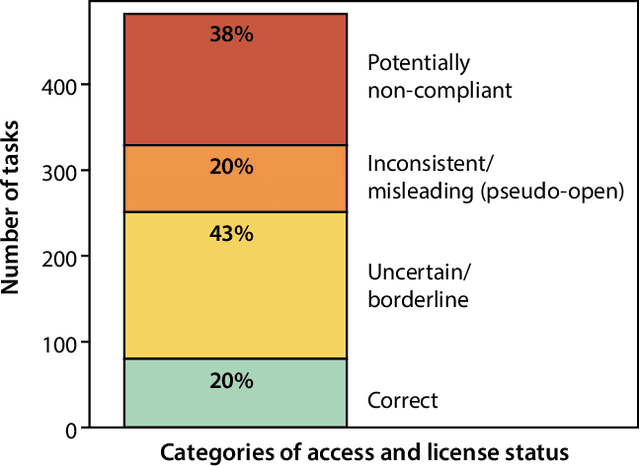
Benchmarking competitions are central to the development of artificial intelligence (AI) in medical imaging, defining performance standards and shaping methodological progress. However, it remains unclear whether these benchmarks provide data that are sufficiently representative, accessible, and reusable to support clinically meaningful AI. In this work, we assess fairness along two complementary dimensions: (1) whether challenge datasets are representative of real-world clinical diversity, and (2) whether they are accessible and legally reusable in line with the FAIR principles. To address this question, we conducted a large-scale systematic study of 241 biomedical image analysis challenges comprising 458 tasks across 19 imaging modalities. Our findings show substantial biases in dataset composition, including geographic location, modality-, and problem type-related biases, indicating that current benchmarks do not adequately reflect real-world clinical diversity. Despite their widespread influence, challenge datasets were frequently constrained by restrictive or ambiguous access conditions, inconsistent or non-compliant licensing practices, and incomplete documentation, limiting reproducibility and long-term reuse. Together, these shortcomings expose foundational fairness limitations in our benchmarking ecosystem and highlight a disconnect between leaderboard success and clinical relevance.
Classifying Histopathologic Glioblastoma Sub-regions with EfficientNet
Nov 12, 2025Glioblastoma (GBM) is the most common aggressive, fast-growing brain tumor, with a grim prognosis. Despite clinical diagnostic advancements, there have not been any substantial improvements to patient prognosis. Histopathological assessment of excised tumors is the first line of clinical diagnostic routine. We hypothesize that automated, robust, and accurate identification of distinct histological sub-regions within GBM could contribute to morphologically understanding this disease at scale. In this study, we designed a four-step deep learning approach to classify six (6) histopathological regions and quantitatively evaluated it on the BraTS-Path 2024 challenge dataset, which includes digitized Hematoxylin \& Eosin (H\&E) stained GBM tissue sections annotated for six distinct regions. We used the challenge's publicly available training dataset to develop and evaluate the effectiveness of several variants of EfficientNet architectures (i.e., B0, B1, B2, B3, B4). EfficientNet-B1 and EfficientNet-B4 achieved the best performance, achieving an F1 score of 0.98 in a 5-fold cross-validation configuration using the BraTS-Path training set. The quantitative performance evaluation of our proposed approach with EfficientNet-B1 on the BraTS-Path hold-out validation data and the final hidden testing data yielded F1 scores of 0.546 and 0.517, respectively, for the associated 6-class classification task. The difference in the performance on training, validation, and testing data highlights the challenge of developing models that generalize well to new data, which is crucial for clinical applications. The source code of the proposed approach can be found at the GitHub repository of Indiana University Division of Computational Pathology: https://github.com/IUCompPath/brats-path-2024-enet.
PROFUSEme: PROstate Cancer Biochemical Recurrence Prediction via FUSEd Multi-modal Embeddings
Sep 17, 2025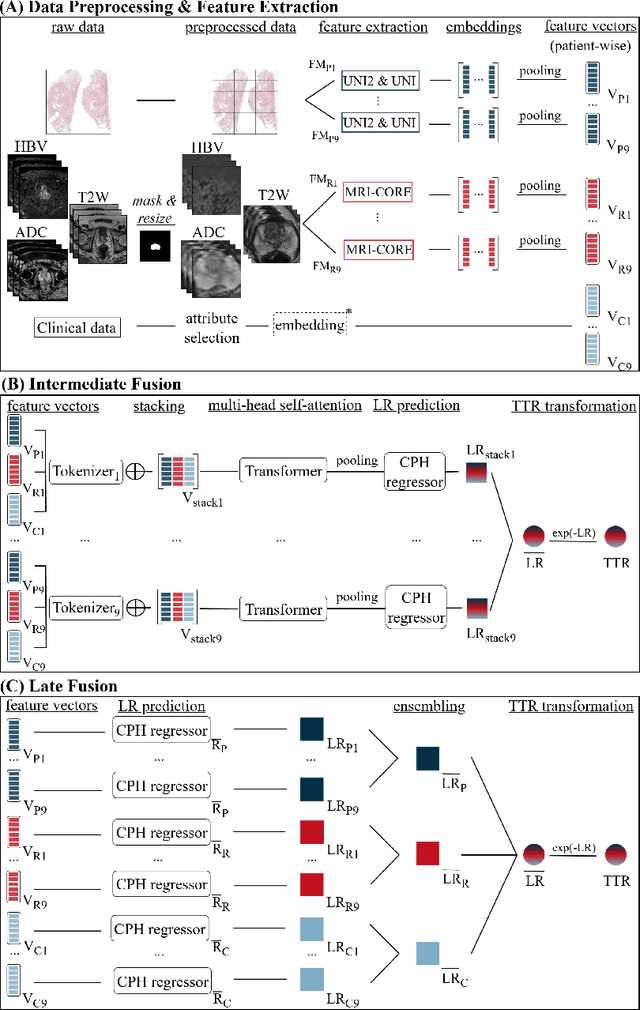
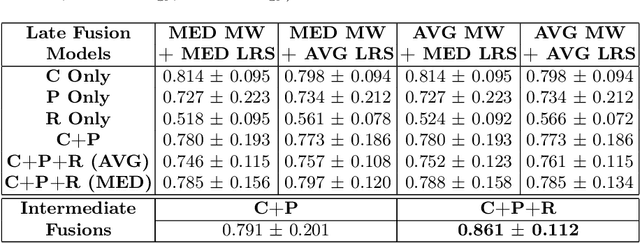
Almost 30% of prostate cancer (PCa) patients undergoing radical prostatectomy (RP) experience biochemical recurrence (BCR), characterized by increased prostate specific antigen (PSA) and associated with increased mortality. Accurate early prediction of BCR, at the time of RP, would contribute to prompt adaptive clinical decision-making and improved patient outcomes. In this work, we propose prostate cancer BCR prediction via fused multi-modal embeddings (PROFUSEme), which learns cross-modal interactions of clinical, radiology, and pathology data, following an intermediate fusion configuration in combination with Cox Proportional Hazard regressors. Quantitative evaluation of our proposed approach reveals superior performance, when compared with late fusion configurations, yielding a mean C-index of 0.861 ($\sigma=0.112$) on the internal 5-fold nested cross-validation framework, and a C-index of 0.7103 on the hold out data of CHIMERA 2025 challenge validation leaderboard.
Skull stripping with purely synthetic data
May 12, 2025While many skull stripping algorithms have been developed for multi-modal and multi-species cases, there is still a lack of a fundamentally generalizable approach. We present PUMBA(PUrely synthetic Multimodal/species invariant Brain extrAction), a strategy to train a model for brain extraction with no real brain images or labels. Our results show that even without any real images or anatomical priors, the model achieves comparable accuracy in multi-modal, multi-species and pathological cases. This work presents a new direction of research for any generalizable medical image segmentation task.
Analysis of the MICCAI Brain Tumor Segmentation -- Metastases (BraTS-METS) 2025 Lighthouse Challenge: Brain Metastasis Segmentation on Pre- and Post-treatment MRI
Apr 16, 2025Despite continuous advancements in cancer treatment, brain metastatic disease remains a significant complication of primary cancer and is associated with an unfavorable prognosis. One approach for improving diagnosis, management, and outcomes is to implement algorithms based on artificial intelligence for the automated segmentation of both pre- and post-treatment MRI brain images. Such algorithms rely on volumetric criteria for lesion identification and treatment response assessment, which are still not available in clinical practice. Therefore, it is critical to establish tools for rapid volumetric segmentations methods that can be translated to clinical practice and that are trained on high quality annotated data. The BraTS-METS 2025 Lighthouse Challenge aims to address this critical need by establishing inter-rater and intra-rater variability in dataset annotation by generating high quality annotated datasets from four individual instances of segmentation by neuroradiologists while being recorded on video (two instances doing "from scratch" and two instances after AI pre-segmentation). This high-quality annotated dataset will be used for testing phase in 2025 Lighthouse challenge and will be publicly released at the completion of the challenge. The 2025 Lighthouse challenge will also release the 2023 and 2024 segmented datasets that were annotated using an established pipeline of pre-segmentation, student annotation, two neuroradiologists checking, and one neuroradiologist finalizing the process. It builds upon its previous edition by including post-treatment cases in the dataset. Using these high-quality annotated datasets, the 2025 Lighthouse challenge plans to test benchmark algorithms for automated segmentation of pre-and post-treatment brain metastases (BM), trained on diverse and multi-institutional datasets of MRI images obtained from patients with brain metastases.
Biochemical Prostate Cancer Recurrence Prediction: Thinking Fast & Slow
Sep 03, 2024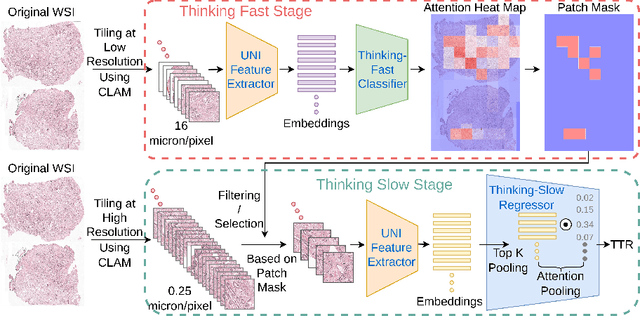
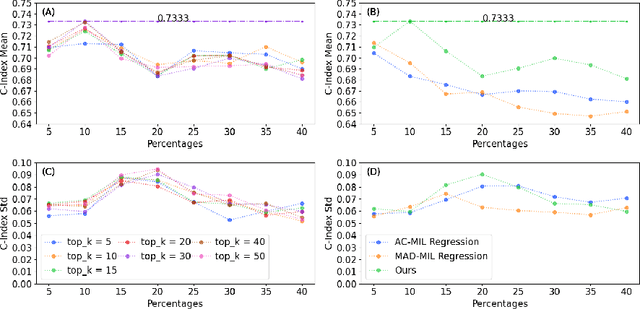
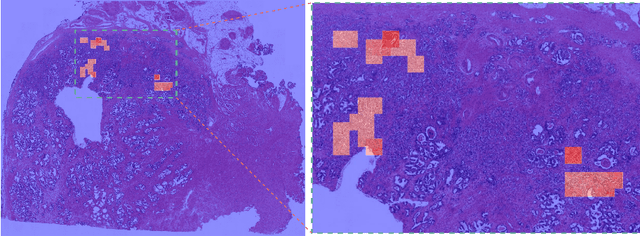
Time to biochemical recurrence in prostate cancer is essential for prognostic monitoring of the progression of patients after prostatectomy, which assesses the efficacy of the surgery. In this work, we proposed to leverage multiple instance learning through a two-stage ``thinking fast \& slow'' strategy for the time to recurrence (TTR) prediction. The first (``thinking fast'') stage finds the most relevant WSI area for biochemical recurrence and the second (``thinking slow'') stage leverages higher resolution patches to predict TTR. Our approach reveals a mean C-index ($Ci$) of 0.733 ($\theta=0.059$) on our internal validation and $Ci=0.603$ on the LEOPARD challenge validation set. Post hoc attention visualization shows that the most attentive area contributes to the TTR prediction.
BraTS-PEDs: Results of the Multi-Consortium International Pediatric Brain Tumor Segmentation Challenge 2023
Jul 11, 2024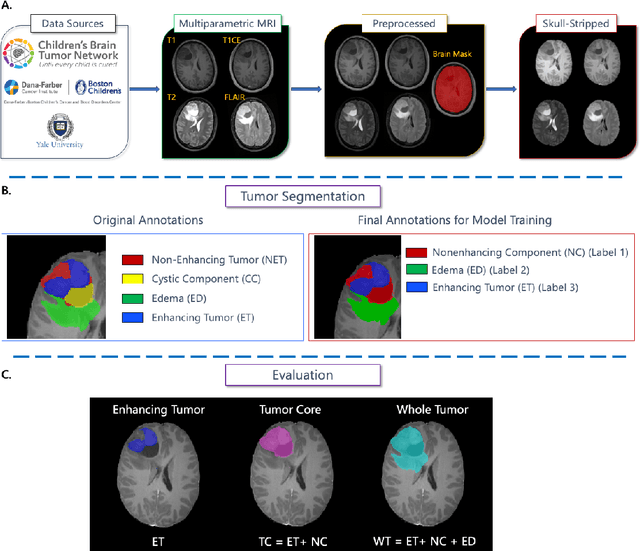

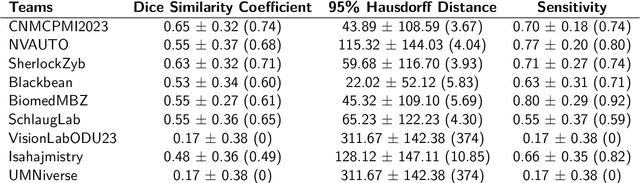
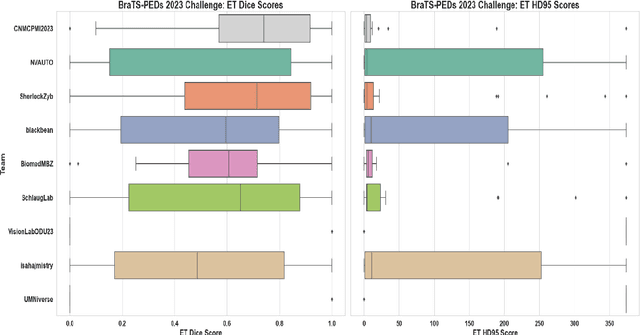
Pediatric central nervous system tumors are the leading cause of cancer-related deaths in children. The five-year survival rate for high-grade glioma in children is less than 20%. The development of new treatments is dependent upon multi-institutional collaborative clinical trials requiring reproducible and accurate centralized response assessment. We present the results of the BraTS-PEDs 2023 challenge, the first Brain Tumor Segmentation (BraTS) challenge focused on pediatric brain tumors. This challenge utilized data acquired from multiple international consortia dedicated to pediatric neuro-oncology and clinical trials. BraTS-PEDs 2023 aimed to evaluate volumetric segmentation algorithms for pediatric brain gliomas from magnetic resonance imaging using standardized quantitative performance evaluation metrics employed across the BraTS 2023 challenges. The top-performing AI approaches for pediatric tumor analysis included ensembles of nnU-Net and Swin UNETR, Auto3DSeg, or nnU-Net with a self-supervised framework. The BraTSPEDs 2023 challenge fostered collaboration between clinicians (neuro-oncologists, neuroradiologists) and AI/imaging scientists, promoting faster data sharing and the development of automated volumetric analysis techniques. These advancements could significantly benefit clinical trials and improve the care of children with brain tumors.
The 2024 Brain Tumor Segmentation (BraTS) Challenge: Glioma Segmentation on Post-treatment MRI
May 28, 2024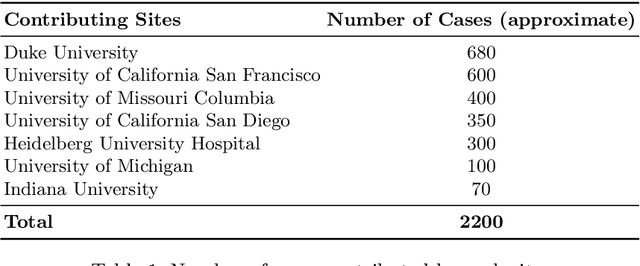


Gliomas are the most common malignant primary brain tumors in adults and one of the deadliest types of cancer. There are many challenges in treatment and monitoring due to the genetic diversity and high intrinsic heterogeneity in appearance, shape, histology, and treatment response. Treatments include surgery, radiation, and systemic therapies, with magnetic resonance imaging (MRI) playing a key role in treatment planning and post-treatment longitudinal assessment. The 2024 Brain Tumor Segmentation (BraTS) challenge on post-treatment glioma MRI will provide a community standard and benchmark for state-of-the-art automated segmentation models based on the largest expert-annotated post-treatment glioma MRI dataset. Challenge competitors will develop automated segmentation models to predict four distinct tumor sub-regions consisting of enhancing tissue (ET), surrounding non-enhancing T2/fluid-attenuated inversion recovery (FLAIR) hyperintensity (SNFH), non-enhancing tumor core (NETC), and resection cavity (RC). Models will be evaluated on separate validation and test datasets using standardized performance metrics utilized across the BraTS 2024 cluster of challenges, including lesion-wise Dice Similarity Coefficient and Hausdorff Distance. Models developed during this challenge will advance the field of automated MRI segmentation and contribute to their integration into clinical practice, ultimately enhancing patient care.
Brain Tumor Segmentation (BraTS) Challenge 2024: Meningioma Radiotherapy Planning Automated Segmentation
May 28, 2024The 2024 Brain Tumor Segmentation Meningioma Radiotherapy (BraTS-MEN-RT) challenge aims to advance automated segmentation algorithms using the largest known multi-institutional dataset of radiotherapy planning brain MRIs with expert-annotated target labels for patients with intact or post-operative meningioma that underwent either conventional external beam radiotherapy or stereotactic radiosurgery. Each case includes a defaced 3D post-contrast T1-weighted radiotherapy planning MRI in its native acquisition space, accompanied by a single-label "target volume" representing the gross tumor volume (GTV) and any at-risk post-operative site. Target volume annotations adhere to established radiotherapy planning protocols, ensuring consistency across cases and institutions. For pre-operative meningiomas, the target volume encompasses the entire GTV and associated nodular dural tail, while for post-operative cases, it includes at-risk resection cavity margins as determined by the treating institution. Case annotations were reviewed and approved by expert neuroradiologists and radiation oncologists. Participating teams will develop, containerize, and evaluate automated segmentation models using this comprehensive dataset. Model performance will be assessed using the lesion-wise Dice Similarity Coefficient and the 95% Hausdorff distance. The top-performing teams will be recognized at the Medical Image Computing and Computer Assisted Intervention Conference in October 2024. BraTS-MEN-RT is expected to significantly advance automated radiotherapy planning by enabling precise tumor segmentation and facilitating tailored treatment, ultimately improving patient outcomes.