 Add to Chrome
 Add to Firefox
 Add to Edge
AgenticTwin: An Agentic LLM Framework Integrated with Digital Twin for Anomaly Detection
Aug 12, 2026
Digital twins are increasingly used to monitor and simulate the behavior of cyber-physical systems. Even with skilled operators, interpreting anomalies detected within digital twin pipelines is challenging, as the sheer complexity and volume of raw sensor data make thorough analysis difficult. Recent advances in large language models (LLMs) offer promising capabilities for reasoning and explanation, yet their integration into digital twin-driven anomaly analysis remains underexplored. In this work, we propose AgenticTwin, an agentic framework that integrates LLM-driven reasoning with a digital twin-based anomaly detection pipeline. The framework grounds LLM-generated explanations in outputs from a digital twin-driven anomaly classifier and enables human operators to ask relevant natural-language questions about the system. Beyond the framework itself, we introduce a benchmark-oriented evaluation pipeline constructed over synthetic anomalies injected into a real-world weather sensor dataset, enabling controlled generation of operator queries over anomaly events. We further evaluate the feasibility of deploying lightweight, open-source LLMs for practical cyber-physical environments. Experimental results demonstrate that structured agent collaboration and knowledge-grounded reasoning improve diagnosis quality, contextual retrieval, and mitigation quality across diverse possible anomaly scenarios.

TRACE: Trustworthy Retrieval-Augmented Conversational Engine
Aug 10, 2026Public service chatbots are expected to deliver recommendations from an underlying public service directory, while also making sure that the recommendations respect explicit user constraints. In practice, public service directories are noisy and inconsistent, and general-purpose large language model (LLM) or AI-based chatbots frequently generate unreliable recommendations, citing unverified sources from the web. We investigate the impact of retrieval quality on constraint-aware recommendation in public service conversational systems built over noisy and heterogeneous service directories. We propose TRACE (Trustworthy Retrieval-Augmented Conversational Engine), a retrieval-based, constraint-aware framework that parses input user queries into structural and semantic constraints for downstream retrieval, with the help of a dual data representation schema. Using a curated statewide pantry directory and a synthetic query benchmark, we evaluate multiple knowledge-representation variants with and without knowledge graphs (KGs). We experiment with several open-source LLMs and a proprietary model, showing that strengthening retrieval substantially improves user constraint satisfaction while reducing hallucinated recommendations. Performance differences across LLMs narrowed in our experiments as retrieval quality improved, making results less sensitive to model size. These findings suggest that the quality of retrieval is key for robust public service conversational systems.
Knowledge Graph-Enhanced Zero-Shot Topic Classification: A Multi-Strategy Comparative Study
May 28, 2026Multi-label topic classification without labeled training data is a challenging task, specially when documents contain complex relational information. We present a zero-shot multi-label topic classification framework and systematically investigate how per-article knowledge graph augmentation affects its performance. The base framework classifies topics in documents without labeled training data and has four variants: article-only classification, keyword-enhanced classification, and self-consistency decoding variants of both. Then, we augment each base variant with per article knowledge graph. This graph is extracted from the input document through a pipeline similar to KGGen based on subject-predicate-object triples. We test all eight methods, four base and four graph augmented on fifteen LLMs and eight multi-label datasets across different domains. For the base framework, keyword-enhanced classification (AK) is the best performing method, and six out of fifteen LLMs surpass the sentence-encoder baseline. Graph augmentation has positive and negative impacts on small and large models, respectively. This shows that larger models already contain enough relational information from pretraining. Furthermore, the self-consistency decoding variant does not show performance improvements in any experiment while increasing computation costs about fivefold.
Retrieval Challenges in Low-Resource Public Service Information: A Case Study on Food Pantry Access
Feb 25, 2026Public service information systems are often fragmented, inconsistently formatted, and outdated. These characteristics create low-resource retrieval environments that hinder timely access to critical services. We investigate retrieval challenges in such settings through the domain of food pantry access, a socially urgent problem given persistent food insecurity. We develop an AI-powered conversational retrieval system that scrapes and indexes publicly available pantry data and employs a Retrieval-Augmented Generation (RAG) pipeline to support natural language queries via a web interface. We conduct a pilot evaluation study using community-sourced queries to examine system behavior in realistic scenarios. Our analysis reveals key limitations in retrieval robustness, handling underspecified queries, and grounding over inconsistent knowledge bases. This ongoing work exposes fundamental IR challenges in low-resource environments and motivates future research on robust conversational retrieval to improve access to critical public resources.
Are LLMs Ready to Replace Bangla Annotators?
Feb 19, 2026Large Language Models (LLMs) are increasingly used as automated annotators to scale dataset creation, yet their reliability as unbiased annotators--especially for low-resource and identity-sensitive settings--remains poorly understood. In this work, we study the behavior of LLMs as zero-shot annotators for Bangla hate speech, a task where even human agreement is challenging, and annotator bias can have serious downstream consequences. We conduct a systematic benchmark of 17 LLMs using a unified evaluation framework. Our analysis uncovers annotator bias and substantial instability in model judgments. Surprisingly, increased model scale does not guarantee improved annotation quality--smaller, more task-aligned models frequently exhibit more consistent behavior than their larger counterparts. These results highlight important limitations of current LLMs for sensitive annotation tasks in low-resource languages and underscore the need for careful evaluation before deployment.
Investigating Hallucination in Conversations for Low Resource Languages
Jul 30, 2025Large Language Models (LLMs) have demonstrated remarkable proficiency in generating text that closely resemble human writing. However, they often generate factually incorrect statements, a problem typically referred to as 'hallucination'. Addressing hallucination is crucial for enhancing the reliability and effectiveness of LLMs. While much research has focused on hallucinations in English, our study extends this investigation to conversational data in three languages: Hindi, Farsi, and Mandarin. We offer a comprehensive analysis of a dataset to examine both factual and linguistic errors in these languages for GPT-3.5, GPT-4o, Llama-3.1, Gemma-2.0, DeepSeek-R1 and Qwen-3. We found that LLMs produce very few hallucinated responses in Mandarin but generate a significantly higher number of hallucinations in Hindi and Farsi.
Zero-Shot Multi-Label Classification of Bangla Documents: Large Decoders Vs. Classic Encoders
Mar 04, 2025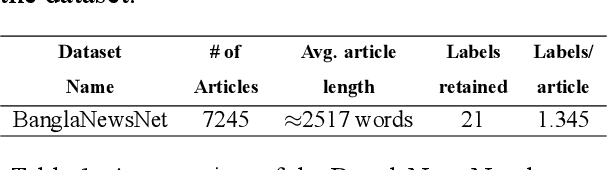
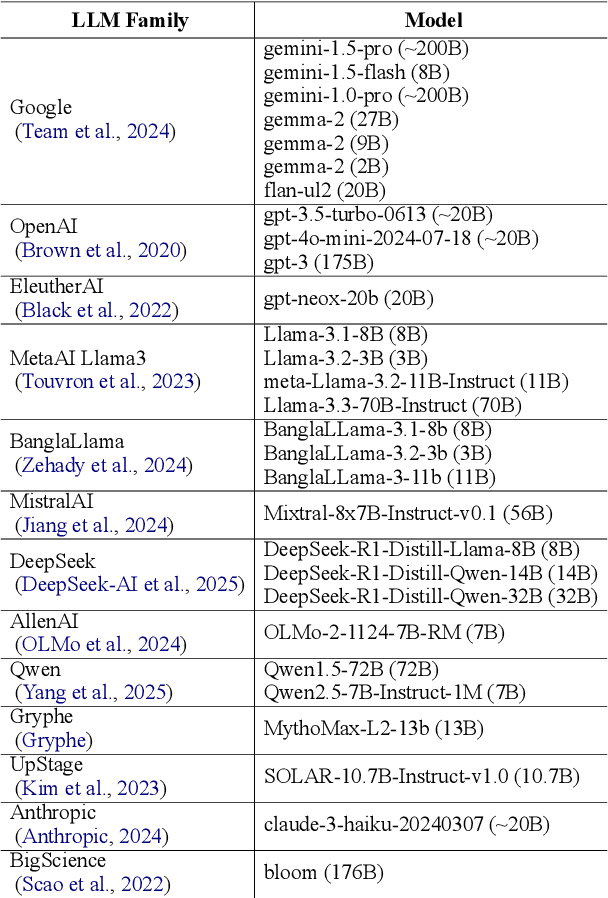

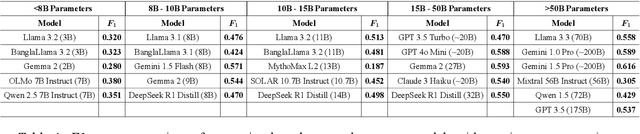
Bangla, a language spoken by over 300 million native speakers and ranked as the sixth most spoken language worldwide, presents unique challenges in natural language processing (NLP) due to its complex morphological characteristics and limited resources. While recent Large Decoder Based models (LLMs), such as GPT, LLaMA, and DeepSeek, have demonstrated excellent performance across many NLP tasks, their effectiveness in Bangla remains largely unexplored. In this paper, we establish the first benchmark comparing decoder-based LLMs with classic encoder-based models for Zero-Shot Multi-Label Classification (Zero-Shot-MLC) task in Bangla. Our evaluation of 32 state-of-the-art models reveals that, existing so-called powerful encoders and decoders still struggle to achieve high accuracy on the Bangla Zero-Shot-MLC task, suggesting a need for more research and resources for Bangla NLP.
Benchmarking LLMs on the Semantic Overlap Summarization Task
Feb 26, 2024
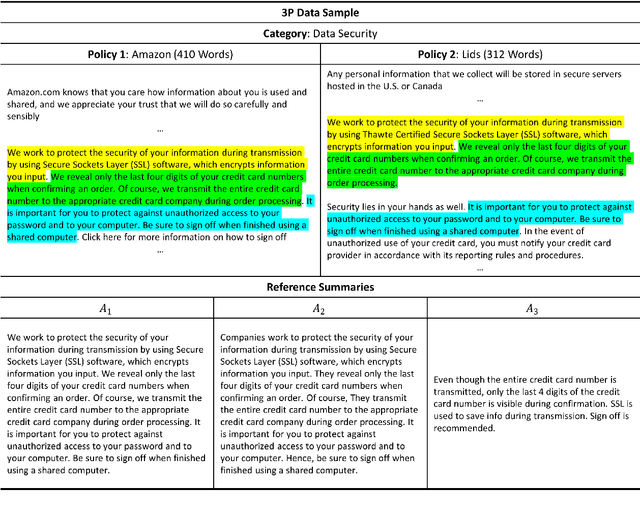
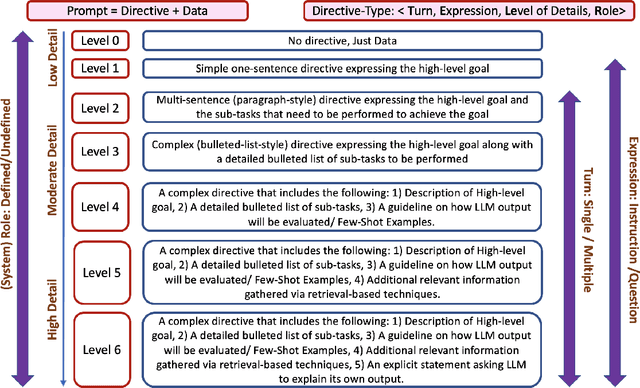
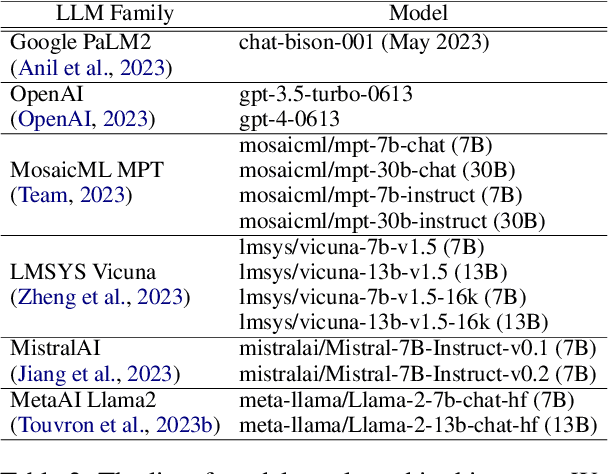
Semantic Overlap Summarization (SOS) is a constrained multi-document summarization task, where the constraint is to capture the common/overlapping information between two alternative narratives. While recent advancements in Large Language Models (LLMs) have achieved superior performance in numerous summarization tasks, a benchmarking study of the SOS task using LLMs is yet to be performed. As LLMs' responses are sensitive to slight variations in prompt design, a major challenge in conducting such a benchmarking study is to systematically explore a variety of prompts before drawing a reliable conclusion. Fortunately, very recently, the TELeR taxonomy has been proposed which can be used to design and explore various prompts for LLMs. Using this TELeR taxonomy and 15 popular LLMs, this paper comprehensively evaluates LLMs on the SOS Task, assessing their ability to summarize overlapping information from multiple alternative narratives. For evaluation, we report well-established metrics like ROUGE, BERTscore, and SEM-F1$ on two different datasets of alternative narratives. We conclude the paper by analyzing the strengths and limitations of various LLMs in terms of their capabilities in capturing overlapping information The code and datasets used to conduct this study are available at https://anonymous.4open.science/r/llm_eval-E16D.
Prompting LLMs to Compose Meta-Review Drafts from Peer-Review Narratives of Scholarly Manuscripts
Feb 23, 2024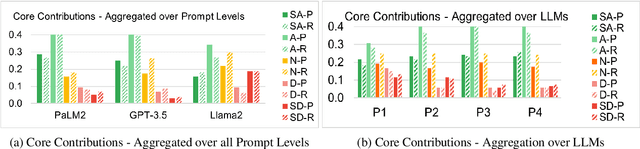
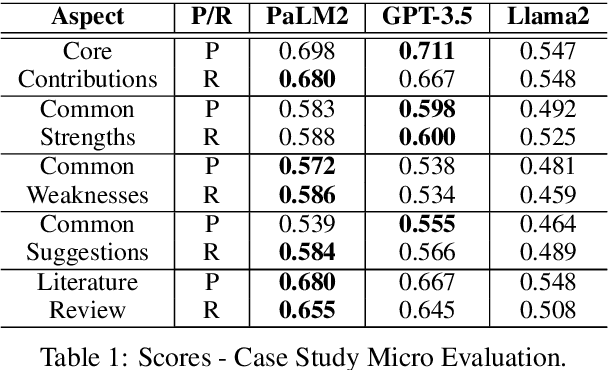
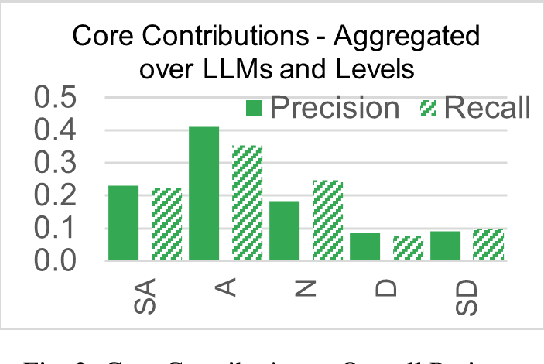
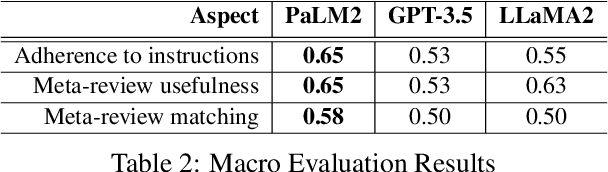
One of the most important yet onerous tasks in the academic peer-reviewing process is composing meta-reviews, which involves understanding the core contributions, strengths, and weaknesses of a scholarly manuscript based on peer-review narratives from multiple experts and then summarizing those multiple experts' perspectives into a concise holistic overview. Given the latest major developments in generative AI, especially Large Language Models (LLMs), it is very compelling to rigorously study the utility of LLMs in generating such meta-reviews in an academic peer-review setting. In this paper, we perform a case study with three popular LLMs, i.e., GPT-3.5, LLaMA2, and PaLM2, to automatically generate meta-reviews by prompting them with different types/levels of prompts based on the recently proposed TELeR taxonomy. Finally, we perform a detailed qualitative study of the meta-reviews generated by the LLMs and summarize our findings and recommendations for prompting LLMs for this complex task.
LLMs as On-demand Customizable Service
Jan 29, 2024Large Language Models (LLMs) have demonstrated remarkable language understanding and generation capabilities. However, training, deploying, and accessing these models pose notable challenges, including resource-intensive demands, extended training durations, and scalability issues. To address these issues, we introduce a concept of hierarchical, distributed LLM architecture that aims at enhancing the accessibility and deployability of LLMs across heterogeneous computing platforms, including general-purpose computers (e.g., laptops) and IoT-style devices (e.g., embedded systems). By introducing a "layered" approach, the proposed architecture enables on-demand accessibility to LLMs as a customizable service. This approach also ensures optimal trade-offs between the available computational resources and the user's application needs. We envision that the concept of hierarchical LLM will empower extensive, crowd-sourced user bases to harness the capabilities of LLMs, thereby fostering advancements in AI technology in general.