 Add to Chrome
 Add to Firefox
 Add to Edge
M3Net: A Macro-to-Meso-to-Micro Clinical-inspired Hierarchical 3D Network for Pulmonary Nodule Classification
May 12, 2026
The accurate classification of benign and malignant pulmonary nodules in CT scans is critical for early lung cancer screening, yet remains challenging due to the multi-scale and heterogeneous nature of pulmonary nodules. While deep learning offers potential for auxiliary diagnosis, most existing models act as "black boxes", lacking the transparency and explainability required for trustworthy clinical integration. To address this issue, we propose M3Net, a novel 3D network for pulmonary nodule classification inspired by the hierarchical diagnostic workflow of radiologists, which integrates multi-scale contextual information from fine-grained structures to global anatomical relationships. Our framework constructs a progressive multi-scale input, from fine-grained nodule structures to local semantics and global spatial relationships. M3Net employs scale-specific encoders and ensures cross-scale semantic consistency through latent space projection and mutual information maximization. Extensive experiments on the public LIDC-IDRI dataset and a self-collected clinical dataset (USTC-FHLN) demonstrate that our method achieves state-of-the-art performance, with accuracies of 86.96% and 84.24% respectively, outperforming the best baseline by 3.26% and 2.17%. The results validate that M3Net provides a more robust and clinically relevant solution for pulmonary nodule classification. The code is available at https://github.com/jylEcho/M3-Net.
* Published in Information Fusion (2026), 15 pages, 5 figures

Investigation of Customized Medical Decision Algorithms Utilizing Graph Neural Networks
May 23, 2024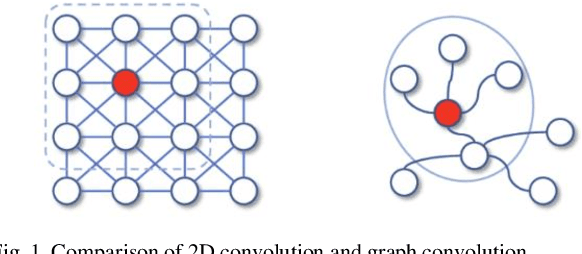
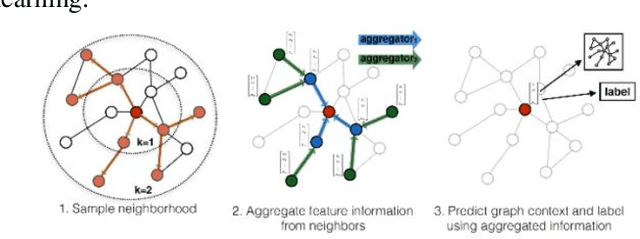
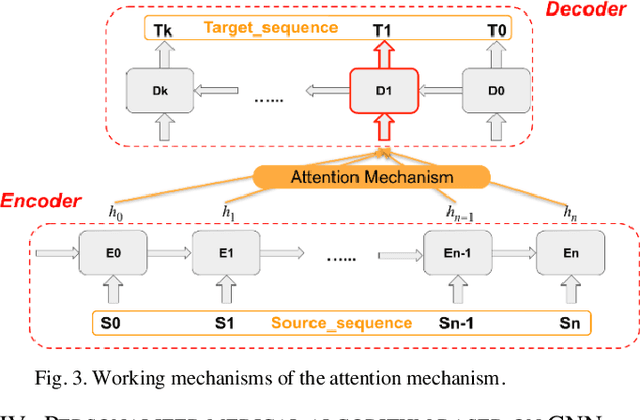
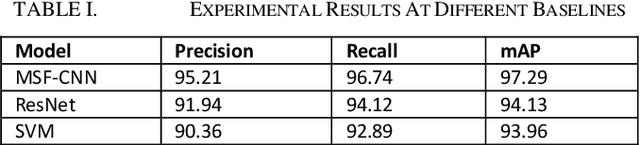
Aiming at the limitations of traditional medical decision system in processing large-scale heterogeneous medical data and realizing highly personalized recommendation, this paper introduces a personalized medical decision algorithm utilizing graph neural network (GNN). This research innovatively integrates graph neural network technology into the medical and health field, aiming to build a high-precision representation model of patient health status by mining the complex association between patients' clinical characteristics, genetic information, living habits. In this study, medical data is preprocessed to transform it into a graph structure, where nodes represent different data entities (such as patients, diseases, genes, etc.) and edges represent interactions or relationships between entities. The core of the algorithm is to design a novel multi-scale fusion mechanism, combining the historical medical records, physiological indicators and genetic characteristics of patients, to dynamically adjust the attention allocation strategy of the graph neural network, so as to achieve highly customized analysis of individual cases. In the experimental part, this study selected several publicly available medical data sets for validation, and the results showed that compared with traditional machine learning methods and a single graph neural network model, the proposed personalized medical decision algorithm showed significantly superior performance in terms of disease prediction accuracy, treatment effect evaluation and patient risk stratification.
Research on Intelligent Aided Diagnosis System of Medical Image Based on Computer Deep Learning
Apr 29, 2024This paper combines Struts and Hibernate two architectures together, using DAO (Data Access Object) to store and access data. Then a set of dual-mode humidity medical image library suitable for deep network is established, and a dual-mode medical image assisted diagnosis method based on the image is proposed. Through the test of various feature extraction methods, the optimal operating characteristic under curve product (AUROC) is 0.9985, the recall rate is 0.9814, and the accuracy is 0.9833. This method can be applied to clinical diagnosis, and it is a practical method. Any outpatient doctor can register quickly through the system, or log in to the platform to upload the image to obtain more accurate images. Through the system, each outpatient physician can quickly register or log in to the platform for image uploading, thus obtaining more accurate images. The segmentation of images can guide doctors in clinical departments. Then the image is analyzed to determine the location and nature of the tumor, so as to make targeted treatment.
Adaptive speed planning for Unmanned Vehicle Based on Deep Reinforcement Learning
Apr 26, 2024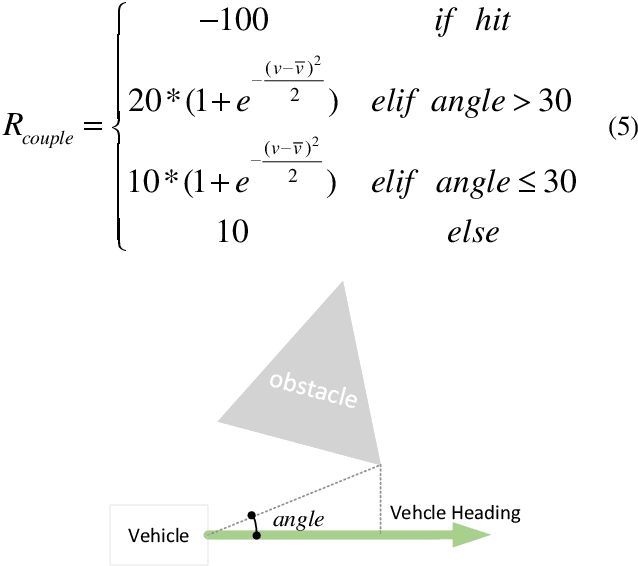
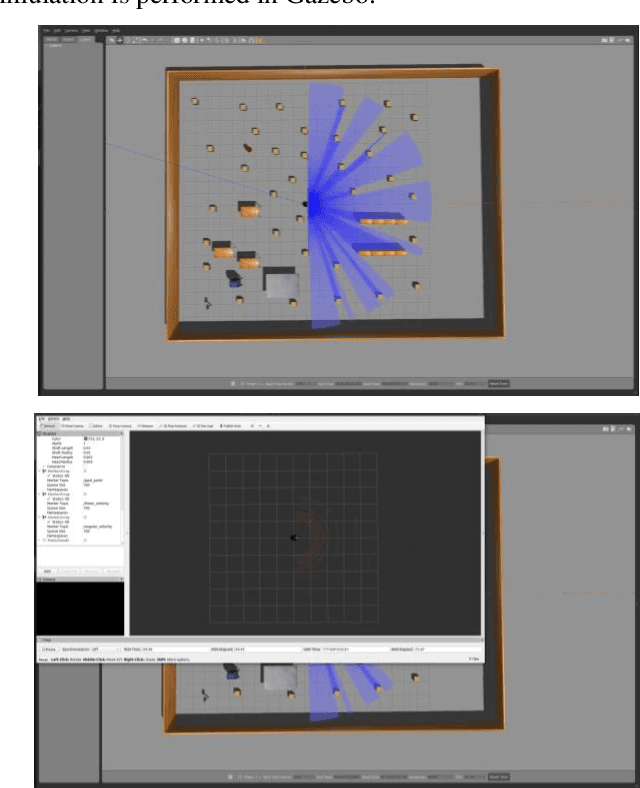
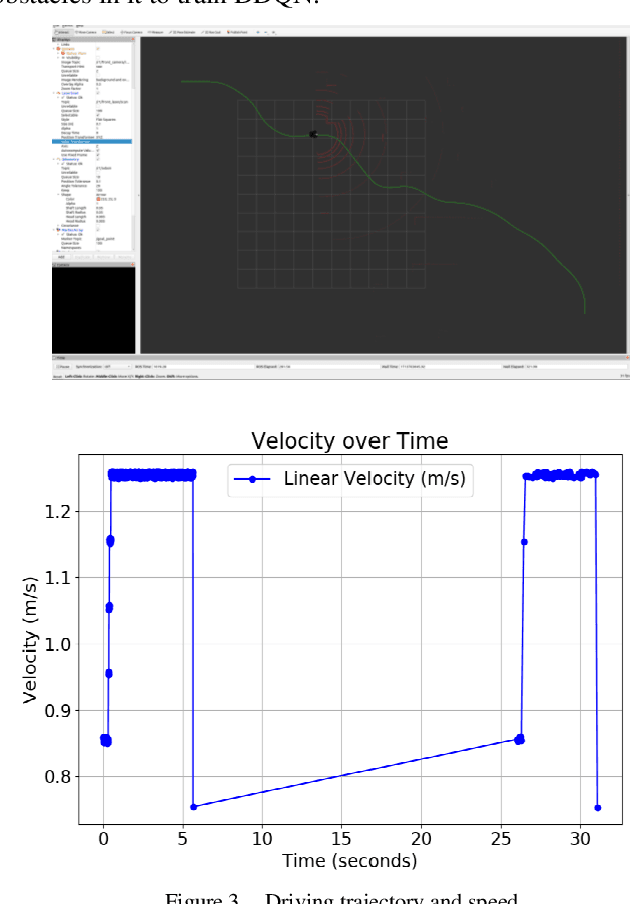
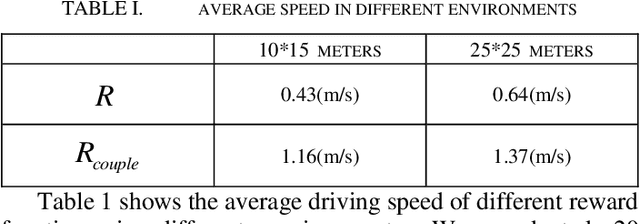
In order to solve the problem of frequent deceleration of unmanned vehicles when approaching obstacles, this article uses a Deep Q-Network (DQN) and its extension, the Double Deep Q-Network (DDQN), to develop a local navigation system that adapts to obstacles while maintaining optimal speed planning. By integrating improved reward functions and obstacle angle determination methods, the system demonstrates significant enhancements in maneuvering capabilities without frequent decelerations. Experiments conducted in simulated environments with varying obstacle densities confirm the effectiveness of the proposed method in achieving more stable and efficient path planning.