 Add to Chrome
 Add to Firefox
 Add to Edge
AutoIndex: Learning Representation Programs for Retrieval
Jul 21, 2026
We present AutoIndex, a framework for learning representation programs: executable transformations that map raw documents into the representations exposed to a retrieval system. Rather than tuning retrievers, rerankers, or a small set of preprocessing hyperparameters, AutoIndex searches over programs that slice, enrich, normalize, reweight, or reorganize documents before indexing. At each iteration, AutoIndex performs validation-guided program search, in which agents diagnose failures of the current program and synthesize candidate updates, retaining only updates that improve retrieval quality under the resulting index. We evaluate AutoIndex on CRUMB, a benchmark of heterogeneous retrieval tasks, with BM25 held fixed across all experiments. The learned programs improve recall over a static full-document BM25 baseline on all 8 tasks, with average gains of +8.4% in Recall@100 and +8.3% in nDCG@10, and largest gains of +30.5% in Recall@100 and +43.6% in nDCG@10. These results suggest that document representation should not be treated as a fixed preprocessing choice made before retrieval begins, but as an explicit optimization target. Code to reproduce our results is available at https://github.com/auto-index/autoindex.

Black-Box Inference of LLM Architectural Properties with Restrictive API Access
Jul 01, 2026In practice, most commercial LLM providers do not publicly release details of underlying LLM architectures. However, prior work has shown that given limited API access to an LLM (namely, top-$k$ logits and/or a logit bias function), one can recover certain architectural details of an LLM, such as the hidden dimension of the feed-forward network. Perhaps in response to these results, most commercial LLM providers have restricted their APIs to expose only the single logit for each decoded token, and they no longer give users the ability to bias logits. We show that even under current restrictive APIs, several architectural parameters are still recoverable. We present NightVision, an attack that uses restrictive black-box API access to estimate the hidden dimension, depth, and parameter count of an LLM. Algorithmically, NightVision relies on a novel common set prompting technique in which multiple prompts expose log probabilities for the same set of output tokens; a spectral analysis of these results is used to infer hidden dimension. NightVision additionally uses end-to-end time to first token (TTFT) measurements and the estimated hidden dimension to estimate depth and parameter count. We empirically evaluate NightVision on 32 open-source LLMs, recovering hidden dimension to within 23% average relative error across all models (9% on MoE models), and depth and parameter count to within 53% for models exceeding three billion parameters. We run extensive ablations to demonstrate how these accuracies scale with token budget and model properties. Overall, our results suggest that current LLM APIs are not sufficiently restricted to fully obfuscate the architectural details of their underlying models.
Representation Matters in Randomized Smoothing for Audio Classification
Jun 02, 2026Randomized smoothing (RS) certifies robustness in the vector space where Gaussian noise is added. In audio classification, this space is often not uniquely defined as standard pipelines normalize, range-control, and transform waveforms into log-mel or other spectral features. We show that direct RS is therefore under-specified unless the certified object and preprocessing policy are explicit. On two audio benchmarks, keyword spotting and environmental-sound classification, we study waveform, feature-space, and post-processed smoothing. Our diagnostics show why representation-aware reporting is necessary: at the same smoothing level $σ=0.0025$, the two datasets share the same median raw radius $.007996$, but different waveform energies yield different SNR-equivalent scales ($83.98$ vs. $90.97$ dB); log-mel smoothing gives higher positive-radius certified accuracy on environmental sounds ($68.42\%$ vs. $65.53\%$), certifying more examples with nonzero radius but over features rather than waveforms; and clipping or peak normalization changes the effective perturbation norm by roughly $230$--$351\times$. We therefore recommend that audio RS studies choose and report the task-specific certified object and perturbation model, including the perturbation location, gain policy, raw radius, and any post-noise geometry changes.
RRISE: Robust Radius Inference via a Surrogate Estimator
Jun 01, 2026Randomized smoothing (RS) uses a smoothed classifier to provide architecture-agnostic certificates of $\ell_2$ classification robustness, but its dependence on per-input Monte Carlo (MC) sampling undermines its use in real-time systems. We argue that this cost is structural rather than fundamental, such that it can be significantly reduced by sharing information across the deployment stream. We introduce RRISE, an RS framework that compresses certification into a single forward pass through a learned surrogate. RRISE trains the surrogate against precomputed MC class-count targets via a soft-label cross-entropy loss and converts surrogate predictions into provably conservative certified radii through a one-time conformal calibration step. The resulting certificate is deployment-verifiable: whenever the calibrated radius is positive, the surrogate's prediction provably matches the smoothed classifier's and the smoothed classifier is constant on a ball of that radius around the input. Across image classification benchmarks, RRISE matches fixed-budget MC certified accuracy within $0.84$ percentage points while replacing up to $10^4$ noisy base-model evaluations per query with a single surrogate forward pass, recouping MC training cost after $\approx 10^5$ deployment queries. On CIFAR-100 and Tiny ImageNet, where the only prior offline-surrogate method collapses, RRISE achieves $1.23$ to $1.91\times$ higher certified accuracy, establishing efficient randomized smoothing as a practical path to certified robustness in repeated-deployment settings.
Test-Time Strategies for More Efficient and Accurate Agentic RAG
Mar 12, 2026Retrieval-Augmented Generation (RAG) systems face challenges with complex, multihop questions, and agentic frameworks such as Search-R1 (Jin et al., 2025), which operates iteratively, have been proposed to address these complexities. However, such approaches can introduce inefficiencies, including repetitive retrieval of previously processed information and challenges in contextualizing retrieved results effectively within the current generation prompt. Such issues can lead to unnecessary retrieval turns, suboptimal reasoning, inaccurate answers, and increased token consumption. In this paper, we investigate test-time modifications to the Search-R1 pipeline to mitigate these identified shortcomings. Specifically, we explore the integration of two components and their combination: a contextualization module to better integrate relevant information from retrieved documents into reasoning, and a de-duplication module that replaces previously retrieved documents with the next most relevant ones. We evaluate our approaches using the HotpotQA (Yang et al., 2018) and the Natural Questions (Kwiatkowski et al., 2019) datasets, reporting the exact match (EM) score, an LLM-as-a-Judge assessment of answer correctness, and the average number of turns. Our best-performing variant, utilizing GPT-4.1-mini for contextualization, achieves a 5.6% increase in EM score and reduces the number of turns by 10.5% compared to the Search-R1 baseline, demonstrating improved answer accuracy and retrieval efficiency.
GLUE: Gradient-free Learning to Unify Experts
Dec 27, 2025In many deployed systems (multilingual ASR, cross-hospital imaging, region-specific perception), multiple pretrained specialist models coexist. Yet, new target domains often require domain expansion: a generalized model that performs well beyond any single specialist's domain. Given such a new target domain, prior works seek a single strong initialization prior for the model parameters by first blending expert models to initialize a target model. However, heuristic blending -- using coefficients based on data size or proxy metrics -- often yields lower target-domain test accuracy, and learning the coefficients on the target loss typically requires computationally-expensive full backpropagation through the network. We propose GLUE, Gradient-free Learning To Unify Experts, which initializes the target model as a convex combination of fixed experts, learning the mixture coefficients of this combination via a gradient-free two-point (SPSA) update that requires only two forward passes per step. Across experiments on three datasets and three network architectures, GLUE produces a single prior that can be fine-tuned effectively to outperform baselines. GLUE improves test accuracy by up to 8.5% over data-size weighting and by up to 9.1% over proxy-metric selection. GLUE either outperforms backpropagation-based full-gradient mixing or matches its performance within 1.4%.
GradNetOT: Learning Optimal Transport Maps with GradNets
Jul 17, 2025Monotone gradient functions play a central role in solving the Monge formulation of the optimal transport problem, which arises in modern applications ranging from fluid dynamics to robot swarm control. When the transport cost is the squared Euclidean distance, Brenier's theorem guarantees that the unique optimal map is the gradient of a convex function, namely a monotone gradient map, and it satisfies a Monge-Amp\`ere equation. In [arXiv:2301.10862] [arXiv:2404.07361], we proposed Monotone Gradient Networks (mGradNets), neural networks that directly parameterize the space of monotone gradient maps. In this work, we leverage mGradNets to directly learn the optimal transport mapping by minimizing a training loss function defined using the Monge-Amp\`ere equation. We empirically show that the structural bias of mGradNets facilitates the learning of optimal transport maps and employ our method for a robot swarm control problem.
Agent Context Protocols Enhance Collective Inference
May 20, 2025AI agents have become increasingly adept at complex tasks such as coding, reasoning, and multimodal understanding. However, building generalist systems requires moving beyond individual agents to collective inference -- a paradigm where multi-agent systems with diverse, task-specialized agents complement one another through structured communication and collaboration. Today, coordination is usually handled with imprecise, ad-hoc natural language, which limits complex interaction and hinders interoperability with domain-specific agents. We introduce Agent context protocols (ACPs): a domain- and agent-agnostic family of structured protocols for agent-agent communication, coordination, and error handling. ACPs combine (i) persistent execution blueprints -- explicit dependency graphs that store intermediate agent outputs -- with (ii) standardized message schemas, enabling robust and fault-tolerant multi-agent collective inference. ACP-powered generalist systems reach state-of-the-art performance: 28.3 % accuracy on AssistantBench for long-horizon web assistance and best-in-class multimodal technical reports, outperforming commercial AI systems in human evaluation. ACPs are highly modular and extensible, allowing practitioners to build top-tier generalist agents quickly.
ReLU Networks as Random Functions: Their Distribution in Probability Space
Mar 28, 2025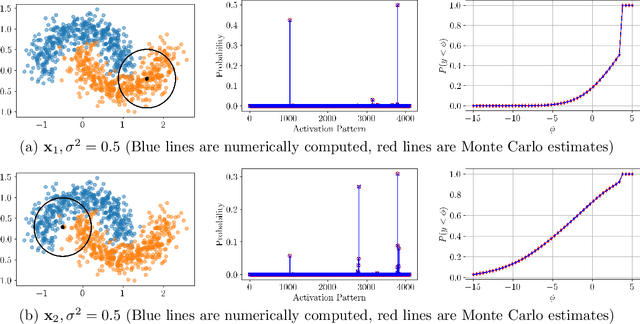
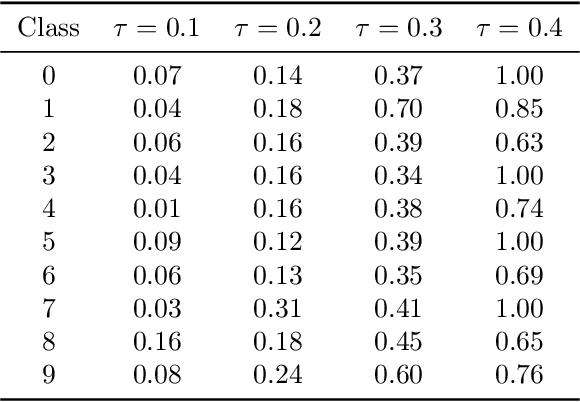
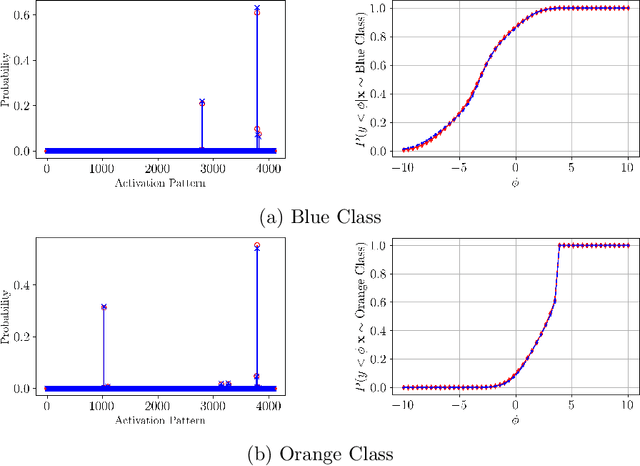
This paper presents a novel framework for understanding trained ReLU networks as random, affine functions, where the randomness is induced by the distribution over the inputs. By characterizing the probability distribution of the network's activation patterns, we derive the discrete probability distribution over the affine functions realizable by the network. We extend this analysis to describe the probability distribution of the network's outputs. Our approach provides explicit, numerically tractable expressions for these distributions in terms of Gaussian orthant probabilities. Additionally, we develop approximation techniques to identify the support of affine functions a trained ReLU network can realize for a given distribution of inputs. Our work provides a framework for understanding the behavior and performance of ReLU networks corresponding to stochastic inputs, paving the way for more interpretable and reliable models.
Abstract Reward Processes: Leveraging State Abstraction for Consistent Off-Policy Evaluation
Oct 03, 2024Evaluating policies using off-policy data is crucial for applying reinforcement learning to real-world problems such as healthcare and autonomous driving. Previous methods for off-policy evaluation (OPE) generally suffer from high variance or irreducible bias, leading to unacceptably high prediction errors. In this work, we introduce STAR, a framework for OPE that encompasses a broad range of estimators -- which include existing OPE methods as special cases -- that achieve lower mean squared prediction errors. STAR leverages state abstraction to distill complex, potentially continuous problems into compact, discrete models which we call abstract reward processes (ARPs). Predictions from ARPs estimated from off-policy data are provably consistent (asymptotically correct). Rather than proposing a specific estimator, we present a new framework for OPE and empirically demonstrate that estimators within STAR outperform existing methods. The best STAR estimator outperforms baselines in all twelve cases studied, and even the median STAR estimator surpasses the baselines in seven out of the twelve cases.