 Add to Chrome
 Add to Firefox
 Add to Edge
DiffNR: Diffusion-Enhanced Neural Representation Optimization for Sparse-View 3D Tomographic Reconstruction
Apr 23, 2026
Neural representations (NRs), such as neural fields and 3D Gaussians, effectively model volumetric data in computed tomography (CT) but suffer from severe artifacts under sparse-view settings. To address this, we propose DiffNR, a novel framework that enhances NR optimization with diffusion priors. At its core is SliceFixer, a single-step diffusion model designed to correct artifacts in degraded slices. We integrate specialized conditioning layers into the network and develop tailored data curation strategies to support model finetuning. During reconstruction, SliceFixer periodically generates pseudo-reference volumes, providing auxiliary 3D perceptual supervision to fix underconstrained regions. Compared to prior methods that embed CT solvers into time-consuming iterative denoising, our repair-and-augment strategy avoids frequent diffusion model queries, leading to better runtime performance. Extensive experiments show that DiffNR improves PSNR by 3.99 dB on average, generalizes well across domains, and maintains efficient optimization.

Thinking in Uncertainty: Mitigating Hallucinations in MLRMs with Latent Entropy-Aware Decoding
Mar 09, 2026Recent advancements in multimodal large reasoning models (MLRMs) have significantly improved performance in visual question answering. However, we observe that transition words (e.g., because, however, and wait) are closely associated with hallucinations and tend to exhibit high-entropy states. We argue that adequate contextual reasoning information can be directly extracted from the token probability distribution. Inspired by superposed representation theory, we propose leveraging latent superposed reasoning to integrate multiple candidate semantics and maintain latent reasoning trajectories. The hypothesis is that reliance on discrete textual inputs may drive the model toward sequential explicit reasoning, underutilizing dense contextual cues during high-entropy reasoning stages. Therefore, we propose constructing rich semantic representations from the token probability distributions to enhance in-context reasoning. With this goal, we present Latent Entropy-Aware Decoding (LEAD), an efficient plug-and-play decoding strategy that leverages semantic context to achieve reliable reasoning. The heart of our method lies in entropy-aware reasoning mode switching. The model employs probability-weighted continuous embeddings under high-entropy states and transitions back to discrete token embeddings as entropy decreases. Moreover, we propose a prior-guided visual anchor injection strategy that encourages the model to focus on visual information. Extensive experiments show that LEAD effectively mitigates hallucinations across various MLRMs on multiple benchmarks.
A Survey of Scientific Large Language Models: From Data Foundations to Agent Frontiers
Aug 28, 2025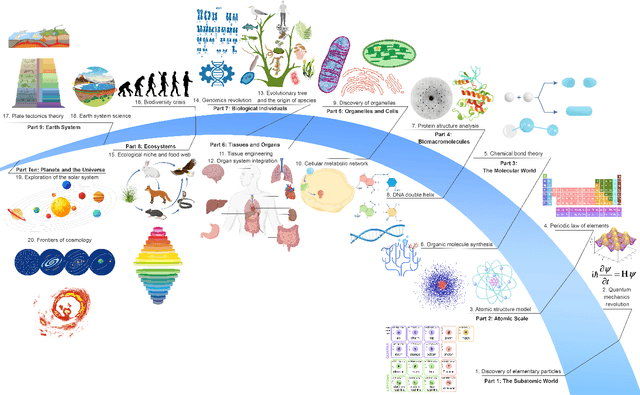
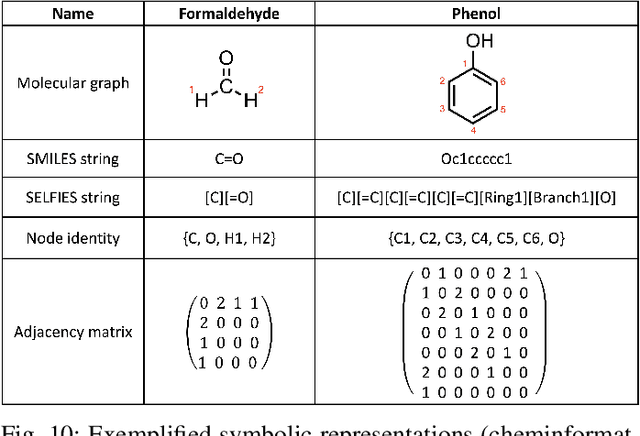
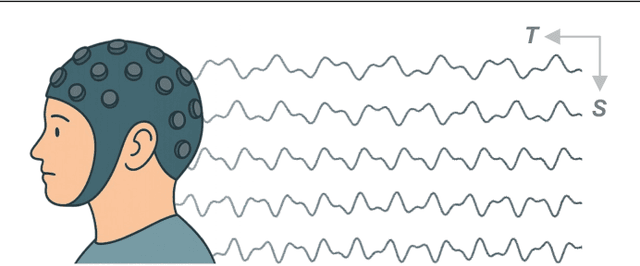
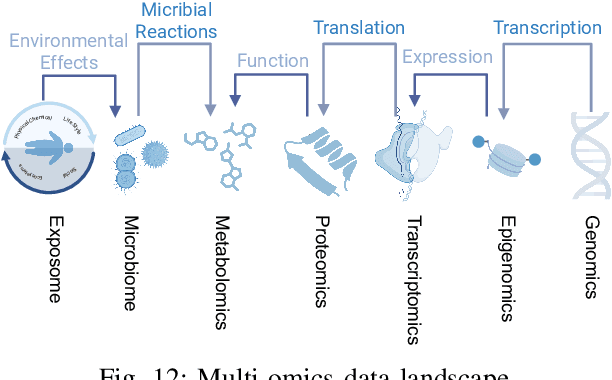
Scientific Large Language Models (Sci-LLMs) are transforming how knowledge is represented, integrated, and applied in scientific research, yet their progress is shaped by the complex nature of scientific data. This survey presents a comprehensive, data-centric synthesis that reframes the development of Sci-LLMs as a co-evolution between models and their underlying data substrate. We formulate a unified taxonomy of scientific data and a hierarchical model of scientific knowledge, emphasizing the multimodal, cross-scale, and domain-specific challenges that differentiate scientific corpora from general natural language processing datasets. We systematically review recent Sci-LLMs, from general-purpose foundations to specialized models across diverse scientific disciplines, alongside an extensive analysis of over 270 pre-/post-training datasets, showing why Sci-LLMs pose distinct demands -- heterogeneous, multi-scale, uncertainty-laden corpora that require representations preserving domain invariance and enabling cross-modal reasoning. On evaluation, we examine over 190 benchmark datasets and trace a shift from static exams toward process- and discovery-oriented assessments with advanced evaluation protocols. These data-centric analyses highlight persistent issues in scientific data development and discuss emerging solutions involving semi-automated annotation pipelines and expert validation. Finally, we outline a paradigm shift toward closed-loop systems where autonomous agents based on Sci-LLMs actively experiment, validate, and contribute to a living, evolving knowledge base. Collectively, this work provides a roadmap for building trustworthy, continually evolving artificial intelligence (AI) systems that function as a true partner in accelerating scientific discovery.