 Add to Chrome
 Add to Firefox
 Add to Edge
LoCA: Forward-Only LLM Tuning after One-Shot Calibration with Local Credit Assignment
Aug 07, 2026
Parameter-efficient post-training reduces the number of trainable parameters, but still requires repeated end-to-end backpropagation through the frozen backbone. Every adaptation step therefore needs backward-capable hardware and must store or recompute activations. We ask whether this repeated backward chain can be replaced by a one-time calibration. We introduce Local Credit Assignment (LoCA), a two-stage method for small-shift adaptation. One probe backward pass fits a low-rank map at each transformer block from the final prediction error to a local hidden-state correction. LoCA then reuses these maps to form blockwise regression targets from forward activations and fits low-rank adapters with closed-form ridge solves. No further backbone backward pass is required. We evaluate LoCA on five discriminative benchmarks with Qwen2.5 models from 0.5B to 14B. In 16 of 25 reported task--scale comparisons, LoCA yields lower evaluation cross-entropy than the corresponding LoRA run. Its measured full-run GPU peak, including calibration, is 26--29\% lower than LoRA's. After calibration, its CPU steady-state memory is 36--52\% lower and its per-pass time is 43--48\% lower. A shared scale-normalized candidate set is reused across all tested Qwen2.5 sizes and on SmolLM2-1.7B. LoCA thus amortizes global credit assignment into one calibration and enables later forward-only tuning when repeated backpropagation is impractical. The code associated with this paper is available \href{https://github.com/Xia12121/LoCA}{here}.

Evolving in the Agent Jungle via History-Informed Opponent Awareness
Aug 03, 2026Learning to adapt strategies through interaction is a key step toward more general and autonomous LLM agents. Existing approaches typically achieve behavioral adaptation by revising skill libraries. However, in multi-agent environments, opponents may simultaneously update their strategies, causing the environment itself to evolve continuously. Applying skill-revision methods designed for static environments in such settings therefore amounts to updating against an obsolete reference. To address this challenge, we introduce OASE (Opponent-Aware Selective Evolution), which identifies and adopts genuinely beneficial skill revisions in dynamic multi-agent environments. Specifically, OASE conducts paired comparisons between a candidate skill and the incumbent under identical conditions anchored by historical snapshots of opponent strategies, and adopts the candidate only when its estimated payoff gain exceeds an acceptance threshold. We evaluate OASE in two decision-making scenarios: first-price auctions and private-cost Cournot competition. Experimental results show that, compared with a Reflexion-style baseline, OASE achieves a lower final equilibrium distance in both environments while accepting substantially fewer skill revisions, thereby suppressing strategy changes that lack sufficient payoff support. OASE therefore replaces blind updating with evidence-anchored selection, allowing agents to adapt stably and efficiently even as opponents continuously evolve.
GRAIN: Molecules Are Not the Right Granularity -- Active-Ingredient Modeling for Safe Medication Recommendation
Jul 30, 2026Medication recommendation from electronic health records must balance predictive accuracy against the risk of adverse drug-drug interactions (DDIs) under polypharmacy. Existing safety-aware recommenders operate at one of two granularities: the drug code, which treats each medication as an indivisible token, or the molecular substructure, which is finer than pharmacological interaction knowledge is actually organized. We argue that the active ingredient is the missing granularity, and introduce GRAIN, a medication recommendation framework built around it. GRAIN encodes longitudinal patient trajectories (diagnoses, procedures, past medications) with a selective state space backbone that handles long, irregular visit sequences in linear time. On top of it we introduce a joint objective unifying three knowledge sources aligned to a common medication vocabulary: a drug-level DDI graph, an ingredient-level DDI graph obtained by normalizing medication codes to active ingredients via RxNorm, and an EHR-derived co-prescription graph. A proportional controller adapts the accuracy-safety trade-off to the observed validation DDI rate rather than fixing it a priori. Under strictly matched settings -- identical preprocessing, cohort, vocabulary, split, and evaluation code -- GRAIN improves over a re-implemented MambaHealth baseline on MIMIC-IV across all standard multi-label metrics (Jaccard 0.4488 to 0.4983, PRAUC 0.6911 to 0.7485, F1 0.5989 to 0.6453) while reducing the drug-level DDI rate from 0.1875 to 0.0948. We further define an ingredient-level DDI rate, a safety measure invisible to drug-code-level evaluation. The results indicate that ingredient-level normalization recovers predictive signal erased by code-level aggregation, and that it is complementary to, rather than in competition with, accurate sequence modeling.
AI Harness Engineering: A Runtime Substrate for Foundation-Model Software Agents
May 13, 2026Foundation models have transformed automated code generation, yet autonomous software-engineering agents remain unreliable in realistic development settings. The dominant explanation locates this gap in model capability. We propose a different locus: software-engineering capability emerges from a model-harness-environment system, in which a runtime substrate -- the harness -- mediates how a foundation-model agent observes a project, acts on it, receives feedback, and establishes that a change is complete. We formalize this substrate as an AI Harness Engineering and identify eleven component responsibilities: task specification, context selection, tool access, project memory, task state, observability, failure attribution, verification, permissions, entropy auditing, and intervention recording. We operationalize the harness through a four-level ladder (H0-H3) that progressively exposes runtime support to the agent, and we propose a trace-based evaluation protocol that converts each agent run into an auditable episode package. Applied to a controlled validation task, the framework yields episode packages whose evidence structure varies systematically with harness level: lower levels produce only a final patch, higher levels produce reproduction logs, failure attributions, deterministic requirement checks, and structured verification reports. The framework reframes the central question of autonomous software engineering from whether a foundation model can produce a patch to whether the model-harness-environment system can produce a verifiably correct, attributed, and maintainable change. We outline a research program for the runtime systems that foundation-model software agents will require.
GGBond: Growing Graph-Based AI-Agent Society for Socially-Aware Recommender Simulation
May 27, 2025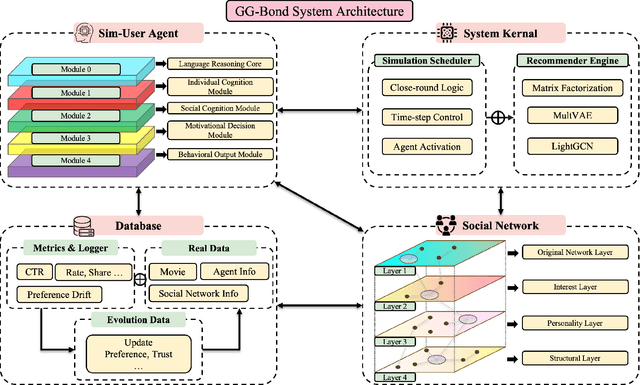
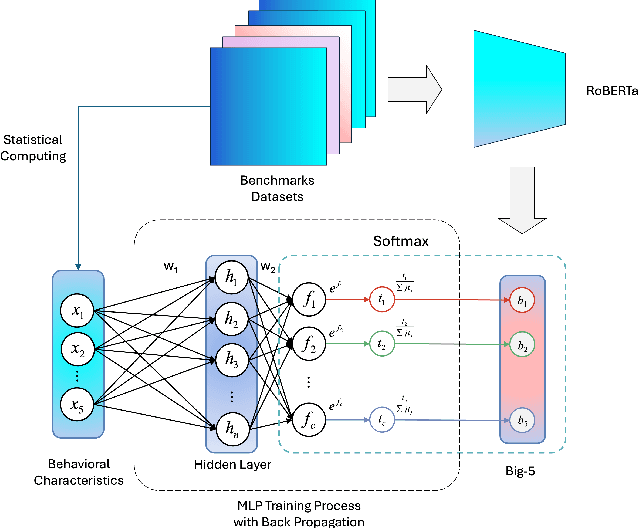
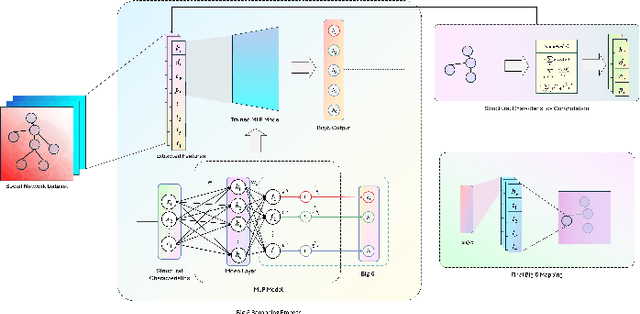
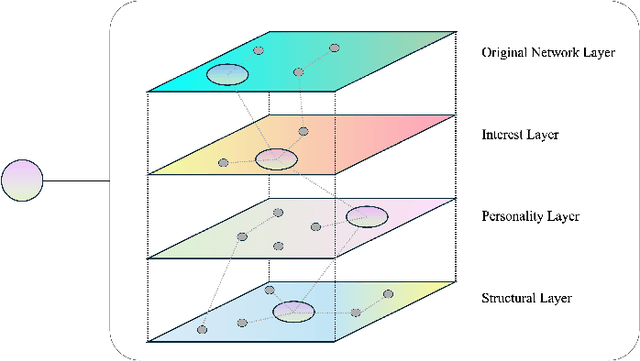
Current personalized recommender systems predominantly rely on static offline data for algorithm design and evaluation, significantly limiting their ability to capture long-term user preference evolution and social influence dynamics in real-world scenarios. To address this fundamental challenge, we propose a high-fidelity social simulation platform integrating human-like cognitive agents and dynamic social interactions to realistically simulate user behavior evolution under recommendation interventions. Specifically, the system comprises a population of Sim-User Agents, each equipped with a five-layer cognitive architecture that encapsulates key psychological mechanisms, including episodic memory, affective state transitions, adaptive preference learning, and dynamic trust-risk assessments. In particular, we innovatively introduce the Intimacy--Curiosity--Reciprocity--Risk (ICR2) motivational engine grounded in psychological and sociological theories, enabling more realistic user decision-making processes. Furthermore, we construct a multilayer heterogeneous social graph (GGBond Graph) supporting dynamic relational evolution, effectively modeling users' evolving social ties and trust dynamics based on interest similarity, personality alignment, and structural homophily. During system operation, agents autonomously respond to recommendations generated by typical recommender algorithms (e.g., Matrix Factorization, MultVAE, LightGCN), deciding whether to consume, rate, and share content while dynamically updating their internal states and social connections, thereby forming a stable, multi-round feedback loop. This innovative design transcends the limitations of traditional static datasets, providing a controlled, observable environment for evaluating long-term recommender effects.
Can bidirectional encoder become the ultimate winner for downstream applications of foundation models?
Nov 27, 2024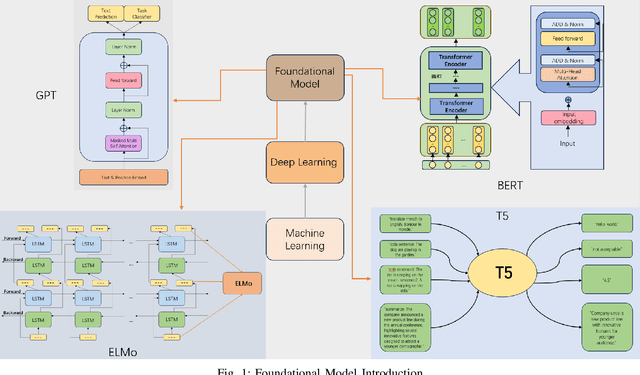
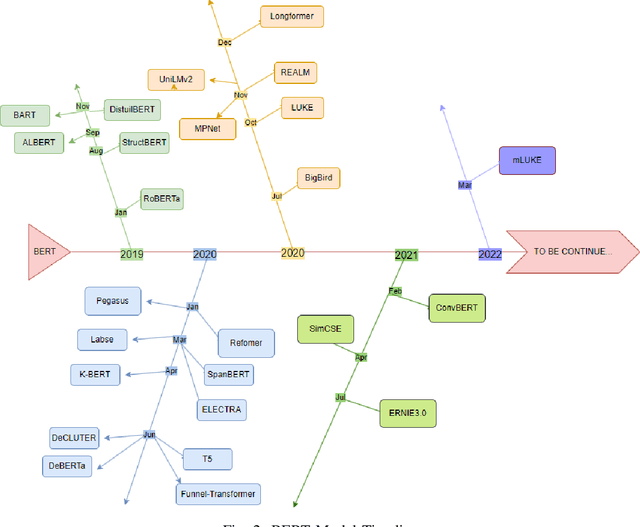
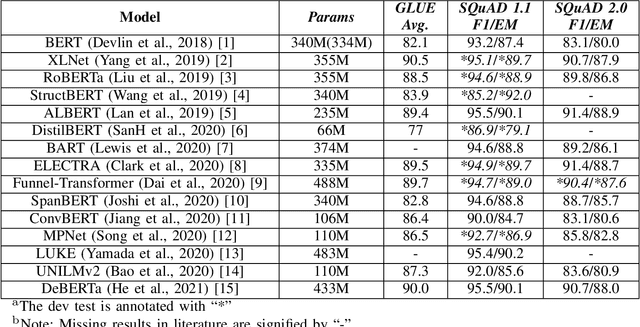

Over the past few decades, Artificial Intelligence(AI) has progressed from the initial machine learning stage to the deep learning stage, and now to the stage of foundational models. Foundational models have the characteristics of pre-training, transfer learning, and self-supervised learning, and pre-trained models can be fine-tuned and applied to various downstream tasks. Under the framework of foundational models, models such as Bidirectional Encoder Representations from Transformers(BERT) and Generative Pre-trained Transformer(GPT) have greatly advanced the development of natural language processing(NLP), especially the emergence of many models based on BERT. BERT broke through the limitation of only using one-way methods for language modeling in pre-training by using a masked language model. It can capture bidirectional context information to predict the masked words in the sequence, this can improve the feature extraction ability of the model. This makes the model very useful for downstream tasks, especially for specialized applications. The model using the bidirectional encoder can better understand the domain knowledge and be better applied to these downstream tasks. So we hope to help understand how this technology has evolved and improved model performance in various natural language processing tasks under the background of foundational models and reveal its importance in capturing context information and improving the model's performance on downstream tasks. This article analyzes one-way and bidirectional models based on GPT and BERT and compares their differences based on the purpose of the model. It also briefly analyzes BERT and the improvements of some models based on BERT. The model's performance on the Stanford Question Answering Dataset(SQuAD) and General Language Understanding Evaluation(GLUE) was compared.
Stochastic diagonal estimation with adaptive parameter selection
Oct 15, 2024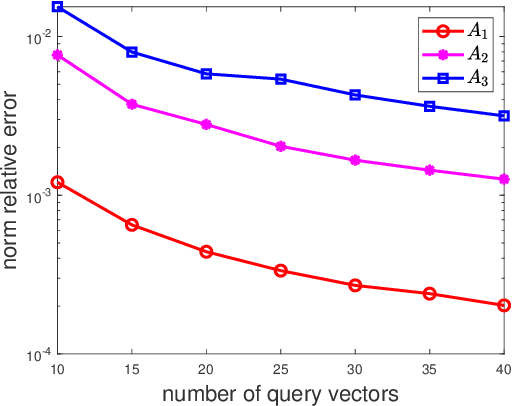
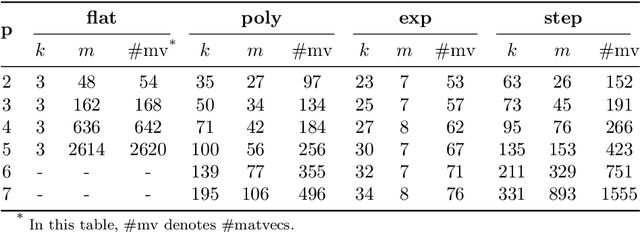
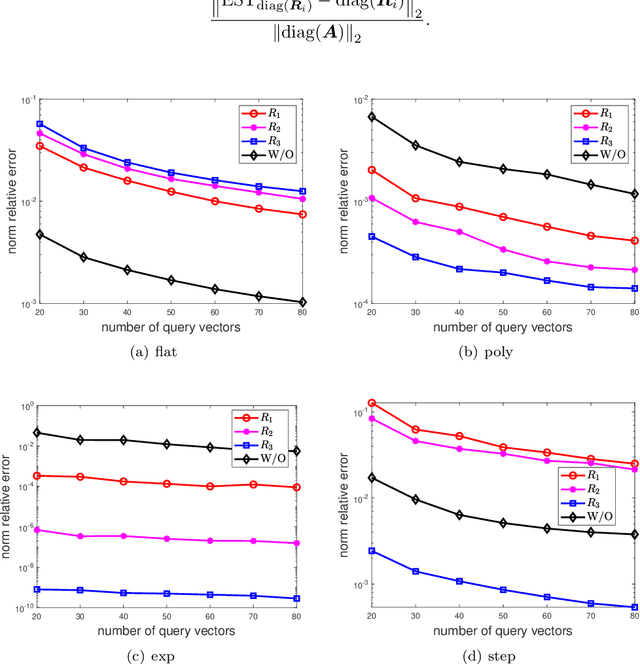
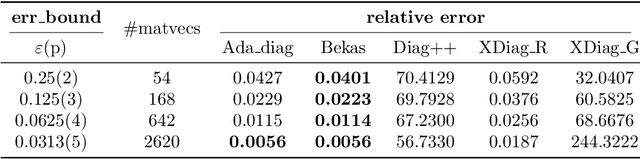
In this paper, we investigate diagonal estimation for large or implicit matrices, aiming to develop a novel and efficient stochastic algorithm that incorporates adaptive parameter selection. We explore the influence of different eigenvalue distributions on diagonal estimation and analyze the necessity of introducing the projection method and adaptive parameter optimization into the stochastic diagonal estimator. Based on this analysis, we derive a lower bound on the number of random query vectors needed to satisfy a given probabilistic error bound, which forms the foundation of our adaptive stochastic diagonal estimation algorithm. Finally, numerical experiments demonstrate the effectiveness of the proposed estimator for various matrix types, showcasing its efficiency and stability compared to other existing stochastic diagonal estimation methods.
Movie Recommendation with Poster Attention via Multi-modal Transformer Feature Fusion
Jul 12, 2024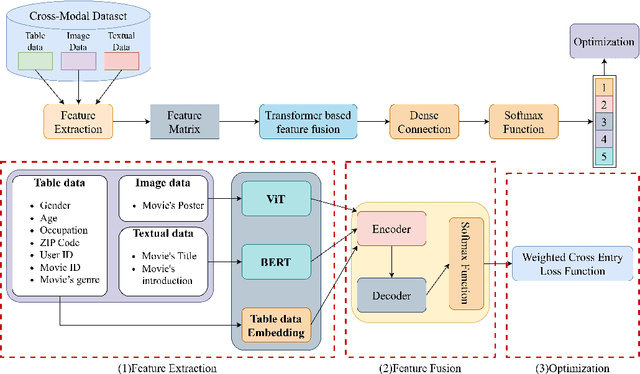
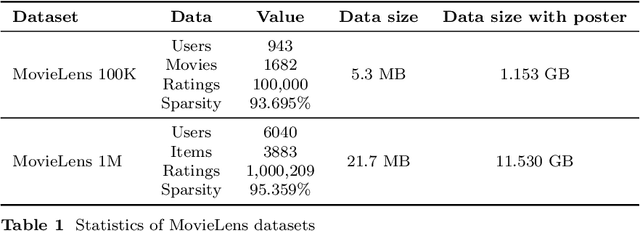

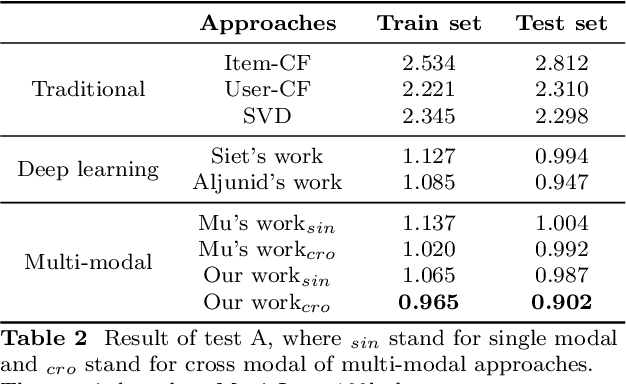
Pre-trained models learn general representations from large datsets which can be fine-turned for specific tasks to significantly reduce training time. Pre-trained models like generative pretrained transformers (GPT), bidirectional encoder representations from transformers (BERT), vision transfomers (ViT) have become a cornerstone of current research in machine learning. This study proposes a multi-modal movie recommendation system by extract features of the well designed posters for each movie and the narrative text description of the movie. This system uses the BERT model to extract the information of text modality, the ViT model applied to extract the information of poster/image modality, and the Transformer architecture for feature fusion of all modalities to predict users' preference. The integration of pre-trained foundational models with some smaller data sets in downstream applications capture multi-modal content features in a more comprehensive manner, thereby providing more accurate recommendations. The efficiency of the proof-of-concept model is verified by the standard benchmark problem the MovieLens 100K and 1M datasets. The prediction accuracy of user ratings is enhanced in comparison to the baseline algorithm, thereby demonstrating the potential of this cross-modal algorithm to be applied for movie or video recommendation.
EchoMamba4Rec: Harmonizing Bidirectional State Space Models with Spectral Filtering for Advanced Sequential Recommendation
Jun 04, 2024Sequential recommendation aims to estimate dynamic user preferences and sequential dependencies among historical user behaviors. Attention-based models have proven effective for sequential recommendation, but they suffer from inference inefficiency due to the quadratic computational complexity of attention mechanisms, particularly for long-range behavior sequences. Inspired by the recent success of state space models (SSMs) in control theory, which provide a robust framework for modeling and controlling dynamic systems, we present EchoMamba4Rec. Control theory emphasizes the use of SSMs for managing long-range dependencies and maintaining inferential efficiency through structured state matrices. EchoMamba4Rec leverages these control relationships in sequential recommendation and integrates bi-directional processing with frequency-domain filtering to capture complex patterns and dependencies in user interaction data more effectively. Our model benefits from the ability of state space models (SSMs) to learn and perform parallel computations, significantly enhancing computational efficiency and scalability. It features a bi-directional Mamba module that incorporates both forward and reverse Mamba components, leveraging information from both past and future interactions. Additionally, a filter layer operates in the frequency domain using learnable Fast Fourier Transform (FFT) and learnable filters, followed by an inverse FFT to refine item embeddings and reduce noise. We also integrate Gate Linear Units (GLU) to dynamically control information flow, enhancing the model's expressiveness and training stability. Experimental results demonstrate that EchoMamba significantly outperforms existing models, providing more accurate and personalized recommendations.
From attention to profit: quantitative trading strategy based on transformer
Mar 30, 2024In traditional quantitative trading practice, navigating the complicated and dynamic financial market presents a persistent challenge. Former machine learning approaches have struggled to fully capture various market variables, often ignore long-term information and fail to catch up with essential signals that may lead the profit. This paper introduces an enhanced transformer architecture and designs a novel factor based on the model. By transfer learning from sentiment analysis, the proposed model not only exploits its original inherent advantages in capturing long-range dependencies and modelling complex data relationships but is also able to solve tasks with numerical inputs and accurately forecast future returns over a period. This work collects more than 5,000,000 rolling data of 4,601 stocks in the Chinese capital market from 2010 to 2019. The results of this study demonstrated the model's superior performance in predicting stock trends compared with other 100 factor-based quantitative strategies with lower turnover rates and a more robust half-life period. Notably, the model's innovative use transformer to establish factors, in conjunction with market sentiment information, has been shown to enhance the accuracy of trading signals significantly, thereby offering promising implications for the future of quantitative trading strategies.