 Add to Chrome
 Add to Firefox
 Add to Edge
Heterogeneous synaptic motifs bridge microscale structure and macroscale nonlinear dynamics
Jun 26, 2026
Recent breakthroughs in synaptic-resolution network connectomics have revealed that brain circuits feature fine-scale structural connectivity, such as pairs of correlated synaptic couplings known as second-order motifs. Large-scale recordings of neuronal activity in networks containing nonlinear neurons reveal macroscopic heterogeneous population dynamics throughout the brain. These findings rekindle the inquiry into this intriguing question: Can microscale synaptic structures contribute to macroscopic heterogeneous dynamics and computations in ways that canonical brain circuit models cannot? To answer this question, we create random RNNs with various cell types, nonlinear non-negative neural responses, and arbitrary marginal and second-order correlated synaptic statistics. We derive mean-field low-rank equations for P-population networks in which the pre- and postsynaptic neuronal population identities determine the synaptic and motif strengths. Our framework requires 2P latent dynamic variables with P variables describing mean population activity and P variables capturing within-population variability. Theoretical and simulational results demonstrate that chain motifs induce correlations in synaptic variability, enabling microscopic fluctuations to be integrated and influence mesoscopic mean population dynamics. We apply this framework to reverse engineer network connectivity that recapitulates the heterogeneous activity across the population in the mouse primary visual cortex. By bridging the gap between synaptic organization and nonlinear heterogeneous population dynamics, our results offer a principled approach and testable predictions regarding the relationship between fine-scale connectivity, heterogeneous dynamics, and functional computations.

GGBond: Growing Graph-Based AI-Agent Society for Socially-Aware Recommender Simulation
May 27, 2025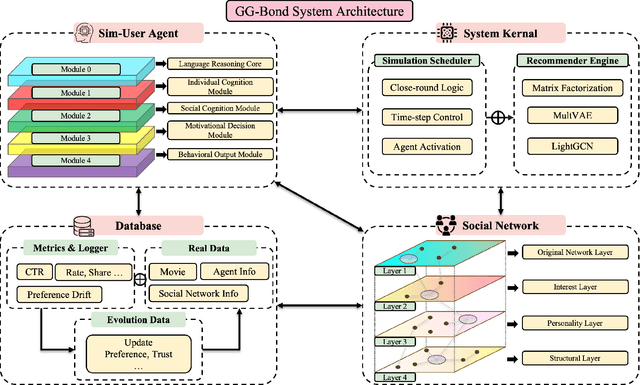
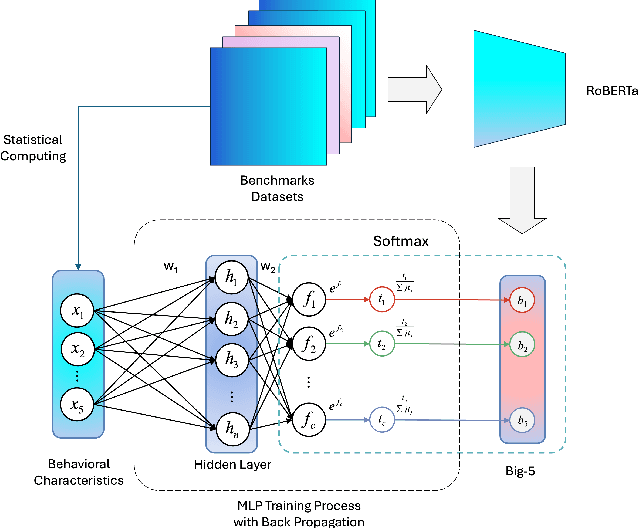
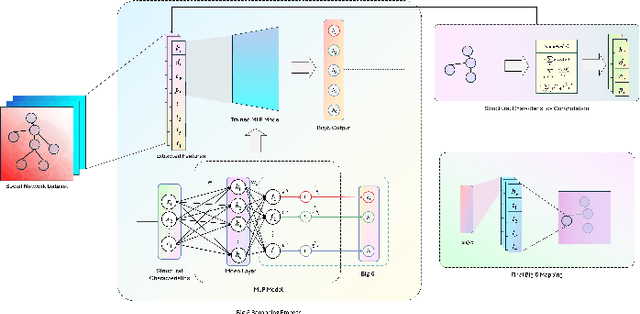
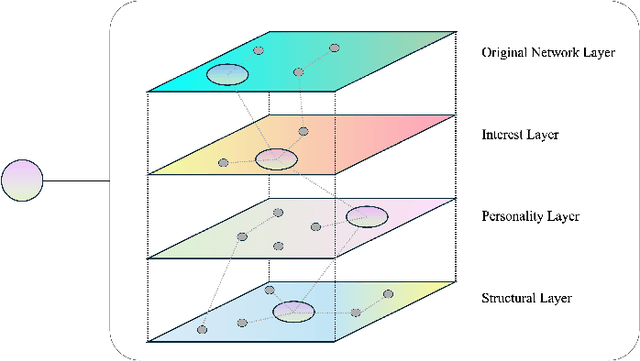
Current personalized recommender systems predominantly rely on static offline data for algorithm design and evaluation, significantly limiting their ability to capture long-term user preference evolution and social influence dynamics in real-world scenarios. To address this fundamental challenge, we propose a high-fidelity social simulation platform integrating human-like cognitive agents and dynamic social interactions to realistically simulate user behavior evolution under recommendation interventions. Specifically, the system comprises a population of Sim-User Agents, each equipped with a five-layer cognitive architecture that encapsulates key psychological mechanisms, including episodic memory, affective state transitions, adaptive preference learning, and dynamic trust-risk assessments. In particular, we innovatively introduce the Intimacy--Curiosity--Reciprocity--Risk (ICR2) motivational engine grounded in psychological and sociological theories, enabling more realistic user decision-making processes. Furthermore, we construct a multilayer heterogeneous social graph (GGBond Graph) supporting dynamic relational evolution, effectively modeling users' evolving social ties and trust dynamics based on interest similarity, personality alignment, and structural homophily. During system operation, agents autonomously respond to recommendations generated by typical recommender algorithms (e.g., Matrix Factorization, MultVAE, LightGCN), deciding whether to consume, rate, and share content while dynamically updating their internal states and social connections, thereby forming a stable, multi-round feedback loop. This innovative design transcends the limitations of traditional static datasets, providing a controlled, observable environment for evaluating long-term recommender effects.