 Add to Chrome
 Add to Firefox
 Add to Edge
Evaluating Open-Source LLMs for Multi-Label ATT&CK Technique Classification on CTI Reports
Jun 16, 2026
Classifying Cyber Threat Intelligence (CTI) using MITRE Adversarial Tactics, Techniques, and Common Knowledge (ATT&CK) is essential for proactive defense, but historically required extensive human effort. Pre-Large Language Model (LLM) automation sped up this process, but could not resolve the complex language and multi-step attack patterns found in unstructured CTI reports. LLMs addressed previous limitations by using contextual reasoning to understand unstructured text. However, current evaluations rely on simplified, single-technique sentences that ignore the complexity of real-world CTI reports, which often leads to inflated performance results. Consequently, the baseline performance of open-source LLMs on complex unstructured CTI reports remains unevaluated. To address this gap, we constructed a ground-truth dataset of 2,076 human-annotated sentences (1,281 technique-positive, 795 negative) from 83 complex unstructured CTI reports. These sentences were mapped to 114 unique ATT&CK techniques using a six-phase annotation process, achieving \k{appa} = 0.68 inter-annotator agreement. Using this dataset, we evaluated seven open-source LLMs ranging from 8B to 236B parameters across prompt strategy and temperature configurations. The highest-performing LLM achieved a micro-averaged F1 score of 0.22, establishing the empirical baseline for multi-label ATT&CK classification on complex unstructured CTI. Parameter size showed a statistically significant positive correlation with F1 score. Prompt strategy and temperature produced no statistically significant gains across model configurations. These results indicate that current open-source LLMs are insufficient for production-grade ATT&CK classification. The dataset, benchmark, and findings provide a reproducible foundation for future CTI research.

A Post-Processing Based Bengali Document Layout Analysis with YOLOV8
Sep 02, 2023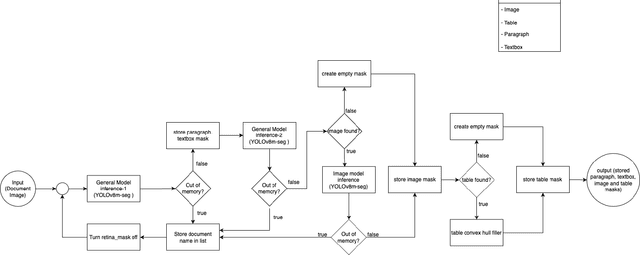
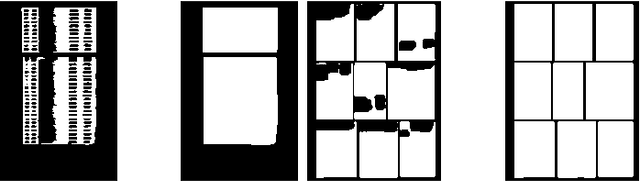
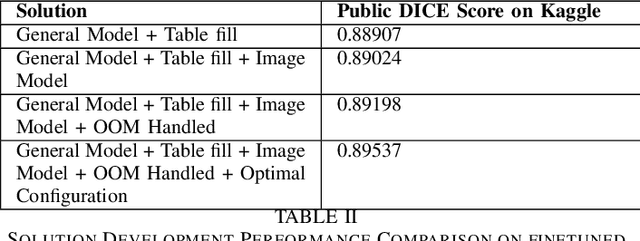
This paper focuses on enhancing Bengali Document Layout Analysis (DLA) using the YOLOv8 model and innovative post-processing techniques. We tackle challenges unique to the complex Bengali script by employing data augmentation for model robustness. After meticulous validation set evaluation, we fine-tune our approach on the complete dataset, leading to a two-stage prediction strategy for accurate element segmentation. Our ensemble model, combined with post-processing, outperforms individual base architectures, addressing issues identified in the BaDLAD dataset. By leveraging this approach, we aim to advance Bengali document analysis, contributing to improved OCR and document comprehension and BaDLAD serves as a foundational resource for this endeavor, aiding future research in the field. Furthermore, our experiments provided key insights to incorporate new strategies into the established solution.