 Add to Chrome
 Add to Firefox
 Add to Edge
One Run Is Not an Idea: The Implementation Lottery in Automated Research
Jul 29, 2026
Automated research systems use experimental scores both to deliver artifacts and to decide which ideas to retain, transfer, and pursue. Yet one run scores one implementation of an idea. Crediting that realization-level score as evidence about the parent mechanism creates the \emph{implementation lottery}, in which an idea-level conclusion depends on which plausible implementation was sampled. The mismatch is structural whenever one run updates beliefs about a mechanism. We estimate its magnitude. The \emph{Idea Reliability Audit} measures \emph{idea reliability} by validating and freezing candidate cards, sampling fresh-session implementations, using outcome-blind fidelity labels, and rerunning saved artifacts. It reports idea ICC and leave-one-implementation-out (LOO) winner reversal. Prior work generally repeats the task; we repeat the idea. Across 312 assignments on 13 tabular tasks and two coding-agent setups, implementation variance was more than five and ten times same-artifact rerun variance, respectively, and the winner from one implementation draw differed from the winner under the other-two mean in 25.6\% and 43.6\% of decisions. Reversal survives card-level filtering under two outcome-blind review rules. An exploratory diagnostic on three materials-regression workflows with a deterministic evaluator also finds implementation variation dominating the decomposition. These findings distinguish idea reliability from best-of-$N$ artifact utility. Before a score guides idea-level branching, transfer, or research memory, evidence should cover multiple implementations.

Auto Research for Materials: Auditable AI-Scientist Workflows with Held-Out Transfer
Jul 19, 2026An AI research agent can improve the score it sees without finding a modelling change that works on new materials. We ask a stricter question. After repeated experiments, does the selected change survive on data that never entered the loop, and can its code be reused? We separate the search into changes to features, models, representations, and training data. Seven searches produce 701 evaluated changes across ten Matbench endpoints. Agents receive only the mean over five inner folds, reducing reliance on any single development split. We then freeze the selected code and evaluate it once on an untouched holdout. Nine of ten choices remain the best tested single intervention. The surviving changes reveal two materials modelling regimes. With composition alone, feature, model, and representation changes provide comparable routes to improvement. They include held-out MAE reductions of 17.4\% for band gap and 18.6\% for steel strength, as well as gains on both classification endpoints, while screened external data adds little. For structure tasks, richer geometry descriptors and model or calibration changes lower mean held-out MAE by 14.6\% and 7.1\% and lead on different property families, whereas composition embeddings do not transfer. Combining separately found feature and model changes yields a 26.3\% mean held-out improvement. These results show in materials prediction that closed-loop agents can produce decisions that survive unseen evidence and code changes that can be reused across tasks and combined. More broadly, they provide an evaluation design for testing executable discoveries beyond the feedback loop.
SkillLearnBench: Benchmarking Continual Learning Methods for Agent Skill Generation on Real-World Tasks
Apr 22, 2026Skills have become the de facto way to enable LLM agents to perform complex real-world tasks with customized instructions, workflows, and tools, but how to learn them automatically and effectively remains unclear. We introduce SkillLearnBench, the first benchmark for evaluating continual skill learning methods, comprising 20 verified, skill-dependent tasks across 15 sub-domains derived from a real-world skill taxonomy , evaluated at three levels: skill quality, execution trajectory, and task outcome. Using this benchmark, we evaluate recent continual learning techniques, those leveraging one-shot, self/teacher feedback, and skill creator to generate skills from agent experiences. We find that all continual learning methods improve over the no-skill baseline, yet consistent gains remain elusive: no method leads across all tasks and LLMs, and scaling to stronger LLMs does not reliably help. Continual learning improves tasks with clear, reusable workflows but struggles on open-ended tasks, and using stronger LLM backbones does not consistently produce better skills. Our analysis also revealed that multiple iterations in continual learning facilitate genuine improvement via external feedback, whereas self-feedback alone induces recursive drift. Our data and code are open-source at https://github.com/cxcscmu/SkillLearnBench to enable further studies of automatic skill generation and continual learning techniques.
Neural Chain-of-Thought Search: Searching the Optimal Reasoning Path to Enhance Large Language Models
Jan 16, 2026Chain-of-Thought reasoning has significantly enhanced the problem-solving capabilities of Large Language Models. Unfortunately, current models generate reasoning steps sequentially without foresight, often becoming trapped in suboptimal reasoning paths with redundant steps. In contrast, we introduce Neural Chain-of-Thought Search (NCoTS), a framework that reformulates reasoning as a dynamic search for the optimal thinking strategy. By quantitatively characterizing the solution space, we reveal the existence of sparse superior reasoning paths that are simultaneously more accurate and concise than standard outputs. Our method actively navigates towards these paths by evaluating candidate reasoning operators using a dual-factor heuristic that optimizes for both correctness and computational cost. Consequently, NCoTS achieves a Pareto improvement across diverse reasoning benchmarks, boosting accuracy by over 3.5% while reducing generation length by over 22%. Our code and data are available at https://github.com/MilkThink-Lab/Neural-CoT-Search.
AssoCiAm: A Benchmark for Evaluating Association Thinking while Circumventing Ambiguity
Sep 18, 2025Recent advancements in multimodal large language models (MLLMs) have garnered significant attention, offering a promising pathway toward artificial general intelligence (AGI). Among the essential capabilities required for AGI, creativity has emerged as a critical trait for MLLMs, with association serving as its foundation. Association reflects a model' s ability to think creatively, making it vital to evaluate and understand. While several frameworks have been proposed to assess associative ability, they often overlook the inherent ambiguity in association tasks, which arises from the divergent nature of associations and undermines the reliability of evaluations. To address this issue, we decompose ambiguity into two types-internal ambiguity and external ambiguity-and introduce AssoCiAm, a benchmark designed to evaluate associative ability while circumventing the ambiguity through a hybrid computational method. We then conduct extensive experiments on MLLMs, revealing a strong positive correlation between cognition and association. Additionally, we observe that the presence of ambiguity in the evaluation process causes MLLMs' behavior to become more random-like. Finally, we validate the effectiveness of our method in ensuring more accurate and reliable evaluations. See Project Page for the data and codes.
MiniLongBench: The Low-cost Long Context Understanding Benchmark for Large Language Models
May 26, 2025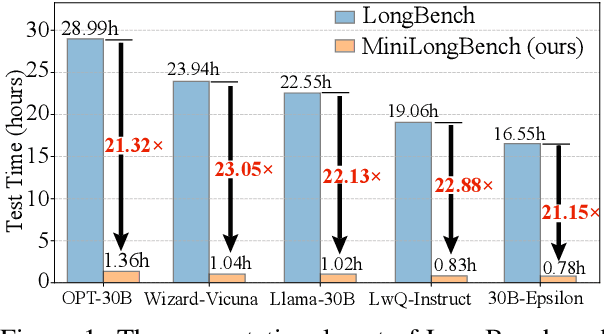
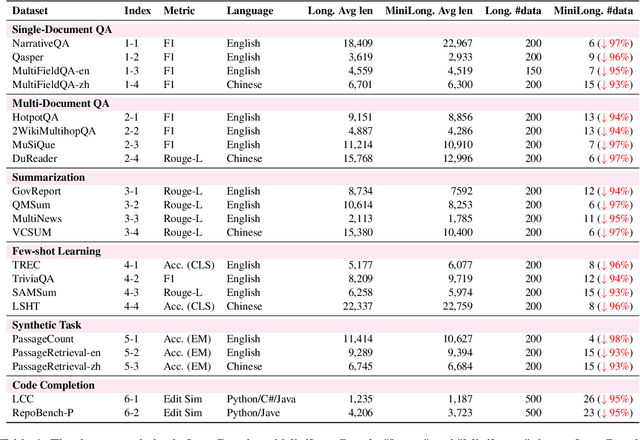
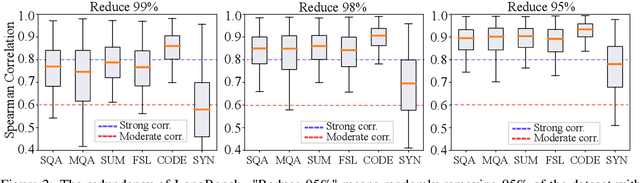
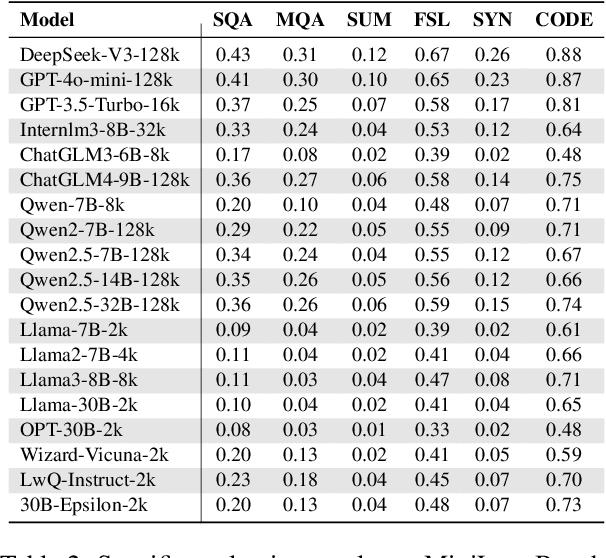
Long Context Understanding (LCU) is a critical area for exploration in current large language models (LLMs). However, due to the inherently lengthy nature of long-text data, existing LCU benchmarks for LLMs often result in prohibitively high evaluation costs, like testing time and inference expenses. Through extensive experimentation, we discover that existing LCU benchmarks exhibit significant redundancy, which means the inefficiency in evaluation. In this paper, we propose a concise data compression method tailored for long-text data with sparse information characteristics. By pruning the well-known LCU benchmark LongBench, we create MiniLongBench. This benchmark includes only 237 test samples across six major task categories and 21 distinct tasks. Through empirical analysis of over 60 LLMs, MiniLongBench achieves an average evaluation cost reduced to only 4.5% of the original while maintaining an average rank correlation coefficient of 0.97 with LongBench results. Therefore, our MiniLongBench, as a low-cost benchmark, holds great potential to substantially drive future research into the LCU capabilities of LLMs. See https://github.com/MilkThink-Lab/MiniLongBench for our code, data and tutorial.
A Causality-aware Paradigm for Evaluating Creativity of Multimodal Large Language Models
Jan 25, 2025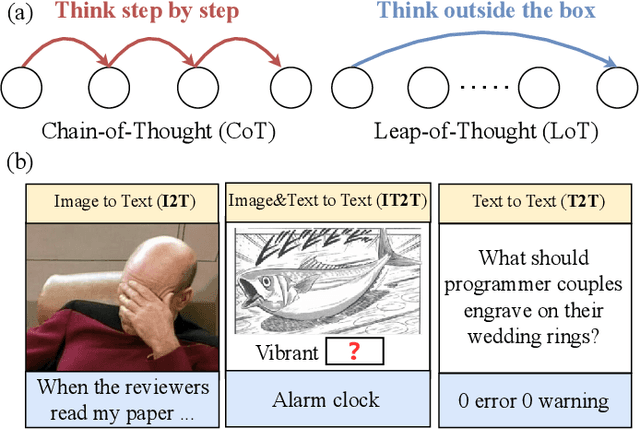
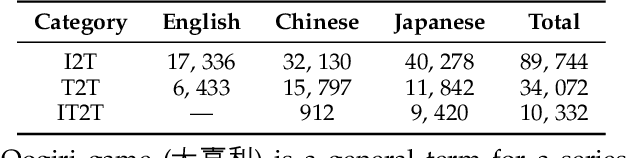

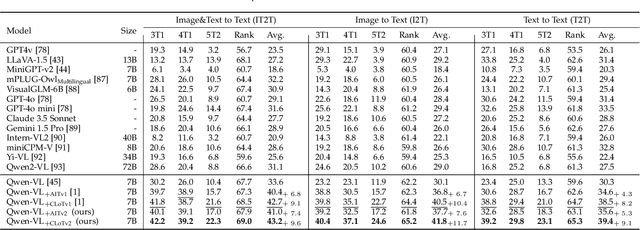
Recently, numerous benchmarks have been developed to evaluate the logical reasoning abilities of large language models (LLMs). However, assessing the equally important creative capabilities of LLMs is challenging due to the subjective, diverse, and data-scarce nature of creativity, especially in multimodal scenarios. In this paper, we consider the comprehensive pipeline for evaluating the creativity of multimodal LLMs, with a focus on suitable evaluation platforms and methodologies. First, we find the Oogiri game, a creativity-driven task requiring humor, associative thinking, and the ability to produce unexpected responses to text, images, or both. This game aligns well with the input-output structure of modern multimodal LLMs and benefits from a rich repository of high-quality, human-annotated creative responses, making it an ideal platform for studying LLM creativity. Next, beyond using the Oogiri game for standard evaluations like ranking and selection, we propose LoTbench, an interactive, causality-aware evaluation framework, to further address some intrinsic risks in standard evaluations, such as information leakage and limited interpretability. The proposed LoTbench not only quantifies LLM creativity more effectively but also visualizes the underlying creative thought processes. Our results show that while most LLMs exhibit constrained creativity, the performance gap between LLMs and humans is not insurmountable. Furthermore, we observe a strong correlation between results from the multimodal cognition benchmark MMMU and LoTbench, but only a weak connection with traditional creativity metrics. This suggests that LoTbench better aligns with human cognitive theories, highlighting cognition as a critical foundation in the early stages of creativity and enabling the bridging of diverse concepts. https://lotbench.github.io
MoExtend: Tuning New Experts for Modality and Task Extension
Aug 07, 2024

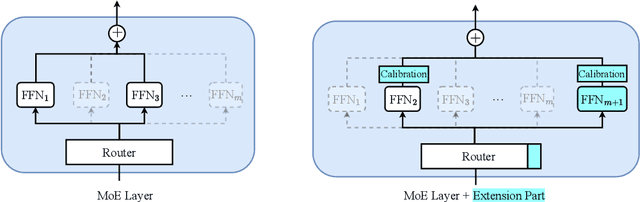

Large language models (LLMs) excel in various tasks but are primarily trained on text data, limiting their application scope. Expanding LLM capabilities to include vision-language understanding is vital, yet training them on multimodal data from scratch is challenging and costly. Existing instruction tuning methods, e.g., LLAVA, often connects a pretrained CLIP vision encoder and LLMs via fully fine-tuning LLMs to bridge the modality gap. However, full fine-tuning is plagued by catastrophic forgetting, i.e., forgetting previous knowledge, and high training costs particularly in the era of increasing tasks and modalities. To solve this issue, we introduce MoExtend, an effective framework designed to streamline the modality adaptation and extension of Mixture-of-Experts (MoE) models. MoExtend seamlessly integrates new experts into pre-trained MoE models, endowing them with novel knowledge without the need to tune pretrained models such as MoE and vision encoders. This approach enables rapid adaptation and extension to new modal data or tasks, effectively addressing the challenge of accommodating new modalities within LLMs. Furthermore, MoExtend avoids tuning pretrained models, thus mitigating the risk of catastrophic forgetting. Experimental results demonstrate the efficacy and efficiency of MoExtend in enhancing the multimodal capabilities of LLMs, contributing to advancements in multimodal AI research. Code: https://github.com/zhongshsh/MoExtend.
Mirror Gradient: Towards Robust Multimodal Recommender Systems via Exploring Flat Local Minima
Feb 17, 2024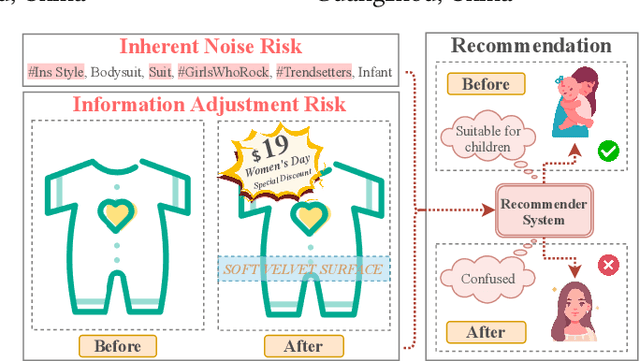
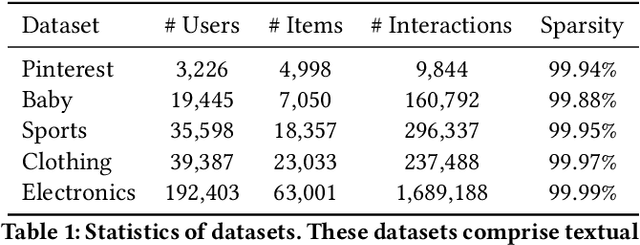
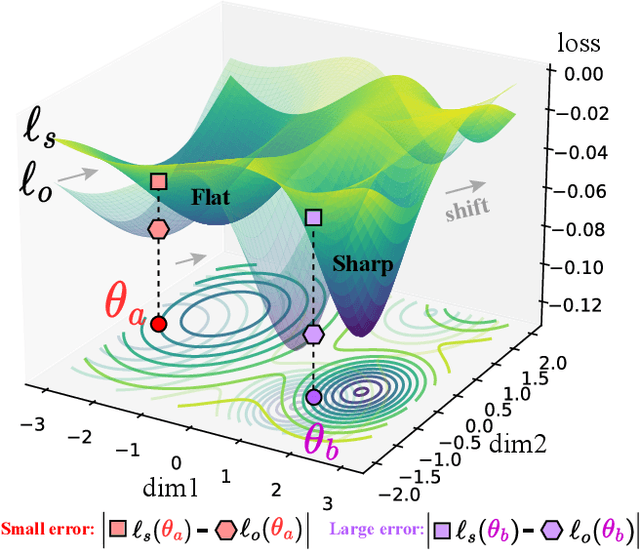
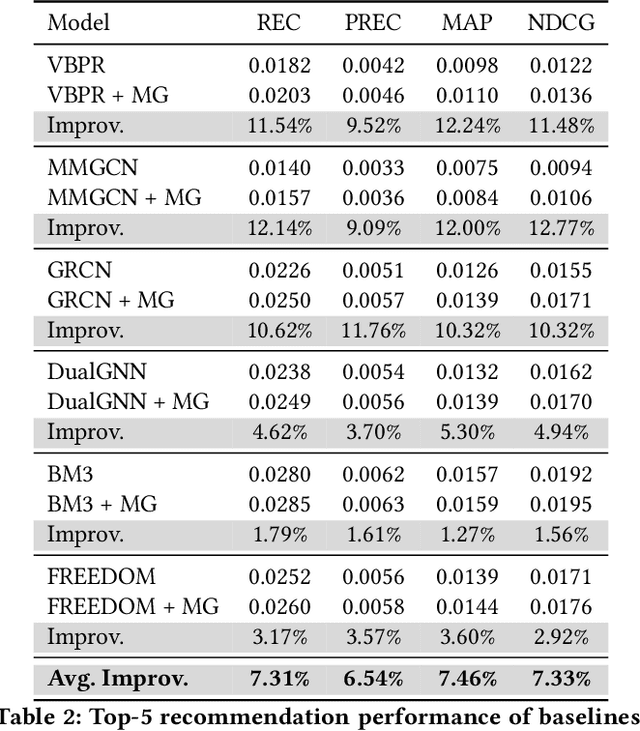
Multimodal recommender systems utilize various types of information to model user preferences and item features, helping users discover items aligned with their interests. The integration of multimodal information mitigates the inherent challenges in recommender systems, e.g., the data sparsity problem and cold-start issues. However, it simultaneously magnifies certain risks from multimodal information inputs, such as information adjustment risk and inherent noise risk. These risks pose crucial challenges to the robustness of recommendation models. In this paper, we analyze multimodal recommender systems from the novel perspective of flat local minima and propose a concise yet effective gradient strategy called Mirror Gradient (MG). This strategy can implicitly enhance the model's robustness during the optimization process, mitigating instability risks arising from multimodal information inputs. We also provide strong theoretical evidence and conduct extensive empirical experiments to show the superiority of MG across various multimodal recommendation models and benchmarks. Furthermore, we find that the proposed MG can complement existing robust training methods and be easily extended to diverse advanced recommendation models, making it a promising new and fundamental paradigm for training multimodal recommender systems. The code is released at https://github.com/Qrange-group/Mirror-Gradient.
Let's Think Outside the Box: Exploring Leap-of-Thought in Large Language Models with Creative Humor Generation
Dec 06, 2023


Chain-of-Thought (CoT) guides large language models (LLMs) to reason step-by-step, and can motivate their logical reasoning ability. While effective for logical tasks, CoT is not conducive to creative problem-solving which often requires out-of-box thoughts and is crucial for innovation advancements. In this paper, we explore the Leap-of-Thought (LoT) abilities within LLMs -- a non-sequential, creative paradigm involving strong associations and knowledge leaps. To this end, we study LLMs on the popular Oogiri game which needs participants to have good creativity and strong associative thinking for responding unexpectedly and humorously to the given image, text, or both, and thus is suitable for LoT study. Then to investigate LLMs' LoT ability in the Oogiri game, we first build a multimodal and multilingual Oogiri-GO dataset which contains over 130,000 samples from the Oogiri game, and observe the insufficient LoT ability or failures of most existing LLMs on the Oogiri game. Accordingly, we introduce a creative Leap-of-Thought (CLoT) paradigm to improve LLM's LoT ability. CLoT first formulates the Oogiri-GO dataset into LoT-oriented instruction tuning data to train pretrained LLM for achieving certain LoT humor generation and discrimination abilities. Then CLoT designs an explorative self-refinement that encourages the LLM to generate more creative LoT data via exploring parallels between seemingly unrelated concepts and selects high-quality data to train itself for self-refinement. CLoT not only excels in humor generation in the Oogiri game but also boosts creative abilities in various tasks like cloud guessing game and divergent association task. These findings advance our understanding and offer a pathway to improve LLMs' creative capacities for innovative applications across domains. The dataset, code, and models will be released online. https://zhongshsh.github.io/CLoT/.