 Add to Chrome
 Add to Firefox
 Add to Edge
Information fusion and machine learning for sensitivity analysis using physics knowledge and experimental data
Aug 18, 2026
When computational models (either physics-based or data-driven) are used for the sensitivity analysis of engineering systems, the sensitivity estimate is affected by the accuracy and uncertainty of the model. This paper considers global sensitivity analysis (GSA) for situations where both a physics-based model and experimental observations are available, and investigates physics-informed machine learning strategies to effectively combine the two sources of information in order to maximize the accuracy of the sensitivity estimate. Two representative machine learning (ML) techniques are considered, namely, deep neural networks (DNN) and Gaussian process (GP) modeling, and two strategies for incorporating physics knowledge within these techniques are investigated, namely: (i) incorporating loss functions in the ML models to enforce physics constraints, and (ii) pre-training and updating the ML model using simulation and experimental data respectively. Four different models are built for each type (DNN and GP), and the uncertainties in these models are included in the Sobol indices computation. The DNN-based models, with many degrees of freedom in terms of model parameters and training options, are found to result in smaller bounds on the sensitivity estimates when compared to the GP-based models. The proposed methods are illustrated for additive manufacturing and lake temperature modeling examples.
* Reliability Engineering & System Safety

Physics-Informed and Hybrid Machine Learning in Additive Manufacturing: Application to Fused Filament Fabrication
Aug 18, 2026This article investigates several physics-informed and hybrid machine learning strategies that incorporate physics knowledge in experimental data-driven deep-learning models for predicting the bond quality and porosity of fused filament fabrication (FFF) parts. Three types of strategies are explored to incorporate physics constraints and multi-physics FFF simulation results into a deep neural network (DNN), thus ensuring consistency with physical laws: (1) incorporate physics constraints within the loss function of the DNN, (2) use physics model outputs as additional inputs to the DNN model, and (3) pre-train a DNN model with physics model input-output and then update it with experimental data. These strategies help to enforce a physically consistent relationship between bond quality and tensile strength, thus making porosity predictions physically meaningful. Eight different combinations of the above strategies are investigated. The results show how the combination of multiple strategies produces accurate machine learning models even with limited experimental data.
* 11 pages, JOM (Journal of The Minerals, Metals & Materials Society)
Adaptive surrogate modeling for high-dimensional spatio-temporal output
Aug 18, 2026This paper develops an adaptive surrogate modeling method for problems with very high-dimensional spatio-temporal outputs. The analysis of spatio-temporal multi-physics systems is computationally expensive and consists of a large number of inputs and outputs. Surrogate models are often constructed to replace the physics-based model to achieve computational efficiency in analyses such as uncertainty quantification and optimization that require many function calls. In order to address the challenge introduced by the high dimensionality of spatio-temporal output, a dimension reduction method is first employed to map the high-dimensional output to a low-dimensional latent space. This is followed by the construction of the surrogate model in the low-dimensional space. The prediction error in the original space, which includes both the reconstruction error and surrogate model error, is evaluated using different error metrics. Based on the prediction accuracy of the surrogate model, new training points are identified for adaptive improvement of the surrogate model. We present a novel adaptive sampling technique that combines exploration and exploitation to improve the surrogate model accuracy with the fewest possible runs of the expensive physics-based model. Thermo-mechanical analysis of a gas turbine engine blade is used to analyze the effectiveness of the proposed method.
* Structural and Multidisciplinary Optimization
Power grid operational risk assessment using graph neural network surrogates
Nov 21, 2023


We investigate the utility of graph neural networks (GNNs) as proxies of power grid operational decision-making algorithms (optimal power flow (OPF) and security-constrained unit commitment (SCUC)) to enable rigorous quantification of the operational risk. To conduct principled risk analysis, numerous Monte Carlo (MC) samples are drawn from the (foretasted) probability distributions of spatio-temporally correlated stochastic grid variables. The corresponding OPF and SCUC solutions, which are needed to quantify the risk, are generated using traditional OPF and SCUC solvers to generate data for training GNN model(s). The GNN model performance is evaluated in terms of the accuracy of predicting quantities of interests (QoIs) derived from the decision variables in OPF and SCUC. Specifically, we focus on thermal power generation and load shedding at system and individual zone level. We also perform reliability and risk quantification based on GNN predictions and compare with that obtained from OPF/SCUC solutions. Our results demonstrate that GNNs are capable of providing fast and accurate prediction of QoIs and thus can be good surrogate models for OPF and SCUC. The excellent accuracy of GNN-based reliability and risk assessment further suggests that GNN surrogate has the potential to be applied in real-time and hours-ahead risk quantification.
Graph Neural Networks for Power Grid Operational Risk Assessment
Nov 07, 2023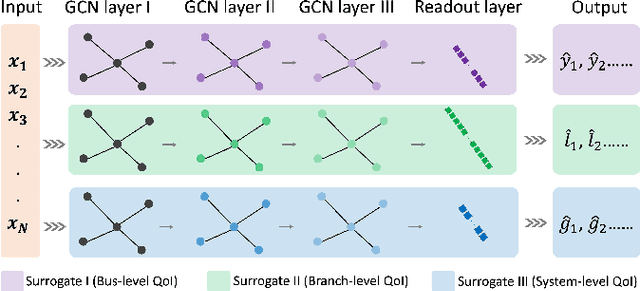
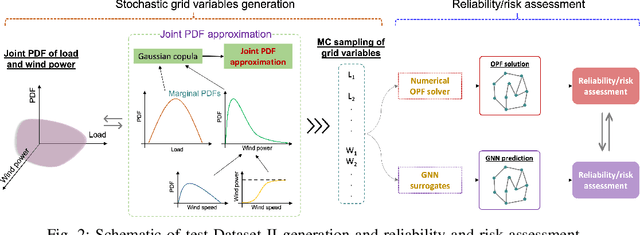
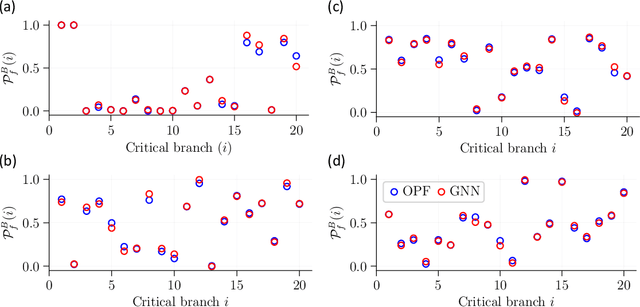
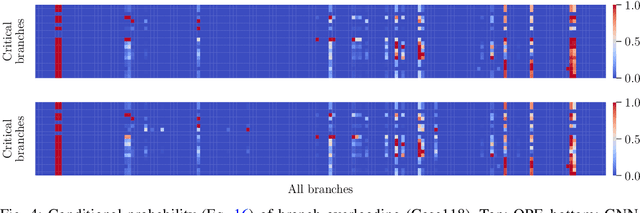
In this article, the utility of graph neural network (GNN) surrogates for Monte Carlo (MC) sampling-based risk quantification in daily operations of power grid is investigated. The MC simulation process necessitates solving a large number of optimal power flow (OPF) problems corresponding to the sample values of stochastic grid variables (power demand and renewable generation), which is computationally prohibitive. Computationally inexpensive surrogates of the OPF problem provide an attractive alternative for expedited MC simulation. GNN surrogates are especially suitable due to their superior ability to handle graph-structured data. Therefore, GNN surrogates of OPF problem are trained using supervised learning. They are then used to obtain Monte Carlo (MC) samples of the quantities of interest (operating reserve, transmission line flow) given the (hours-ahead) probabilistic wind generation and load forecast. The utility of GNN surrogates is evaluated by comparing OPF-based and GNN-based grid reliability and risk for IEEE Case118 synthetic grid. It is shown that the GNN surrogates are sufficiently accurate for predicting the (bus-level, branch-level and system-level) grid state and enable fast as well as accurate operational risk quantification for power grids. The article thus develops various tools for fast reliability and risk quantification for real-world power grids using GNNs.
Just-In-Time Learning for Operational Risk Assessment in Power Grids
Sep 26, 2022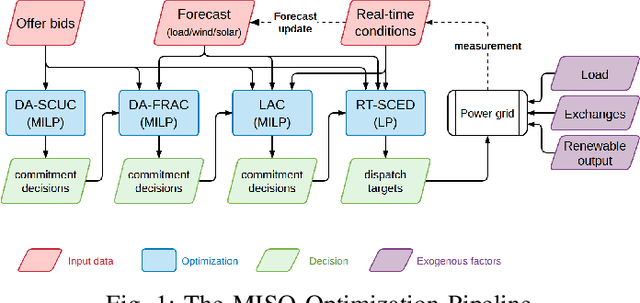
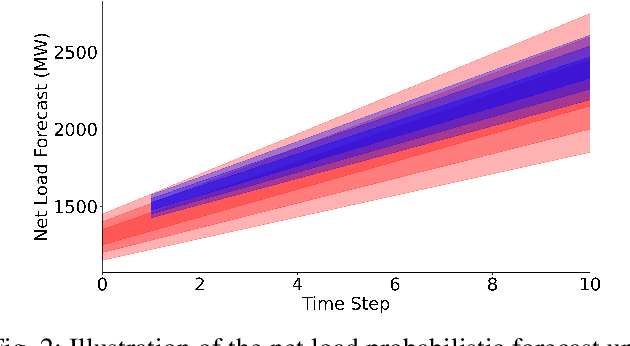
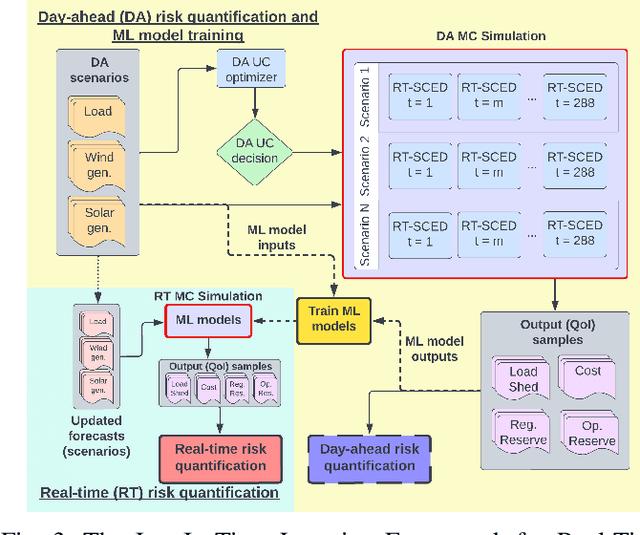
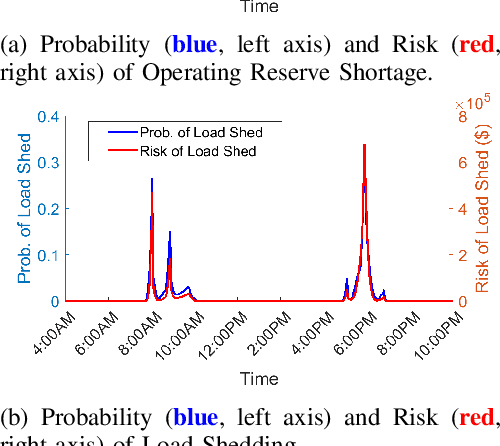
In a grid with a significant share of renewable generation, operators will need additional tools to evaluate the operational risk due to the increased volatility in load and generation. The computational requirements of the forward uncertainty propagation problem, which must solve numerous security-constrained economic dispatch (SCED) optimizations, is a major barrier for such real-time risk assessment. This paper proposes a Just-In-Time Risk Assessment Learning Framework (JITRALF) as an alternative. JITRALF trains risk surrogates, one for each hour in the day, using Machine Learning (ML) to predict the quantities needed to estimate risk, without explicitly solving the SCED problem. This significantly reduces the computational burden of the forward uncertainty propagation and allows for fast, real-time risk estimation. The paper also proposes a novel, asymmetric loss function and shows that models trained using the asymmetric loss perform better than those using symmetric loss functions. JITRALF is evaluated on the French transmission system for assessing the risk of insufficient operating reserves, the risk of load shedding, and the expected operating cost.
A Comprehensive Review of Digital Twin -- Part 2: Roles of Uncertainty Quantification and Optimization, a Battery Digital Twin, and Perspectives
Aug 27, 2022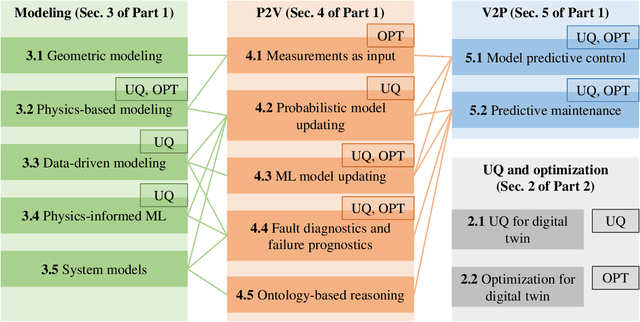
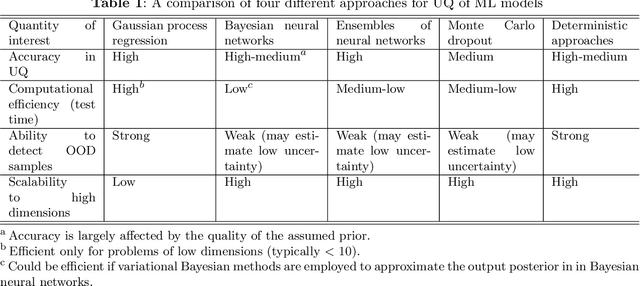
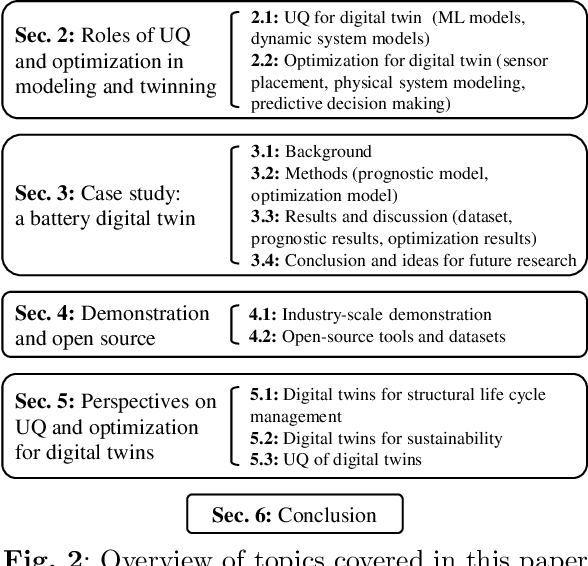
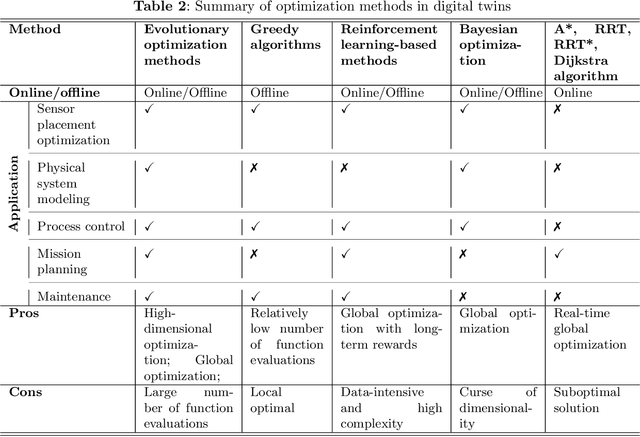
As an emerging technology in the era of Industry 4.0, digital twin is gaining unprecedented attention because of its promise to further optimize process design, quality control, health monitoring, decision and policy making, and more, by comprehensively modeling the physical world as a group of interconnected digital models. In a two-part series of papers, we examine the fundamental role of different modeling techniques, twinning enabling technologies, and uncertainty quantification and optimization methods commonly used in digital twins. This second paper presents a literature review of key enabling technologies of digital twins, with an emphasis on uncertainty quantification, optimization methods, open source datasets and tools, major findings, challenges, and future directions. Discussions focus on current methods of uncertainty quantification and optimization and how they are applied in different dimensions of a digital twin. Additionally, this paper presents a case study where a battery digital twin is constructed and tested to illustrate some of the modeling and twinning methods reviewed in this two-part review. Code and preprocessed data for generating all the results and figures presented in the case study are available on GitHub.
A Comprehensive Review of Digital Twin -- Part 1: Modeling and Twinning Enabling Technologies
Aug 26, 2022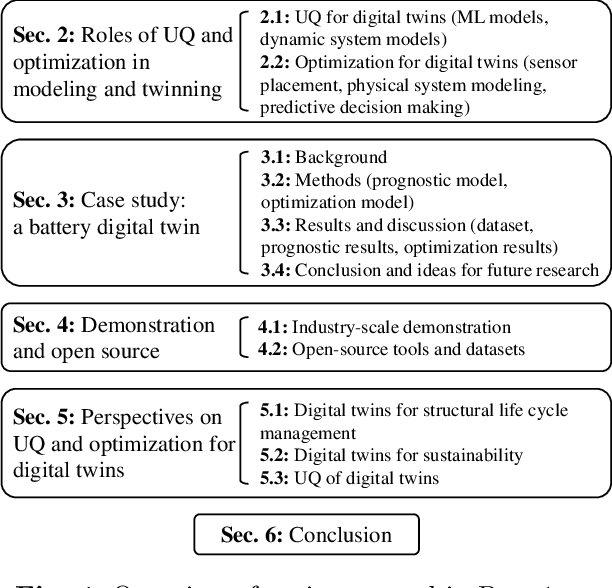
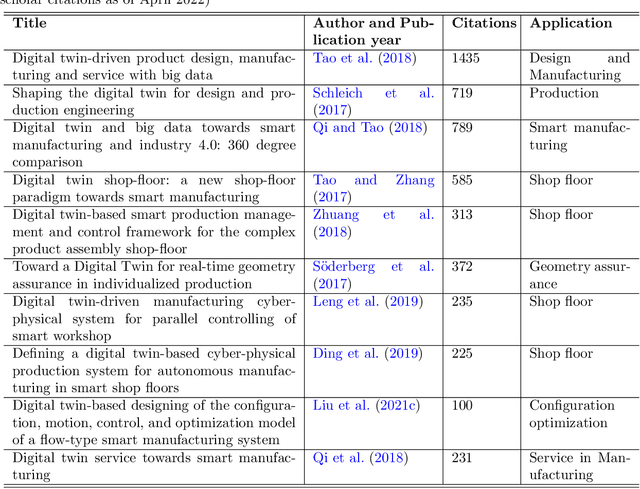
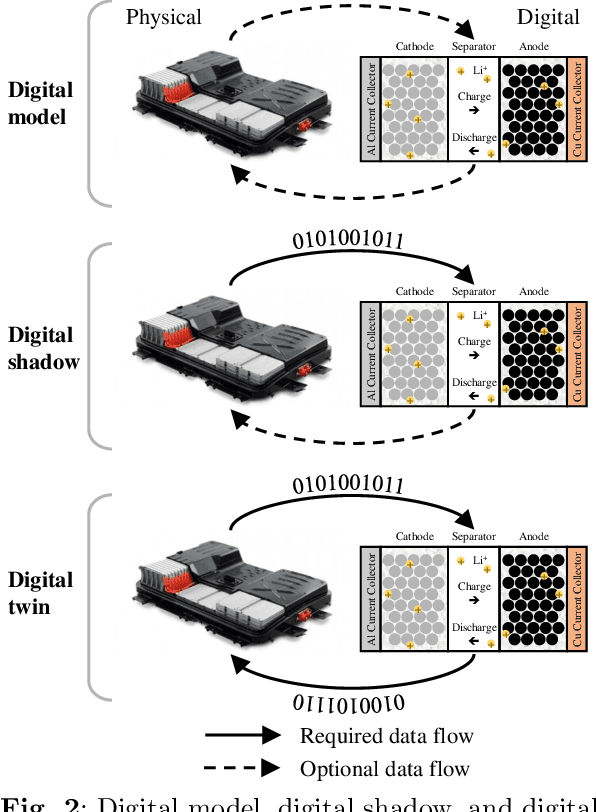
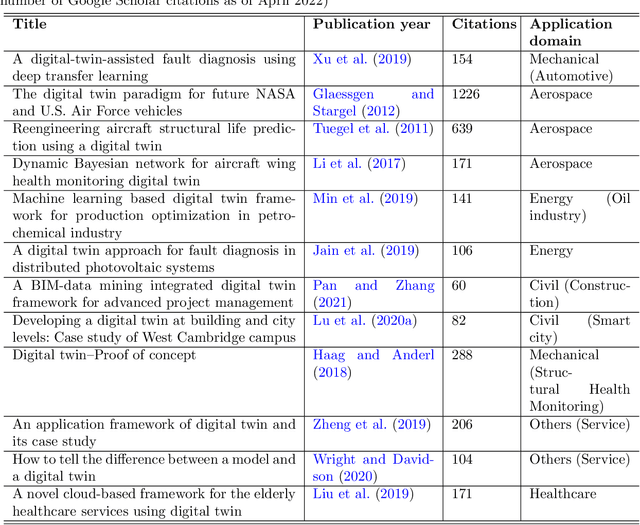
As an emerging technology in the era of Industry 4.0, digital twin is gaining unprecedented attention because of its promise to further optimize process design, quality control, health monitoring, decision and policy making, and more, by comprehensively modeling the physical world as a group of interconnected digital models. In a two-part series of papers, we examine the fundamental role of different modeling techniques, twinning enabling technologies, and uncertainty quantification and optimization methods commonly used in digital twins. This first paper presents a thorough literature review of digital twin trends across many disciplines currently pursuing this area of research. Then, digital twin modeling and twinning enabling technologies are further analyzed by classifying them into two main categories: physical-to-virtual, and virtual-to-physical, based on the direction in which data flows. Finally, this paper provides perspectives on the trajectory of digital twin technology over the next decade, and introduces a few emerging areas of research which will likely be of great use in future digital twin research. In part two of this review, the role of uncertainty quantification and optimization are discussed, a battery digital twin is demonstrated, and more perspectives on the future of digital twin are shared.
Modeling contaminant intrusion in water distribution networks based on D numbers
Apr 02, 2014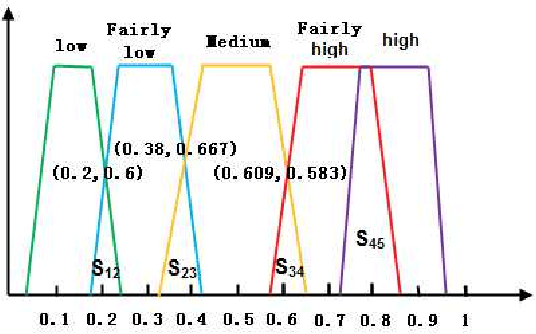
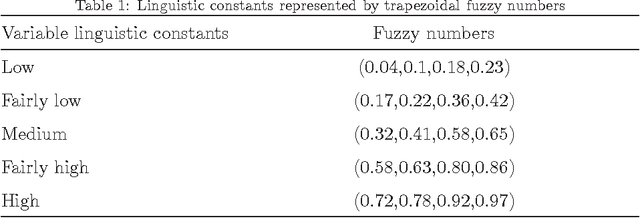
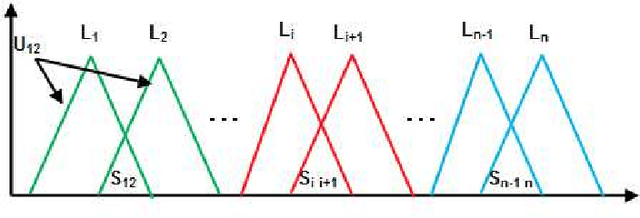
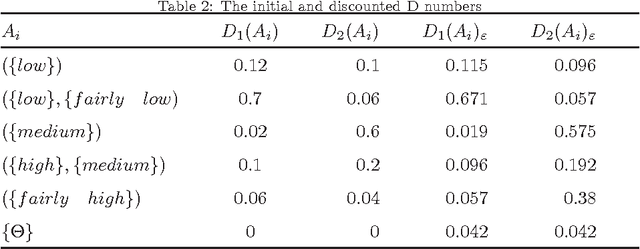
Efficient modeling on uncertain information plays an important role in estimating the risk of contaminant intrusion in water distribution networks. Dempster-Shafer evidence theory is one of the most commonly used methods. However, the Dempster-Shafer evidence theory has some hypotheses including the exclusive property of the elements in the frame of discernment, which may not be consistent with the real world. In this paper, based on a more effective representation of uncertainty, called D numbers, a new method that allows the elements in the frame of discernment to be non-exclusive is proposed. To demonstrate the efficiency of the proposed method, we apply it to the water distribution networks to estimate the risk of contaminant intrusion.
D-CFPR: D numbers extended consistent fuzzy preference relations
Mar 23, 2014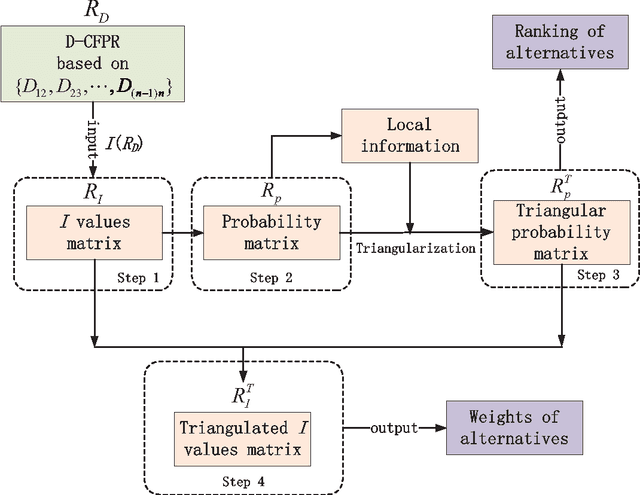
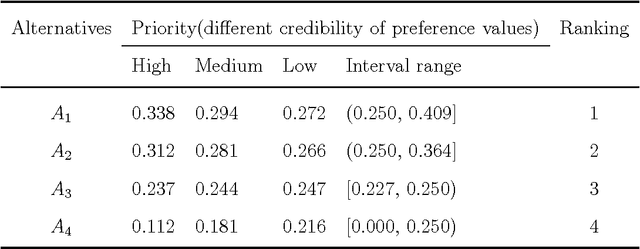
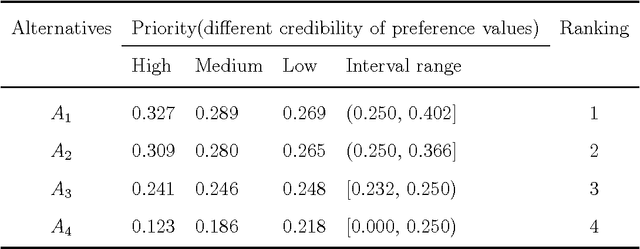
How to express an expert's or a decision maker's preference for alternatives is an open issue. Consistent fuzzy preference relation (CFPR) is with big advantages to handle this problem due to it can be construed via a smaller number of pairwise comparisons and satisfies additive transitivity property. However, the CFPR is incapable of dealing with the cases involving uncertain and incomplete information. In this paper, a D numbers extended consistent fuzzy preference relation (D-CFPR) is proposed to overcome the weakness. The D-CFPR extends the classical CFPR by using a new model of expressing uncertain information called D numbers. The D-CFPR inherits the merits of classical CFPR and can be totally reduced to the classical CFPR. This study can be integrated into our previous study about D-AHP (D numbers extended AHP) model to provide a systematic solution for multi-criteria decision making (MCDM).